

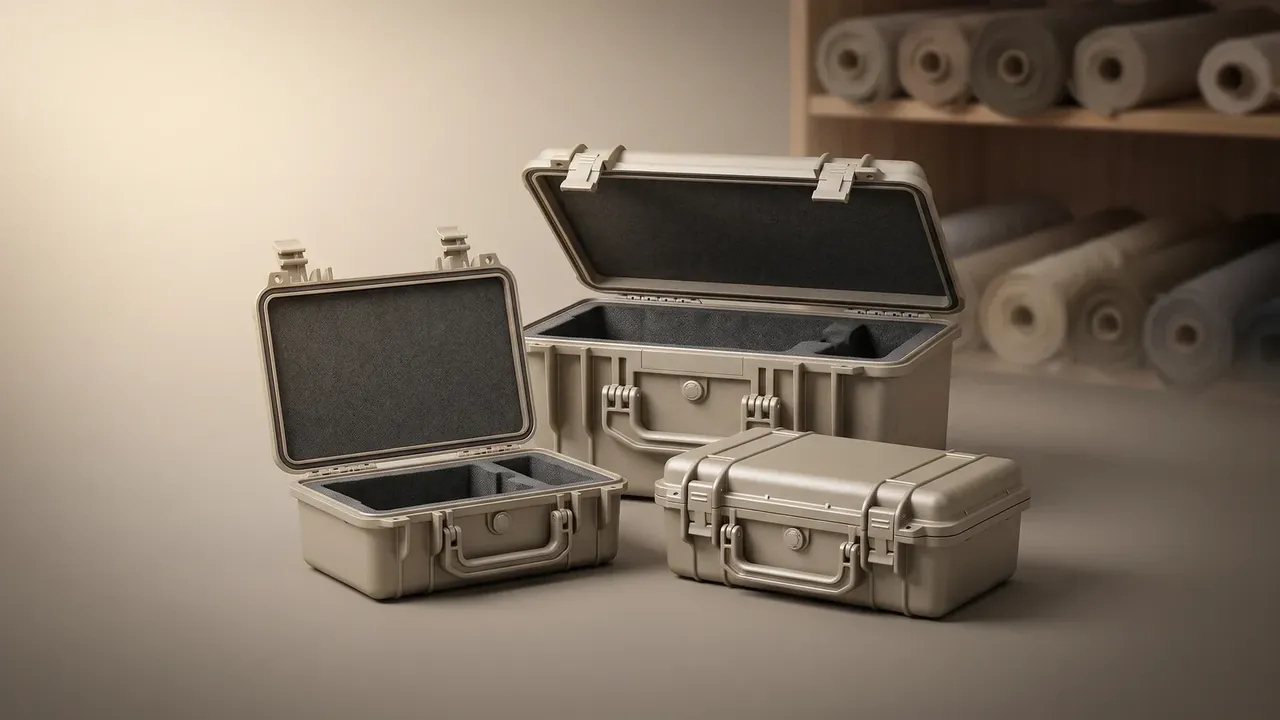
Quick answer: Inner box protection is not thicker foam. The inner box must come out, close on its own and carry load on its own, with 4 to 10 mm clearances at four positions and walls of at least 12 mm. Measure those and the protection claim becomes checkable.
Table of contents
- Why extra foam is not inner box protection
- Four clearances between the two shells
- Wall thickness against stacking load
- Four acceptance moves on the day
- FAQ
1. Why extra foam is not inner box protection
The line heard most often at a trade fair is that 50 mm of foam equals inner box protection. It does not.
Foam spreads an impact but never becomes a shell. A real inner box has its own walls, lid and closure, and carries the shock into its own corners. The difference is one word: rigidity.
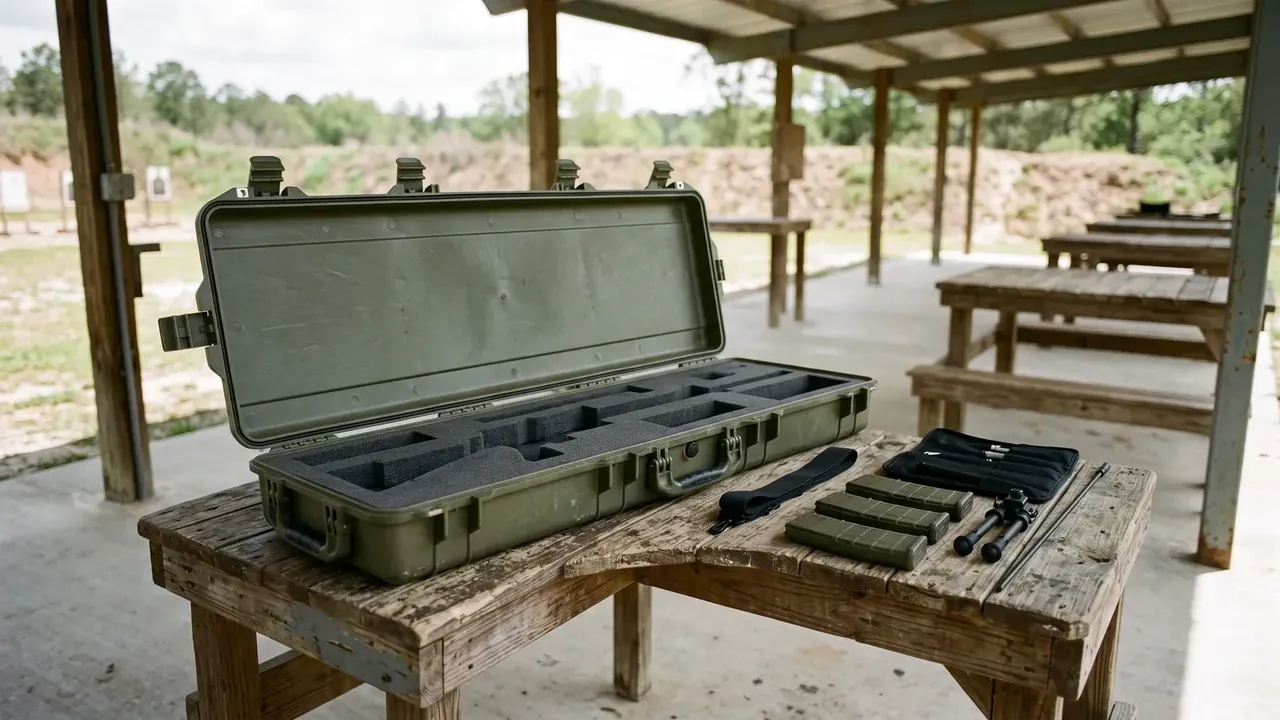
The test on a plastic case with inner box protection is direct. Lift the inner box out, stand it on a bench, close it. If it holds its shape and the lid survives a firm palm press, it is an inner box; if it only passes the first step, it is a lining.
The work splits: the outer shell takes knocks and rain in transit, the inner box takes grouping after opening, and either half can be replaced alone.
2. Four clearances between the two shells
Clearance is where a plastic case with inner box protection usually fails. Too much and the inner box rattles; too little and a deformed outer shell bears straight on it and passes the shock through.
The base gets 8 mm of closed-cell pad, which still measures 5 mm under compression. The sides get 4 mm each, centred by ribs rather than squeezed by foam. The lid gets 6 mm, the room the outer lid needs when it sags. The corners get 10 mm of void, because a corner drop lands there first.
| Position | Clearance | Filled with | If it is wrong |
|---|---|---|---|
| Base | 8 mm | Closed-cell pad, 5 mm left | Hard contact, base corner cracks |
| Sides | 4 mm each | Ribs for centring | Excess gap, inner box shifts |
| Lid | 6 mm | Void in the lining | Sagging lid bears on the inner lid |
| Corners | 10 mm | Void | Corner impact passes straight through |
These figures come from a 520 x 380 x 220 mm cavity holding a 480 x 340 x 180 mm inner box. Rescale for other sizes, but keep the order: inner box first, clearance second, outer shell last.
3. Wall thickness against stacking load
Below 12 mm on a plastic case with inner box protection, stacking claims mean nothing. A thin wall bulges first, the bulge bears on the outer shell, and the load routes back into the corners of the inner box.
| Inner wall | Inner weight | 150 kg static, 24 hours | Diagonal distortion |
|---|---|---|---|
| 10 mm | 1.2 kg | 3.8 mm side bulge | Out of limit |
| 12 mm | 1.4 kg | 1.1 mm side bulge | Within 1.5 mm |
| 15 mm | 1.7 kg | 0.6 mm side bulge | Within 1.0 mm |
Static load assumes three loaded layers: 50 kg a case, two above, 150 kg for 24 hours, then the diagonal is measured. Past 1.5 mm the inner box will not close on the second trip.
Temperature belongs in the same calculation. At minus 25 degrees Celsius polypropylene loses about 40% of its impact strength, so a corner drop that passed in the lab can crack at a cold store door. For cold chain, specify a modified grade and 1 mm more wall.
4. Four acceptance moves on the day
Acceptance of a plastic case with inner box protection does not need a third-party report. Four moves settle it the same afternoon.
- Lift: carry the inner box by its handle off the floor; no sag, no whitening at the handle root.
- Close: latch the inner lid, then run a 0.5 mm feeler gauge around the rim; it should not enter at more than three points.
- Pressure: close the empty inner box, apply 0.3 kPa and hold for 60 seconds; drop no more than 5%.
- Stack: fill the inner box, put 50 kg on top for 24 hours, then check the four corners for cracks.
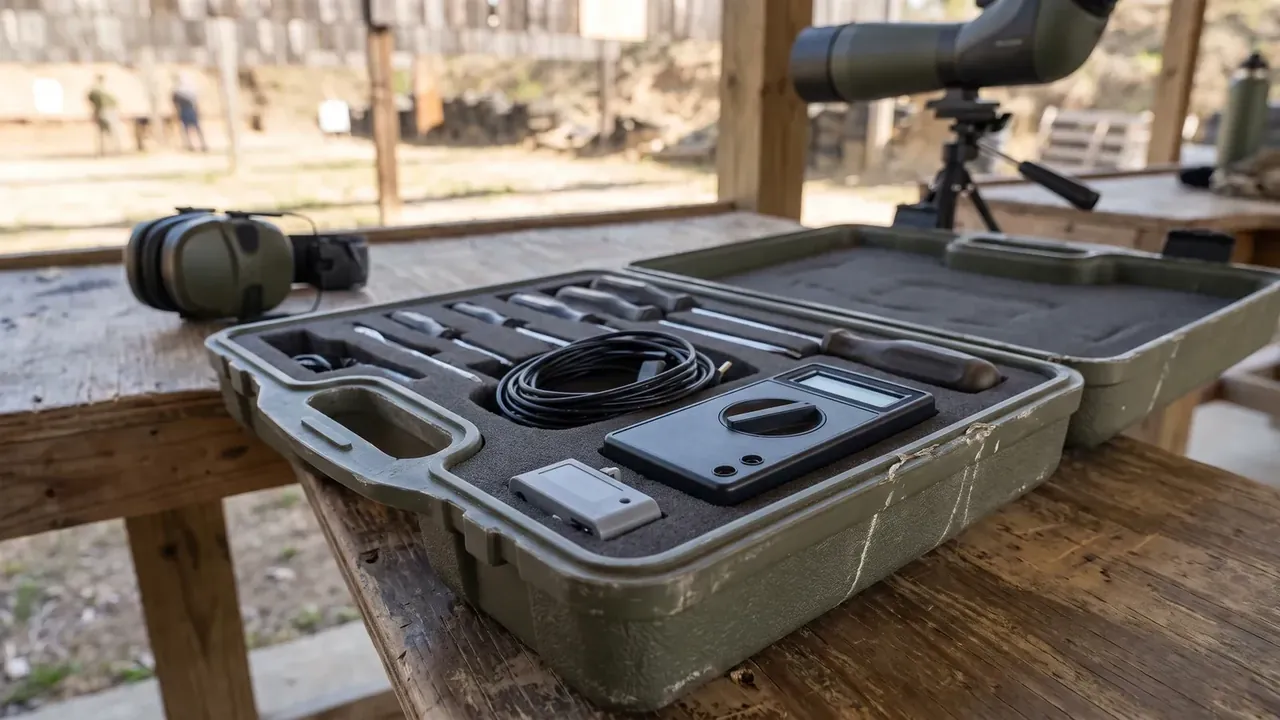
The pressure move is the one buyers skip. Sealing depends on a gasket in the lid groove, and a 0.3 mm difference in groove depth leaks. Left at 85% relative humidity for 30 days, a leaking inner box collects condensation and the protection is gone.
Conclusion
Thicker foam answers whether the load is cushioned; an inner box answers whether a second boundary exists at all. Four clearances set position, 12 mm sets shape, four moves set acceptance. Put those on the drawing and a plastic case with inner box protection stays what it claims to be.
This article discusses only the container (case body) side of specifications and design intent, and does not cover any handling, loading or use of the contents.
Related Reading
- Lining and fixing methods for equipment protection cases
- How to walk a case showroom and what to ask
- Cavity layout and gimbal clearance in drone cases
Related Products
- 8 Series — Gun Cases; Military Equipment Cases; Camera Equipment Cases; Drone Cases; Watch Cases; Knife Cases; First Aid Cases; Electronics Equipment Cases
- WL8-2812 PP Gun Case — model WL8-2812
- All protective cases and toolboxes: 7 series, 158 models