

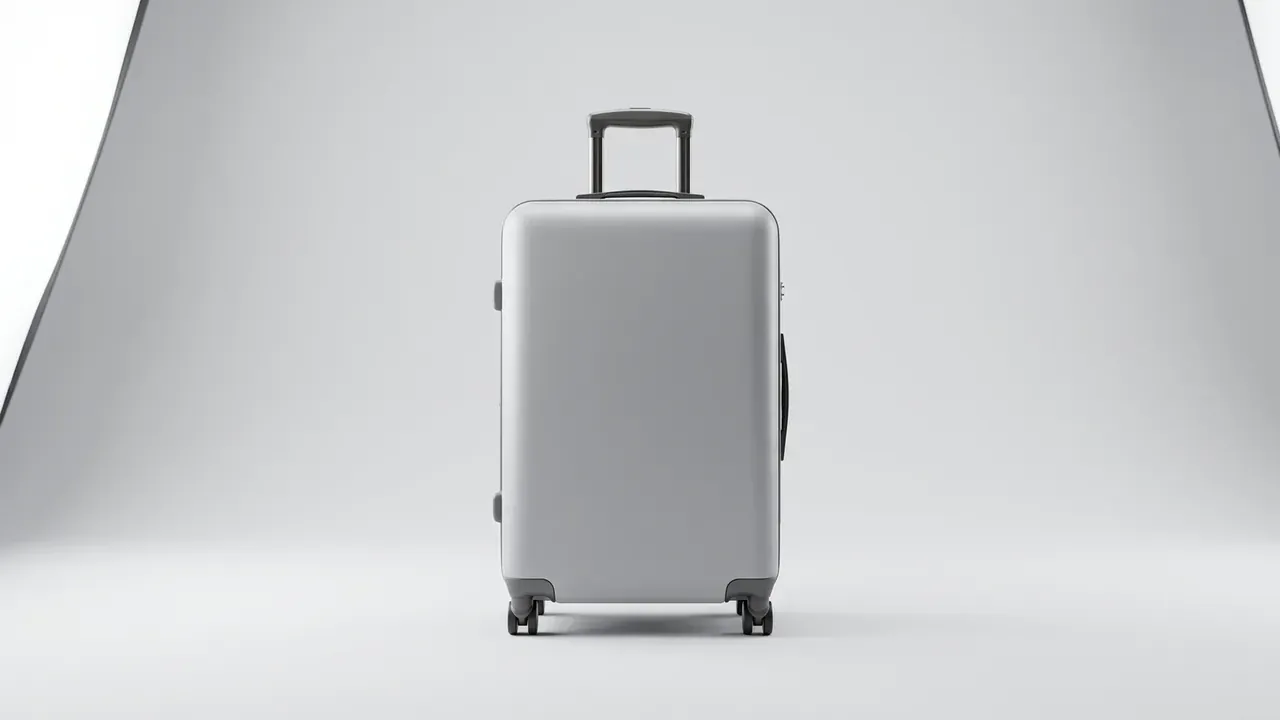
Quick answer: Read a plastic box size chart in three passes: inner size decides what fits, outer size what it clears, wall and material the stack.
Table of contents
- Reading the plastic box size chart by capacity tier
- Usable space and liner losses
- Two standard footprints
- Wall thickness, load and stack height
- Materials and a three-step routine
- FAQ
1. Reading the plastic box size chart by capacity tier
The first column of a plastic box size chart is capacity, not part number, and 5, 12, 25, 45, 75 and 120 litres cover most orders.
The gap is not wall thickness alone. Per side it runs 10 to 16 mm: a 1.2 to 5.0 mm wall, 4 to 6 mm of ribbing, draft and rim flange, so two 25 litre boxes can share an outer size and differ by 8 mm inside. A 20 ft unit at 2350 mm takes the 470 mm box five abreast.
| Tier | Outer LxWxH (mm) | Inner LxWxH (mm) | Weight (kg) |
|---|---|---|---|
| 5L | 282x202x132 | 260x180x110 | 0.42 |
| 12L | 374x274x164 | 350x250x140 | 0.78 |
| 25L | 470x340x205 | 445x315x180 | 1.35 |
| 45L | 572x412x242 | 545x385x215 | 2.10 |
| 75L | 674x484x284 | 645x455x255 | 3.20 |
| 120L | 782x562x336 | 750x530x305 | 4.60 |
2. Usable space and liner losses
Inner size means three numbers on any plastic box size chart: length and width across the mouth, depth from floor to rim, R8 to R15 corners excluded. A 445x315 cavity has a 545 mm diagonal.
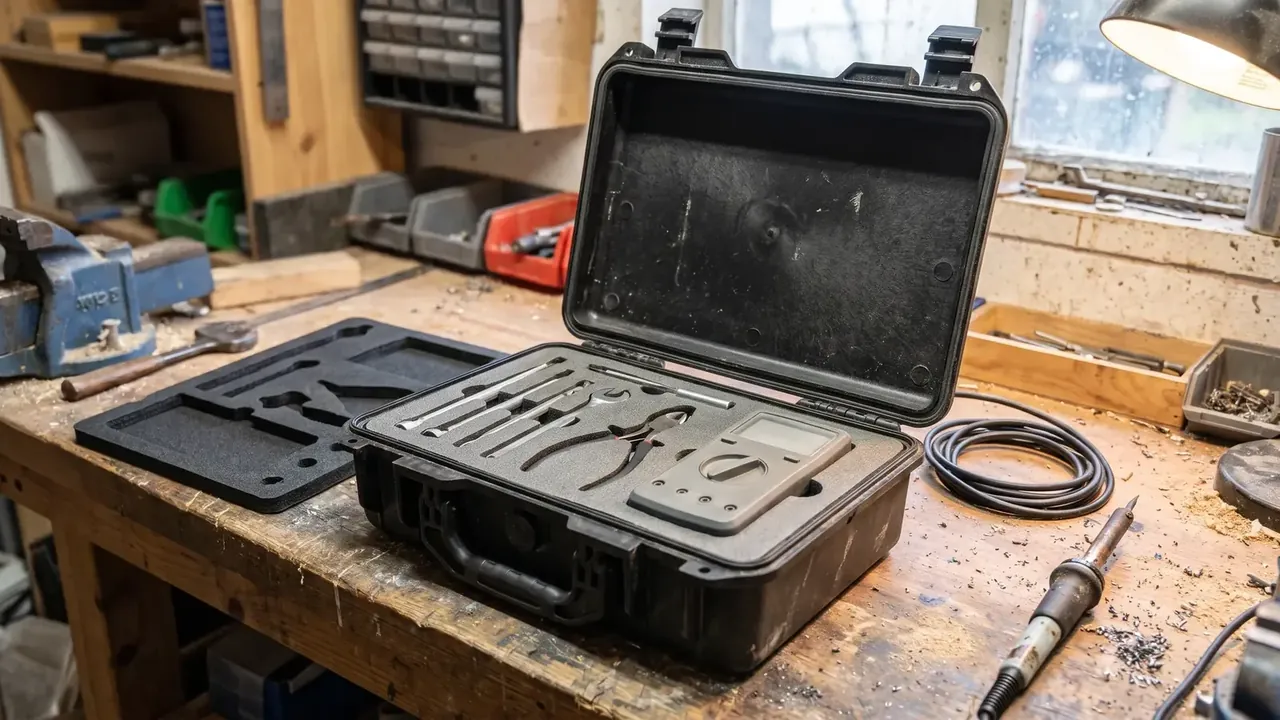
A liner takes back more: 20 mm per side and 15 mm on top shrink a 445x315x180 cavity to 405x275x140, cutting usable volume from 25.2 to 15.6 litres.
Dividers cost space too: three 2 mm boards take 10 mm per compartment.
3. Two standard footprints
Logistics works from footprint, not capacity. The 600x400 and 400x300 bases come from the European tote system; height is free in 120, 175, 220 and 280 mm steps.
| Series | Heights (mm) | Load (kg) | Layers | Per pallet |
|---|---|---|---|---|
| 600x400 | 120, 175, 220, 280 | 25 | 6 | 4 |
| 400x300 | 90, 120, 150, 180 | 15 | 8 | 10 |
| 800x600 | 150, 220, 280 | 30 | 4 | 2 |
A nominal 600x400 carries an 8 or 12 mm rim flange, and only the bottom layer takes load: six layers of 25 kg load the base with 150 kg.
4. Wall thickness, load and stack height
Wall thickness is the first variable in a plastic box size chart, not the only one: at 2.5 mm a ribbed base carries 30 kg, a flat base 18 kg.
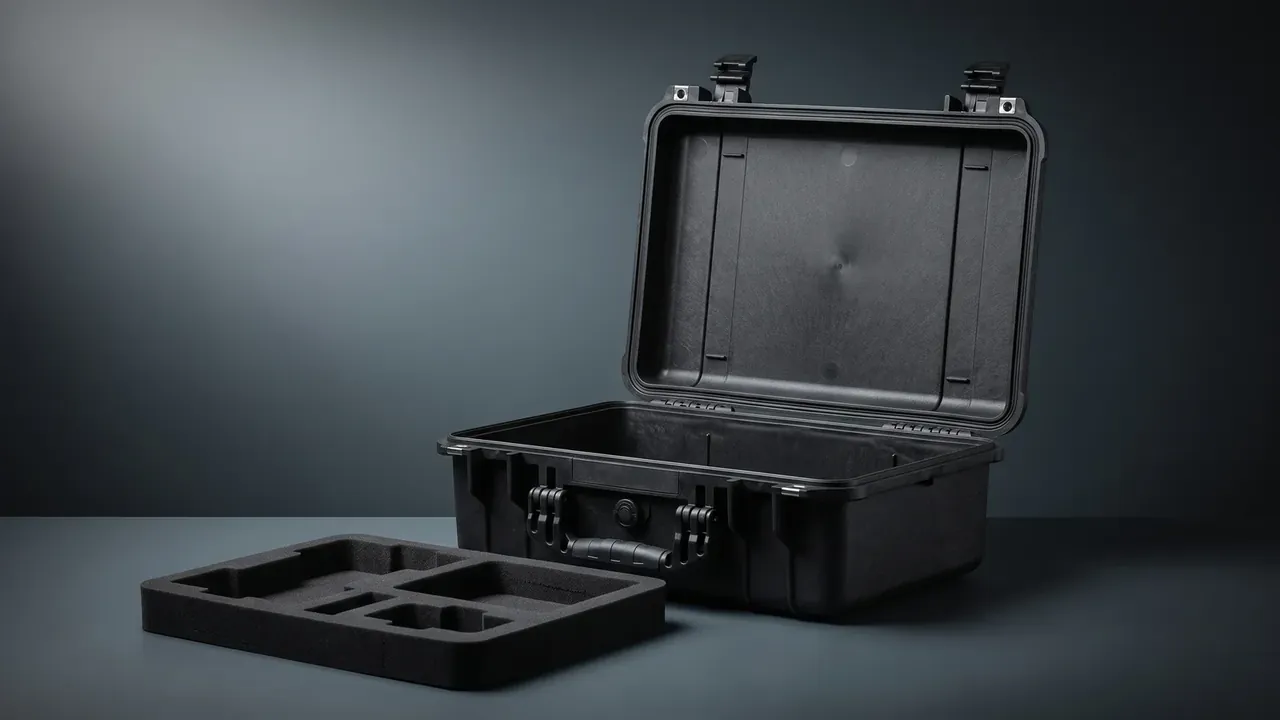
Stack height is set by the bottom layer: 30 kg over six layers puts 180 kg on the base, and a 2.5 mm floor creeps at 25 C, sagging 2 to 3 mm in three months. At 40 C rate a PP box at 70 percent of that load.
| Wall (mm) | Load (kg) | Layers | Drop (m) | Typical use |
|---|---|---|---|---|
| 1.2 | 8 | 3 | 0.8 | Light parts, one-way |
| 1.8 | 15 | 5 | 1.0 | Sorting bins |
| 2.5 | 30 | 6 | 1.2 | Workshop use |
| 3.5 | 60 | 5 | 1.5 | Cold chain |
| 5.0 | 120 | 4 | 1.8 | Export packing |
5. Materials and a three-step routine
PP is the workhorse: chemical resistant and cheap. HDPE suits cold stores, ABS gives stiffness, PC is clear where inspection matters, though it runs 25 to 35 percent heavier.
| Material | Temp (C) | Brittle (C) | Impact (kJ/m2) | Clarity | Cost |
|---|---|---|---|---|---|
| PP | -10 to 100 | -20 | 6 | Translucent | 1.0 |
| HDPE | -30 to 80 | -40 | 9 | Opaque | 1.1 |
| ABS | -20 to 85 | -25 | 12 | Opaque | 1.6 |
| PC | -40 to 120 | -50 | 35 | Clear | 3.2 |
The routine runs one way: cavity for the longest item plus 10 to 20 mm per side, then wall and material, then footprint against the pallet and van width.
Conclusion
Six tiers, three tables and one routine make a plastic box size chart you can quote from: cavity decides what goes in, outer size what it clears, wall and material the stack.
This article discusses only the container (case body) side of specifications and design intent, and does not cover any handling, loading or use of the contents.
Related Reading
- How to choose protective case dimensions
- PP versus ABS cases
- Stackable box specifications
- Choosing internal dividers
Related Products
- 8 Series — Gun Cases; Military Equipment Cases; Camera Equipment Cases; Drone Cases; Watch Cases; Knife Cases; First Aid Cases; Electronics Equipment Cases
- WL8-2812 PP Gun Case — model WL8-2812
- All protective cases and toolboxes: 7 series, 158 models