

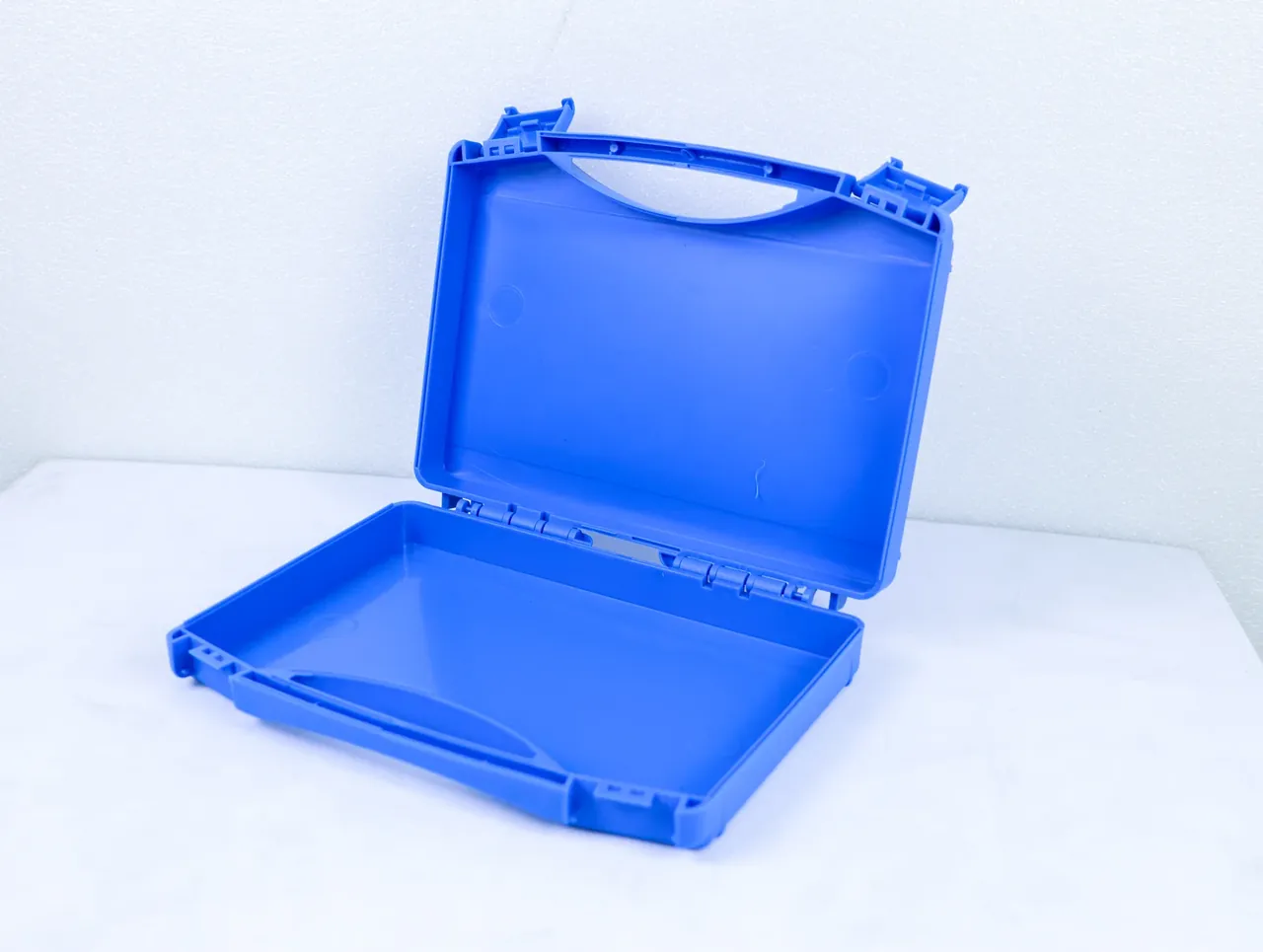
Quick answer: Inspect a large protective case in three passes: rim flatness and eye symmetry on the dock, stacking and drop tests on three samples, then a lot verdict at AQL 2.5. On a 26 kg unit, a 60 kg load for 24 hours followed by more than 1 mm of permanent set rejects the lot.
Table of contents
- Three measurements on the loading dock
- Stacking and lifting load checks
- Drop heights and the sampling decision line
- Quarantine, repair and re-inspection
- FAQ
1. Three measurements on the loading dock
The tail lift drops level with the floor and the door opens into vapour at minus eighteen. Four hundred large protective case units sit inside, each 26 kg gross and 1180 by 480 by 360 mm, and once they are racked nobody can tell which mould cavity made which unit.
Rim flatness first. Close the lid and run a 0.5 mm feeler gauge around the rim. If it slides in continuously for 30 mm, the gasket is no longer compressed and the seal is nominal only.
Then the lifting eyes, moulded into the shell on a large protective case. If the two centres differ by more than 3 mm in height, the slings load unevenly and the case swings off the floor. Measure three times.
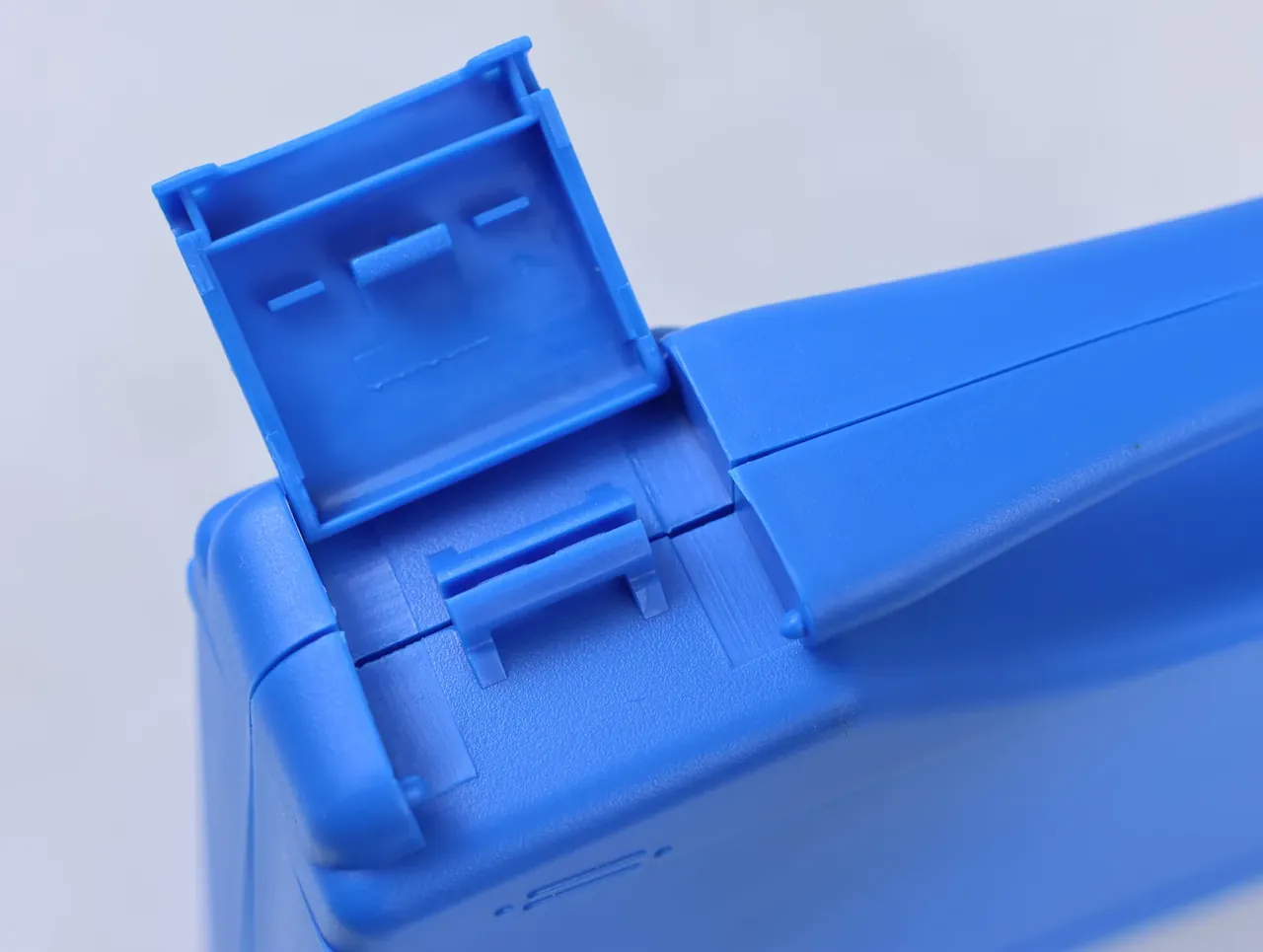
Last, pull each latch with a 10 kg spring scale along the opening direction: it must hold at 2 kg, may release at 5 kg, and must not fracture.
| Check | Instrument | Accept limit | Action if out |
|---|---|---|---|
| Rim flatness | 0.5 mm feeler gauge | 30 mm or less continuous | Pull 20 extra units |
| Lifting-eye symmetry | Steel tape | 3 mm or less | Scrap the unit |
| Latch retention | 10 kg spring scale | Holds at 2 kg | Re-latch and retest |
| Outer dimensions | Steel tape | Within plus or minus 4 mm | Concession needs sign-off |
| Whitening, flow lines | Visual at 500 lux | 2 marks per face | Log it |
2. Stacking and lifting load checks
Stacking runs on real units. Ballast three from one lot to 32 kg with sandbags, stack them three high, set a 60 kg counterweight on top and shim the corners with 5 mm rubber.
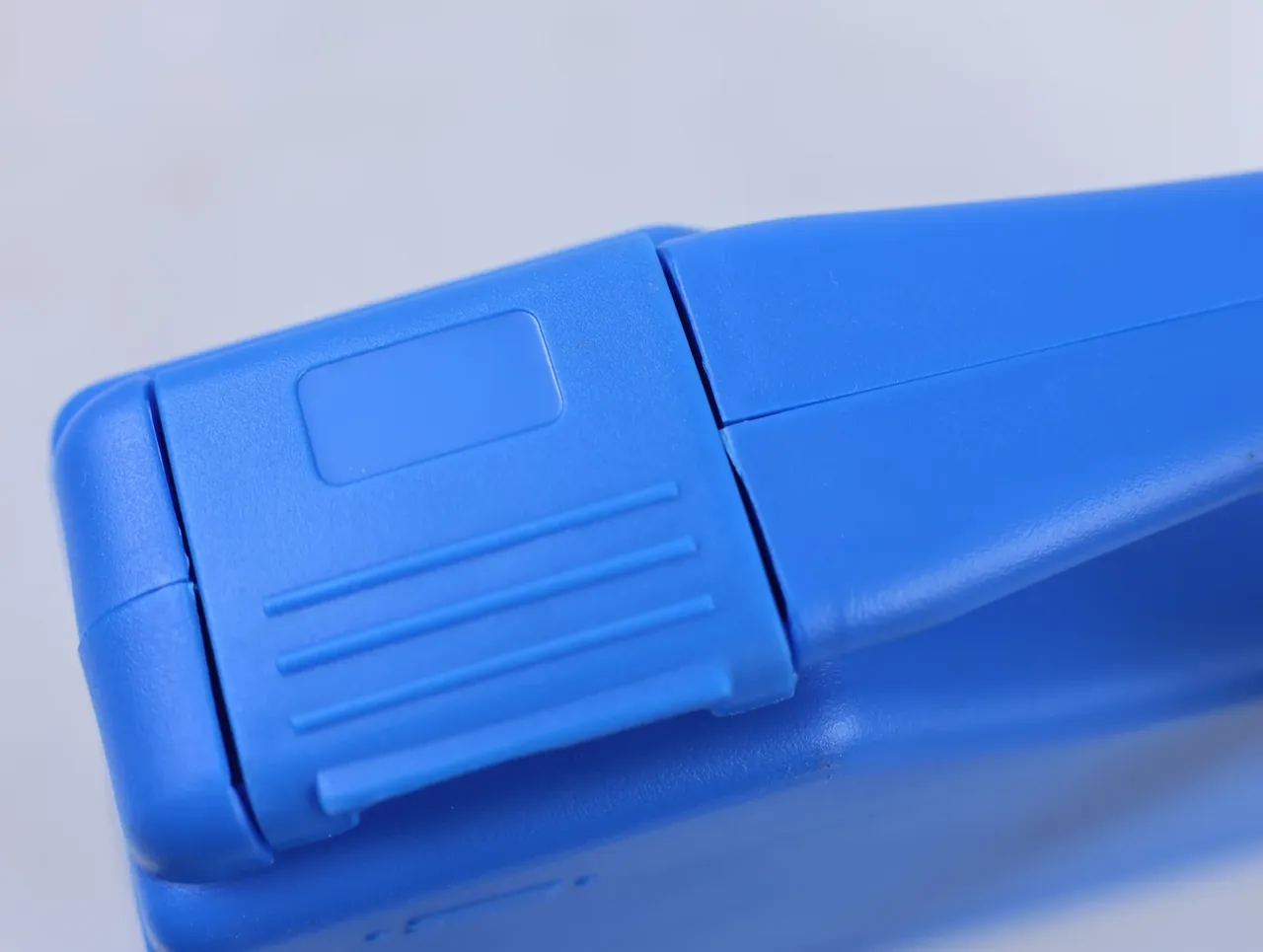
Unload after 24 hours and measure mid-wall bulge with a straight edge and feeler gauge: over 3 mm fails. Rest two hours and remeasure; over 1 mm of set also fails, because a shell that will not spring back is short of wall or ribs.
Lifting is simpler and far more dangerous. Hang two slings, keep the included angle under 60 degrees, lift 200 mm clear and hold five minutes. Static load per point is three times gross weight, so 78 kg on a 26 kg unit.
Whitening, hairline cracks or an eye stretched past 1 mm disqualify the whole set of points. At a 90 degree angle the load per point rises 1.4 times; at 120 degrees it doubles.
3. Drop heights and the sampling decision line
Impact energy tracks mass and height together, so the 1.2 m drop used on small cases does not transfer to 26 kg. Grading by gross weight holds up better:
| Gross weight | Face drop | Edge drop | Corner drop | Accept criteria |
|---|---|---|---|---|
| Up to 10 kg | 1.2 m | 1.0 m | 0.8 m | No through-crack, latches shut |
| 10 to 20 kg | 1.0 m | 0.8 m | 0.6 m | Same |
| 20 to 30 kg | 0.8 m | 0.6 m | 0.5 m | Same |
| Above 30 kg | 0.6 m | 0.5 m | 0.4 m | Same, plus hinge-pin shift |
Drop onto 25 mm steel plate on concrete. Each large protective case takes one corner, three edges and six faces, ten impacts, then twenty open-and-close cycles.
Sample to GB/T 2828.1, level II, AQL 2.5. A 400-unit large protective case lot lands on code letter H: 50 samples, acceptance number 3, rejection number 4. For structural items, cut 3 of those 50 open and measure the thinnest wall; below 85 percent of nominal fails. One failure triggers 6 more units, and a second failure rejects the lot.
4. Quarantine, repair and re-inspection
Do not ship a failed lot back on reflex. Mould cycles are long, and a return can idle a line for 20 days, at which point the late-delivery penalty exceeds the goods.
Four steps, each with a signature:
- Quarantine: red tag, separate pallet, never loaded beside accepted stock.
- Sort: cosmetic defects can be repaired, structural ones cannot.
- Repair: trim flash, keep wall thickness at 7 mm or above, air-test each touched unit at 0.3 bar for 3 minutes.
- Re-inspect: double the sample, sentence again at AQL 2.5, reject the lot if it fails.
Records outlast verdicts. Keep one sheet per lot: mould number, production date, inspector, instrument serials, measured values. When that mould ships again in three months, compare them. Latch retention sliding from 5 kg to 3 kg means the catch seat has worn at the root; rim flatness climbing from 0.3 mm to 0.6 mm means scale in the cooling circuit.
Conclusion
Accepting a large protective case is not fault-finding. It is turning fitness for use into numbers somebody can measure: 0.5 mm of rim gap, 3 mm of eye symmetry, 1 mm of residual set after 24 hours, four drop grades by weight. Quarantine first, sort second, repair only what is cosmetic, and keep the sheet, so every large protective case lot stays traceable from dock to rack.
This article discusses only the container (case body) side of specifications and design intent, and does not cover any handling, loading or use of the contents.
Related Reading
- How wall thickness, ribs and lifting points are set
- Factory inspection items and release limits
- How drop and sling tests are graded for airdrop cases
Related Products
- 8 Series — Gun Cases; Military Equipment Cases; Camera Equipment Cases; Drone Cases; Watch Cases; Knife Cases; First Aid Cases; Electronics Equipment Cases
- WL8-2812 PP Gun Case — model WL8-2812
- All protective cases and toolboxes: 7 series, 158 models