


Quick answer: Case latch lubricant comes in two routes: silicone grease holds feel down to −40 ℃ with an oil film, dry PTFE leaves an 8 μm film that sheds dust, and the gap shows in three months.
Table of contents
- Two routes for latch lubrication
- Silicone and its −40–200 ℃ range
- Dry film at 8 μm
- Dosage, interval and three bans
- FAQ
1. Two routes for latch lubrication
Put the same case in two hands, one with silicone on the latches and one with dry film, and three months later the feel differs by half. The silicone case still opens smoothly, with a grey film of dust across the latch body. The dry-film case opens a little stiffer, and the latch is clean enough to show its original black.
The two work differently. Silicone lays a 20–50 μm oil film between the metal latch and the PP seat, and that film fills the small clearance at the pivot, which is why it feels softest. Dry film carries PTFE particles in a solvent that flashes off, leaving an 8 μm solid layer that slides on itself; no oil means no tack.
Selection depends on three conditions: dust, temperature and cycles. Woodshops, concrete plants and open yards belong on dry film. Cold stores, high altitude and hot cabs belong on silicone. A case opened more than 8 times a day belongs on dry film, because an oil film gets squeezed out of the pivot.
Cost barely separates them. A 30 g silicone tube covers 25 cases at about 0.4 USD each; a 400 mL dry-film can covers 60 at 0.8 USD. Case latch lubricant choice never turns on that gap, but it does turn on rework and downtime.
The common failure is not picking the wrong one of these two but reaching for machine oil because nobody specified anything, which section 4 covers.
2. Silicone and its −40–200 ℃ range
Silicone grease is rated −40–200 ℃, and both ends earn their place. At −40 ℃ it still spreads instead of turning waxy, and at 200 ℃ it neither cokes nor runs away.
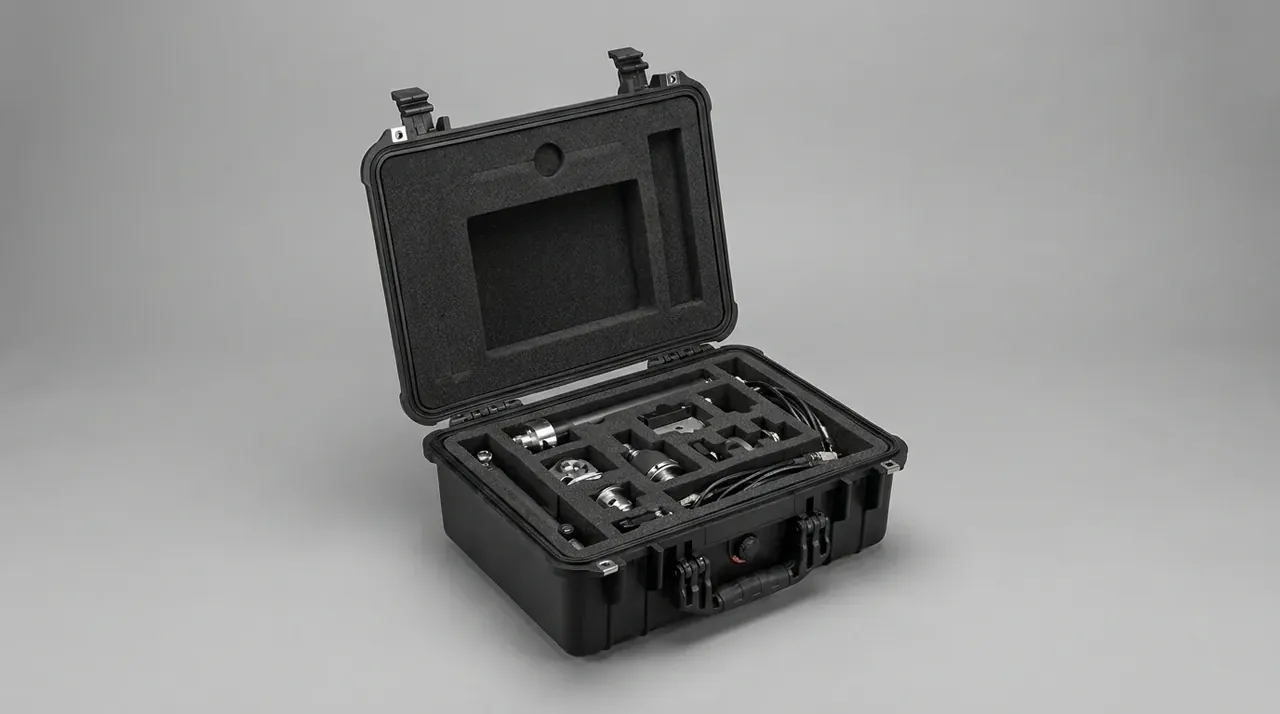
A wide range does not mean a constant feel. Viscosity follows temperature: at −20 ℃ the force to open a latch is 2.5 times the 25 ℃ figure, which reads as a stiff latch to anyone wearing thin gloves. Winter users regularly blame the latch for a problem that is only thickened grease.
Adhesion is where silicone wins. On a vertically mounted latch it stays put instead of creeping down, which mineral oil cannot do, and short rain does not wash it off.
The hot end needs watching. A closed cab reaches 70 ℃ in summer, silicone starts to bleed, and base oil creeps along the latch face until a small oil stain collects under the seat. The stain holds dust and travels down the wall to the gasket, which is where trouble starts.
| Temperature | Silicone opening force | Dry film feel | Field note |
|---|---|---|---|
| −40 ℃ | clearly heavier | slightly dry, still opens | reduce silicone dose |
| −20 ℃ | 2.5× the 25 ℃ figure | unchanged | dry film preferred |
| 25 ℃ | baseline | baseline | either works |
| 70 ℃ | slight bleed | stable | wipe the bleed |
| 120 ℃ | thinner paste | stable | dry film preferred |
| 200 ℃ | at the limit | stable | dry film only |
Placement decides whether the grease does anything: the pivot, the hook-to-seat ramp and the release-button track, three points that carry load, while grease on the outer face only collects dust.
3. Dry film at 8 μm
An 8 μm film is about a tenth of a human hair, thin enough not to change the latch fit, which is why dry film suits tight-tolerance hardware.
The anti-dust behaviour comes from the film: a PTFE surface stays dry, so dust settles rather than sticks, while grease holds particles until the layer thickens. In one woodshop over 30 days, the silicone latch carried 0.9 g of dust by weight and the dry-film latch carried 0.3 g, a factor of 3.
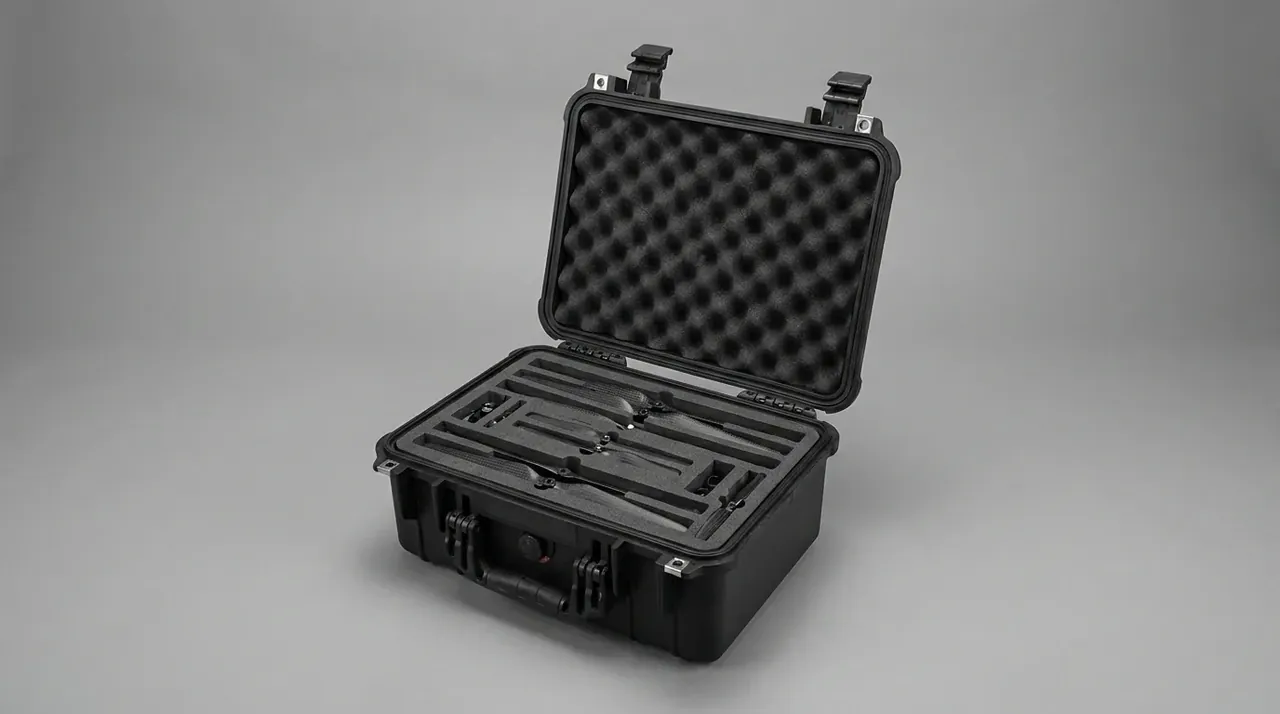
Dust plus grease makes lapping paste. Grit pressed into the film at every cycle works its way into the pivot and the pin bore, and because the abrasive never leaves, wear accelerates. Those latches typically go from 0.1 mm to 0.5 mm of play within 12 months, which shows up as a rocking latch on a service record that says lubricated on schedule.
The weakness of dry film is that it cannot repair itself. Once the layer wears through, nothing flows back, so the interval has to follow cycle count rather than feel. Recoating needs no cleaning beyond a wipe, since there is no oily residue to trap grit.
Dry film is also wrong where damping matters: it cuts friction without absorbing shock, so clatter is louder than with grease. Choosing case latch lubricant here trades feel for cleanliness.
4. Dosage, interval and three bans
Dosage is counted per point: 0.2 g each, three points per latch, 1.2 g across six points on a double-latch case. Silicone goes on with a 1 mL syringe, since 0.2 g is 0.2 mL you can read off the scale. Dry film takes a 2 s burst from a can, then 10 min of flash-off before the lid closes.
Interval follows the environment: 6 months as standard, 3 months in dust, 4 months for cases opened more than 8 times a day. All three count from cycles, with dust as an accelerator.
The first ban is mineral oil. PP under sustained mineral oil contact stress-cracks, and the latch seat is only 2.4 mm thick, so a crack starts at the screw hole and reaches 3 mm in 30 days. Machine oil, grease and general rust sprays all belong to this family. A thin film feels fine at the time, and the seat splits by mid-year.
The second ban is letting lubricant reach the gasket. Silicone swells the silicone cord by 3%–5%, lifting compression from 25% to 28% until the lid fights the latches, and dust-laden grease grinds fine grooves into the sealing face. Wipe it off with a dry cloth rather than trying to neutralise it with more lubricant.
The third ban is dry film over silicone. The solvent has to carry particles onto clean metal, and an oil layer underneath means the film is pushed out within half an hour, leaving oil that holds dust even better. Strip the old grease before switching routes.
Technique fails more often than dosage: dot the grease with a cotton swab, cycle the latch 3 times so it spreads through the pivot, then wipe the edges.
Conclusion
Case latch lubricant selection fits on one comparison table: temperature range, film thickness, dose, interval, dust pickup, migration and suitable environment. Silicone wins on −40–200 ℃ and on vertical adhesion, and loses on bleed, dust and travel to the gasket. Dry film wins on an 8 μm dry surface and a third of the dust at 30 days, and loses on self-repair and noise. The action items stay the same either way: 0.2 g per point, 6 months as standard, and none of the three bans crossed.
| Item | Silicone grease | Dry PTFE film |
|---|---|---|
| Range | −40–200 ℃ | −40–150 ℃ |
| Film | 20–50 μm oil | 8 μm solid |
| Dose | 0.2 g per point, 1.2 g per case | 0.2 g per point, 2 s burst |
| Interval | 6 months | 6 months, 3 in dust |
| Dust, 30 days | 0.9 g | 0.3 g |
| Migration | reaches the gasket | none |
| Best for | cold stores, wide swings | dust, high cycles |
This article discusses container-side specifications and design implications only, and does not cover any handling, loading or use of the contents.
Related Reading
Related Products
- 8 Series — Gun Cases; Military Equipment Cases; Camera Equipment Cases; Drone Cases; Watch Cases; Knife Cases; First Aid Cases; Electronics Equipment Cases
- WL8-2812 PP Gun Case — model WL8-2812
- All protective cases and toolboxes: 7 series, 158 models