

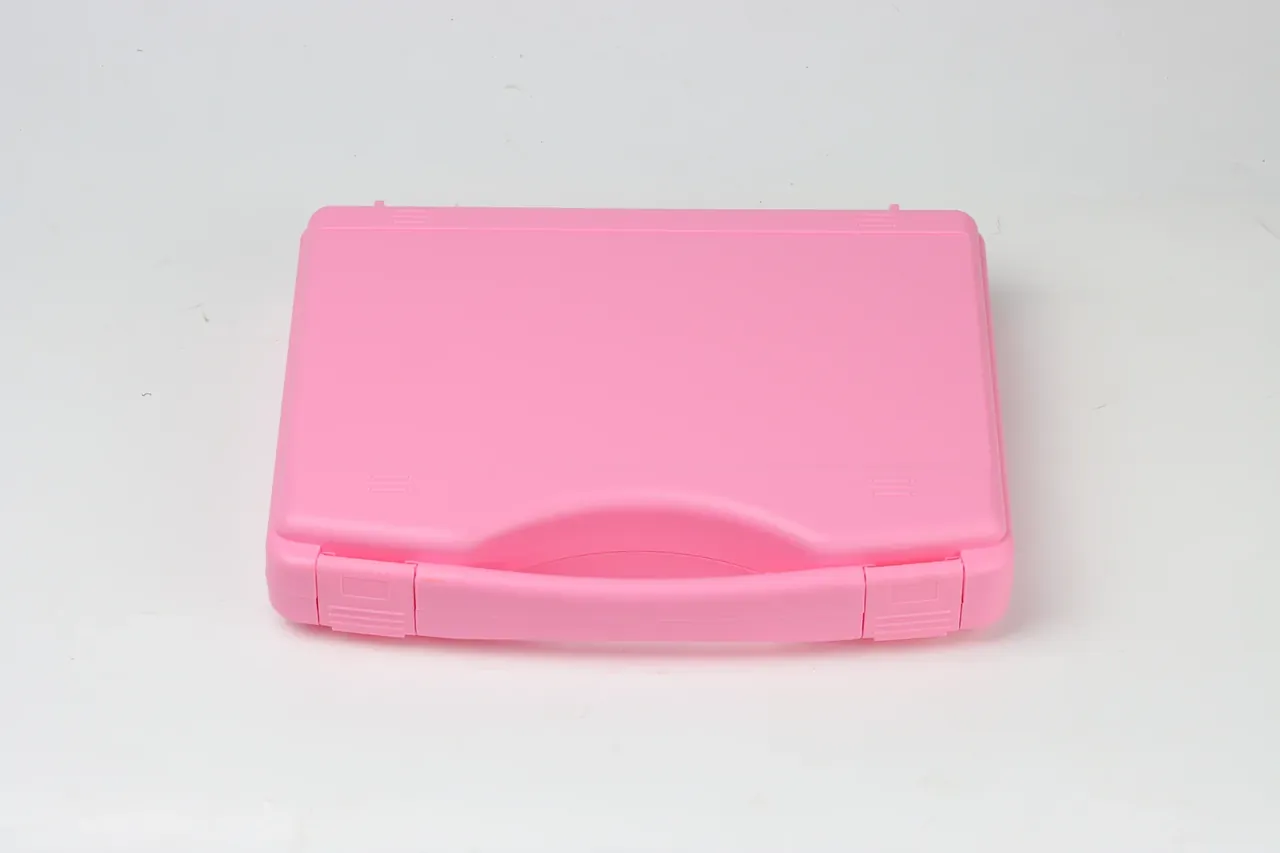
Quick answer: Case latch force is the peak pull measured at the lever tip as the latch closes. At 0.5 kg the hook carries only 94 N and the gasket sits at 12% compression, which stops a splash but not a soak; at 2 kg it carries 318 N and 26% compression, the working band for IPX7.
Table of contents
- Where the Force Comes From
- 0.5 kg vs 2 kg: Three Bench Runs
- Gasket Material Sets the Compression
- Three Side Effects of Too Much Force
- Measuring on the Line
- Writing the Number Into the Drawing
- FAQ
1. Where the Force Comes From
A latch does not lock a lid down; it compresses a gasket. The gasket pushes back, the hook takes that push, and the lever ratio turns it into the effort a hand feels. A 600 × 400 class case has a 1872 mm groove; an 8 × 4 mm silicone cord at 40 Shore A needs 0.17 N/mm at 25%, so the loop takes 318 N.
Two latches share it at 159 N each. The lever arm is 25 mm against a 3 mm hook arm, a ratio of 1:8.3, so the hand supplies 19 N, or two kilograms. Case latch force is not a convention; it falls out of perimeter, section and hardness.
| Gasket compression | Line load | Total on 1872 mm | Lever effort | Measured seal |
|---|---|---|---|---|
| 12% | 0.05 N/mm | 94 N | 0.5 kg | Splash only, 0.4 g through at 0.5 m for 30 min |
| 20% | 0.10 N/mm | 187 N | 1.2 kg | Rain passed, leak from minute 18 at 1 m |
| 26% | 0.17 N/mm | 318 N | 2.0 kg | Dry at 1 m for 30 min |
| 34% | 0.24 N/mm | 449 N | 3.0 kg | Dry, lid bows 1.1 mm at mid-span |
2. 0.5 kg vs 2 kg: Three Bench Runs
Fix the method before readings mean anything: a 0 to 50 N spring scale at 0.5 N divisions, hooked 25 mm from the pivot, pulled at 20 mm/s to the peak; three samples, three pulls per latch, median of nine, at 23 °C.
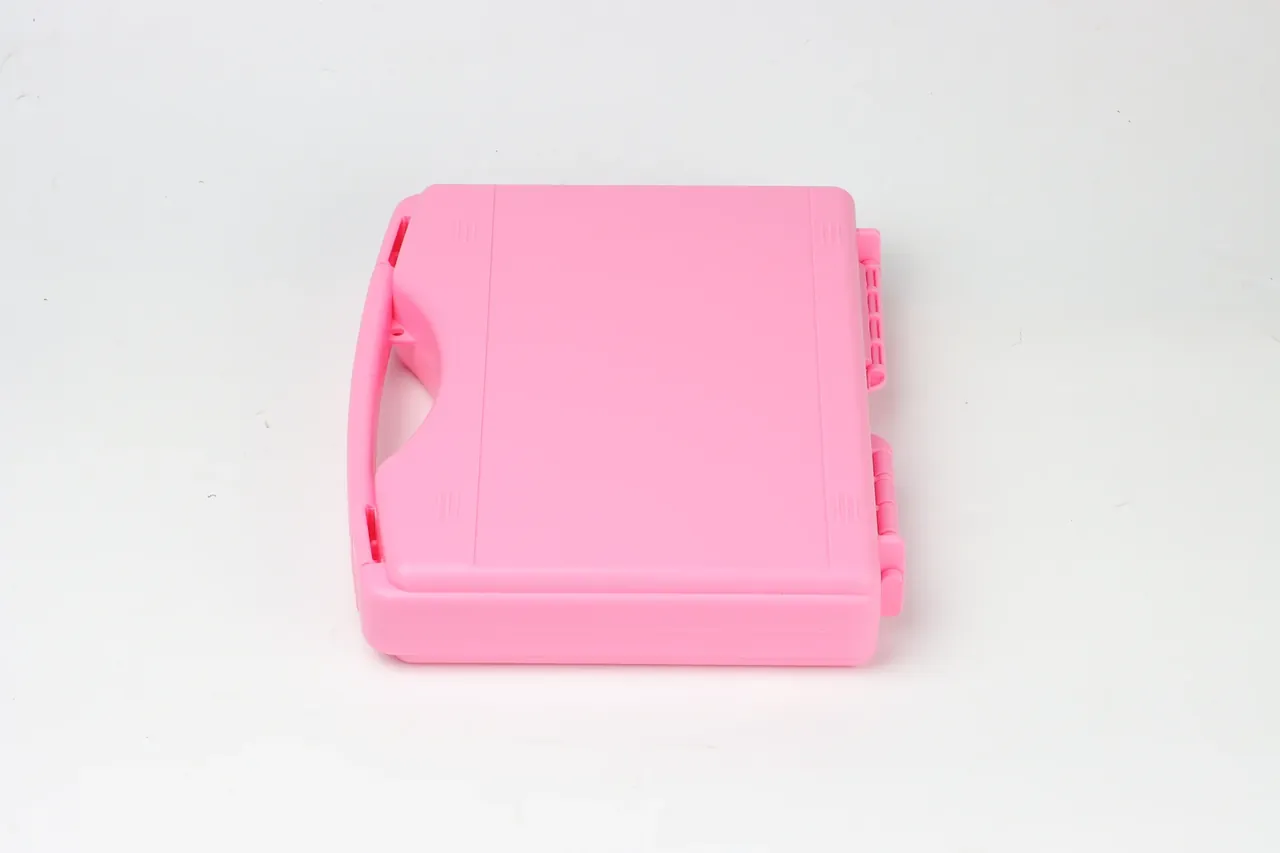
At 0.5 kg the readings sat between 4.5 and 5.2 N, compression 11% to 13%. Half a metre of water for 30 minutes put 0.4 g into absorbent paper and left a line along the inner lip. At 2 kg they were 18.6 to 20.1 N, compression 26%, and the paper gained nothing.
The band everyone skips is 1.2 kg: rain passes, the soak seeps at minute 18. Cases shipped at 1.2 kg and labelled IP67 fail here, because the case latch force reading looks respectable while compression stops at 20%.
An 8 mm cord gives 0.021 MPa of contact at 26% and 0.012 MPa at 20%; a one-metre head needs 0.010 MPa, so the reserve is 20% and one dished patch of lid eats it.
3. Gasket Material Sets the Compression
The same effort buys different compression by compound. Silicone holds a steady 26% at 40 Shore A; EPDM sponge flattens further and recovers slowly; TPE stiffens first in the cold.
| Compound | Set after 24 h at 70 °C | Hardness at -20 °C | Compression at 2 kg | Life |
|---|---|---|---|---|
| Silicone 40 Shore A | 12% | +6 points | 26% | 5 years |
| EPDM sponge | 18% | +11 points | 31% | 3 years |
| TPE 65 Shore A | 26% | +18 points | 24% | 2 years |
Past 20% set, compression must be written into the drawing. A TPE cord in year three drops from 26% to 19% while the lever still feels identical, and the failure gets blamed on the user.
4. Three Side Effects of Too Much Force
Push the number up and the problem moves from sealing to structure. The lid comes first: 0.4 mm of mid-span deflection at 2 kg, 1.1 mm at 3 kg. Both ends are pinned while the middle lifts, so the gasket is loosest where it must be tightest.
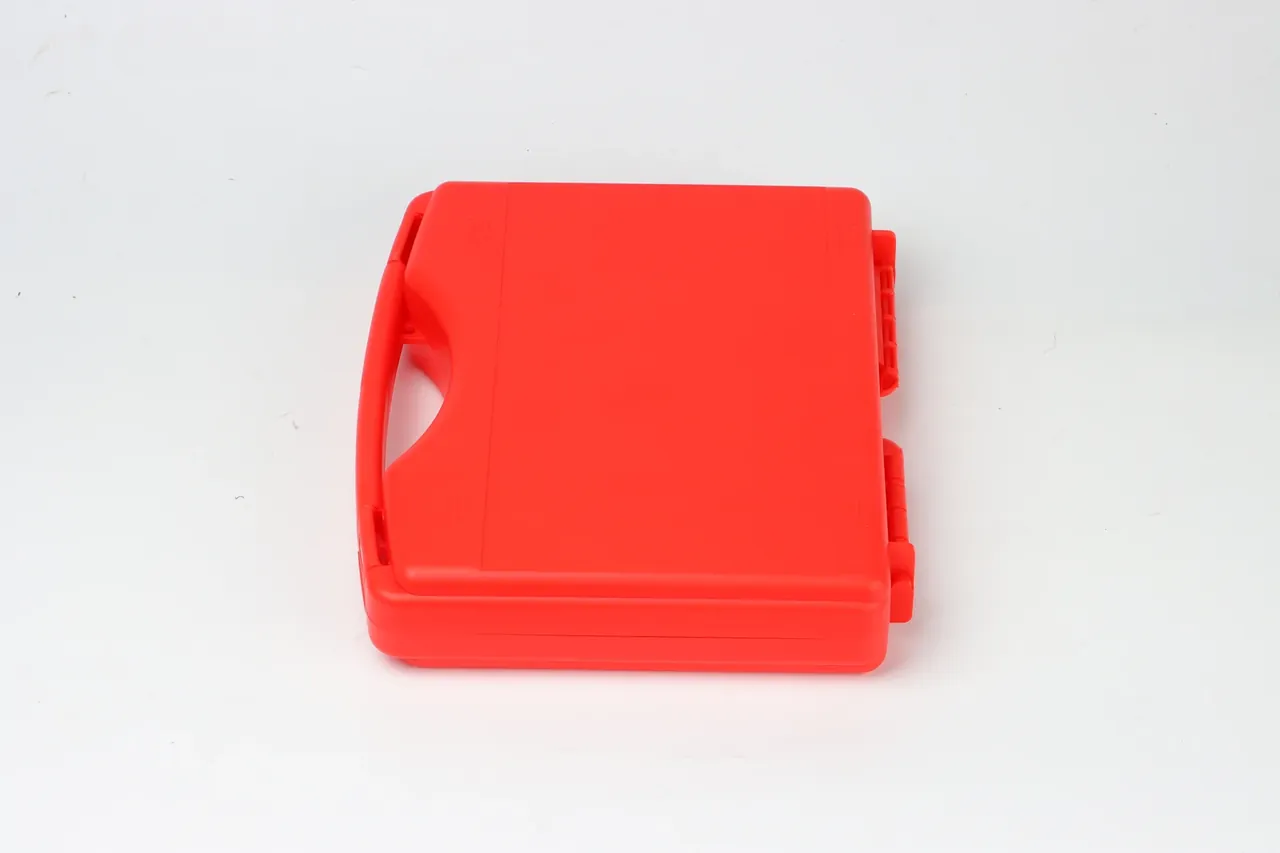
The hook comes second. A POM hook with a 3.2 mm root broke at 620 N. Two kilos puts 159 N on it, a factor of 3.9; three kilos puts 245 N, a factor of 2.5. After 500 closures the root whitens, and by 1000 there is an audible click.
People come third. In 3 mm gloves a hand controls about 25 N at the lever, already the ceiling at 2 kg. At -20 °C the silicone hardens six points and the case reads 2.9 kg, so crews pry with a screwdriver; more latches break that way than from gasket wear. Specify case latch force too high and repairs arrive before leaks do.
5. Measuring on the Line
Pin down three things: scale division, hook position, pull speed. Leave one loose and two operators read 0.4 kg apart on the same case.
| Check | Instrument and condition | Limit |
|---|---|---|
| Closing peak | 0–50 N scale, 25 mm from pivot, 20 mm/s | 2.0 ± 0.2 kg |
| Left-right spread | Same, three pulls each side | ≤ 0.3 kg |
| Hold after 500 cycles | Rig, one closure per 2 s | ≤ 10% loss |
| Immersion | 1 m, 30 min | ≤ 0.1 g gain |
Sample five per lot: two full protocol, three peak only. The first article gets the soak, then every other lot. If it fails, check gasket batch hardness first; grades vary 3 points between batches.
6. Writing the Number Into the Drawing
One sentence on the order: latch closing peak 2.0 ± 0.2 kg, measured 25 mm from the pivot at 20 mm/s, with an 8 × 4 mm silicone cord at 25% to 28% compression, whole case immersed 1 m for 30 minutes.
Add three clauses and the argument disappears: spread no more than 0.3 kg; hold no lower than 1.8 kg after 500 closures; single-hand closure still possible after four hours at -20 °C.
Sampling wants three cases and nine readings each, median inside 1.9 to 2.1. Thickening the hook root from 3.2 to 4 mm adds 0.35 CNY; glass-filled POM adds 0.6 CNY and lifts break load from 620 to 810 N.
Conclusion
Case latch force is a reading of gasket rebound, not a tightness contest. A 1872 mm groove, an 8 × 4 mm cord and 26% compression land at 2 kg on the lever; at 0.5 kg compression falls to 12% and 0.5 m of water gets through in 30 minutes.
This article discusses only the specification and design intent on the container (case) side, and does not cover any handling, loading or use of the contents.
Related Reading
- Latch and hardware specs for heavy-duty cases
- Stacking load and lid stiffness on stackable boxes
- Choosing a shipping case: load, seal, handling
- Foam insert thickness and compression
Related Products
- 8 Series — Gun Cases; Military Equipment Cases; Camera Equipment Cases; Drone Cases; Watch Cases; Knife Cases; First Aid Cases; Electronics Equipment Cases
- WL8-2812 PP Gun Case — model WL8-2812
- All protective cases and toolboxes: 7 series, 158 models