

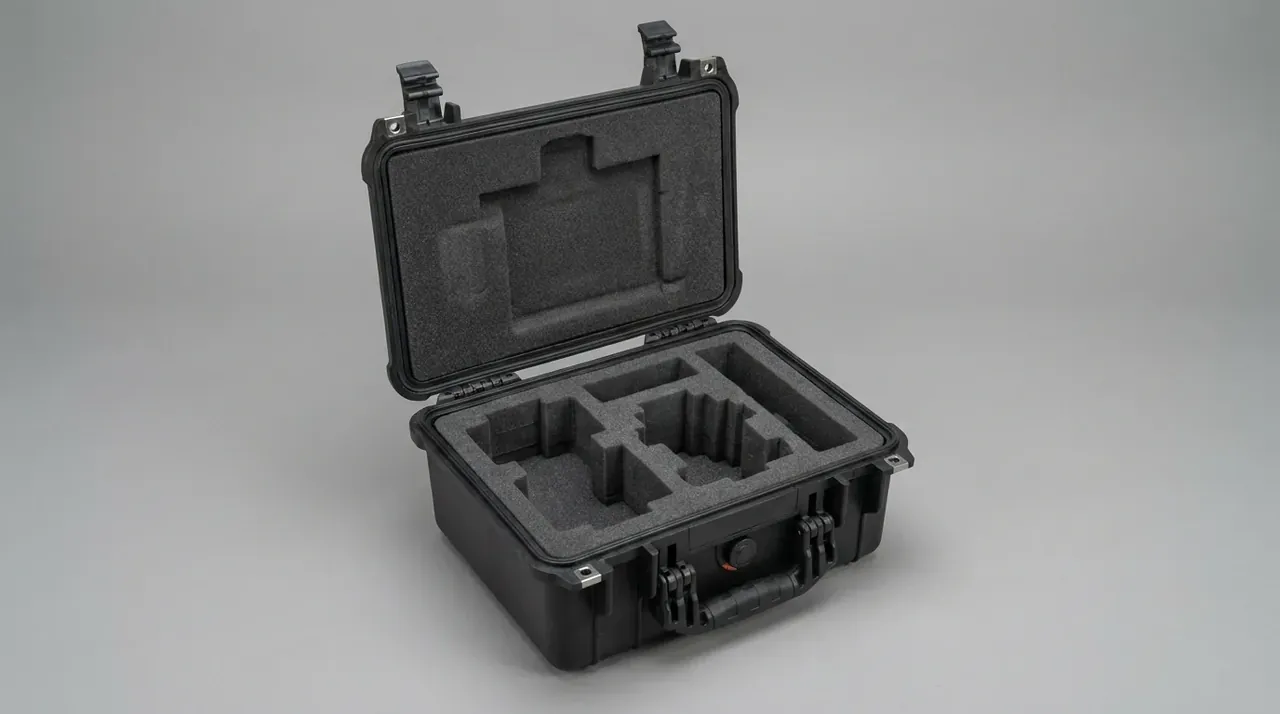
Quick answer: A rotomould tool comparison on one drawing: the imported cavity holds 0.16 mm of wall spread, the local tool 0.32 mm, and the gap is conduction.
Table of contents
- Splitting 45 days against 120 days
- Wall thickness spread: ±8% against ±4%
- Aluminium and steel
- Change response of 7 days against 30 days
- When the imported tool pays
- FAQ
1. Splitting 45 days against 120 days
A local rotomould tool runs a 45-day cycle and an imported one 120 days, and the missing 75 days sit in the node count, not in spindle speed: the local route presses review, machining, trials and sign-off onto one line, while import adds freight and a queue.
Broken out, 45 days is 5 of drawing review, 22 of cavity machining, 12 of three trial rounds and 6 of sign-off; 120 days is 10 + 45 + 21 + 30 + 14. Both run three trial rounds, so the waiting between them is the difference.
| Metric | Local tool | Imported tool | Gap |
|---|---|---|---|
| Tool price | 80,000 CNY | 260,000 CNY | 3.25 times |
| Tool cycle | 45 days | 120 days | 75 days more |
| Wall tolerance | ±0.5 mm | ±0.2 mm | 2.5 times |
| Tool life | 150,000 shots | 400,000 shots | 250,000 more |
The easiest stage to compress is the serial link between trials and sign-off. Start sign-off alongside the second trial round and the local tool drops from 45 days to 38; the import route takes only 4 days off because each round crosses a 7 h time difference, landing at 116.
Queue time is the part of an imported tool nobody controls: of its 45 machining days, 26 are on the machine and 19 wait for a slot or material, against 18 and 4 locally. That gap alone is half of the 45 against 120 difference.
Quote the cycle as nodes, not as one number: a single figure gives no way to tell whether a slip came from machining or trials.
2. Wall thickness spread: ±8% against ±4%
On a 4.0 mm nominal wall the imported cavity holds 0.16 mm between its thickest and thinnest points, the local tool 0.32 mm, and both figures come from the temperature map of the mould wall rather than from machining accuracy.
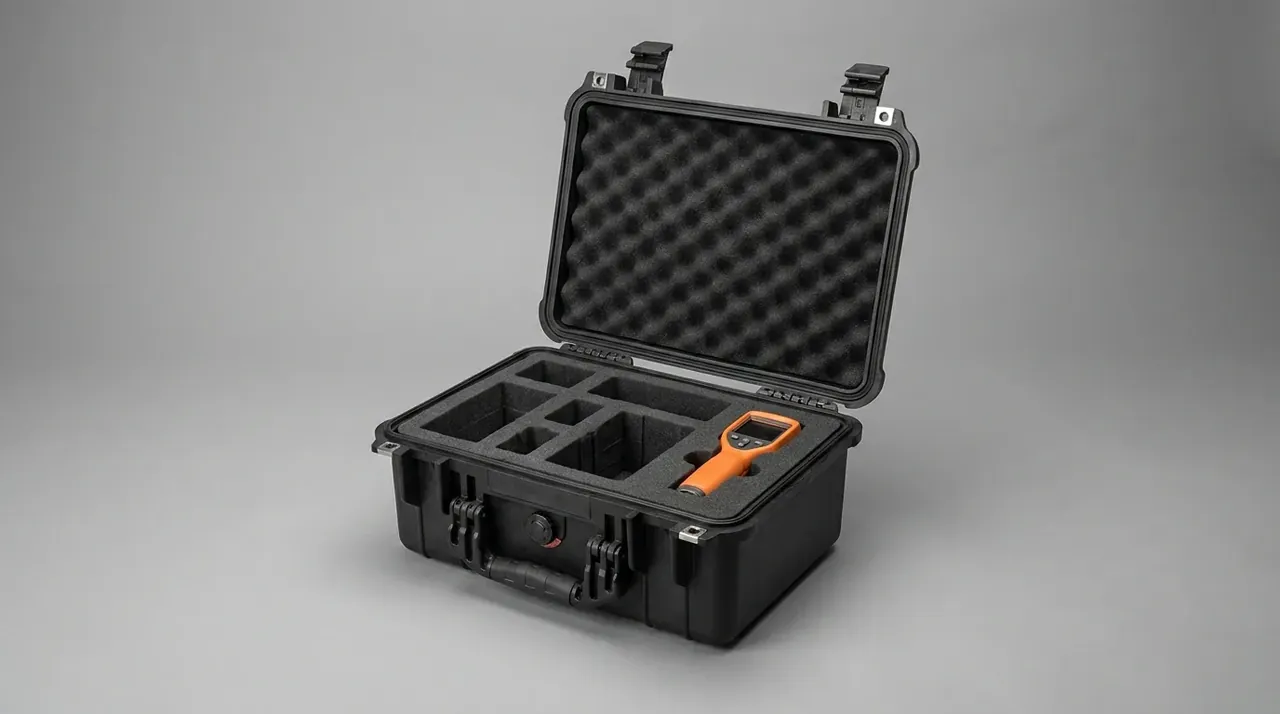
Conductivity sets that spread: aluminium runs near 160 W/(m·K) against 45 W/(m·K) for tool steel, so a fast wall evens out cavity temperature while a slow wall leaves the far face thin.
Tool wall thickness amplifies it: from 8 mm to 12 mm of wall the conduction path grows 50%, the cold-end spread widens from 5 K to 8 K and the range gains 0.06 mm.
The spread eats strength margin. A thin point of 3.68 mm on a 4.0 mm wall loses about 15% of its section modulus, and crack probability in a 1.2 m drop rises from 3% to 9%.
Inspection needs more than one part: pull 3 parts from a shot and take 9 wall readings each. A range of 0.16 mm marks imported quality, 0.32 mm local, and past 0.4 mm points at the tool.
3. Aluminium and steel
The 80,000 CNY local tier is steel, the 60,000 CNY tier is aluminium and the 260,000 CNY import tier is steel, so material moves conduction, expansion and repair together. Aluminium heats fast and holds a tight spread; steel holds size and lasts.
| Item | Aluminium | Steel |
|---|---|---|
| Conductivity | 160 W/(m·K) | 45 W/(m·K) |
| Expansion | 23×10⁻⁶/K | 12×10⁻⁶/K |
| Surface hardness | HB 95 | HB 180 |
| Tool life | 30,000 shots | 150,000 to 400,000 |
| Cavity repair | 4 h TIG plus 6 h dressing | weld plus 3 days of stress relief |
Expansion near double changes size stability. On a 600 mm cavity a 40 K rise stretches aluminium about 0.55 mm and steel about 0.29 mm, and both return on cooling, but aluminium returns less consistently: after 2000 shots flatness drifts 0.3 mm.
Repair shows up as downtime: a chipped aluminium corner takes 4 h of TIG and 6 h of dressing and is back the same day, while steel must be stress relieved, which costs 3 days.
Life is where steel wins: 30,000 shots for aluminium against 150,000 locally and 400,000 on import, which at 5000 parts a year is 6, 30 and 80 years.
4. Change response of 7 days against 30 days
A local change returns a sample in 7 days: 1 of weld repair, 3 of machining, 2 of trial and 1 of sample. The same change on import takes 30: 9 of scheduling, 12 of machining, 6 of freight and 3 of trial.
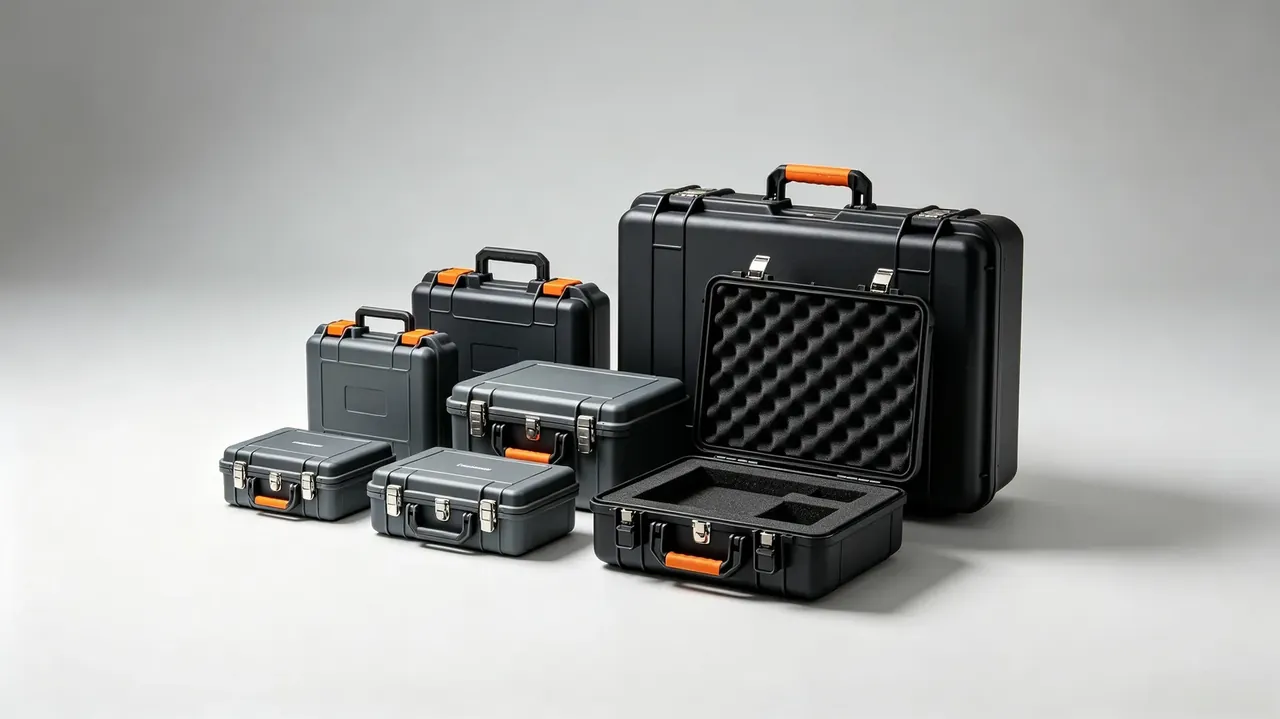
Accuracy after a change differs too: a local cavity returns to about 0.1 mm of drawing per change against 0.04 mm, so after three changes one holds 0.3 mm and the other 0.12 mm.
Count changes into the cycle at kick-off: a medium-complexity case averages three changes, 21 days locally and 90 on import, so a 60-day plan makes the imported tool late by the second change.
Changes carry their own clock: one rib is 7 days, one wall transition 9, one insert boss 12, and all three turn the imported 30 days into 40.
Cutting changes beats cutting time per change: freeze the 7 key dimensions, 3 corner radii and 2 wall transitions before the first tool and three changes become one, saving 14 days locally and 60 on import.
5. When the imported tool pays
Start with amortisation. The local 80,000 CNY over 150,000 shots is 0.53 CNY a part; the imported 260,000 over 400,000 is 0.65. That 0.12 CNY never repays 180,000, so an imported tool cannot be justified on amortisation, only on scrap.
Scrap is where the sums work: a ±8% tool carries about 2.1% scrap from thin walls against 0.6%, so at 68 CNY a part the 1.02 CNY on 8000 parts a year needs 22 years to repay 180,000.
An imported tool therefore pays when tolerance is written into the drawing: at ±0.3 mm a ±0.5 mm tool fails outright, while at ±0.5 mm the extra accuracy earns nothing.
Three thresholds cover most cases: a drawing tighter than ±0.3 mm, a part selling above 200 CNY where scrap loss exceeds the tool gap, or more than 20,000 parts a year with a 400,000-shot requirement. Miss all three and the local 45-day cycle is the advantage.
Three local weaknesses are acceptable: a ±8% spread is covered by 0.4 mm of margin, 150,000 shots covers five years, and 0.1 mm of drift leaves non-mating faces alone.
Conclusion
The rotomould tool comparison resolves on two numbers, drawing tolerance and annual volume. Under ±0.3 mm, above 200 CNY a part, or past 20,000 parts a year with a 400,000-shot requirement, the imported 260,000 CNY and 120 days earn their place; elsewhere the local 80,000 CNY and 45 days win, with ±8% spread, 150,000 shots and 0.1 mm drift covered by 0.4 mm of margin. What deserves attention is freezing key dimensions before the first tool and cutting changes from 3 to 1, which saves 14 days locally and 60 on import.
| Annual volume | Tool | Cycle | Wall spread | Tool life | Cost a part |
|---|---|---|---|---|---|
| Under 3000 | Local aluminium | 45 days | ±8% | 30,000 shots | 2.0 CNY |
| 3000 to 15,000 | Local steel | 45 days | ±8% | 150,000 shots | 0.53 CNY |
| 15,000 to 40,000 | Two local steel tools | 45 days | ±8% | 300,000 shots | 0.53 CNY |
| Above 40,000, tight tolerance | Imported steel | 120 days | ±4% | 400,000 shots | 0.65 CNY |
This article discusses container-side specifications and design implications only, and does not cover any handling, loading or use of the contents.
Related Reading
- What a rotomould tool costs
- Tool life and its replacement line
- Routine mould maintenance
- Controlling rotomoulded wall thickness
Related Products
- 8 Series — Gun Cases; Military Equipment Cases; Camera Equipment Cases; Drone Cases; Watch Cases; Knife Cases; First Aid Cases; Electronics Equipment Cases
- WL8-2812 PP Gun Case — model WL8-2812
- All protective cases and toolboxes: 7 series, 158 models