


Quick answer: Care of a Case Mould is triggered by three measurements: a 0.05 mm feeler at the parting line, 0.10 mm of ejector clearance and a 3 °C water split. Cross any and the press stops, far cheaper than repairing flash.
Table of contents
- The Three Wear Lines in a Case Mould
- Four Numbers to Write Down Every Shift
- Cleaning Order for Parting Line and Cavity
- Water Circuit: Scale Removal and Flow Limits
- Replacement Limits for Ejectors and Guides
- Four Moves That Take 300,000 Shots to 500,000
- FAQ
1. The Three Wear Lines in a Case Mould
A Case Mould fails in a fixed order: parting line, then ejector bores, then the cavity.
| Location | Limit | Check interval | What follows if ignored |
|---|---|---|---|
| Parting line | 0.05 mm feeler enters | 5,000 shots | Flash to 0.4 mm |
| Ejector pin and bore | 0.10 mm clearance | 10,000 shots | Whitening, punch-through |
| Leader pin and bush | 0.08 mm clearance | 10,000 shots | 0.2 mm offset gouges cavity |
| Sprue bush bore | 0.15 mm of wear | 20,000 shots | Stringing, 6 s added |
The parting line fails on the rest blocks, not the sealing face: 0.02 mm short, and clamping force crushes the edge. Ejector bores come second, where melt past 0.10 mm cures into a ring the next ejection scrapes.
2. Four Numbers to Write Down Every Shift
Daily inspection needs no teardown, only four readings: clamping force, mould temperature, water split, cycle time.
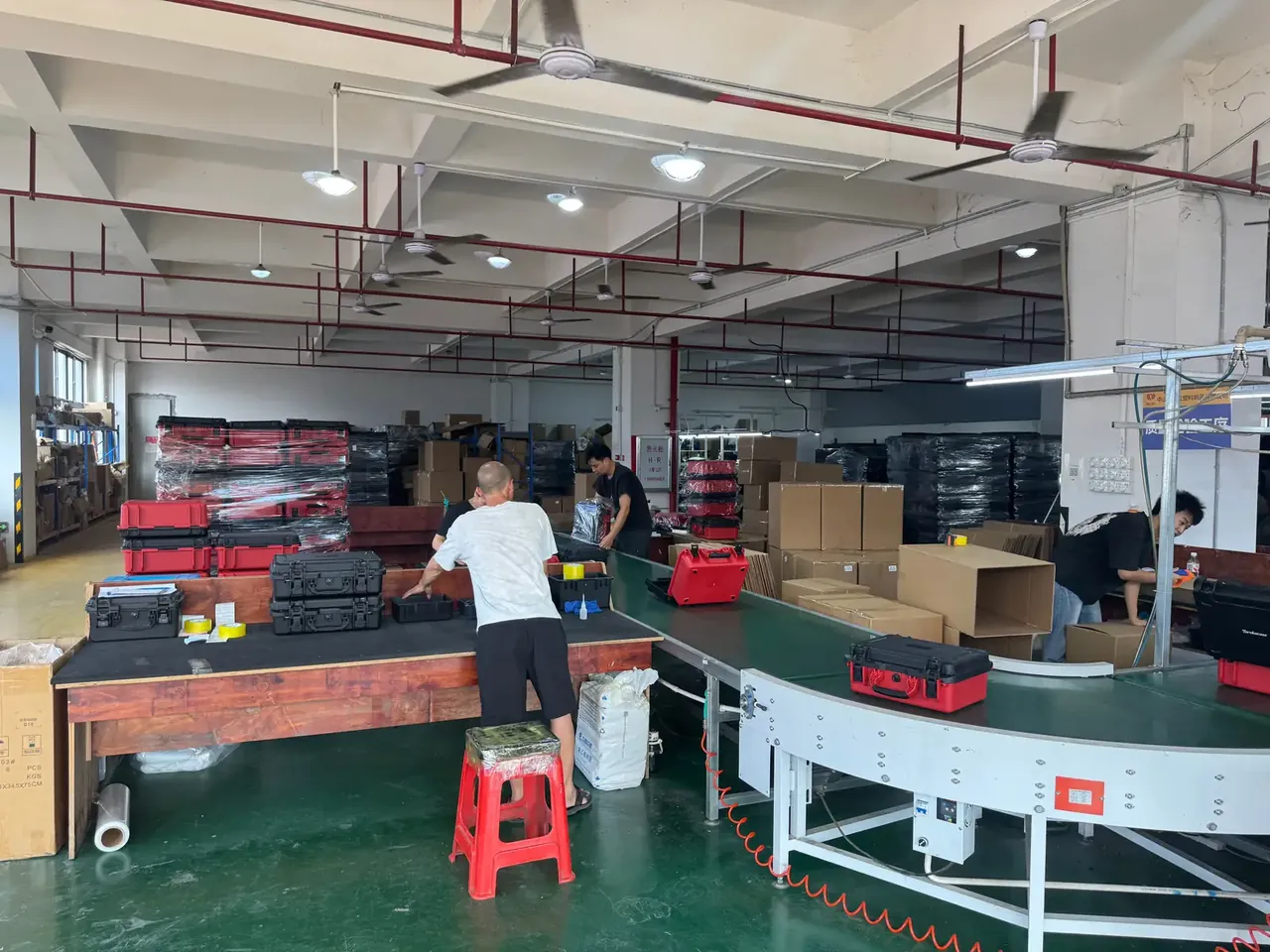
Clamping force holds within 3 percent: 590 to 610 t on a 650 t press, and below 560 t check oil temperature.
Mould temperature follows the resin: PP at 40 to 60 °C, ABS at 60 to 80 °C, and 8 °C under setpoint means restriction.
The water split is the most useful of the four: 3 °C healthy, 6 °C half the flow gone, 8 °C a blocked channel.
A cycle gaining 3 seconds is rarely the press, and plotted per shift the fault seldom survives two days.
3. Cleaning Order for Parting Line and Cavity
Wrong order damages a tool more than skipping the job. Six steps apply whenever a Case Mould leaves the press.
- Lock out power, wait for 60 °C; solvent on a hot cavity starts cracks.
- Blow the parting line with 0.4 MPa air, inside out.
- Scrape resin with copper; abrasives never touch the parting line.
- Wipe the cavity with anhydrous ethanol; acetone hazes polish.
- Apply rust preventive at 5 μm and store closed with a 2 mm gap, or springs stay loaded.
The routine takes 40 minutes. Shops that skip step four polish again within three months.
4. Water Circuit: Scale Removal and Flow Limits
The water circuit never alarms; it just stretches the cycle until scale reaches 0.2 mm.
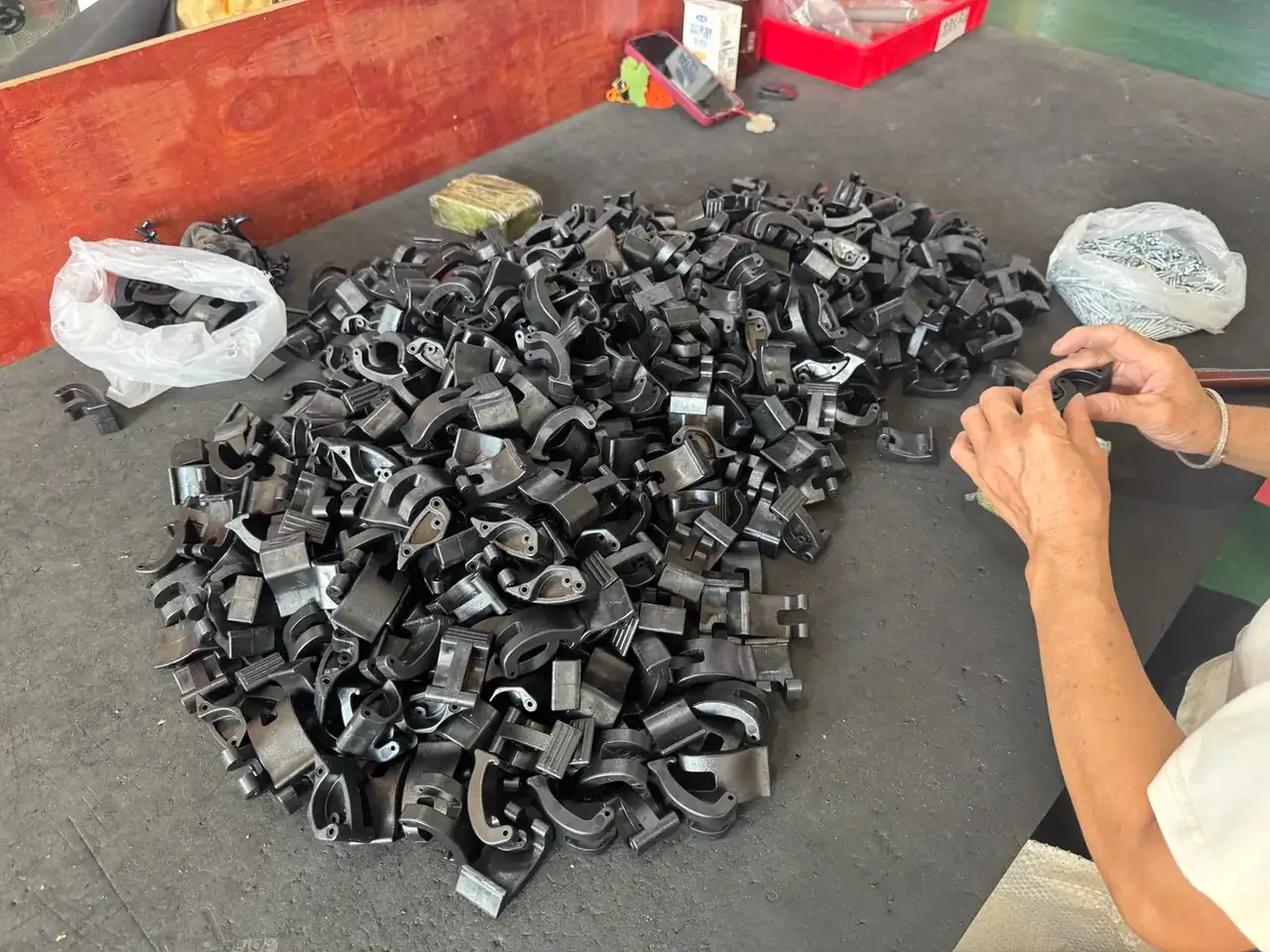
Two readings decide it: flow per circuit and the temperature split. A 10 mm channel should carry 8 L/min; below 5 L/min it needs descaling.
Descaling needs no teardown: circulate 5 percent citric acid at 40 °C backwards for 40 minutes, then flush to neutral pH.
After descaling, flow returns to 8 L/min and the split to 3 °C, winning back 4 to 6 seconds a shot.
5. Replacement Limits for Ejectors and Guides
Ejectors and guides are consumables: replace on dimensions, not feel.
| Part | New-part baseline | Replacement limit | Stock ratio |
|---|---|---|---|
| Ejector pin, 6 mm | 0.02 mm straightness | 0.3 mm wear | 20 percent |
| Leader pin, 25 mm | 58 HRC surface | 0.08 mm bush clearance | 2 per tool |
| Leader bush | H7 bore | 0.05 mm oversize | 2 per tool |
| Return spring | Length on record | 5 percent shorter | 4 per tool |
| Nitrogen cylinder | 120 bar precharge | 108 bar | 1 per tool |
A 6 mm pin worn 0.3 mm loses a tenth of its section and bends, scraping its own bore. Leader pins and bushes go in pairs, or a new pin wears a band and clearance returns to 0.08 mm in a fortnight. Nitrogen at 120 bar down to 108 bar drops ejector force a tenth and crowns thick walls.
6. Four Moves That Take 300,000 Shots to 500,000
A Case Mould rated for 300,000 shots often reaches 500,000 if four moves happen early.
Inserts come first: rest blocks, sprue bush and ejector-plate bushes become replaceable, cutting a repair from three days to four hours.
Second, log three service levels: gauge at 5,000 shots, measure clearances and torque bolts to 45 N·m at 20,000, polish at 100,000.
Third, control the water. Softened water under 200 μS/cm and a quarterly filter change keep the cycle from drifting.
Fourth, control storage: below 60 percent relative humidity, closed with a 2 mm gap, rotated quarterly so leader pins stay evenly loaded.
Inserts cost most and pay back fastest: converting at 300,000 shots usually buys another 200,000.
Conclusion
Care of a Case Mould is measurable: three wear lines give the stop signal, four readings give the trend, water and ejector parts set the ceiling on life. Post the limits beside the press, and 500,000 shots from a 300,000-shot Case Mould becomes normal rather than lucky.
This article discusses only the container (case body) side of specifications and design intent, and does not cover any handling, loading or use of the contents.
Related Reading
- How the service logic of a case mould breaks down
- Annual care points for war reserve cases
- Hard shell suitcase care and replacement lines
- Rust prevention order for metal ammunition boxes
- Injection machine care and mould downtime
Related Products
- 8 Series — Gun Cases; Military Equipment Cases; Camera Equipment Cases; Drone Cases; Watch Cases; Knife Cases; First Aid Cases; Electronics Equipment Cases
- WL8-2812 PP Gun Case — model WL8-2812
- All protective cases and toolboxes: 7 series, 158 models