

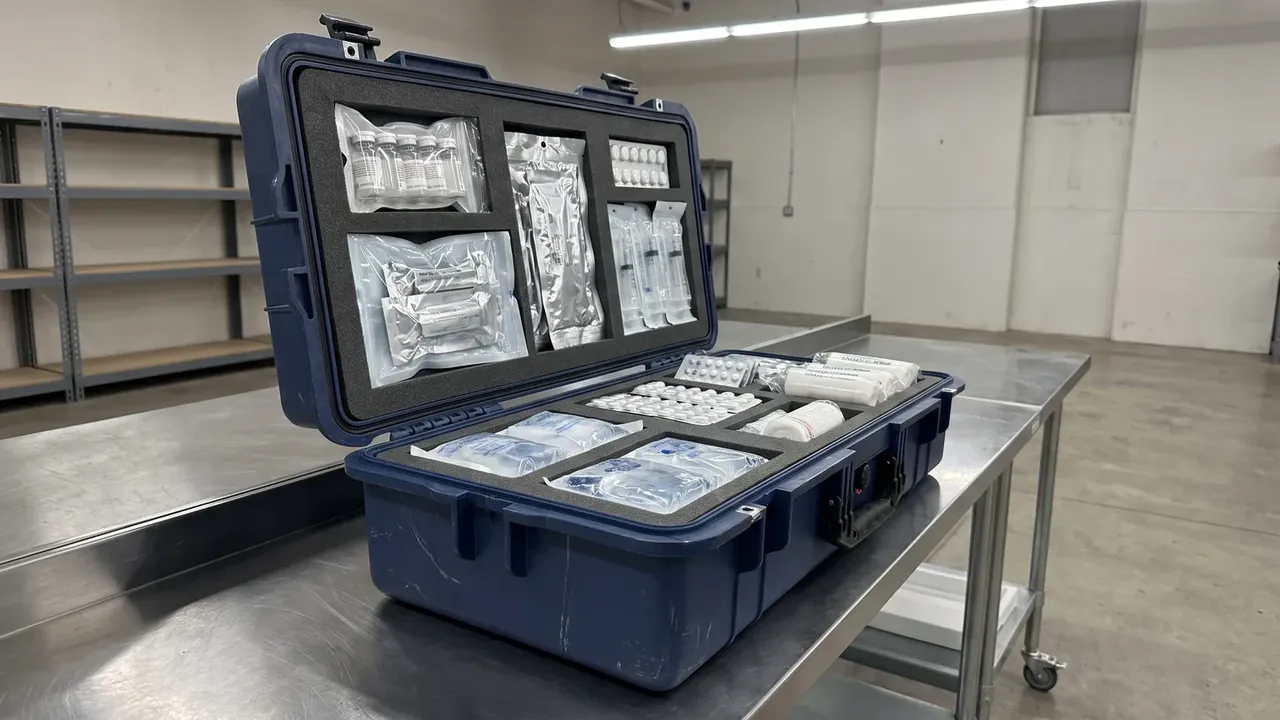
Quick answer: A logistics support box is maintained against four numbers, not age: inspection tier, latch and hinge clearance, gasket compression, crack length. A pin worn to 4.4 mm or a hinge gap past 1.2 mm means a part swap. A crack past 80 mm means retirement.
Table of contents
- Four inspection tiers set by deployment intensity
- Latches and hinges: measuring wear, setting the swap point
- Gaskets: compression and ageing as two separate gates
- Cracks: stop-drill first, reinforce second
- The write-off line: repair, replace or retire
- FAQ
1. Four inspection tiers set by deployment intensity
Intervals cannot be spread evenly across a calendar: a logistics support box that rides with a convoy daily and one sealed in a store age at different rates. The schedule follows deployment intensity, set by monthly sorties, load factor and outdoor exposure.
| Tier | Deployment | Visual check | Full inspection |
|---|---|---|---|
| A | Daily sorties | Every return | Every 7 days |
| B | Two or three a week | Every 30 days | Every 90 days |
| C | Once a month | Every 90 days | Every 180 days |
| D | Stored | Every 180 days | Every 12 months |
A tier is not permanent: rising sorties push a box up, storage drops it down, and the drop triggers a full inspection.
2. Latches and hinges: measuring wear, setting the swap point
Latches and hinges take load every cycle and fail as clearance, not damage.
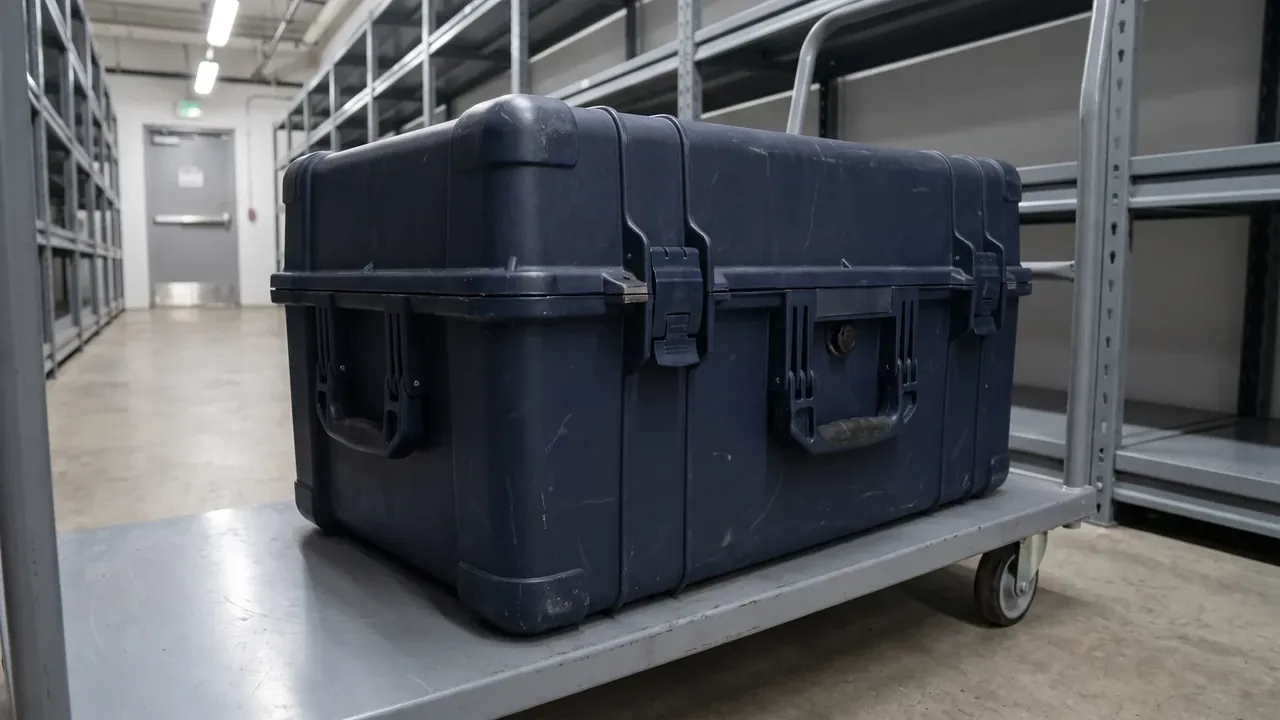
A new pin measures 5 mm; at 4.4 mm the clamp force falls and the box pops open on rough ground. A keeper bore 0.8 mm out of round takes the whole keeper.
Hinges: a 1.2 mm feeler entry means loose, and a lid edge sagging past 4 mm no longer aligns with the bore.
| Item | Gauge | New value | Replacement limit |
|---|---|---|---|
| Latch pin | Vernier caliper | 5 mm | 4.4 mm |
| Keeper bore | Inside micrometer | 0.1 mm roundness | 0.8 mm ovality |
| Hinge clearance | Feeler gauge | 0.3 mm | 1.2 mm |
| Lid free sag | Steel rule | 0 mm | 4 mm |
Wear is not linear: the first 2000 cycles carry sixty per cent of pin loss, so a new box is checked at 500 cycles.
3. Gaskets: compression and ageing as two separate gates
On a logistics support box the gasket has two failure modes that do not arrive together: compression decides today's seal, ageing the remaining life.
The solid cord stands 12 mm free and sits at 7.0 to 7.5 mm when latched, 37 to 42 per cent compression. Under 6 mm it has collapsed; above 9 mm there is too little clamp force. Hardness past 73 Shore A against a new 65, or a compression set over twenty per cent after 24 hours at 70 degrees Celsius, retires the cord.
Replacement is the full length, never a splice. A 0.5 mm feeler run around the channel finds the leak points in a minute.
4. Cracks: stop-drill first, reinforce second
Three crack classes, three answers. Crazing under 0.3 mm is cosmetic: sand and polish. A through-wall crack is structural. Rib-root cracks of a logistics support box are the worst, arriving in strings.
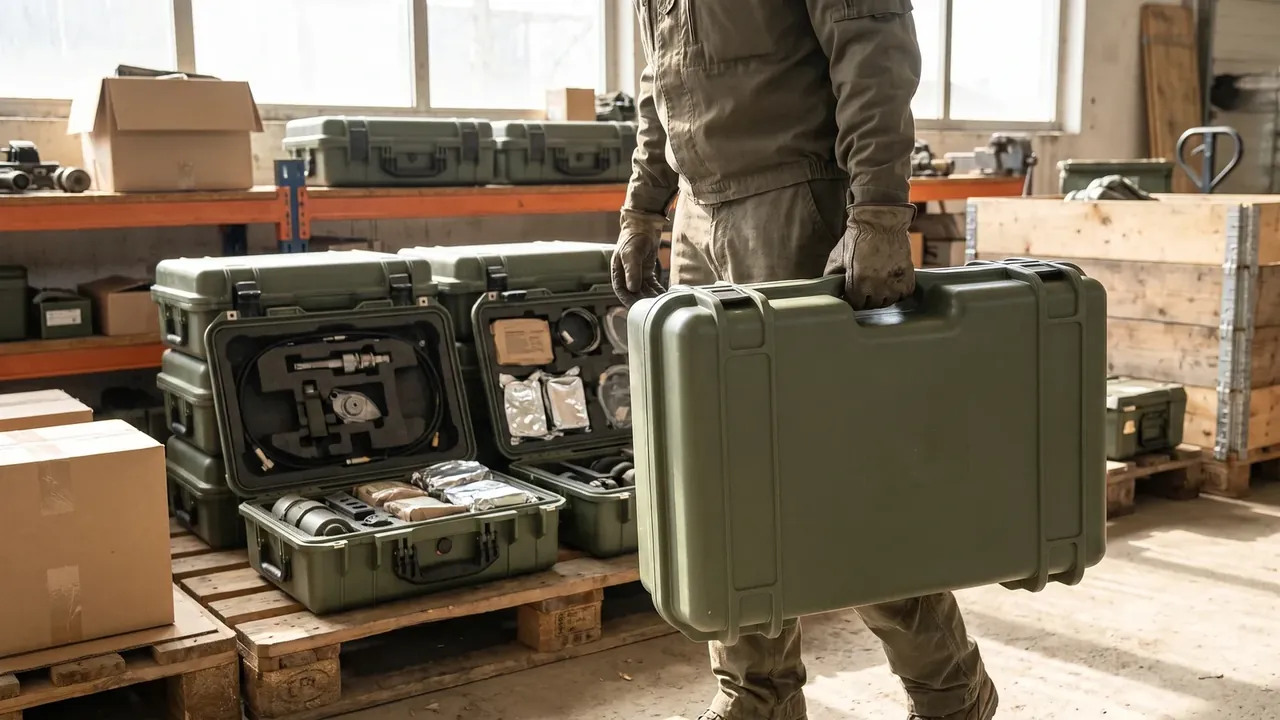
Repair runs stop-drill, groove, weld, reinforce, in that order. Drill 4 mm holes 3 to 5 mm beyond each tip, cut a 60 degree V to two thirds of wall, hot-air weld at 260 to 280 degrees Celsius. Fuse a 3 mm plate of matching material inside, 15 mm past each end, cure 24 hours, then hold 0.3 bar for 3 minutes. Past 80 mm, or two cracks meeting at a rib root, it is not repaired.
5. The write-off line: repair, replace or retire
Score six areas of the logistics support box — walls, rib roots, latches, hinges, gasket, handles and corners — at 0, 1 or 2 points. Seven retires, five or six repairs, four or below is a hardware swap.
One rule backstops it: a repair that cannot survive the next 180 day interval is not worth doing. Retired shells are stripped for spares before material recovery.
Conclusion
Maintenance is not periodic wiping down. It is holding four measurable things inside their limits: inspection tier, latch and hinge clearance, gasket compression, crack length. Each number decides a part, a repair or a retirement. Run verdicts on figures, and a logistics support box stops being consumed and starts being managed.
This article discusses only the container (case body) side of specifications and design intent, and does not cover any handling, loading or use of the contents.
Related Reading
- Selecting a logistics support box: standardisation and modularity
- Rotomoulded case cleaning, repair and retirement
- Military supply case acceptance: appearance, seal, drop
- Preventing damage to cases in storage
Related Products
- 8 Series — Gun Cases; Military Equipment Cases; Camera Equipment Cases; Drone Cases; Watch Cases; Knife Cases; First Aid Cases; Electronics Equipment Cases
- WL8-2812 PP Gun Case — model WL8-2812
- All protective cases and toolboxes: 7 series, 158 models