

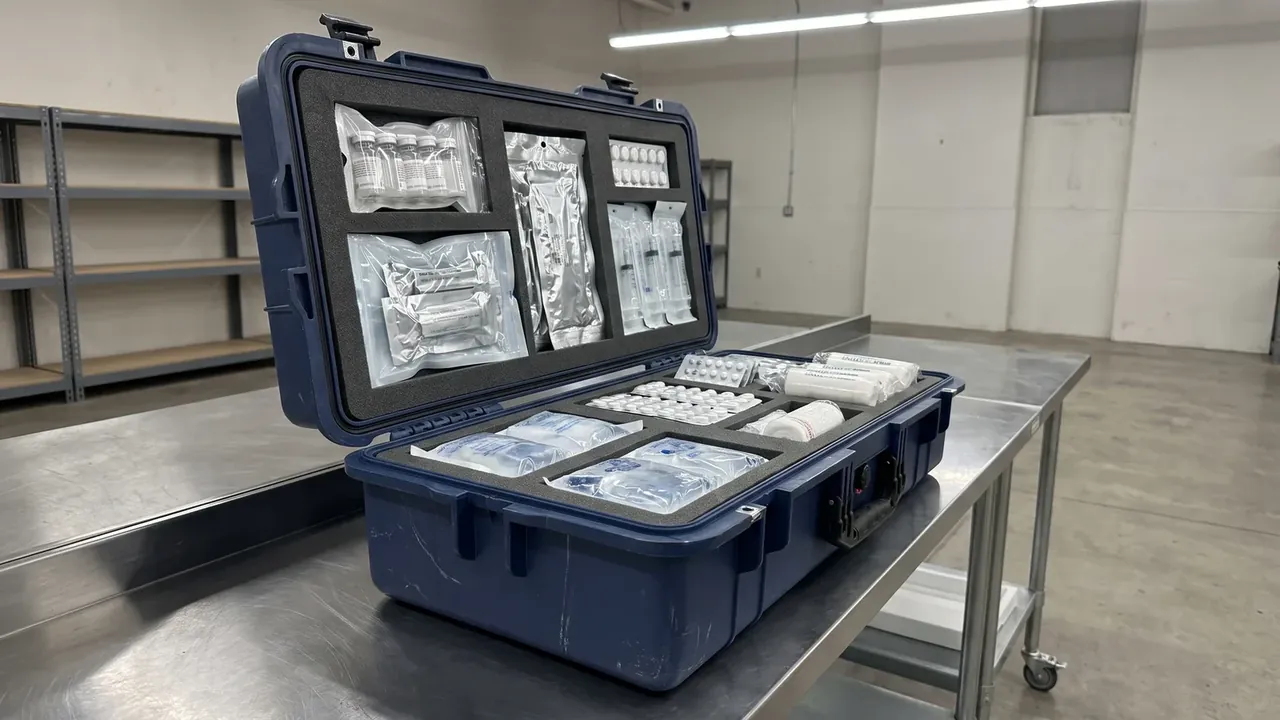
Quick answer: Specify a logistics support box backwards: size the cavity from the load units, add wall, rib height and corner allowance for the outline, then check stacking against a written safety factor. The cavity decides what fits, the outline decides which pallet it rides.
Table of contents
- Deriving the logistics support box outline from the cavity
- Wall thickness and rib spacing: stiffness from shape
- Static load and stacking: writing the safety factor in
- Fork pockets and lifting points: position beats dimensions
- Tolerances and inspection: acceptance on the drawing
- FAQ
1. Deriving the logistics support box outline from the cavity
Most sheets start with the outside. Invert it: a logistics support box serves the load unit, so the cavity comes from unit size and compartment count, and the outline is what remains after wall and ribs.
Cavity equals unit size times compartments, plus divider thickness per joint, plus 4 mm per side. Eight compartments of 120 by 90 by 80 mm with 3 mm dividers give a 520 by 360 by 220 mm cavity, and a 545 by 385 by 247 mm outline at 3.8 mm wall.
| Type | Cavity (mm) | Outline (mm) | Usable volume | Rated static load |
|---|---|---|---|---|
| M | 520×360×220 | 545×385×247 | 0.033 m³ | 180 kg |
| L | 640×440×300 | 665×465×327 | 0.068 m³ | 260 kg |
| XL | 800×560×380 | 825×585×407 | 0.136 m³ | 340 kg |
Usable volume is eighty per cent of the cavity, so price and loading can differ by a fifth.
2. Wall thickness and rib spacing: stiffness from shape
Buyers reach for wall thickness first. Stiffness comes from section shape: 3.8 mm to 4.8 mm adds fifteen per cent weight for thirty per cent stiffness, while ribs raised from 8 to 12 mm and closed from 220 to 160 mm spacing nearly double stiffness for five per cent weight.
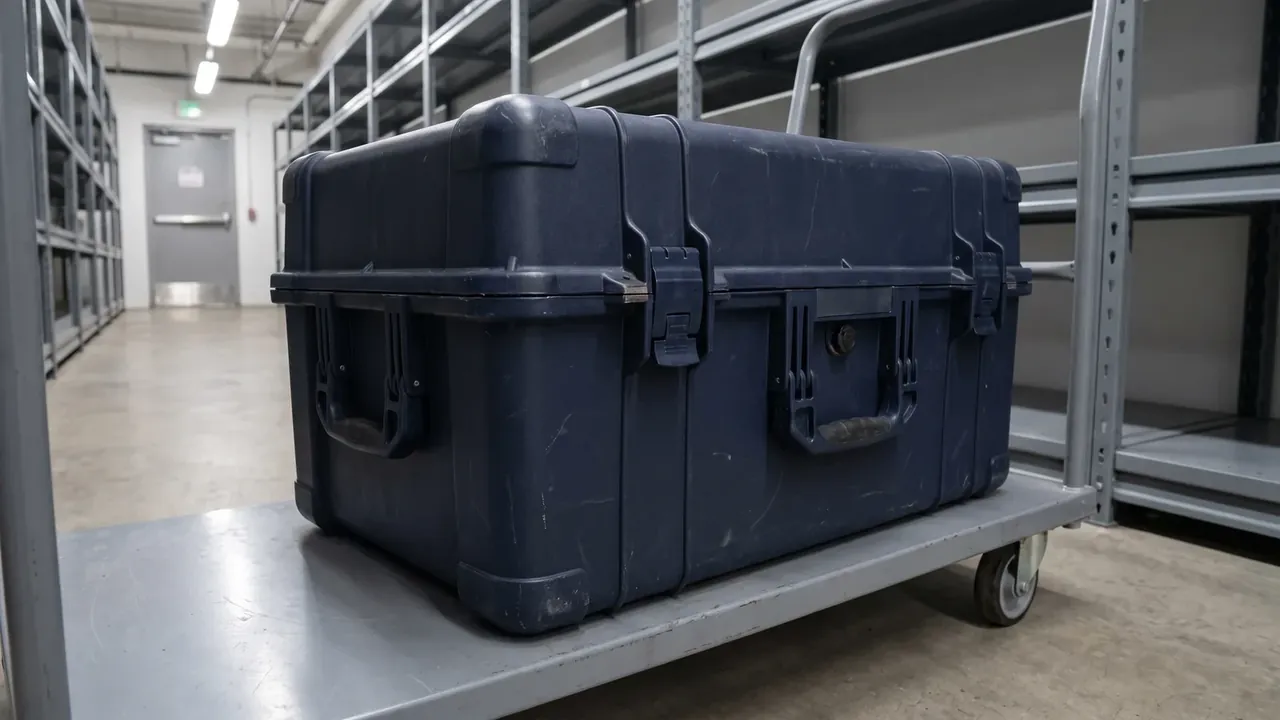
Process sets the ceiling: past 4.5 mm the thick sections cool slower and the warp that follows cancels the gain. Work between 3.2 and 4.5 mm and let ribs carry the rest: thickness at 60 to 70 per cent of wall, spacing under 200 mm, 1.5 degrees of draft.
3. Static load and stacking: writing the safety factor in
The rating describes one logistics support box with a uniformly loaded top face, not the load a bottom box carries in a stack.
Type M at 32 kg loaded, stacked six high, leaves the bottom box carrying 160 kg inside its 180 kg rating; eight layers gives 224 kg. Failure load should reach 2.5 times the rating, 450 kg for a 180 kg box, verified at 40 degrees Celsius for 72 hours with residual deflection within 3 mm.
Pressure is usually missed: 160 kg over 0.19 m² is 842 kg per square metre, over a 0.12 m² lid 1333.
4. Fork pockets and lifting points: position beats dimensions
Fork pockets interface to handling, where position matters more than dimensions. A pocket runs 95 mm high by 220 mm wide, centres 320 mm apart, edges rounded at R8.
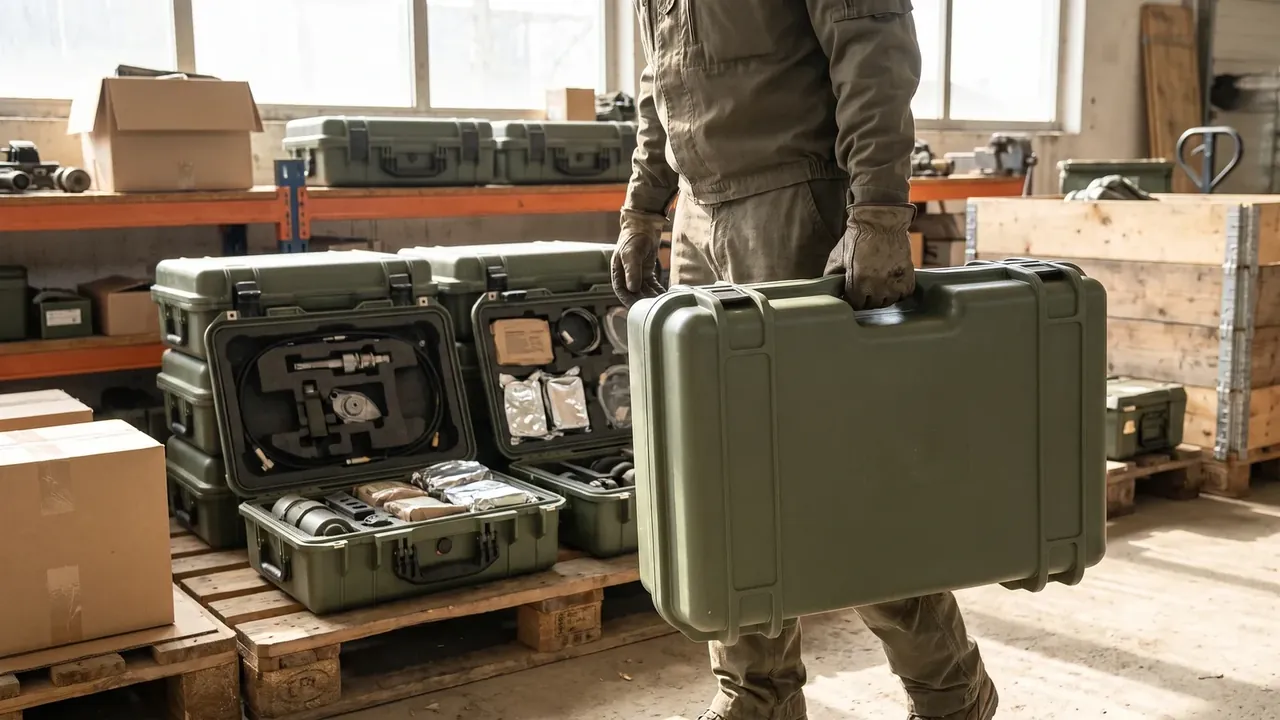
Pocket centre sits about 110 mm above the base so the loaded centre of gravity falls between the forks: sit it high and the box nods in a turn, low and the forks scrape. The pair must be symmetrical: a 10 mm offset tips the load.
Lifting uses four points spaced two thirds of the body length at 1.5 times loaded weight, set at corner blocks rather than mid-panel.
5. Tolerances and inspection: acceptance on the drawing
Tolerances are left out most often and argued over at delivery. Outline governs pallets and bays; cavity governs liner fit and lid interchange.
Outline runs ±2.5 mm, cavity ±1.5 mm, diagonal 3 mm at most. Diagonal decides whether lids swap: boxes 5 mm apart leave a lid 2 mm proud.
| Check | Requirement | Instrument | Frequency |
|---|---|---|---|
| Outline L/W/H | ±2.5 mm | Tape, caliper | 3 per batch |
| Cavity | ±1.5 mm | Dedicated gauge | 3 per 500 |
| Diagonal difference | 3 mm max | Steel tape | First article |
| Top flatness | 1.2 mm per m | Straightedge and feeler | Per batch |
| Lid fit gap | 1.5 mm max | Feeler gauge | First article |
Flatness and fit gap are a pair: an uneven top concentrates stack load until it creeps, and an oversized gap starves the gasket.
Conclusion
Specifications for a logistics support box are a conversion chain: units set the cavity, cavity plus wall sets the outline, outline plus loaded weight sets the stacking, stacking sets the handling interface. Each link carries a checkable number, from a 520 by 360 by 220 mm cavity to a 180 kg rating. Put them on the drawing and the logistics support box stops being revised between pallet and rack.
This article discusses only the container (case body) side of specifications and design intent, and does not cover any handling, loading or use of the contents.
Related Reading
- Logistics support box roles across three distribution levels
- Sizing a protective case: cavity versus outline
- Stackable case specifications and stack checks
- Custom foam insert dimensions and tolerances
Related Products
- 8 Series — Gun Cases; Military Equipment Cases; Camera Equipment Cases; Drone Cases; Watch Cases; Knife Cases; First Aid Cases; Electronics Equipment Cases
- WL8-2812 PP Gun Case — model WL8-2812
- All protective cases and toolboxes: 7 series, 158 models