

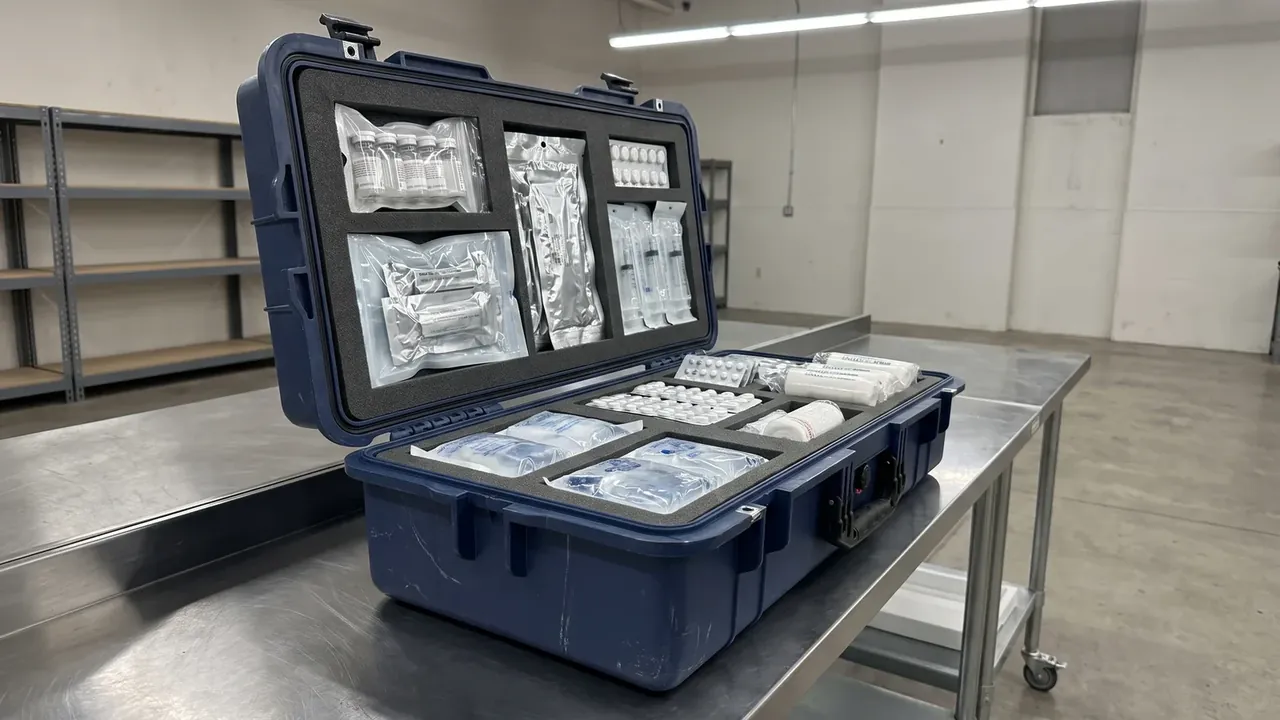
Quick answer: A logistics support box standard works only as a decision table: six check groups, an AQL plan keyed to lot size, first-article control kept apart from lot judgement, and records that survive a claim.
Table of contents
- Six inspection groups for a logistics support box
- Turning AQL sampling into a batch decision
- First article versus lot judgement
- Setting drop and stacking parameters
- Records and traceability retention
- FAQ
1. Six inspection groups for a logistics support box
Most clauses say accept to drawing, which decides nothing. A workable standard answers four questions: what is checked, how, how many, what fails.
| Item | Method | Sampling | Acceptance |
|---|---|---|---|
| Appearance and colour | Visual, colorimeter | 20 per lot | ΔE 2.0 or less |
| Key dimensions | Caliper, gauge | 5 per lot | Cavity ±1.2 mm |
| Sealing | Pressure hold | 3 per lot | 20 kPa, 60 s, decay 1.5 kPa |
| Drop | Loaded case | 1 per lot | No crack at 1.2 m |
| Stacking | Top load | 1 per lot | 380 kg, 24 h, set 2 mm |
| Salt spray | Neutral fog | Quarterly | Creep 2 mm, 48 h |
The split follows destructiveness: drop and stacking ruin the sample, so those units never ship, while appearance, dimensions and sealing allow a wider sample. Write ΔE 2.0, sink depth 0.3 mm, flash 0.5 mm, a 20 mm cap on a scratch.
2. Turning AQL sampling into a batch decision
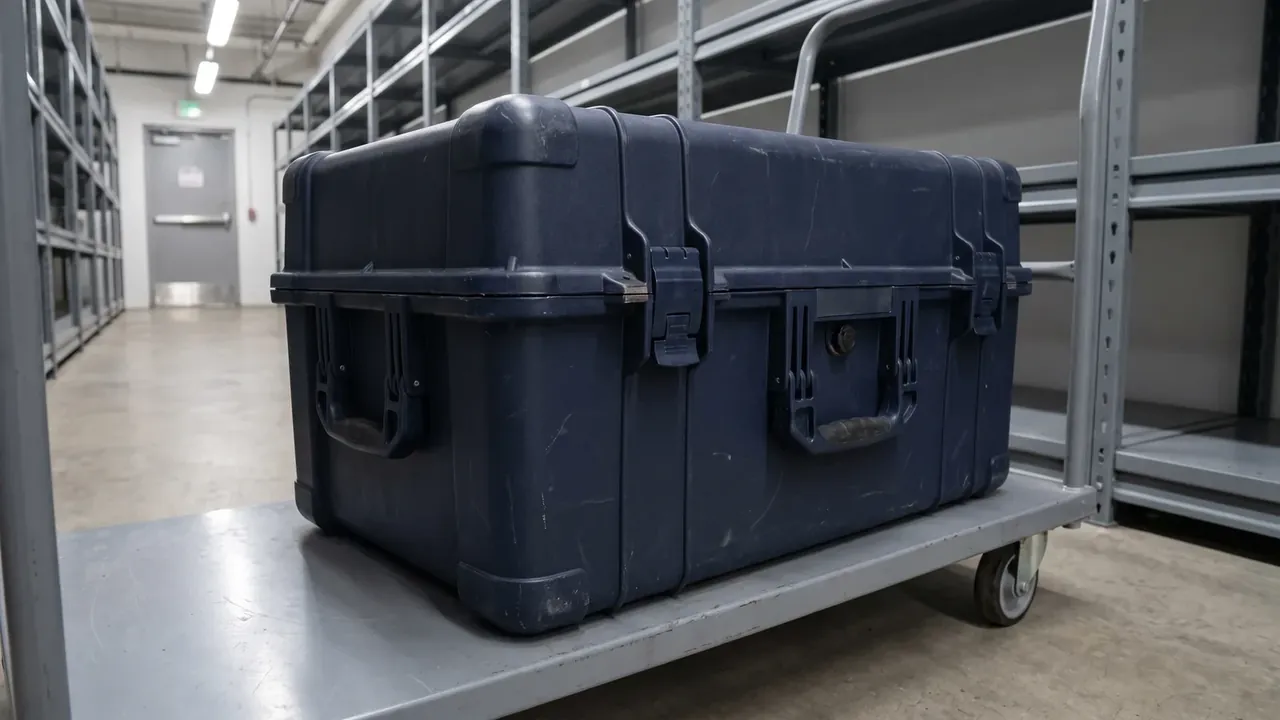
Sampling follows GB/T 2828.1 at general level II, single sampling: critical AQL 0.65, major 2.5, minor 4.0, with zero acceptance on critical items.
| Lot size | Code | Sample | Major Ac/Re | Minor Ac/Re |
|---|---|---|---|---|
| 151 to 280 | G | 32 | 2/3 | 3/4 |
| 281 to 500 | H | 50 | 3/4 | 5/6 |
| 501 to 1200 | J | 80 | 5/6 | 7/8 |
| 1201 to 3200 | K | 125 | 7/8 | 10/11 |
A lot of 800 logistics support boxes lands in the J band: 80 units, five major defects accepted, the sixth rejected. Those figures belong in the contract.
3. First article versus lot judgement
The first article is not the first unit moulded: it is the first three after every start-up, mould change and material change, checked, signed, filed separately and excluded from the sample, since its purpose is proving the process has not drifted.
Three rules cover the lot: one critical defect rejects it; majors above Ac reject it and tighten the next submission; three accepted lots restore normal inspection. Mixing the levels ends with a clean first-article sheet excusing a drifting lot.
4. Setting drop and stacking parameters
Drop exposes a structural weakness in an afternoon: load the case, drop it from 1.2 m in the sequence of one corner, three edges and six faces onto concrete, then judge no through crack, latches engaged, and a repeat 20 kPa hold. A shell intact over a hairline gasket crack still leaks.
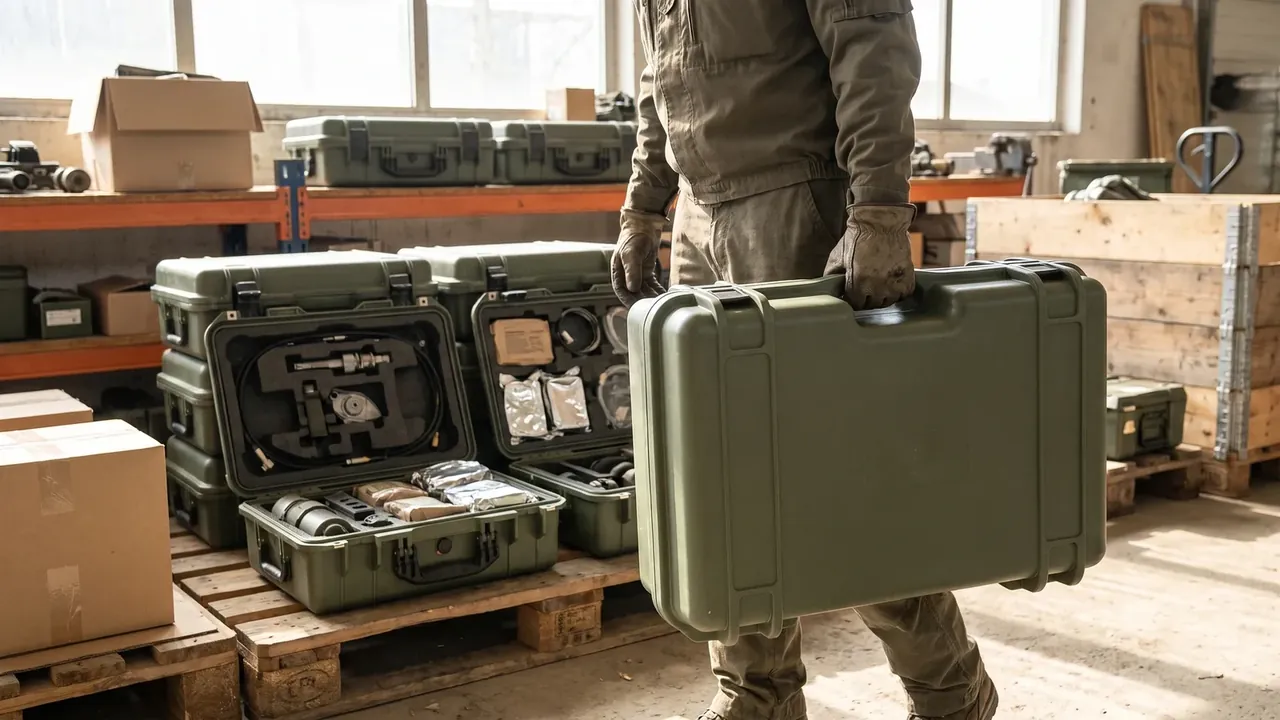
Stacking applies 380 kg over the lid at 40 degrees Celsius for 24 hours, set held to 2 mm after an hour of recovery; record the temperature, since 35 degrees in summer and 15 in winter differ by a factor of two. Salt spray runs 48 hours at 5 per cent sodium chloride, creep held to 2 mm, and failures usually sit in latch springs.
5. Records and traceability retention
Records are written for a claim, not for an auditor: the inspection record, the nonconformity disposition, and the lot trace card carrying cavity number, resin batch, shift and inspector code.
| Record | Medium | Retention | Signed by |
|---|---|---|---|
| Inspection record | Paper and scan | 5 years | Inspector, QA |
| First article sheet | Paper | 3 years | Line leader |
| Disposition sheet | System | 5 years | QA lead |
| Lot trace card | System, marking | 7 years, export | Production |
| Type test report | Electronic | 10 years | Laboratory |
Traceability runs both ways: from a cavity mark back to the shift record, from a disposition sheet forward to the serial range shipped. Three photographs of nameplate, latches and gasket face prevent most disputes.
Conclusion
A logistics support box standard turns acceptable into measurable acts: six groups define what is checked, the AQL plan how much, first article and lot judgement who signs. Written tightly it removes an argument on delivery day; written loosely, sampling is theatre. Fold the parts into one table and acceptance of a logistics support box has something to stand on.
This article discusses only the container (case body) side of specifications and design intent, and does not cover any handling, loading or use of the contents.
Related Reading
- How a logistics support box fits tiered distribution
- Inbound inspection for military supply cases
- Quality control points on a case assembly line
- Pallet and case marking rules
Related Products
- 8 Series — Gun Cases; Military Equipment Cases; Camera Equipment Cases; Drone Cases; Watch Cases; Knife Cases; First Aid Cases; Electronics Equipment Cases
- WL8-2812 PP Gun Case — model WL8-2812
- All protective cases and toolboxes: 7 series, 158 models