

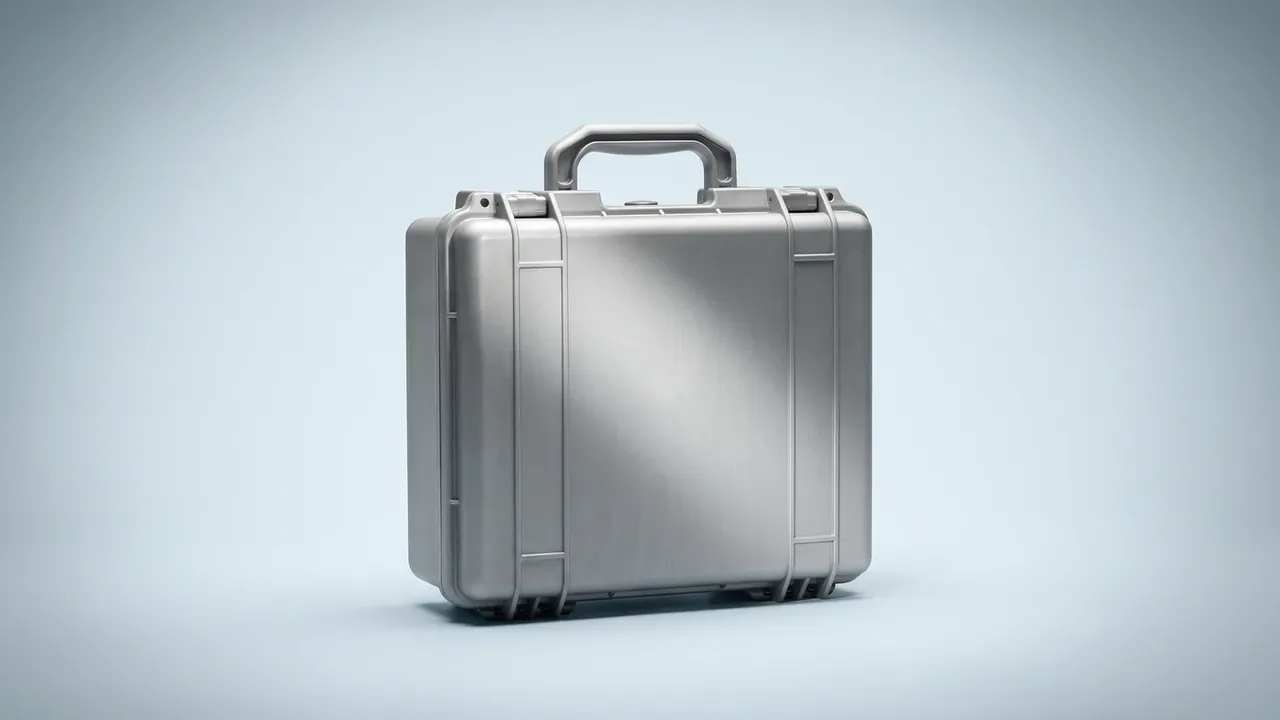
Quick answer: What changes between sites is not the shell but how a Long Weapon Case is tied down. A range needs three spaced tie lines, a vehicle four-point lashing over the axle, a ship a cleared drain, and a hangar handle clearance. Six mistakes come down to spacing and gasket pressure.
Table of contents
- Long Weapon Case on the Range: Three Tie Lines
- Vehicle and Hangar: Four-Point Lashing and Balance
- Ship and Wet Quay: Drain, Condensation and Salt
- Six Recurring Mistakes and Their Fixes
- FAQ
1. Long Weapon Case on the Range: Three Tie Lines
Range work means frequent opening, so the fixture must be quick and repeatable. A Long Weapon Case sits on three parallel tie lines: two set 40 mm in from each end, one at mid length. Spacing follows a third of the clear length, and past 400 mm another line goes in.
All three channels are 20 mm wide; only the foam thickness changes.
| Tie line | Position | Foam |
|---|---|---|
| One | 40 mm from end | 15 mm |
| Two | mid length | 15 mm |
| Three | 40 mm from far end | 12 mm |
The taper is deliberate: firm at the ends, softer in the middle, so the item locates at both ends first. Cutting all three to one depth makes it rock to a side. A training range opens dozens of times a day, so swap a strip once it has collapsed 2 mm.
2. Vehicle and Hangar: Four-Point Lashing and Balance
On a vehicle, shell and cargo floor must behave as one body. Lash at the quarter points with 25 mm straps rated to 1,500 N; once tensioned, hand pressure should leave no more than 10 mm of sag. An 8 mm EPDM mat underneath adds friction and covers weld spatter.
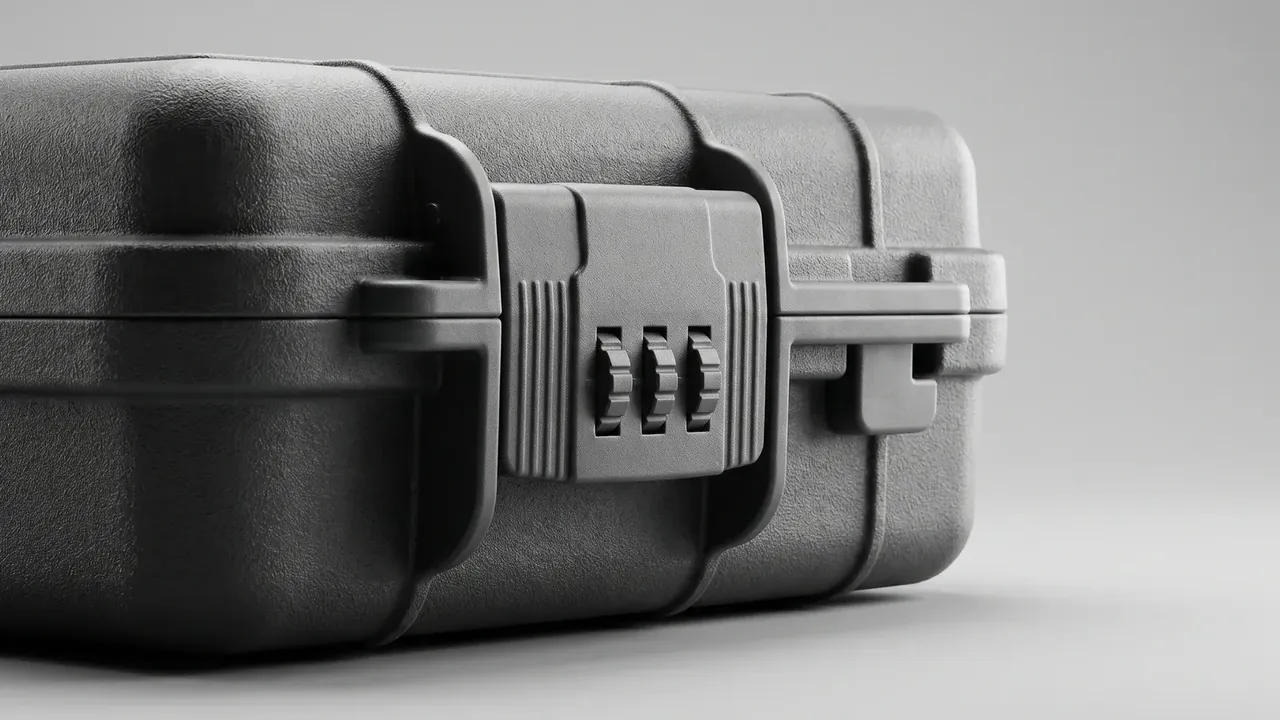
Keep the centre of gravity over the axle. A loaded case runs about 45 kg, and with the centre 300 mm behind the rear axle a 200 km gravel run lets the straps slip and the shell slide until a corner meets the wall. Hangars follow other rules: standing, leave 60 mm above the handle; stacked, three high at most.
Above three, the bottom latches distort first.
3. Ship and Wet Quay: Drain, Condensation and Salt
At sea the enemy is condensation, not rain. As a hold cools from 35 to 20 degrees Celsius at 85 percent relative humidity, water beads on the shell and works in past the latches. Before a Long Weapon Case goes aboard, find the drain: 6 mm bore, lowest point, lipped plug, pulled before the lid opens.
| Phase | Hold | Humidity | Action |
|---|---|---|---|
| Night passage | 20 C | 85% | wipe latches before opening |
| Day on deck | 35 C | 60% | weigh the desiccant |
| Waiting at quay | 30 C | 90% | pull the drain plug |
Prepare hardware for 96 hours of neutral salt fog. The shell does not absorb salt; inserts and rivets rust, so check those. Stack two high in a hold and leave a 50 mm air channel between cases for vapour to escape.
4. Six Recurring Mistakes and Their Fixes
Four of the six are about fixing points; the last two are habits.
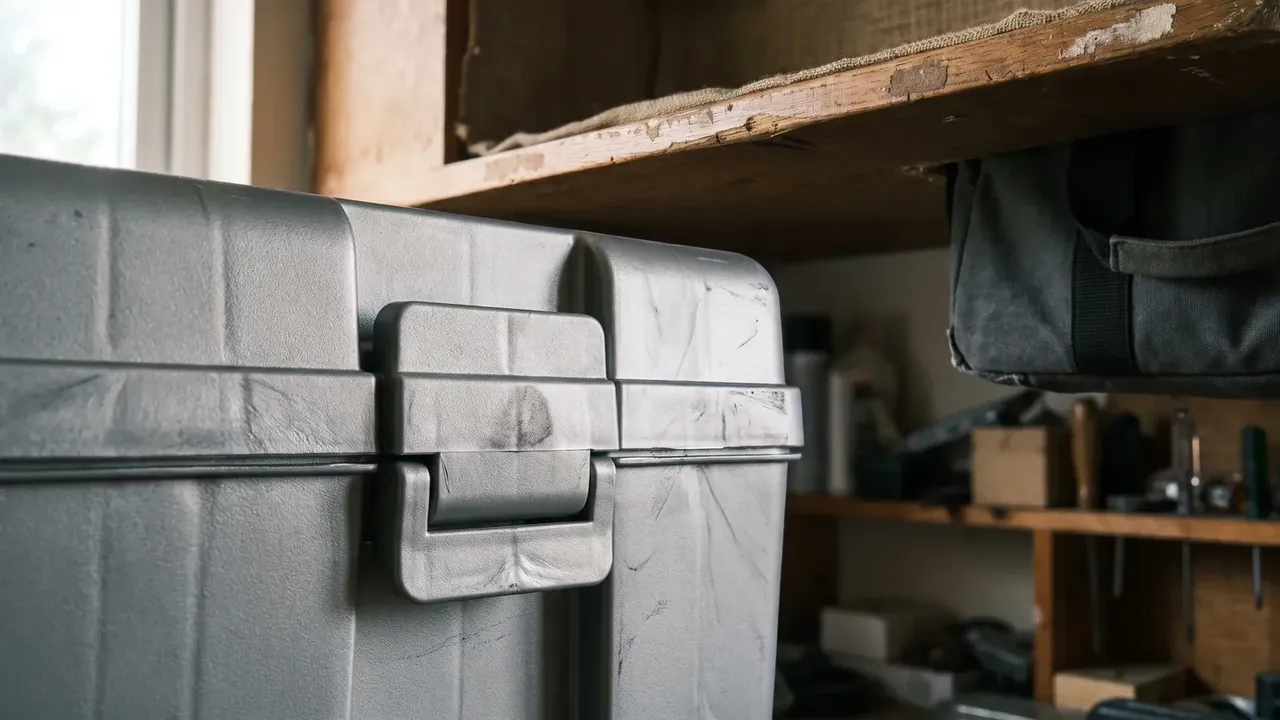
- Only two lashings. The case pivots in a turn: use four, at the quarter points.
- All three tie lines at one depth. The item rocks: make the ends thicker.
- Stacking four high. Bottom latches distort: two plus a divider board.
- A drain plug left in as if it were a seal. Rod the bore before loading.
- Strapping through the handle. The insert pulls out: lash at a rib.
- Opening a wet lid. Water runs in: wipe first, open second.
Each saves a step and stays hidden until it matters.
Conclusion
The four settings come down to two decisions: where the fixing points sit, and where water goes. Taper the range lines firm to soft, lash a vehicle at the quarter points, clear a ship drain before buying desiccant, and hold a hangar stack at two plus a divider. None needs a new shell, only a changed sequence. On a job card, they keep a Long Weapon Case consistent on every site.
This article discusses only the container (case body) side of specifications and design intent, and does not cover any handling, loading or use of the contents.
Related Reading
- What a Long Weapon Case is: cavity length, support and carry
- Weapon storage cabinets in use: sites, quotas and access flow
- Road and rail transport cases: loading, lashing and unloading
Related Products
- 8 Series — Gun Cases; Military Equipment Cases; Camera Equipment Cases; Drone Cases; Watch Cases; Knife Cases; First Aid Cases; Electronics Equipment Cases
- WL8-2812 PP Gun Case — model WL8-2812
- All protective cases and toolboxes: 7 series, 158 models