

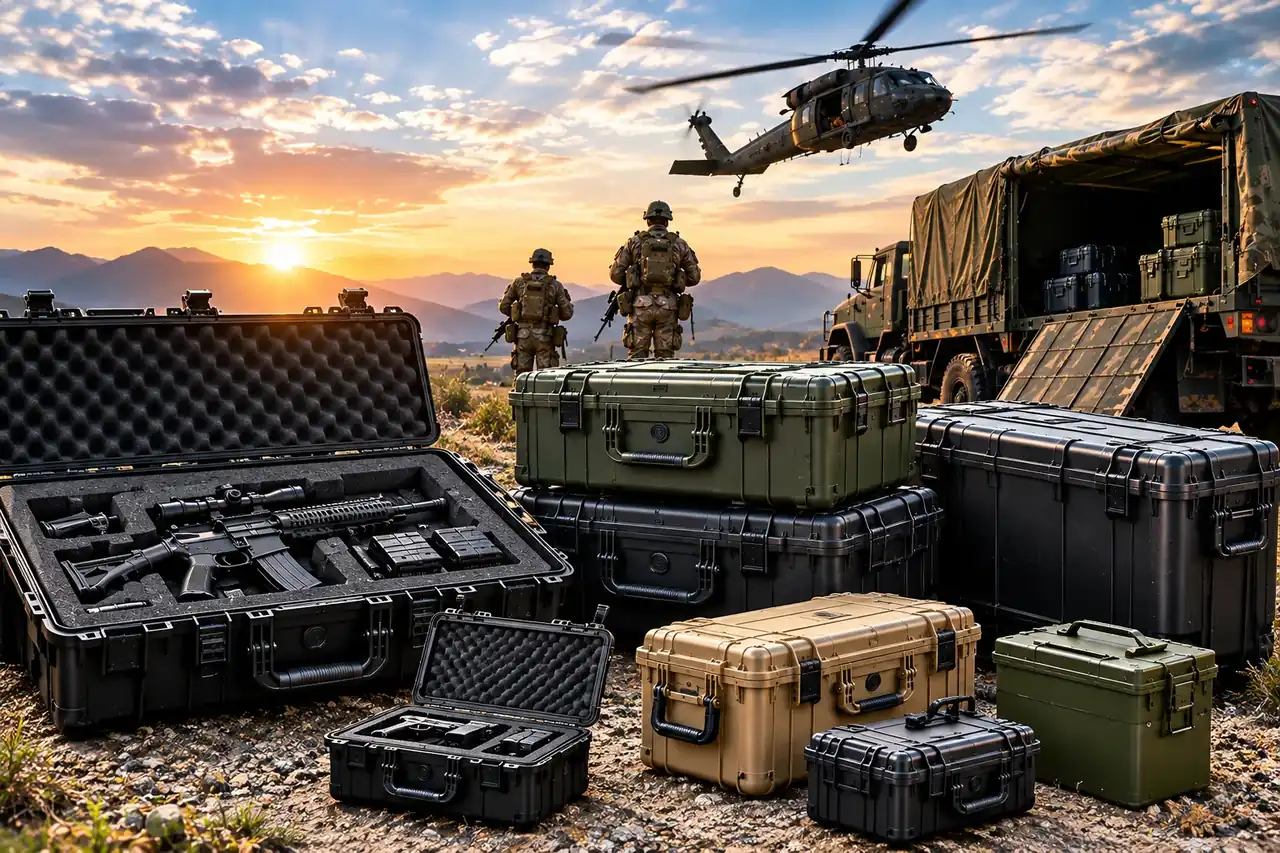
Quick answer: Case marine insurance usually fails on the deductible, not the cover: 3% to 1% costs 0.15 points and pays back only past 12 shipments a year.
Table of contents
- Three variables behind case marine insurance
- Where All Risks and FPA divide
- Trading deductible against premium
- Using the 0.8% to 2% damage benchmark
- General average and five claim documents
- FAQ
1. Three variables behind case marine insurance
One shipment of 1,200 protective cases is declared at USD 46,000; at 0.42% the premium is USD 193. Three things move a case marine insurance quote: cover, deductible and declared value.
| Variable | Typical setting | Effect on premium |
|---|---|---|
| Cover | FPA or All Risks | All Risks runs 1.8–2.4 times FPA |
| Deductible | USD 500 or 3%, whichever is higher | 3% to 1% lifts the rate 0.15 points |
| Declared value | Goods value, or goods value plus 10% | Linear, 10% more base is 10% more premium |
Declared value is squeezed first. Declaring goods value alone leaves paid freight and duty unrecovered; adding 10% costs USD 19 more and keeps USD 4,600 of headroom.
Cover is the second lever: the same 1,200 cases run 0.21% under FPA and 0.42% under All Risks, USD 1,159 apart across 12 shipments.
The deductible is hardest. It is a switch that keeps small losses out of the claims process, so every loss under USD 1,400 stays with the shipper.
2. Where All Risks and FPA divide
FPA pays total loss, partial loss from stranding, sinking, collision and fire, and general average contributions. All Risks adds partial loss from external causes: forklift punctures, drops, rain, rust.
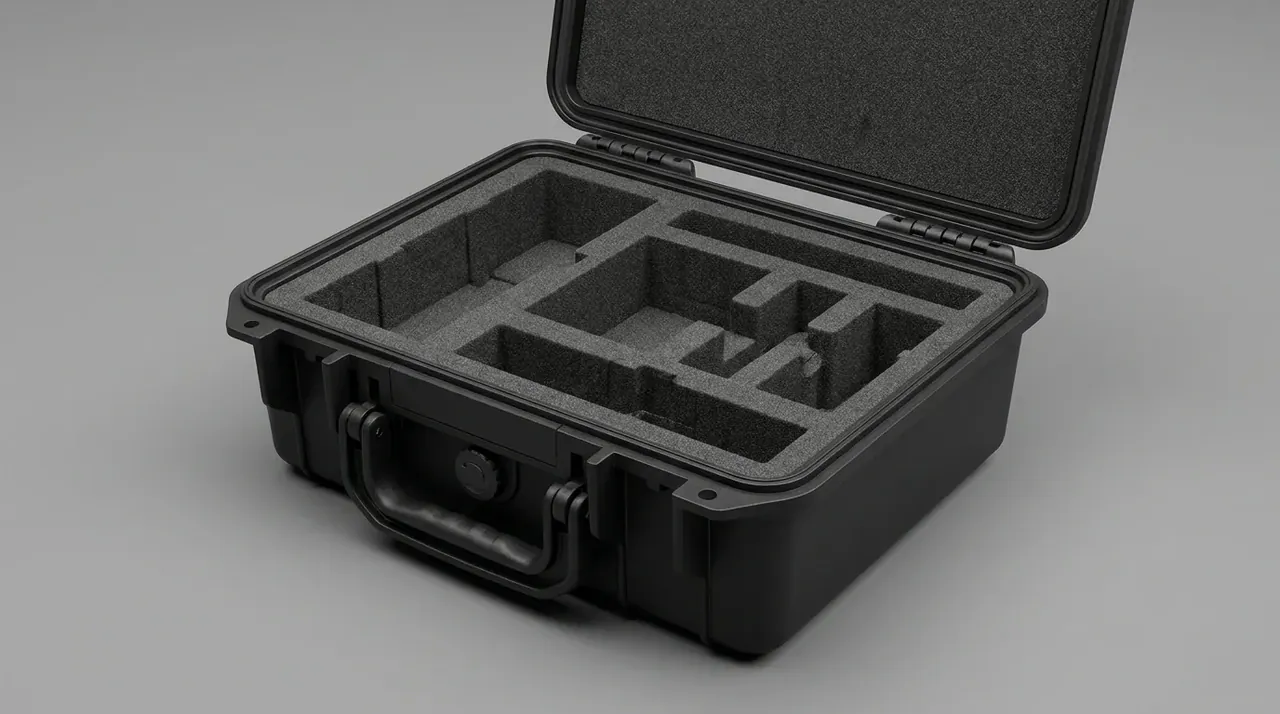
The line is drawn by cause, not amount.
Four exclusions matter: inadequate packing, inherent vice, ordinary loss and delay. The first two cause most disputes.
Inadequate packing is judged on three documents, not on the contract: the damage rate of similar cases over 12 months, loading photos, and the destination tally report. A rate near 0.8% reads as accident; above 2% it triggers a review of stacking and bracing.
Surface scratching is the commonest rejection. Scratches under 0.2 mm that leave the gasket groove and latch travel intact are ordinary loss; a broken latch or cracked hinge boss is structural damage, payable under All Risks and under FPA only with one of the four perils.
3. Trading deductible against premium
The clause reads USD 500 or 3%, whichever is higher. On USD 46,000, 3% is USD 1,380, or 2.76 times the floor, so 3% applies.
| Deductible | Loss threshold | Rate | Premium, 12 shipments | Payout at 1.4% |
|---|---|---|---|---|
| 3% | USD 1,380 | 0.42% | USD 2,318 | 0 |
| 2% | USD 920 | 0.48% | USD 2,650 | 0 |
| 1% | USD 500 | 0.57% | USD 3,146 | USD 1,728 |
| 0.5% | USD 500 | 0.72% | USD 3,974 | USD 1,728 |
The table has a corner. At 1% the deductible is USD 460, under the USD 500 floor, so 500 is still deducted; 0.5% only moves the rate from 0.57% to 0.72% with no extra payout. The 1% tier is the price floor.
The deductible applies per occurrence, not per case: three shipments damaged at one berth lose USD 1,380 once.
Whether to buy the lower tier depends on shipments per year and damage rate. At 12 shipments, a 1.4% rate and USD 644 lost each, the 3% tier pays nothing, while the 1% tier returns USD 144 each, USD 1,728 a year, against USD 828 of extra premium and a net USD 900. Below 8 shipments the arithmetic reverses.
4. Using the 0.8% to 2% damage benchmark
Case marine insurance benchmarks for full loads land between 0.8% and 2%: palletised loads with two handlings at the low end, loose loading with two re-handlings at destination at the high end.
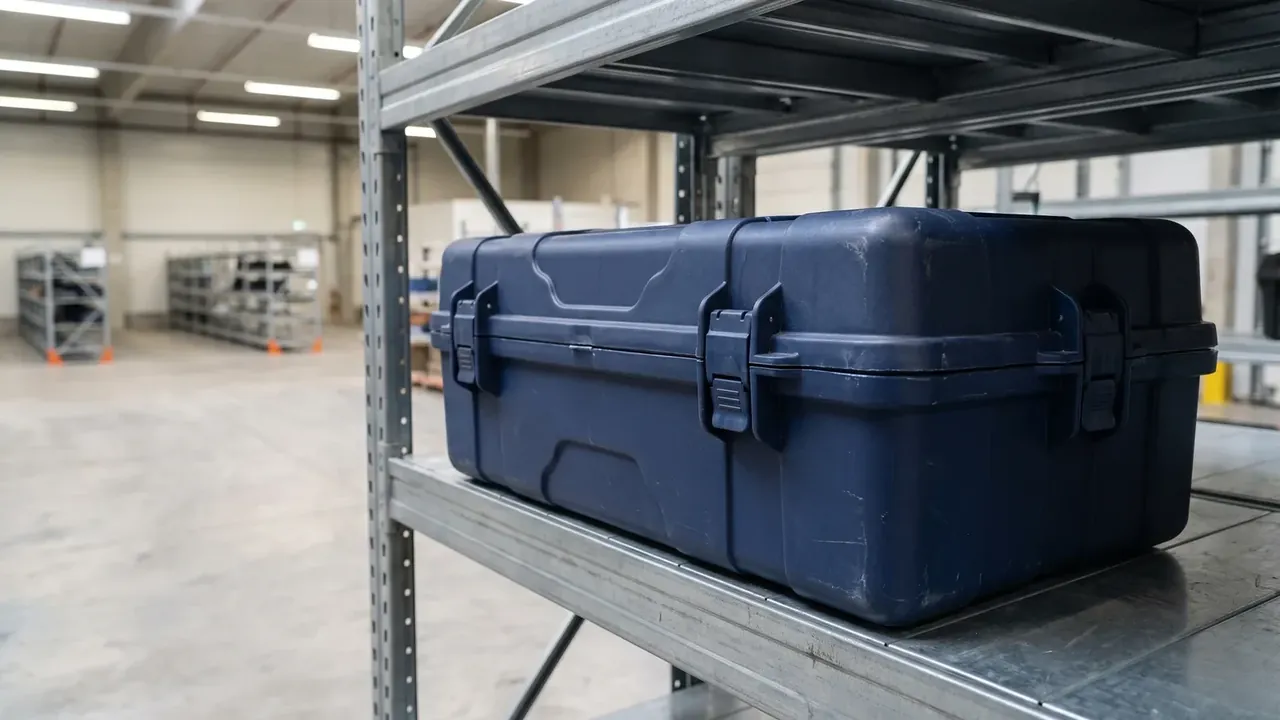
Calibrate with your own figures: twelve shipments hold 14,400 cases, so 0.8% is 115 cases and 2% is 288, a band from USD 4,370 to USD 10,944 at USD 38 each.
Sort losses by shipment and most orders show one shape: the worst 2 carry 60% of the loss. That is a trade lane problem, and no deductible fixes it.
Losses clustering below the deductible mean small, frequent damage, so the case marine insurance deductible should come down to 1%. One shipment that tipped over for USD 5,000 means large, rare damage, where keeping 3% and pressing the rate to 0.42% is cheaper.
5. General average and five claim documents
General average is the most overlooked payout in case marine insurance. Costs from jettison, firefighting or a forced tow are apportioned across all cargo by saved value, and one shipment's share typically runs 8%–15%.
A shipment declared at USD 46,000 assessed at 12% owes USD 5,520. The carrier demands a bond and a cash deposit before release, and without them the cargo stays on the quay; with them, documents reach the insurer within 30 days.
The claim file needs five documents, and a missing one stops the process.
| Document | Issued by | If missing |
|---|---|---|
| Policy or certificate | Insurer | No claim number |
| Bill of lading copy | Carrier | Title questioned |
| Invoice and packing list | Seller | No loss base |
| Surveyor report | Surveyor | Cause unprovable |
| Claim and salvage receipts | Claimant | Amount returned |
Damage found at collection is notified to the carrier in writing within 3 days, documents reach the insurer within 30 days, and the limitation period is 1 year from discharge.
The surveyor report is often missing: attendance takes 2–5 working days and costs USD 300–600, so claims smaller than the fee are abandoned.
Conclusion
The case marine insurance account ends on two sheets of paper: the declaration at purchase and the claim file at loss. Fix three lines on the declaration — deductible at 1%, declared value at goods value plus 10%, cover chosen by cause of damage. On a USD 46,000 shipment those lines cost USD 69 more and pull the claim threshold from USD 1,380 to USD 500. On the claim file, assemble the policy, the bill of lading copy, the invoice with packing list, the surveyor report and the claim statement with salvage receipts. Below 8 shipments a year keep the 3% tier and the 0.42% rate; above 12 with damage over 1%, buy the 1% tier.
This article discusses container-side specifications and design implications only, and does not cover any handling, loading or use of the contents.
Related Reading
- How transit damage rates are counted per load
- Moisture and surface damage on cases shipped by sea
- Export packing and the condition cases leave the factory in
Related Products
- 8 Series — Gun Cases; Military Equipment Cases; Camera Equipment Cases; Drone Cases; Watch Cases; Knife Cases; First Aid Cases; Electronics Equipment Cases
- WL8-2812 PP Gun Case — model WL8-2812
- All protective cases and toolboxes: 7 series, 158 models