

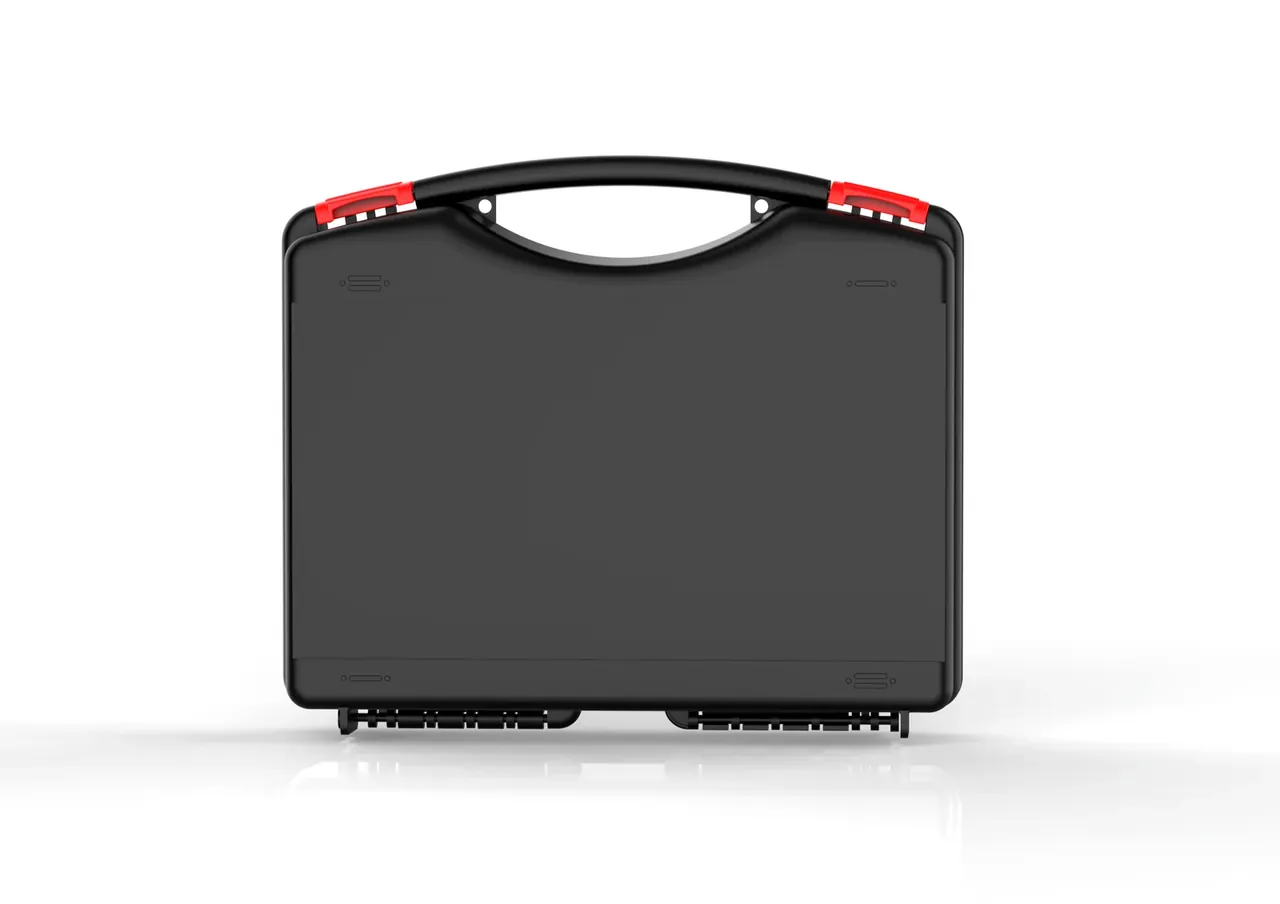
Quick answer: Grade a marine protective case by the salt exposure of its berth, then match hinge pins, latch springs and screws to 316, 304 or zinc-plated stock; the pass line is no red rust after 480 hours of spray and no more than 20 percent loss of latch pull.
Table of contents
- Setting the Salt Spray Grade
- 316, 304 and Zinc-Plated Hardware
- Crevice Corrosion at Hinge Pins
- Latch Springs and Clamp Force
- Gasket Material: Silicone or EPDM
- Maintenance Intervals After Salt Exposure
- FAQ
1. Setting the Salt Spray Grade
A marine protective case takes its grade from the steel plate beneath it, not the box. Deck chloride deposition reaches 200 mg per square metre per day, a third of that inland. Neutral salt spray to GB/T 10125 runs 5 percent sodium chloride at 35 °C, turning the gap into 48 to 720 test hours.
| Berth | Method | Duration | Baseline |
|---|---|---|---|
| Open deck | NSS | 480 h | 316 throughout |
| Splash zone | AASS | 720 h | 316L, passivated |
Acetic acid spray at pH 3.1 to 3.3 attacks plating 1.5 times faster over 720 hours, so a splash-zone marine protective case moves every fitting to 316L.
2. 316, 304 and Zinc-Plated Hardware
Molybdenum is the dividing line. Grade 304 lacks it, so chlorides break the passive film at inclusions and pitting starts at 240 hours; grade 316 carries 2 to 3 percent and holds those sites to 480 hours. Zinc screws lose 8 to 12 micrometres to white rust at 48 hours and red rust by 96.
| Fitting | Molybdenum | 48 h | 240 h | 480 h |
|---|---|---|---|---|
| Zinc screw, 8 μm | none | white rust | red rust | flaking |
| 304 pin | none | unchanged | 3 pits | pitting in bands |
| 316 pin | 2–3% | unchanged | unchanged | slight edge tint |
| 316L, passivated | 2–3% | unchanged | unchanged | unchanged |
A 316 hinge set costs 1.6 to 2 times the 304 one, and two replacement rounds in five years erase the saving. Passivation matters too: a 20 to 30 minute citric bath restores the film machining breaks, without which the alloy pits along tool marks at 240 hours.
3. Crevice Corrosion at Hinge Pins
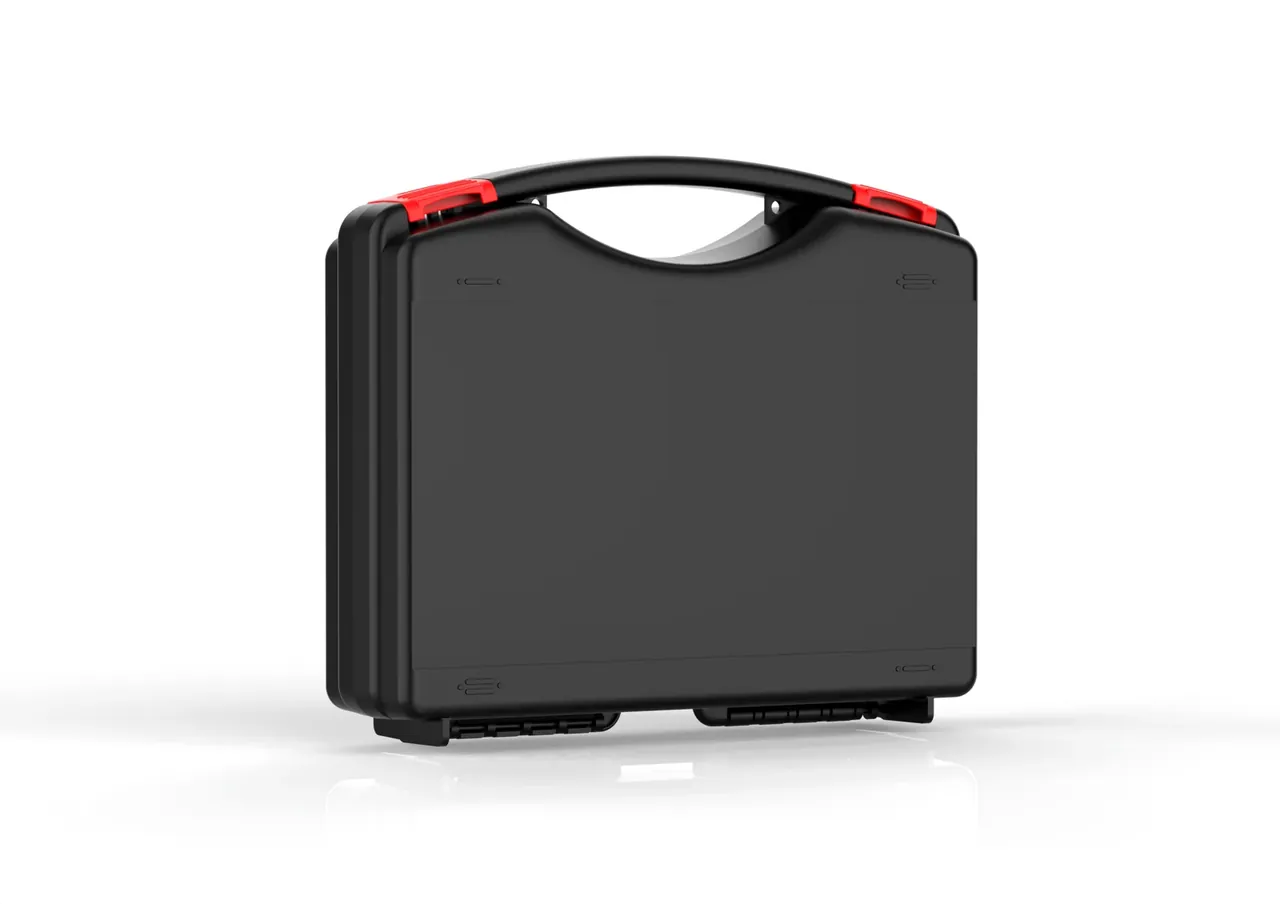
The hinge is the least examined part of a marine protective case. A 6 mm pin in a 6.3 mm hole leaves 0.15 mm of clearance, which reads as tolerance in a dry store and becomes a crevice in spray: oxygen is consumed inside, pH falls below 3, and the pin perforates while the visible surface stays intact.
Three fixes work. Fit a 316 pin in a PTFE bushing, cut a 1.5 mm drain channel under the hinge seat, and store the case upright so brine cannot pool. Deck cases laid flat still gather 5 mm of water in one shower.
4. Latch Springs and Clamp Force
Latch trouble starts in the spring. A 1.2 mm wire in 302 stainless pulls 65 N when new and 57 N after 240 hours of spray, a 12 percent loss, while the same wire in 316 loses 3 N.
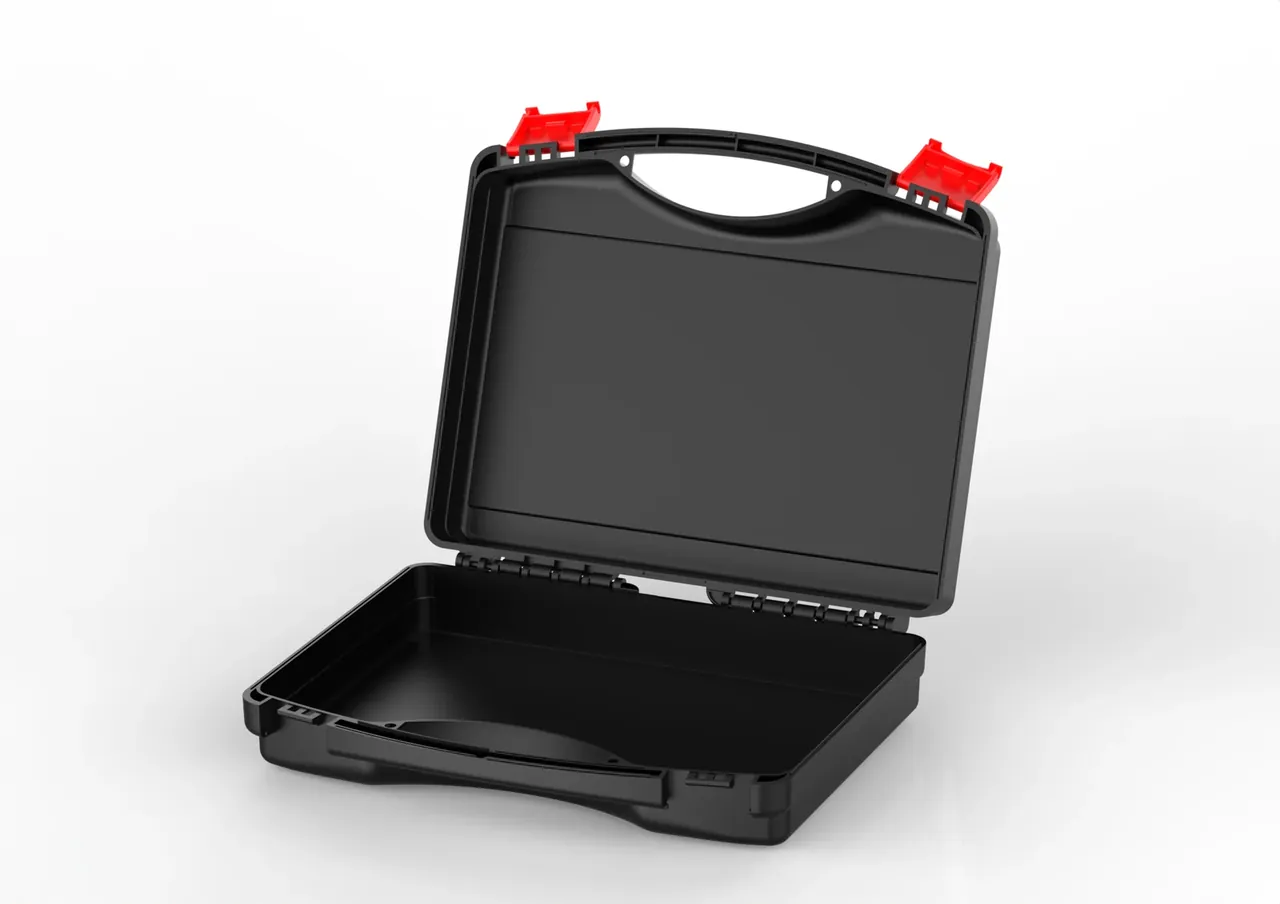
With the lid open, both keepers sit in view, so wear is judged by eye rather than by stripping the case. A stepped bright mark means the latch no longer seats; salt crystals in the groove mean the last rinse missed a corner.
An over-centre latch holds closure with only 8 to 10 N past the dead point. Four latches add 1.5 seconds per cycle, but a marine protective case built with four keeps 1.8 times the pull of a two-latch version after 480 hours.
5. Gasket Material: Silicone or EPDM
The gasket decides whether salt reaches the interior. Silicone holds −60 to 200 °C with 18 percent set after 22 hours at 100 °C; EPDM covers −40 to 120 °C at 25 percent and costs about 60 percent as much.
| Material | Range | Set | After spray | Best for |
|---|---|---|---|---|
| Silicone, 50 Shore A | −60 to 200 °C | 18% | slightly tacky | hot decks |
| EPDM, 60 Shore A | −40 to 120 °C | 25% | hardness +5 | temperate quays |
A 4 mm cord in a 3.2 mm groove lands at 25 to 30 percent compression and 0.15 to 0.2 MPa. A 4 mm groove drops under 10 percent, where spray creeps past an uncompressed lip.
6. Maintenance Intervals After Salt Exposure
Rinse before wiping: fresh water within 4 hours, no warmer than 35 °C, then stand the case upright. Salt left for 24 hours starts pitting that a later rinse can stop but not reverse.
Grease pins and pivots every 90 days with perfluoropolyether, which will not emulsify with brine. Lithium grease traps salt into lapping paste within three months, widening clearance faster than wear.
Re-torque M5 A4-70 screws to 1.2 to 1.5 N·m every 180 days; 1.8 N·m splits the plastic boss, 1.0 N·m lets it back out. Three field checks then keep a marine protective case running without opening it: change the spring below 50 N, the gasket after 5 points of hardening, the pin at the first step on the keeper.
Conclusion
Hardware choice for a marine protective case is a conversion exercise: berth exposure becomes molybdenum content and plating thickness on one side, clearance, drainage and compression on the other. Get the grade wrong and every later specification is wasted; skip the drain channel and 316 still perforates inside the crevice. Close with three lines, no red rust at 480 hours, pull loss under 20 percent, hardening under 5 points, and the choice becomes a five-year cost, not a price comparison.
This article discusses only the container (case body) side of specifications and design intent, and does not cover any handling, loading or use of the contents.
Related Reading
- How marine engineering cases are graded by working condition
- Moving and protecting cases on a port quay
- Replacing a worn hinge on a protective case
- Sealing and testing rules for IP67 cases
Related Products
- 8 Series — Gun Cases; Military Equipment Cases; Camera Equipment Cases; Drone Cases; Watch Cases; Knife Cases; First Aid Cases; Electronics Equipment Cases
- WL8-2812 PP Gun Case — model WL8-2812
- All protective cases and toolboxes: 7 series, 158 models