

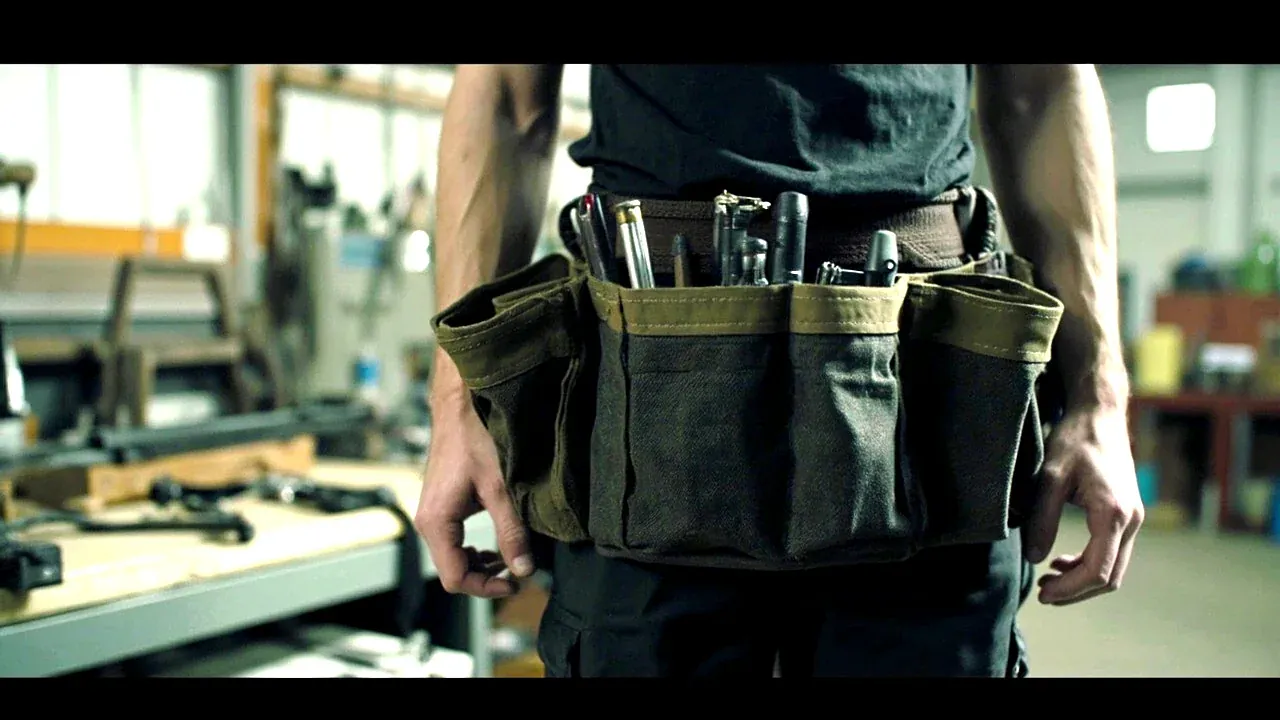
Quick answer: Selecting a mechanic's tool pouch starts with how much weight the waist can carry, not how many pockets it has. Load sets belt type and contact area, slots set the ratio of at-hand to backup tools, and the belt system decides whether a full shift stays comfortable. Estimate any of the three for a light load and the pouch ends up carried by hand before lunch.
Table of contents
- Choosing a mechanic's tool pouch: start with waist load
- Slots: the ratio of at-hand to backup tools
- The belt system: what makes a full shift tolerable
- Material in an oily environment
- Where a pouch ends and a roll or bag begins
- FAQ
1. Choosing a mechanic's tool pouch: start with waist load
A pouch hangs from the waist, so belt and hips carry everything. Above five kilograms on one side the belt starts to slip and needs hitching; above eight most users switch to a shoulder strap or set it down. Weigh the tools that must stay on the body — usually four to six kilograms.
That number sets the belt: under three kilograms a plain belt works, three to six needs a wide padded belt spreading load onto the hips rather than the lumbar spine, and above six a shoulder harness sharing the weight is the realistic answer.
| Carried weight | Belt type | Comfort | Risk |
|---|---|---|---|
| under 3 kg | plain belt | all shift | negligible |
| 3 to 6 kg | wide padded belt | four hours | pressure marks |
| 6 to 8 kg | belt plus harness | needs alternation | one-sided strain |
| above 8 kg | not on the waist | — | use a trolley or pack |
2. Slots: the ratio of at-hand to backup tools
More pockets is not better; layers matter. Outer pockets hold at-hand tools, inner pockets hold backups behind a flap, and the bottom holds low-frequency items — roughly five to three to two. Too many at-hand tools bulge the pouch and catch when sitting or turning.
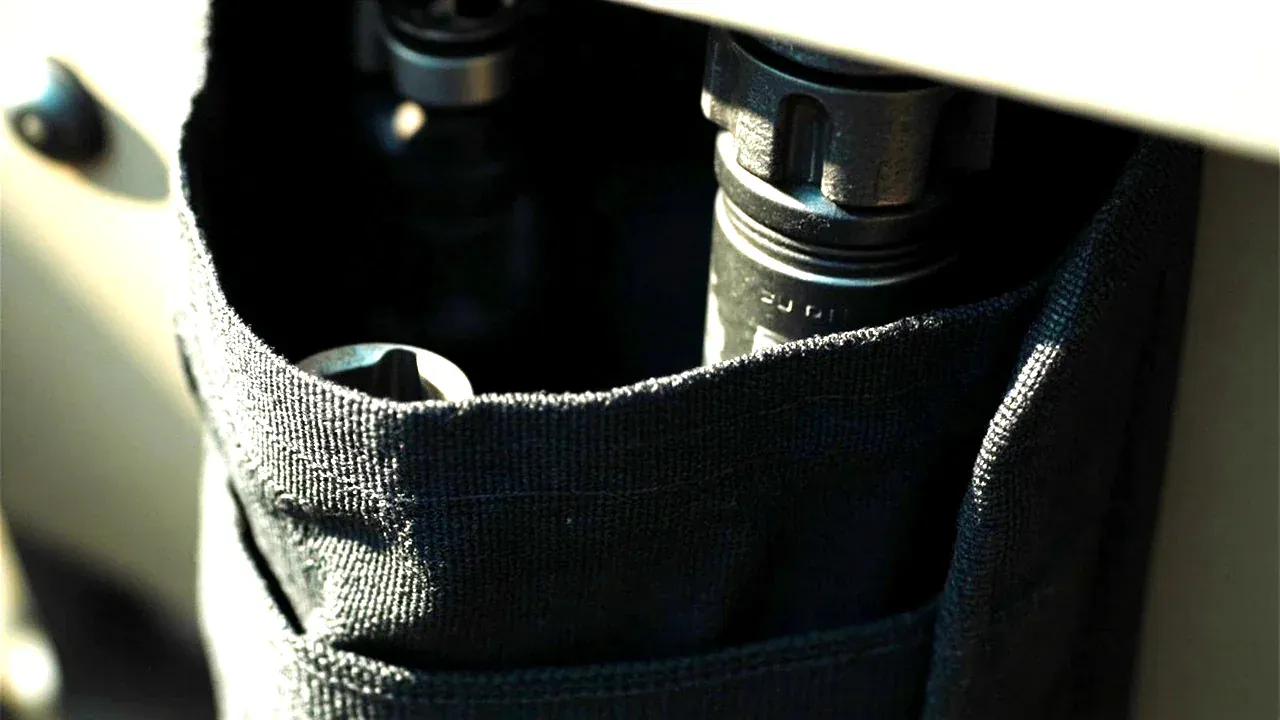
Judge the layering by elastic keepers on outer pockets, dividers inside, and a stiffened base. Keepers stop rattle, dividers stop mixing, the base stops collapse — all visible in a photo, unlike a pocket count.
3. The belt system: what makes a full shift tolerable
Three things define the belt system: belt width, lumbar pad and quick release. Width above forty millimetres spreads load, the pad decides whether hips or lumbar take it, and the release decides how painful lockers and security checks are.
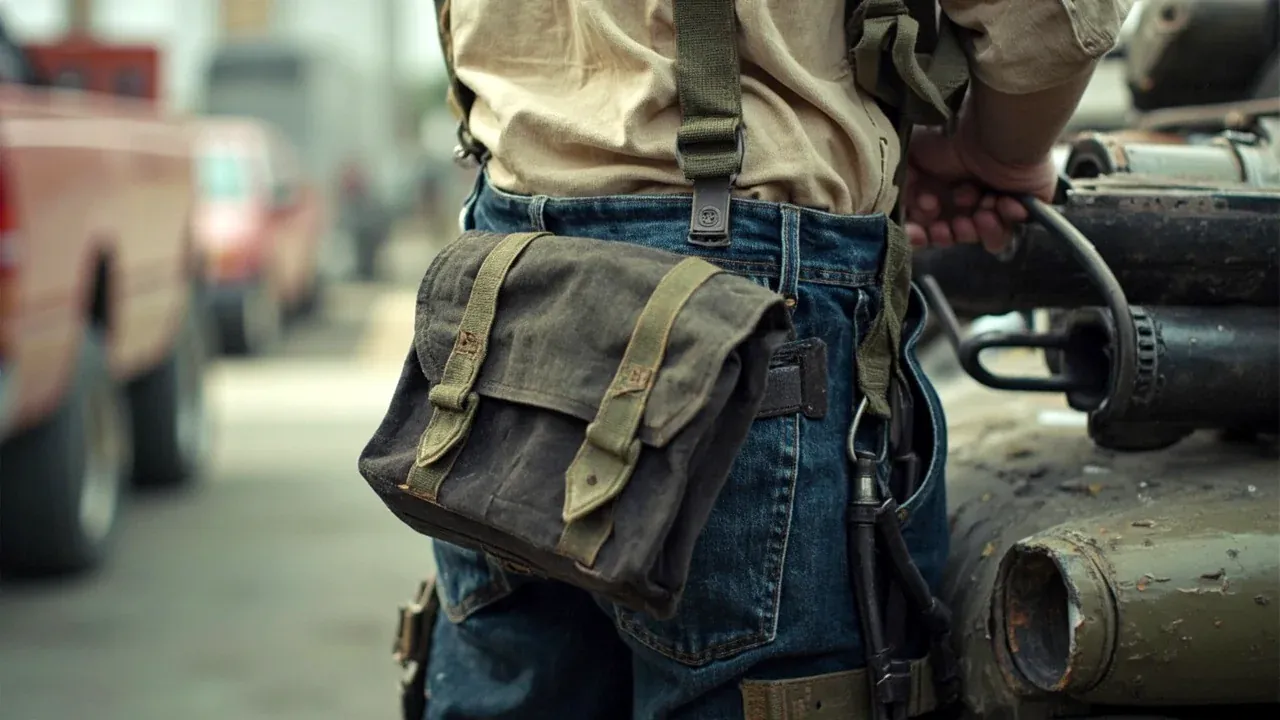
The attachment matters too: a loop-mounted pouch can be repositioned but swings, a sewn one is stable but fixed. Most sites combine a loop-mounted main pouch with sewn auxiliary pockets.
4. Material in an oily environment
A pouch lives with oil, coolant and swarf, so material must resist swelling, abrasion and cleaning. Plain canvas absorbs oil, gains weight, stiffens and takes two days to dry; coated fabric wipes clean but delaminates once cut.
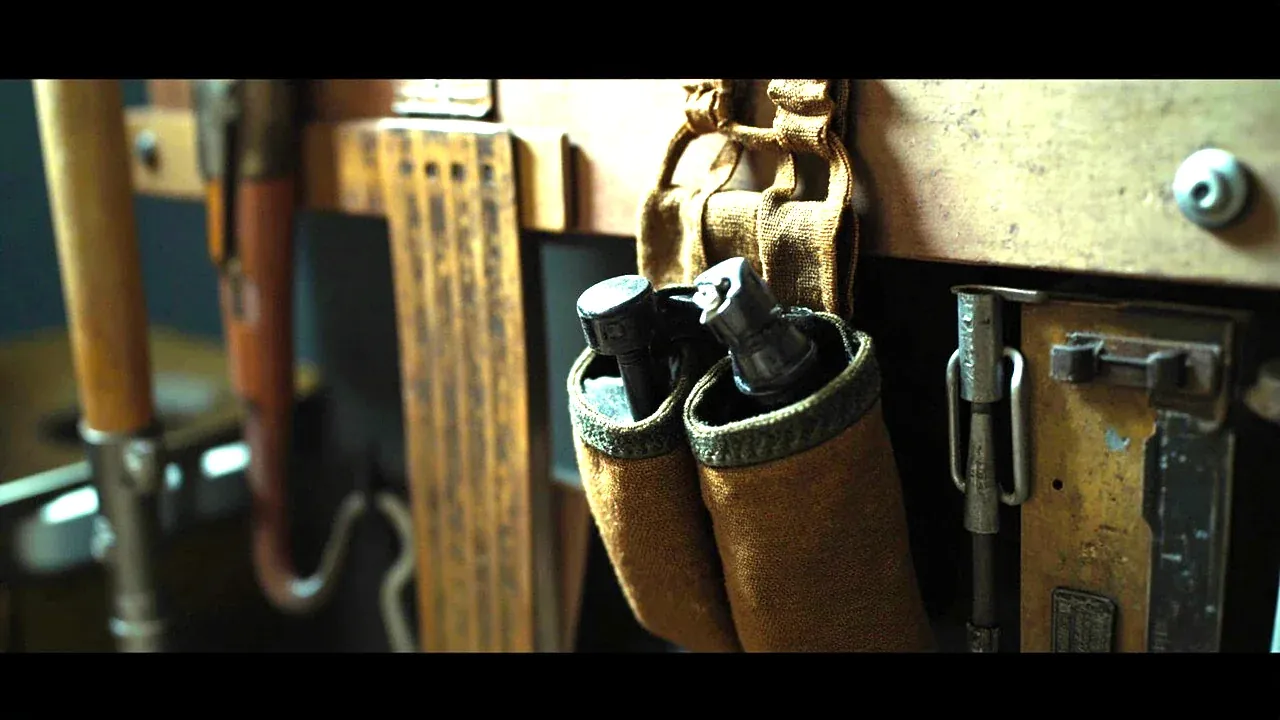
Stitching fails first: oil wicks into the thread, strength drops, and with tool weight the stress points break within about six months. Look for bar-tacked and double-stitched stress points — that decides service life.
5. Where a pouch ends and a roll or bag begins
A pouch is for what rides on the body: small, frequent, light. It cannot hold a full set and should not try — past eight kilograms a bag or trolley is the answer. A roll suits flat items located slot by slot; a bag suits carrying a bundle.
The usual mismatch is loading a pouch like a bag, until it bulges and bending is impossible. Keep the day's tools in the pouch and the rest in a bag or chest, replenished by shift.
Conclusion
Three steps settle it: weigh the tools that must ride on the body and pick the belt, split outer, inner and base pockets by frequency, then choose material and stitching for the oil present. The first step is the one most often skipped, and it decides whether the pouch lasts half a shift or a whole one.
This article covers container-side specifications and design implications only, not the handling, loading or use of the contents.
Related Reading
- Pouches in machine repair and call-outs
- Tool bag versus hard case
- Choosing a tool satchel
- Tool box foam lining selection
Related Products
- 8 Series — Gun Cases; Military Equipment Cases; Camera Equipment Cases; Drone Cases; Watch Cases; Knife Cases; First Aid Cases; Electronics Equipment Cases
- WL8-2812 PP Gun Case — model WL8-2812
- All protective cases and toolboxes: 7 series, 158 models