

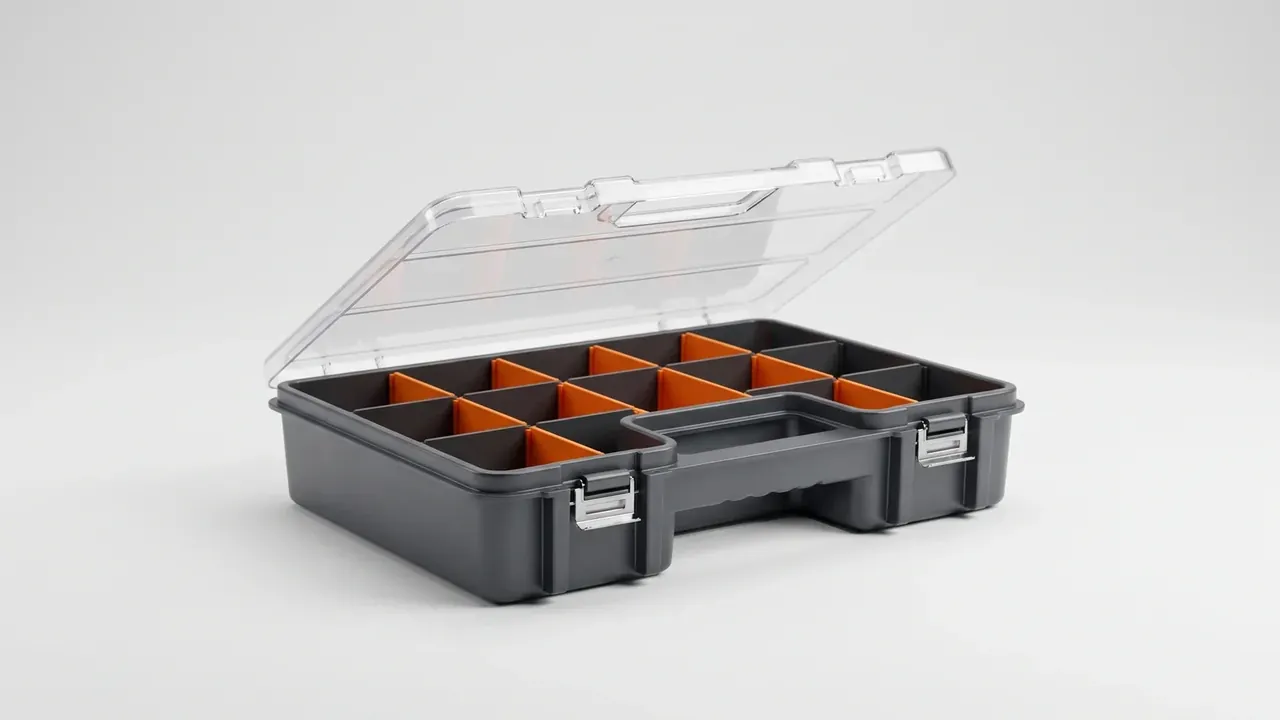
Quick answer: Accepting a mechanic's tool pouch is not a matter of feel. Six test items, a sampling plan and a disposition rule belong on one sheet, and every judgement column states a number rather than an adjective.
Table of contents
- Incoming Inspection Items for a Mechanic's Tool Pouch
- Appearance and Dimension Checks
- Seam Strength and Fabric Strength Testing
- Salt Spray and Load Testing
- AQL Sampling and Disposition Rules
- FAQ
1. Incoming Inspection Items for a Mechanic's Tool Pouch
Split the items by whether they can be judged on the spot: appearance is visible, dimensions and seam strength are measurable, salt spray and load take time. A mechanic's tool pouch sheet lists all three groups, with the slow group returning in seven days.
| Item | Method | Acceptance | Sampling |
|---|---|---|---|
| Appearance | 800 lux at 400 mm | No holes, runs under 3 stitches | 100 percent |
| Dimensions | Steel tape | Within plus or minus 3 mm | 5 per lot |
| Seam strength | Strip at 100 mm per minute | 350 N minimum | 3 per lot |
| Fabric strength | Strip 200 by 50 mm | 1200 N warp | 1 set per lot |
| Salt spray | 35 degrees Celsius, 48 hours | No red rust | 3 per lot |
| Load | 1.5 times rating, 4 hours | Residual set under 3 mm | 2 per lot |
Every judgement is a number. A seam must hold above 350 N, a run over three stitches or a stain over four square millimetres is a defect. Vague wording lets two inspectors disagree.
2. Appearance and Dimension Checks
Light comes first: D65 or above 800 lux, a neutral grey bench, the sample 400 mm from the eyes at 45 degrees. Side light reveals runs; overhead light hides them.
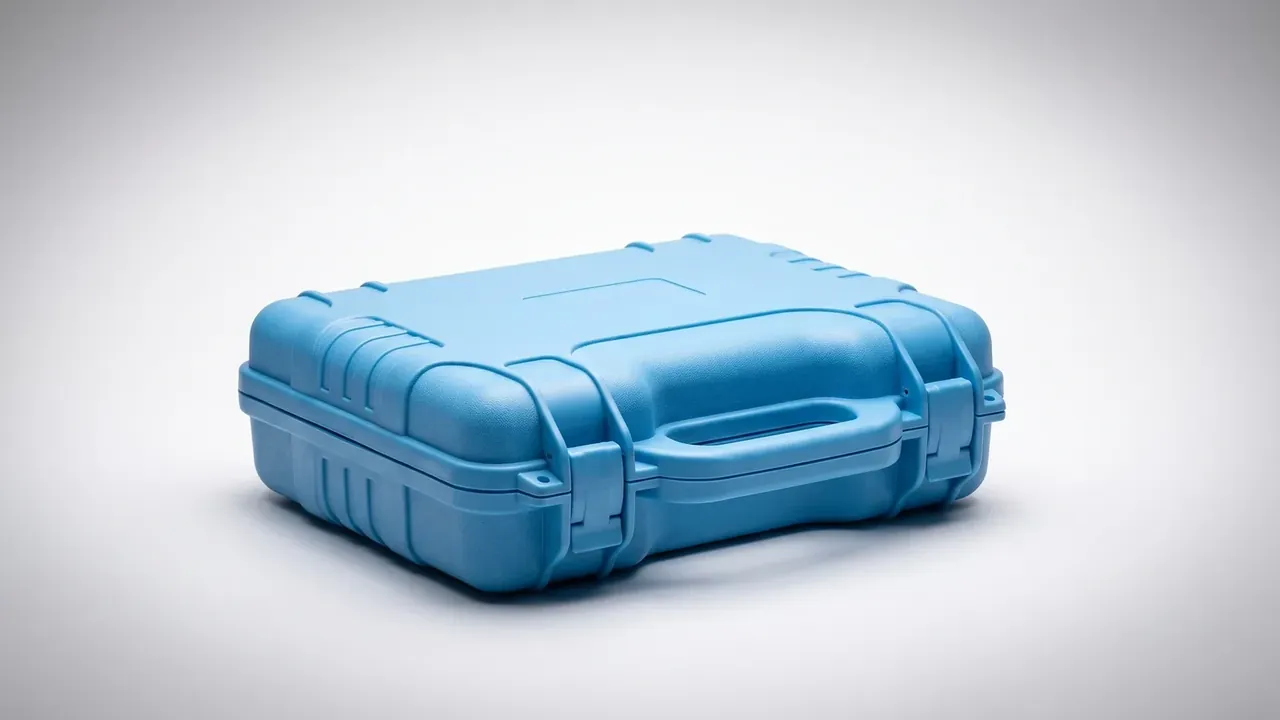
Defects fall into classes: holes, coating loss and missing zip teeth are critical, runs and stains major, loose threads over 10 mm minor. Dimensions are checked on five pouches with a 1 mm tape, always empty, since a loaded pouch is not comparable.
3. Seam Strength and Fabric Strength Testing
Cut a 50 mm strip across a seam, set the grips 100 mm apart and pull at 100 mm per minute. A break in the thread passes, a break in the fabric passes but is recorded, and a break within 5 mm of the seam edge fails because needle holes have cut the cloth.
Fabric runs 200 by 50 mm at 1200 N in warp and 900 N in weft. Results between 90 and 100 percent of the limit trigger a second set; under 90 percent freezes the roll.
4. Salt Spray and Load Testing
Salt spray is neutral: five percent sodium chloride, 35 degrees Celsius, 48 hours, atomised at one to two millilitres per 80 square centimetres per hour. Only red rust fails; white rust, a zinc product, is accepted up to five percent of area.
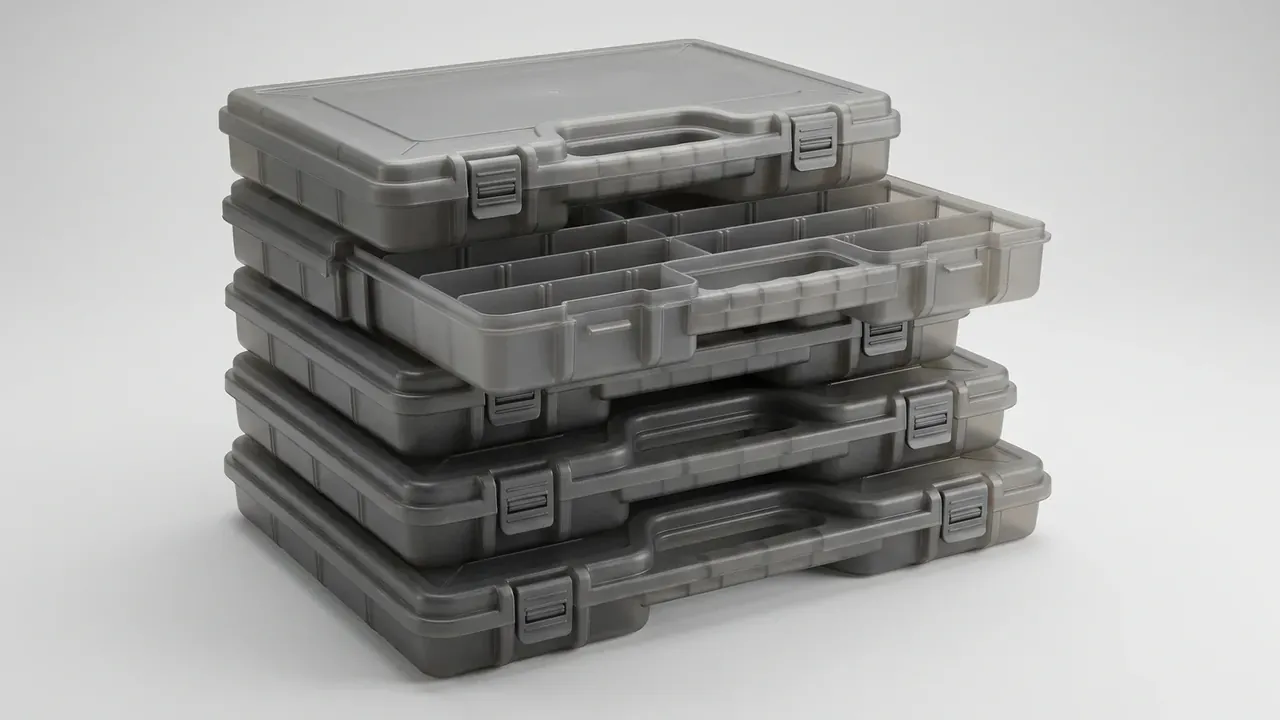
Load hangs 1.5 times the rating, so 18 kg on a 12 kg pouch, for four hours. After thirty minutes of rest the residual seam set must stay under 3 mm, and one attachment point takes 8 kg for ten minutes without pull-out. Load goes first, salt spray second, because loading leaves fine damage that the spray then exposes.
5. AQL Sampling and Disposition Rules
Sampling follows counting adjustment at level II, normal, single. The acceptance quality limit is zero for critical defects, 2.5 for major and 4.0 for minor. A mechanic's tool pouch lot of 501 to 1200 pieces means a sample of 80.
| Lot size | Sample | Major accept reject | Minor accept reject |
|---|---|---|---|
| 151 to 280 | 32 | 2 and 3 | 3 and 4 |
| 281 to 500 | 50 | 3 and 4 | 5 and 6 |
| 501 to 1200 | 80 | 5 and 6 | 7 and 8 |
| 1201 to 3200 | 125 | 7 and 8 | 10 and 11 |
A critical defect such as a sharp edge or a pulled eyelet rejects the lot at one piece; major defects above the acceptance number are sorted and reworked, then inspected tightened; minor ones may pass on concession. An eight digit lot code, three retained samples for 24 months and records for three years close the trace; reworked lots get their own code.
Conclusion
Mechanic's tool pouch acceptance standards replace opinion with repeatable action: six test items define what is checked, the sampling plan defines how many, the disposition rule defines what happens on failure. Then a new inspector reaches the same verdict. Send the standard out with the purchase order, and the mechanic's tool pouch lot stops being a matter of argument.
This article discusses only the container (case body) side of specifications and design intent, and does not cover any handling, loading or use of the contents.
Related Reading
- How raw material traceability works
- Quality control points in case assembly
- Inspection flow for military supply cases
- Where a mechanic's tool pouch is used
Related Products
- 8 Series — Gun Cases; Military Equipment Cases; Camera Equipment Cases; Drone Cases; Watch Cases; Knife Cases; First Aid Cases; Electronics Equipment Cases
- WL8-2812 PP Gun Case — model WL8-2812
- All protective cases and toolboxes: 7 series, 158 models