

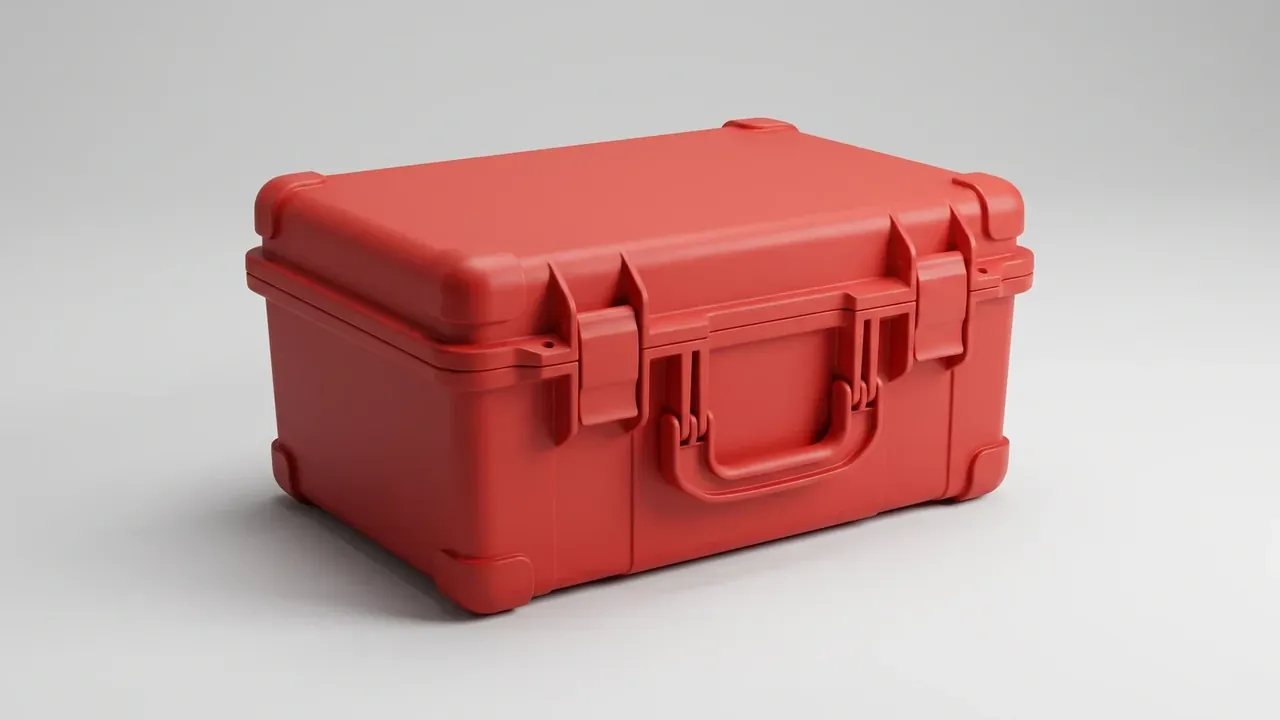
Quick answer: A medical case competes with soft bags, steel boxes, aluminium cases, thin-wall boxes and drawer cabinets. Four things separate them: full-perimeter sealing, surviving a drop, seams that flush clean, and replacement interval.
Table of contents
- Five Alternatives Worth Comparing
- Sealing: Bags and Steel Boxes Fall Short
- Impact and Stacking Reserve
- Cleaning Time Comes Down to Seams
- Weight, Price and Replacement Cycle
- FAQ
1. Five Alternatives Worth Comparing
The comparison set is not another medical case but the five options on the same list: coated fabric bags, steel drug boxes, aluminium cases, thin-wall moulded boxes and drawer cabinets. Price spread is three to one; the useful difference is sealing, impact, cleaning and life.
A soft bag carries the same load at 1.1 kg, a steel box folds 0.9 mm sheet, a thin-wall box runs 1.6 mm. The medical case sits at 5.2 kg, heaviest of the group, and that mass buys double-wall corners and a full-perimeter gasket.
| Option | Weight | Sealing | Cleaning |
|---|---|---|---|
| Soft bag | 1.1 kg | Zip, no clamp | Surface wipe |
| Steel box | 4.5 kg | Folded seam | Rivet seams |
| Aluminium case | 3.8 kg | Extrusion and strip | Many seams |
| Hard case | 5.2 kg | Full gasket, multiple clamps | Flushable |
Weight is the misread row. 5.2 kg pays for 3.4 mm corners, and the light options collect that saving at the first drop.
2. Sealing: Bags and Steel Boxes Fall Short
A soft bag seals with a zip, teeth against fabric with no compression, so the inner layer is damp within ten minutes of rain. A steel box crimps a folded seam without an elastomer; after a knock the fold opens to a measured 0.6 mm, and humidity creeps in over a wet season.
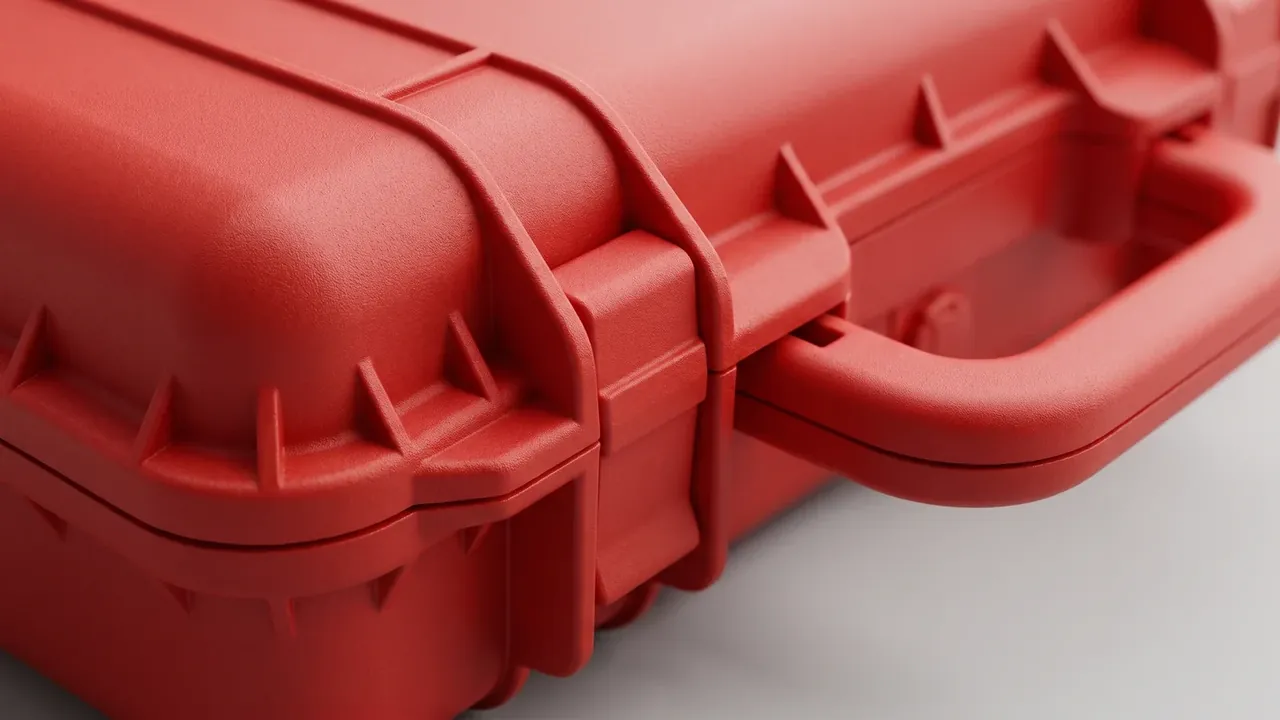
This case uses a full-perimeter gasket compressed at several points, so the gap is filled by elastic deformation rather than metal contact. One metre of water for thirty minutes holds because clamp load is spread, not because the cord is thicker.
3. Impact and Stacking Reserve
Drop testing separates the options fastest. A 1.6 mm thin-wall box dropped corner-first from 1.2 m cracks at the corner; a 3.4 mm double-wall body takes six corner drops from 1.8 m and still latches. The difference is surplus material at the corner, not polymer grade.
Aluminium fails by plastic deformation: a dent on the lid lip cannot be pushed back, the lid then rocks, and later closures leak. Plastic corners spring back to size, which is reserve bought with material.
Stacking follows: grooves underneath let four units sit without sliding, bags cannot stack, and aluminium cases press on the lid at two.
4. Cleaning Time Comes Down to Seams
Time cleaning on the worst case: a spill and a full flush. A soft bag can only be wiped, and the fabric needs drying, so the job runs six minutes; a steel box hides dirt in rivet holes and folded edges, and four minutes reaches only what is visible.
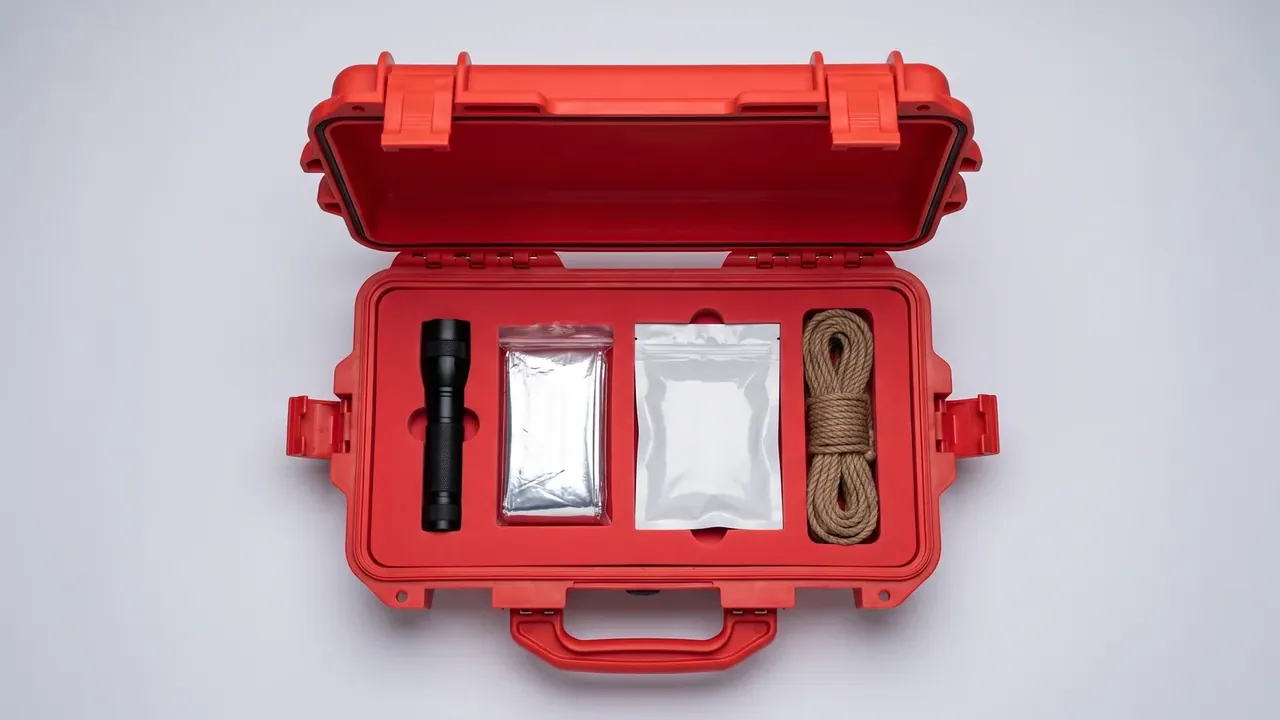
Radiused corners and a tray that lifts out whole bring the medical case to forty seconds. Seams are the only variable: every rivet, fold and channel is a groove a cloth cannot enter.
5. Weight, Price and Replacement Cycle
Put the accounts side by side and the ranking flips. Damp fabric and failed zips give a bag a cycle of 1.5 years, a steel box 3 years before the fold rusts through, the hard case 8 years. At 2.8 times the bag price, eight years narrows the gap to less than double.
| Measure | Soft bag | Steel box | Hard case |
|---|---|---|---|
| Price index | 1.0 | 1.6 | 2.8 |
| Replacement cycle | 1.5 years | 3 years | 8 years |
| Cleaning per event | 6 minutes | 4 minutes | 40 seconds |
Minimum order matters too. Bags ship by the dozen, while a medical case needs tooling and often starts at 300 units.
Conclusion
Each option keeps a place: bags on weight and order size, steel boxes on price, thin-wall boxes on cost, cabinets on volume. The medical case wins by not losing on all four counts at once: it holds its seal, closes after a drop, flushes clean and is bought once in eight years. The real choice is which of those cannot be compromised, and when none can, the medical case is the answer.
This article discusses only the container (case body) side of specifications and design intent, and does not cover any handling, loading or use of the contents.
Related Reading
- First aid kit case versus the alternatives
- How sealing classes are set for waterproof hard cases
- Specifying custom foam inserts
- How a medical case is structured and divided
Related Products
- 8 Series — Gun Cases; Military Equipment Cases; Camera Equipment Cases; Drone Cases; Watch Cases; Knife Cases; First Aid Cases; Electronics Equipment Cases
- WL8-2812 PP Gun Case — model WL8-2812
- All protective cases and toolboxes: 7 series, 158 models