

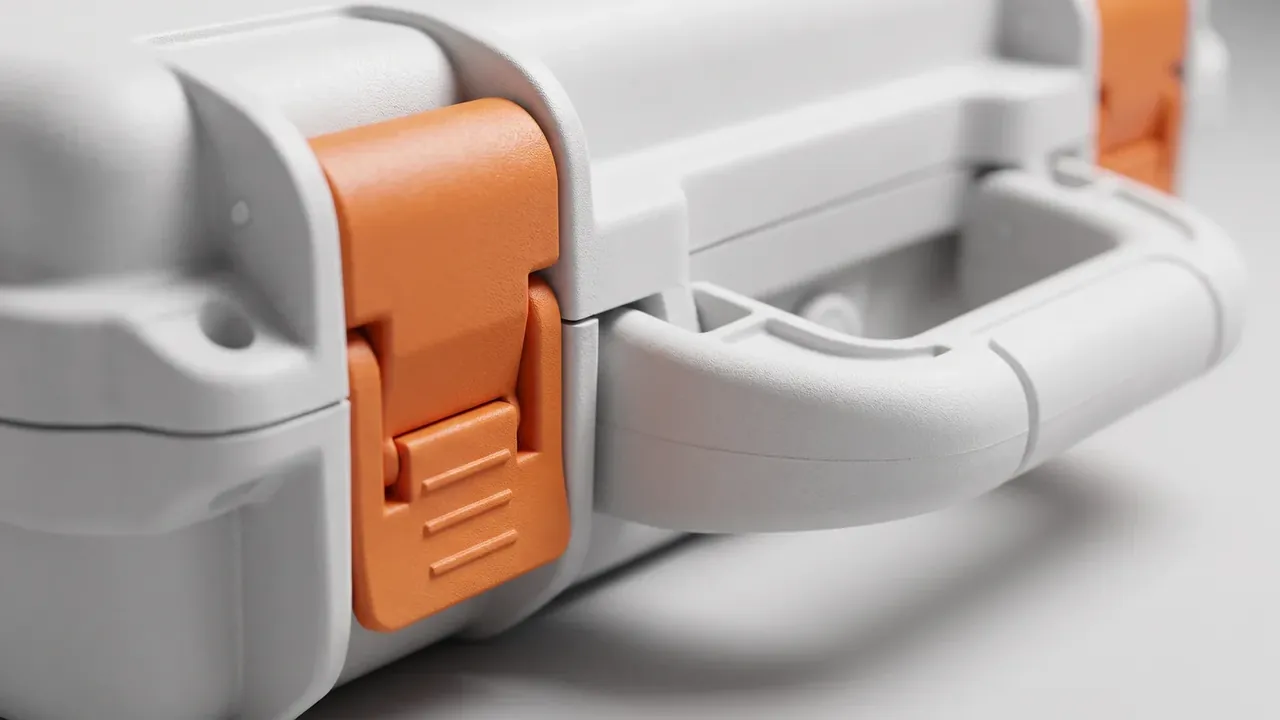
Quick answer: Split a Medical Case quote into body, insert, hardware, printing, packing and tooling before comparing prices. MOQ follows the tool, and lead time starts when deposit, artwork and sample approval are complete.
Table of contents
- What a Medical Case Quote Breaks Down Into
- MOQ Follows Tooling and Press Time
- When the Lead Time Clock Starts
- Six Charges Buyers Forget
- Where Comparison and Negotiation Land
- FAQ
1. What a Medical Case Quote Breaks Down Into
A single total price tells a buyer nothing. A quote worth comparing splits body, insert, hardware, printing, packing and tooling, each with its quantity basis.
The body is usually over half the price. On a 650 tonne press with a 95 second cycle, material at a 1.35 kg shot plus 8 percent regrind runs 55 to 60 percent of the unit price, and moulding adds 15 to 18 percent. A moulded insert needs its own tool.
| Cost line | Share | Driver |
|---|---|---|
| Body material | 55 to 60 percent | Grade and resin price |
| Moulding | 15 to 18 percent | Tonnage and cycle |
| Hardware | 10 to 12 percent | Latches and hinges |
| Insert and print | 6 to 9 percent | Process and colours |
| Packing and freight | 4 to 6 percent | Crate and freight mode |
The sheet should state currency, validity and a material clause. Polypropylene moving RMB 500 a tonne shifts unit cost about 3 percent.
2. MOQ Follows Tooling and Press Time
MOQ is not invented by a salesperson. It follows cavity count, changeover cost and the insert process. With an existing tool, 300 units can run. A new tool pushes the minimum to 1,000, because a cavity at RMB 42,000 adds RMB 140 to each of 300 units.
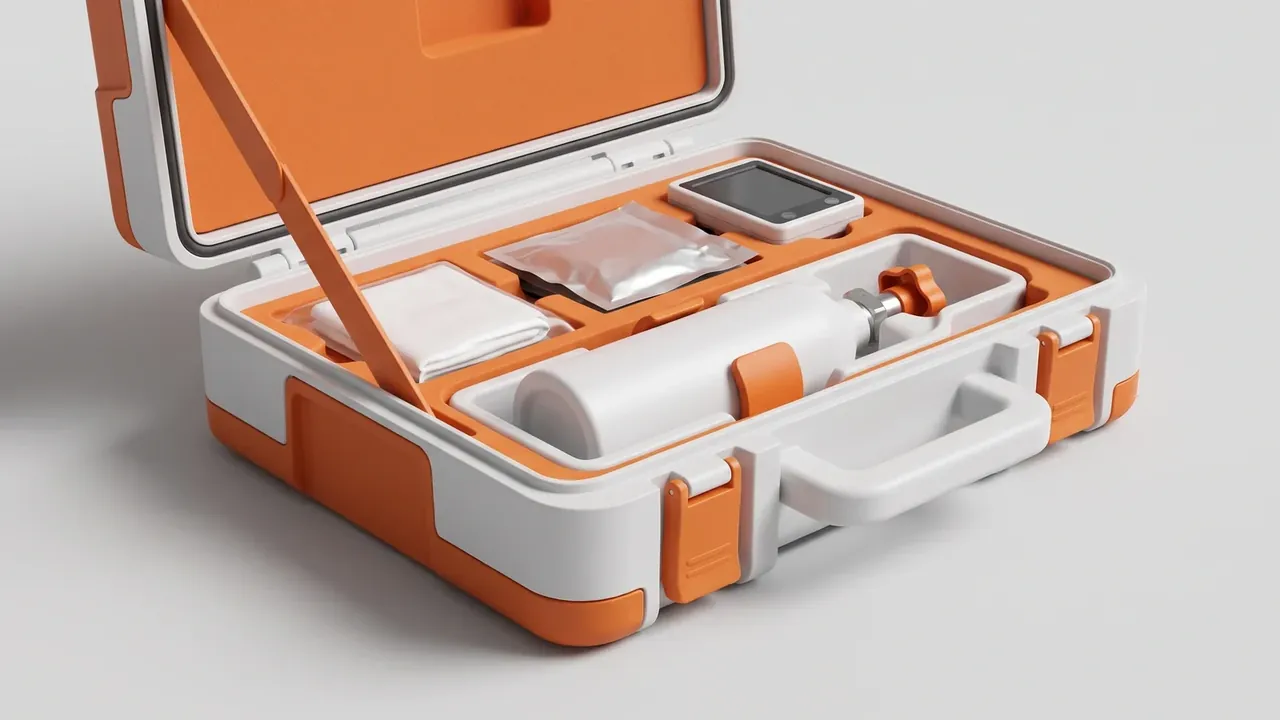
The insert is the second variable. Hand cut foam starts at 50 units; a moulded insert needs a tool and starts at 300 to 500. Each print colour carries a screen charge, and the question is whether the project runs once or repeats.
| Quantity | Unit price | Tooling | Lead time |
|---|---|---|---|
| 300 | RMB 128 | Existing tool | 25 days |
| 500 | RMB 118 | Existing tool | 28 days |
| 1,000 | RMB 112 | New tool, RMB 42,000 | 35 days |
Quantities can also be split: one body, several inserts, bodies pooled at 1,000 units, price from the body tier.
3. When the Lead Time Clock Starts
Lead time arguments come down to the start date. A supplier saying 25 days means after deposit and approved artwork, while the buyer hears 25 days from the order. The contract should fix the clock to deposit, signed artwork and approved sample, whichever is last.
Break the schedule into nodes: sampling 7 days, sample approval 5, tooling 18 to 22, correction 7, production 25, inspection and booking 7. Correction is the node most often forgotten.
Sea freight is separate. A 40HQ holds 480 units, with 28 to 32 days to a European base port. Air freight exceeds 30 percent of cargo value.
4. Six Charges Buyers Forget
Tooling ownership is the first charge buyers forget: pay once or amortise, and if amortised, state when the tool passes to the buyer. Sampling fees run two to three times the production price. Print screens are charged per colour, and export crating adds about RMB 18 per Medical Case.
Inspection is the fifth: a third party charges around RMB 2,800 a day for a sample of 80. Tool changes after drawing approval are the sixth, at RMB 3,000 to 8,000 each. Together they reach 8 to 12 percent of the first shipment.
5. Where Comparison and Negotiation Land
Comparison needs one basis. On a Medical Case order, align three quotes across the six blocks and calculate a landed unit price, or saved packing and freight will read as a discount.
Negotiation lands on quantity and payment. Moving from 30 percent deposit and 70 percent before shipment to 30 deposit, 60 against a bill of lading copy and 10 after acceptance frees the supplier's capital and usually buys 2 to 3 percent. Going from 300 to 500 units takes 4 percent off; 1,000 takes 8.
For repeat business, keep the tool at the supplier and fix the refill price 5 percent below the first tier.
Conclusion
A Medical Case price is settled by three things: how the quote is structured, which quantity tier the order falls into, and when the lead time clock starts. Ask for the six cost lines and the start conditions in writing; the refill clause will matter more than the first discount.
This article discusses only the container (case body) side of specifications and design intent, and does not cover any handling, loading or use of the contents.
Related Reading
- Medical Case applications and typical configurations
- What a Medical Case is: storage in treatment order
- How wholesale protective case buying works
- What small batch case customisation can do
Related Products
- 8 Series — Gun Cases; Military Equipment Cases; Camera Equipment Cases; Drone Cases; Watch Cases; Knife Cases; First Aid Cases; Electronics Equipment Cases
- WL8-2812 PP Gun Case — model WL8-2812
- All protective cases and toolboxes: 7 series, 158 models