

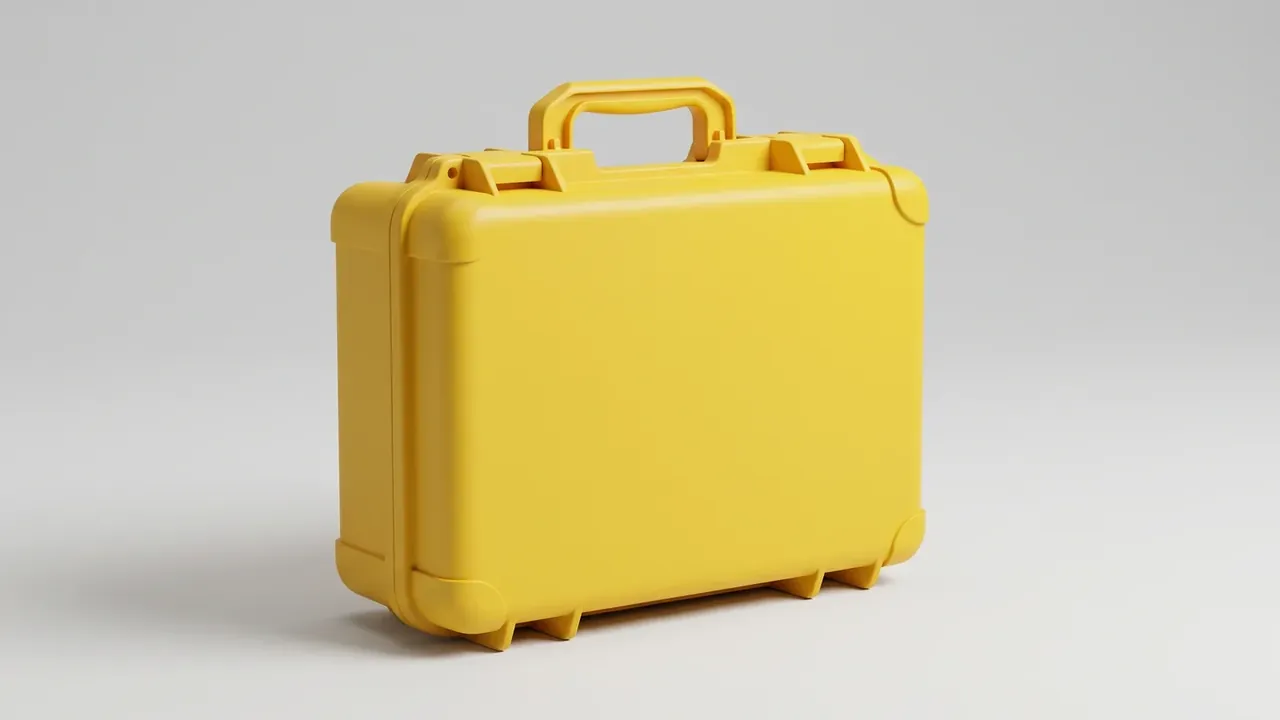
Quick answer: A medical case is specified from the inside out: fix the largest instrument and finger clearance first, add wall and rib depth to reach the envelope, then size wall thickness and machine tonnage against load and drop.
Table of contents
- Sizing a medical case from the inside out
- Wall thickness and ribs: stiffness comes from section shape
- Three load cases: static, stacked and drop
- Handles, hinges and latches: the force ratings
- Turning specs into drawing language: tolerance and acceptance
- FAQ
1. Sizing a medical case from the inside out
A medical case specification that starts with the envelope comes back for rework. Work backwards: list the largest item that must fit, then ask whether fingers reach past it, whether the lid presses, whether a divider fits above. Those answers give the cavity, and wall plus lid depth give the envelope.
An internal 440×310×160 mm means a 480×350×190 mm envelope: 20 mm per side covers 3.0 mm of wall, 12 mm of rib depth and 5 mm of rim engagement. Empty weight is near 3.6 kg; past 4 kg it needs a strap.
| Item | Value | Decided by |
|---|---|---|
| Cavity | 440×310×160 mm | largest item plus clearance |
| Wall | 3.0 mm | load and drop |
| Envelope | 480×350×190 mm | cavity plus wall, lid |
2. Wall thickness and ribs: stiffness comes from section shape
3.0 mm is the usual starting point: melt reaches the far end of the mould, a drop does not crack it, and it still carries by hand. Thickness alone does not set stiffness. A flat 3.0 mm panel bows under 22 kg, while the same panel with two ribs 12 mm deep barely moves.
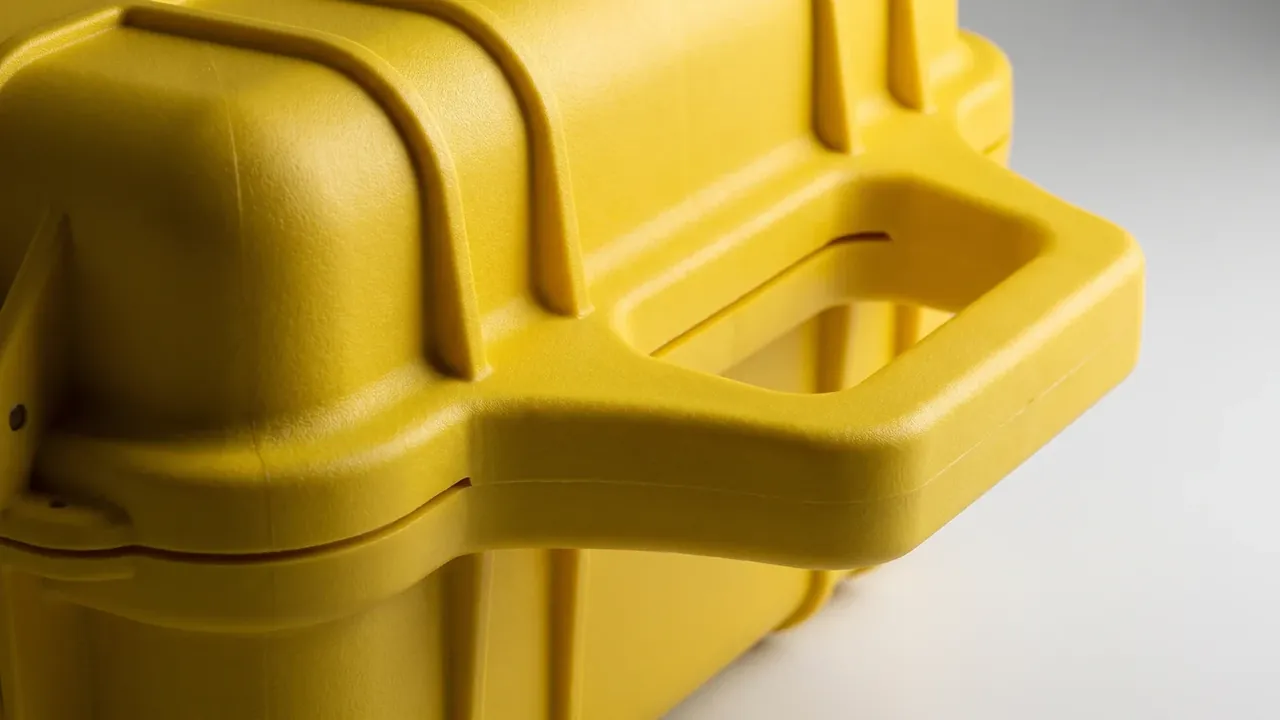
Three rules govern ribs: depth under four times the wall or the root sinks, root thickness at 0.6 of the wall to avoid read-through, pitch within 60 mm. Sections differing by over 0.3 mm cool unevenly and warp.
3. Three load cases: static, stacked and drop
Load is not one number. Static is 22 kg on a shelf for 24 hours. Stacked is four cases high, the bottom taking 150 kg on the lid. Drop is 1.2 m onto corners, edges and faces, corner first.
| Case | Condition | Pass criterion |
|---|---|---|
| Static | 22 kg, 24 h | deflection under 2 mm |
| Stacked | four high, 150 kg, 7 days | no permanent set |
| Drop | 1.2 m, six faces three points | no crack, latches shut |
Each case loads a different feature, so one body passes only by dividing work.
4. Handles, hinges and latches: the force ratings
The handle carries the concentrated load, so it gets two figures. Static is three times rated: 22 kg of contents means 66 kg pulled for a minute without separation. Dynamic is one times, at walking gait, ten thousand cycles. Static tests ultimate strength, dynamic tests fatigue.
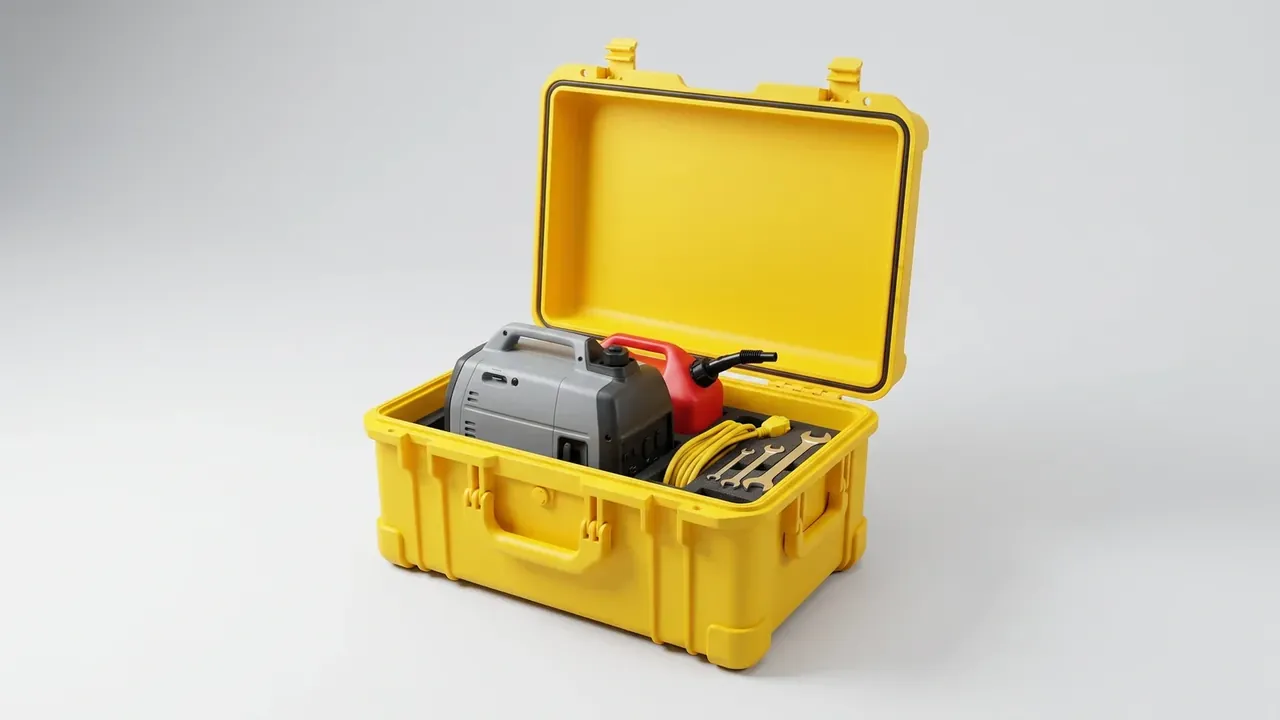
Hinges are specified by pin diameter and bearing length: a 4 mm pin with 60 mm per side suits a hand-carried case; longer bodies need a third support or the lid bows. Latches take a holding force and 30 to 60 N of opening force, light enough for gloves.
5. Turning specs into drawing language: tolerance and acceptance
A specification table must be inspectable, or it is a description: envelope with tolerance, wall and rib positions, warp, gap at the mating faces.
Shrinkage belongs on the drawing: polypropylene moulds at 0.5 percent, so 480 mm needs 2.4 mm of compensation or the first shot is undersize. Tonnage too: at 35 MPa over the projected area, a 480×350 mm case needs 600 to 800 tonnes, below which flash appears at the parting line.
| Check | Specification | Out of tolerance |
|---|---|---|
| Envelope | 480×350×190 mm, ±2.0 mm | rework tool or downgrade |
| Wall | 3.0 mm, ±0.15 mm | adjust process |
| Warp and gap | 0.6 mm and 0.4 mm max | straighten, scrap or fit |
| Latch opening | 30 to 60 N | reset latch position |
Conclusion
A medical case specification is numbers constraining each other: cavity sets envelope, envelope sets tonnage, load sets wall and ribs, tolerance decides whether it can be inspected. Put the four on one sheet and it stops being a guess; widen one alone and the price is paid in weight, cost or yield.
This article discusses only the container (case body) side of specifications and design intent, and does not cover any handling, loading or use of the contents.
Related Reading
- What a medical case is: structure and zoning
- Medical cases at aid posts, in the field and in vehicles
- How a waterproof hard case seal is designed
- Quality control at case assembly and acceptance
Related Products
- 8 Series — Gun Cases; Military Equipment Cases; Camera Equipment Cases; Drone Cases; Watch Cases; Knife Cases; First Aid Cases; Electronics Equipment Cases
- WL8-2812 PP Gun Case — model WL8-2812
- All protective cases and toolboxes: 7 series, 158 models