

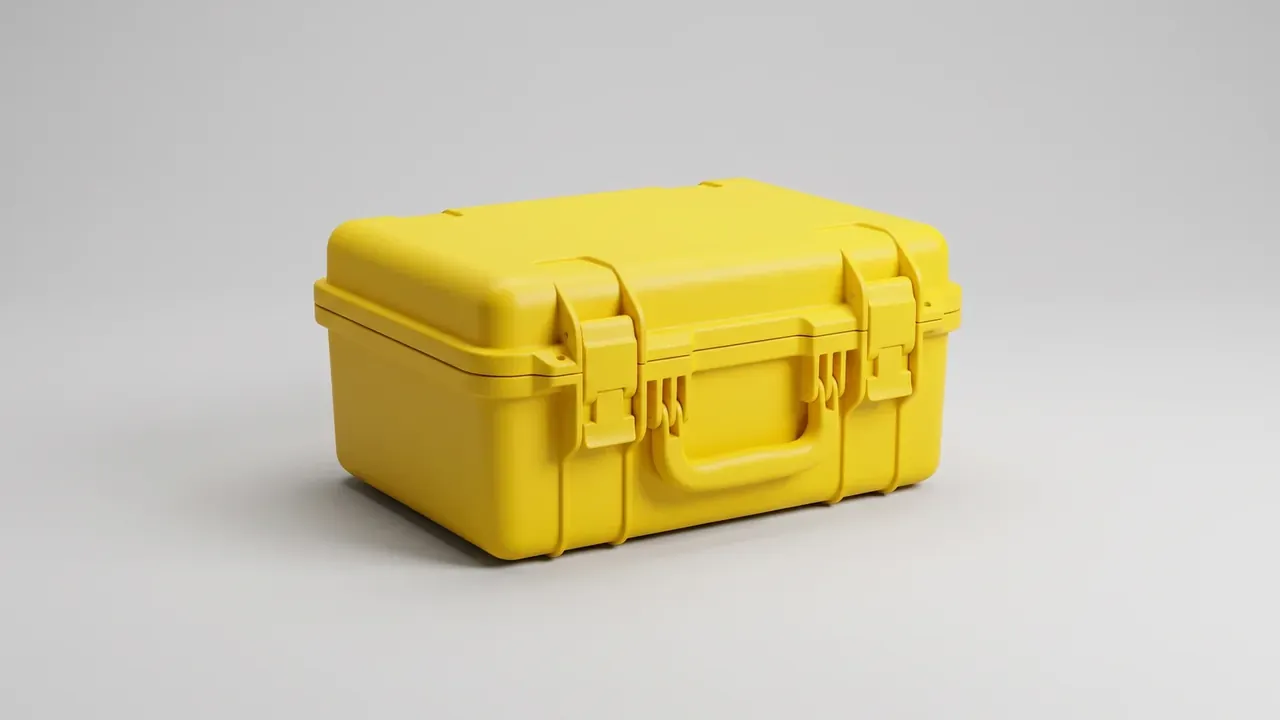
Quick answer: A Medical Case passes only when every item is a number plus a condition: tolerance for geometry, pressure decay for the seal, a signed sample for appearance, a sampling plan for the lot.
Table of contents
- Why a Medical Case Needs Written Verdicts
- First Article Checks
- Verifying Seal and Ingress Protection
- Latch Hinge and Handle Endurance
- Sampling Verdicts and Records
- FAQ
1. Why a Medical Case Needs Written Verdicts
Disputes over a delivered lot are about wording, not looks: one side accepts the case, the other rejects it. Turn each item into a number and a condition, and the argument becomes arithmetic.
The four families are checked at different moments: geometry and appearance at the first article and patrol inspection, function at the first article and each lot, drop and static load at the first article and the annual type test. On a Medical Case they must be frozen while the tool is sampled.
| Family | Items | Verdict |
|---|---|---|
| Geometry | Envelope, wall, flatness | Against tolerance |
| Function | Seal, latch, handle, drop | Pass or fail |
| Appearance | Colour, flash, sink marks | Graded |
Grading matters as much as measuring: a leaking seal is critical, a stiff latch is minor.
2. First Article Checks
The first article comes from shots five to ten, measured after thirty minutes of cooling. The envelope is held to plus or minus 2.0 mm, the thinnest wall to 2.8 mm, and a feeler gauge may not enter under the base beyond 1.5 mm. Lid to body mismatch is the item most often skipped: a fingernail across the seam reads any step above 0.5 mm.
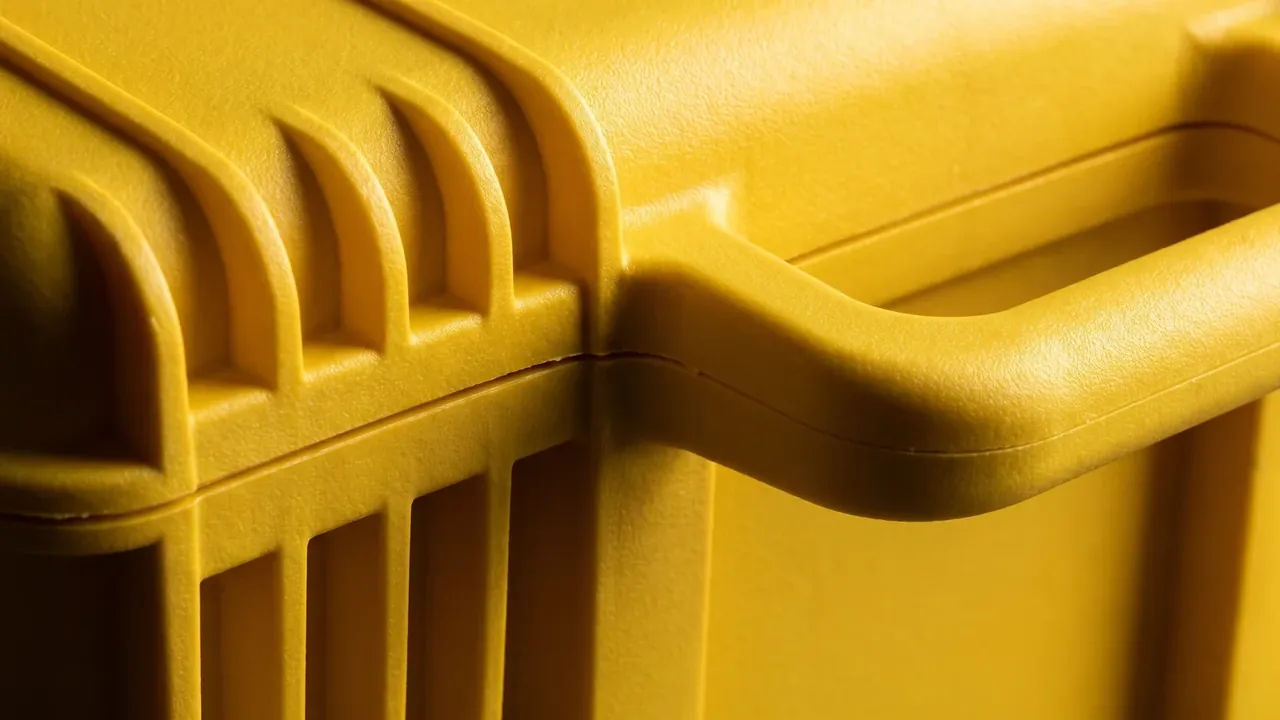
Appearance is judged against a signed limit sample, not a sentence. Colour under D65 may differ from the sample by 1.5, and by 1.0 between body, latch and handle. Flash fails if a 0.3 mm feeler enters the parting line, and wall thickness under 2.5 mm at a corner usually predicts a drop split.
3. Verifying Seal and Ingress Protection
The seal is tested twice. Charge the closed case to 20 kPa, hold 60 seconds, and fail above 1.0 kPa, which catches a missing gasket and an opened splice. Then 30 minutes at one metre, wiped dry, walls checked for water, case weighed: a gain above 5 g fails.
The gasket is accepted as 55 plus or minus 5 Shore A and 25 to 30 percent compression, moulded as one ring with no splice. A spliced ring passes at room temperature and opens after four hours at minus 20 degrees Celsius.
Repeat both tests after four cycles between minus 20 and 55 degrees. Body and gasket shrink at different rates, so a Medical Case that passed cold can leak warm.
4. Latch Hinge and Handle Endurance
Latch life runs at 15 operations per minute to 5,000 cycles. At the last cycle it must still close with one hand and hold pressure. Cracks start at the arm root, so the part is checked at five times magnification and fails above 1 mm.
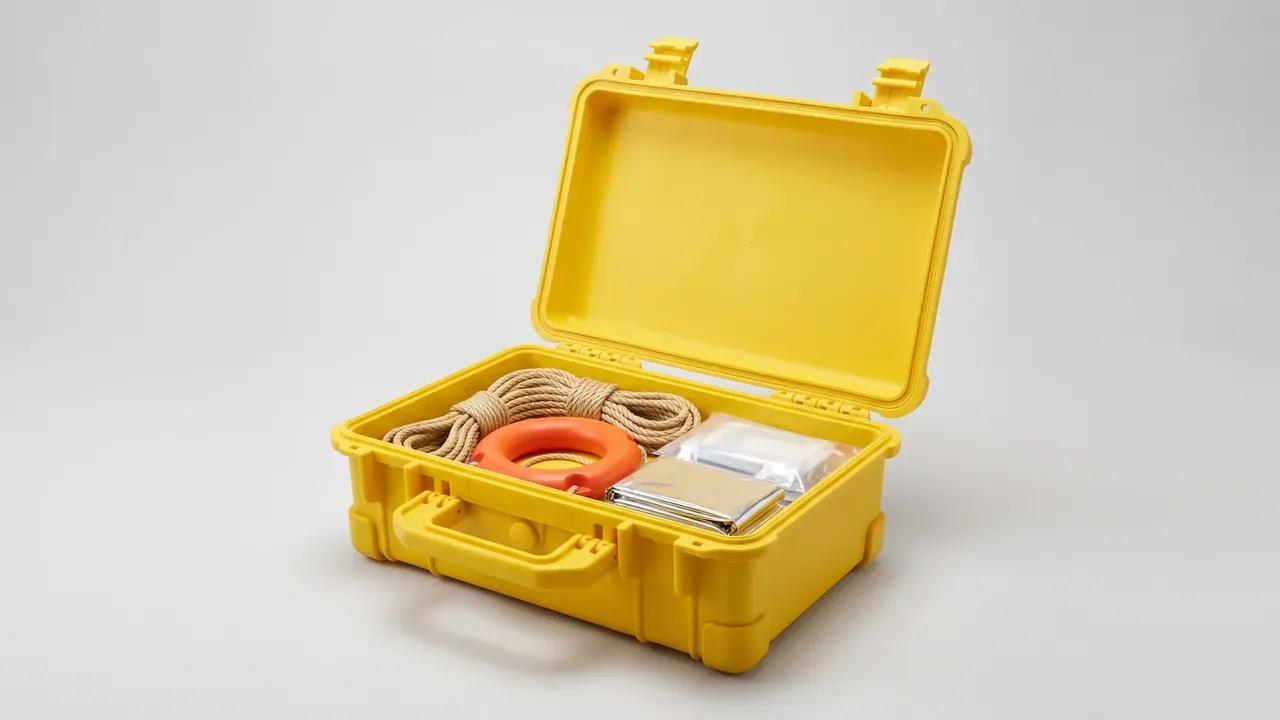
A lid opened to 100 degrees must stay on the hinge stop without a strap. The pin is 304 stainless at 4 mm with 0.1 to 0.2 mm clearance, allowed to grow 0.15 mm over 3,000 cycles. The handle carries twice its 15 kg rating for ten minutes with no more than 2 mm of set.
Drop a loaded Medical Case at 1.2 m, three times on six faces, onto concrete at least 100 mm thick.
5. Sampling Verdicts and Records
Lots are drawn at inspection level II, with an acceptance quality limit of 1.0 for major and 2.5 for minor defects. A leaking seal is critical and not sampled. A lot of 501 to 1,200 units samples 80, accepting 2 and rejecting 3.
| Lot size | Sample | Major Ac/Re | Minor Ac/Re |
|---|---|---|---|
| 151 to 280 | 32 | 1/2 | 3/4 |
| 281 to 500 | 50 | 1/2 | 5/6 |
| 501 to 1,200 | 80 | 2/3 | 5/6 |
| 1,201 to 3,200 | 125 | 3/4 | 7/8 |
A record must let a second person repeat the verdict: batch and mould number, raw readings rather than the word pass, pressure figures, room temperature, date, and a batch code tracing to press and shift.
Conclusion
Acceptance is not a look over; it is a set of numbers someone else can recompute. Put tolerances, test conditions, a limit sample and a sampling plan on the inspection card, and the argument becomes a comparison of readings. Ask for raw data before price is discussed, and the Medical Case will not arrive unjudgeable.
This article discusses only the container (case body) side of specifications and design intent, and does not cover any handling, loading or use of the contents.
Related Reading
- How a Medical Case is configured for different response scenarios
- What a Medical Case is: storage in treatment order
- How to read the specification sheet of a first aid kit case
- How emergency supply cases are used in reserve stores
Related Products
- 8 Series — Gun Cases; Military Equipment Cases; Camera Equipment Cases; Drone Cases; Watch Cases; Knife Cases; First Aid Cases; Electronics Equipment Cases
- WL8-2812 PP Gun Case — model WL8-2812
- All protective cases and toolboxes: 7 series, 158 models