

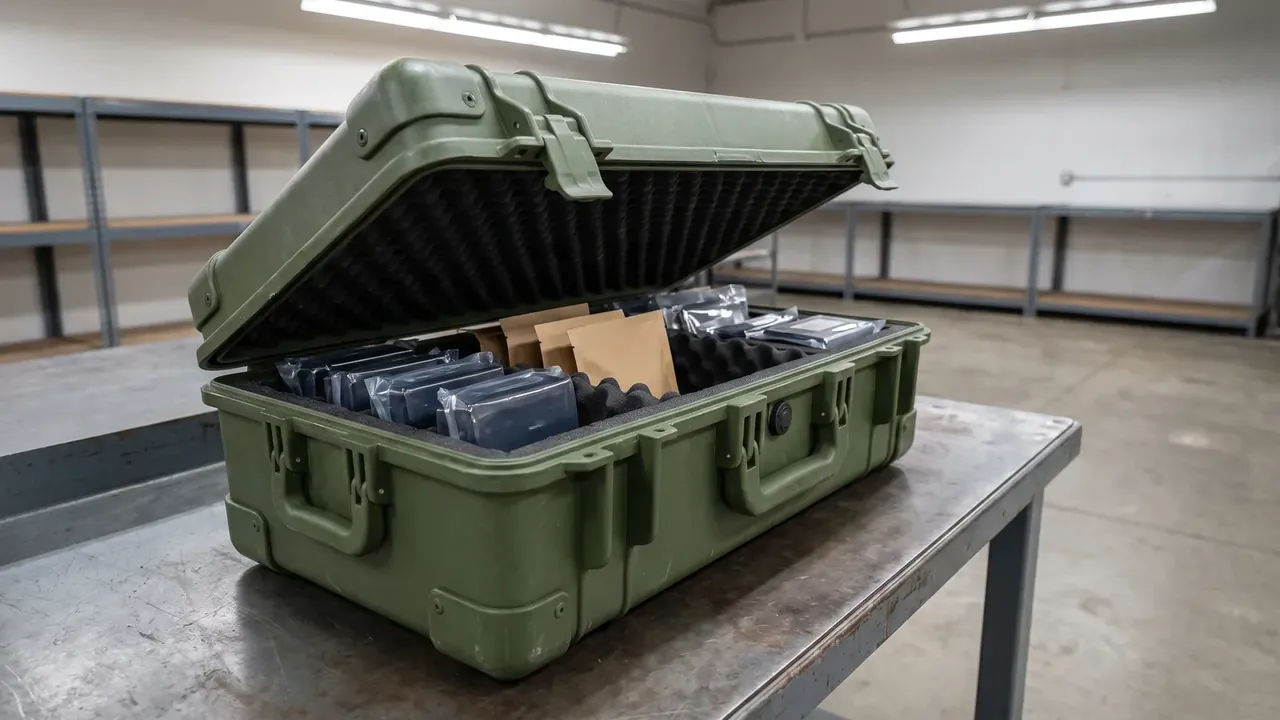
Quick answer: A Medical DNA gene analyzer portable case sets liner peel at ≥10 N/25 mm and an R8 mm base radius, with 350 wipes and shift under 0.7 mm.
Table of contents
- Wipeable liner peel strength in a Medical DNA gene analyzer portable case
- Base radius and drainage fall
- Reading linting after the wipe cycle
- Measuring partition shift after a drop
- Radius sampling on portable production lots
- FAQ
1. Wipeable liner peel strength in a Medical DNA gene analyzer portable case
Lay out the envelope first. A Medical DNA gene analyzer portable case measures 480×350×200 mm outside and 425×295×145 mm inside; the 3.4 mm wall and rim flange take up the gap.
The liner is one bonded wipeable sheet, not loose pads, because the interface must last. Peel strength of at least 10 N/25 mm is the force per 25 mm width needed to lift the liner off the shell at a steady rate; below it a wiped corner lifts and sheds lint. A Medical DNA gene analyzer portable case checks that figure beside the R8 mm base radius, the hardest place to press the bond flat.
| Wipe batch | Item checked | Acceptance |
|---|---|---|
| 0 wipes, baseline | Liner peel strength | ≥10 N/25 mm |
| 150 wipes | Corner lift | No lint, no delamination |
| 350 wipes | Radius bond | No lint under 70% ethanol |
Both checks share one coupon, so batches stay comparable.
2. Base radius and drainage fall
The base is not square-cornered, and that is deliberate. A Medical DNA gene analyzer portable case closes its four base edges with an R8 mm radius and a 2 degree drainage fall, so residue runs to the low side instead of a right-angle seam.
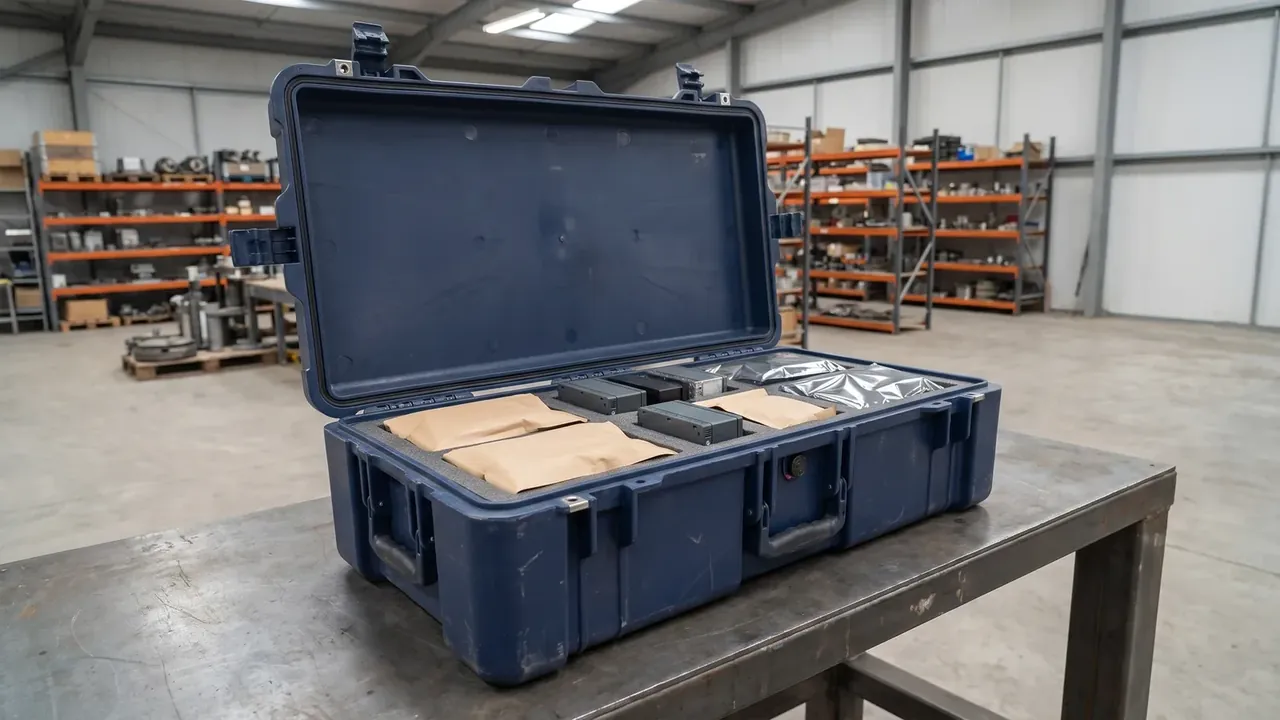
Fall and radius are linked. Two degrees is what both mould release and stable stacking accept; R8 mm keeps liner stretch inside what the adhesive tolerates. Five partitions divide the 425×295×145 mm cavity evenly, with rounded feet that press no crease into the liner.
| Radius location | Size | Check condition |
|---|---|---|
| Four base corners | R8 mm | No pooling at 2 degree fall |
| Partition feet | Rounded | No hard-edge crease in liner |
| Rim flange | Continuous blend | No delamination after 350 wipes |
3. Reading linting after the wipe cycle
Linting needs a repeatable motion, not a glance. A pad under constant pressure runs across the liner with 70% ethanol for 350 passes, stopping every 50 passes to brush the edge with white cotton and log any lint or lift. On a Medical DNA gene analyzer portable case this concerns only the liner-to-shell bond, nothing carried inside.
Reading has three layers. One, the surface: no whitening, no chalking, no fuzzed edges. Two, the bond: run a fingertip along the R8 mm radius and reject any hollow spot. Three, the number: back on the peel rig the reading must still clear 10 N/25 mm. A lift at pass 200 usually means surface prep before bonding, not the liner sheet. Records sit in three columns — wipe batch, radius location, shift reading — so a retest matches row by row. A Medical DNA gene analyzer portable case folds all three onto one rejection sheet, so a third party can reproduce the result after 350 passes.
Sealing and latches are checked on the same coupon. The rim gasket is benchmarked to IP65, two latches each rated 340 N, and the box still clamps after 3000 open-close cycles.
4. Measuring partition shift after a drop
A 1.0 m drop is unavoidable, and how you measure matters more than the outcome. A Medical DNA gene analyzer portable case lands on all six faces; the feet of five partitions are traced again with a scribing template before shift is read. Beyond 0.7 mm, the feet have worked loose under impact.
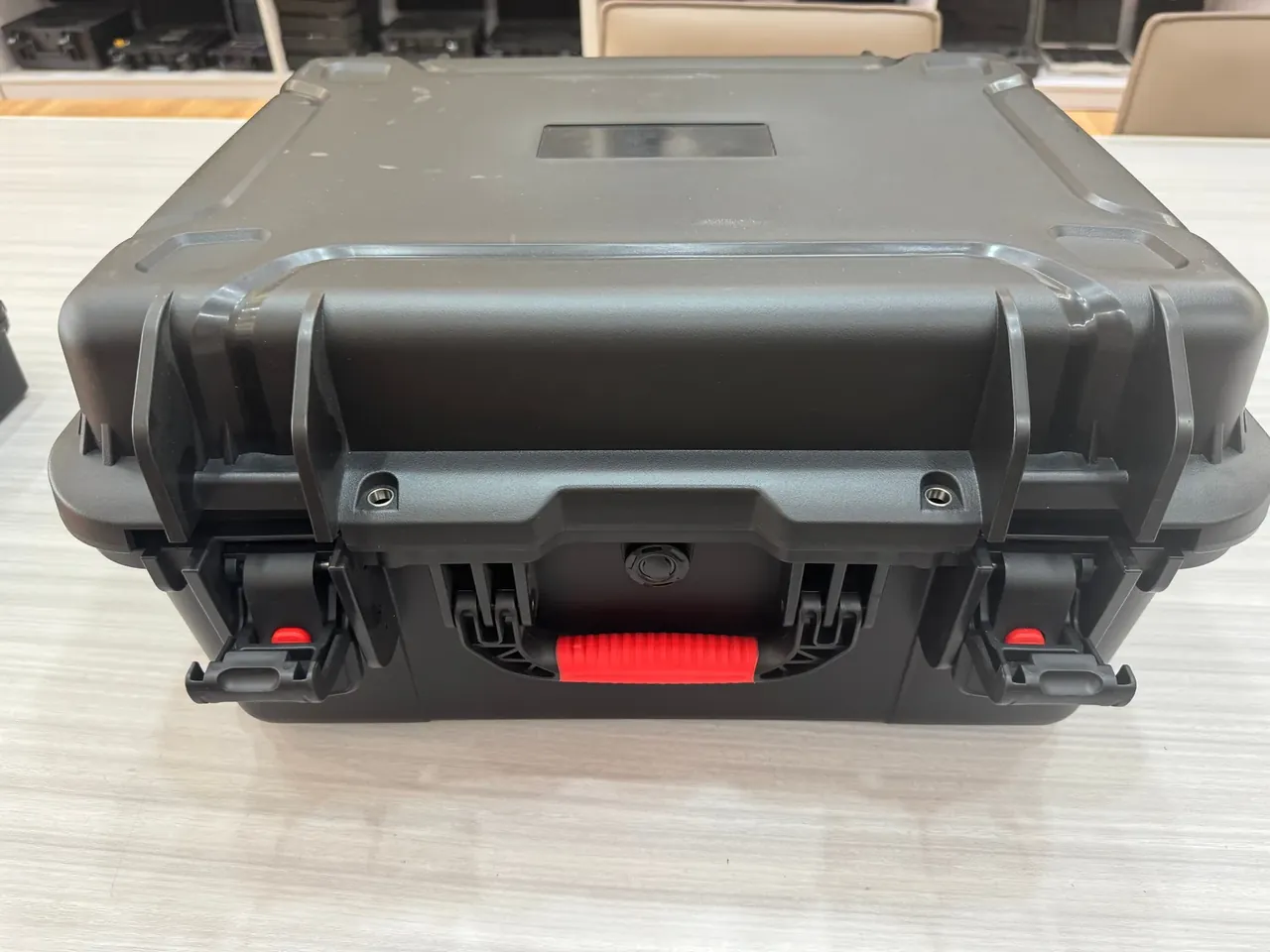
Shift is read at foot root, mid-height and tip; all three must sit at 0.7 mm or less. The drop follows the 350 wipe cycles on the same coupon, wipes first, because the bond is loosest once ethanol has acted on it. The R8 mm radius spreads impact round the curve, so the feet are not driven into a hard right angle.
| Shift reading | Measurement point | Verdict |
|---|---|---|
| ≤0.4 mm | Foot root | Bond intact |
| 0.4 to 0.7 mm | Mid-height | Inside the limit |
| Over 0.7 mm | Tip | Reject |
5. Radius sampling on portable production lots
One good sample does not clear a lot. A Medical DNA gene analyzer portable case is sampled three pieces per mould, and the actual R8 mm radius and 2 degree fall are measured; if either drifts the tool goes back for review. A radius is set by the tool and cannot be corrected after moulding, so sampling looks at dimensions, not finish.
Those records join the wipe batches and shift readings as three source sheets for the lot of Medical DNA gene analyzer portable case: bond peel at 10 N/25 mm or better, base radius R8 mm, partition shift within 0.7 mm. When the three agree, the 480×350×200 mm envelope, 3.6 kg empty weight and 7.5 kg load count as reproduced rather than drawn. JUNZHIJIA files each lot against that line before release.
Conclusion
A Medical DNA gene analyzer portable case reduces, on the shell side, to the bond interface and the base geometry. Peel strength of 10 N/25 mm governs the liner after 350 wipes, the R8 mm radius and 2 degree fall govern where residue goes, and partition shift within 0.7 mm governs the grip after a 1.0 m drop. Put those three beside the 480×350×200 mm envelope on the drawing and a production lot has something to reproduce.
Related Reading
- Shell selection for medical equipment transport cases
- Interior partitions in laboratory instrument cases
- Inspection baseline for field medical cases
- Wipeable surfaces and cleaning tolerance in medical cases
Related Products
- 8 Series — Gun Cases; Military Equipment Cases; Camera Equipment Cases; Drone Cases; Watch Cases; Knife Cases; First Aid Cases; Electronics Equipment Cases
- WL8-2812 PP Gun Case — model WL8-2812
- All protective cases and toolboxes: 7 series, 158 models