

Quick answer:The watershed in a medical equipment after-sales tool case is whether the pockets are milled or moulded. EVA at 60 kg/m³ cut 12 mm deep suits runs under 200 units where the tool list keeps changing, while a moulded tray costs 30,000 to 80,000 RMB and only pays back past 2,000 units.
Table of contents
- How a Service Tool Case Differs
- Three Ways to Form a Pocket
- EVA Cutting Depth and Spacing
- The Batch Threshold for Moulded Trays
- Load and Drop Verification
- FAQ
1、How a Service Tool Case Differs
The process watershed in a medical equipment after-sales tool case is whether the pockets are milled or moulded. Milled pockets lean on the tool path and the foam density, moulded ones on the tool and the shrink rate, and the two cost curves cross near 200 units.
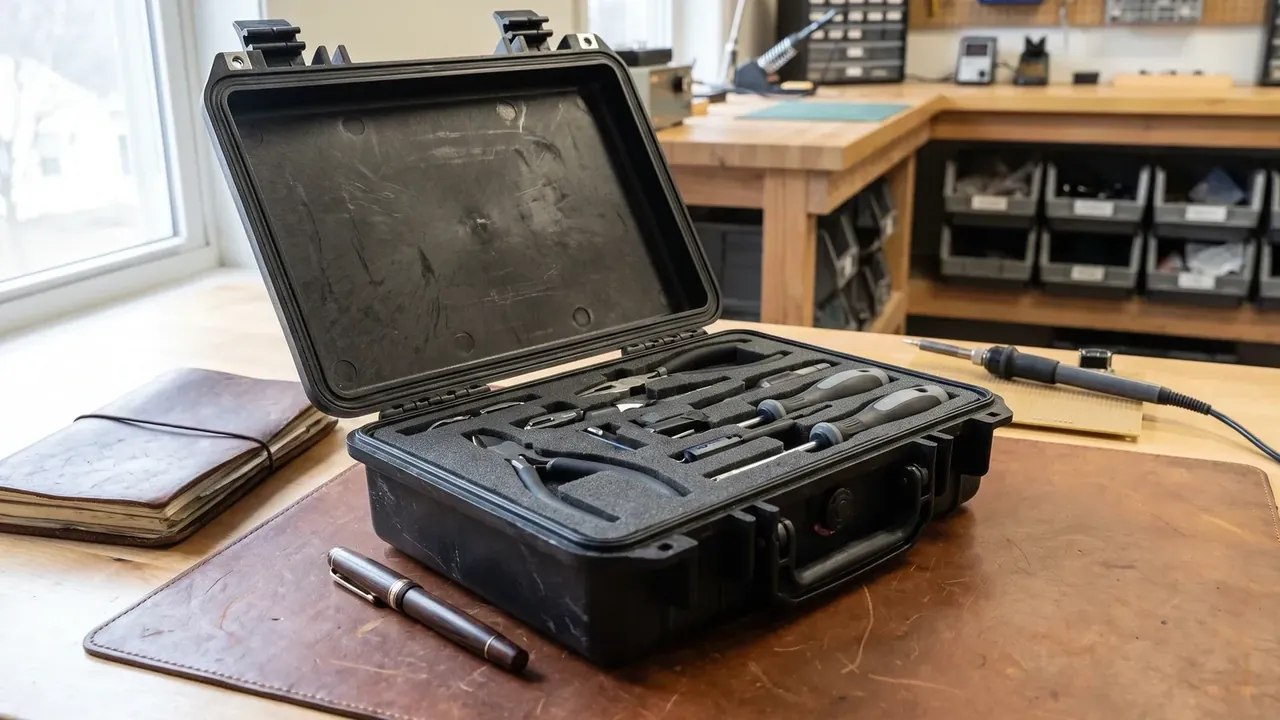
An ordinary tool case only has to stop things rattling; a medical equipment after-sales tool case adds two demands: an empty pocket stays visible, and grime wipes out. A through-slot hides a missing screwdriver until everything is tipped out, and a tool that shifts in its recess wears the calibration label off before the next check.
2、Three Ways to Form a Pocket
Three routes map onto three volumes: EVA milling for samples and small runs, moulded trays once the model settles, laminated PE board in between.
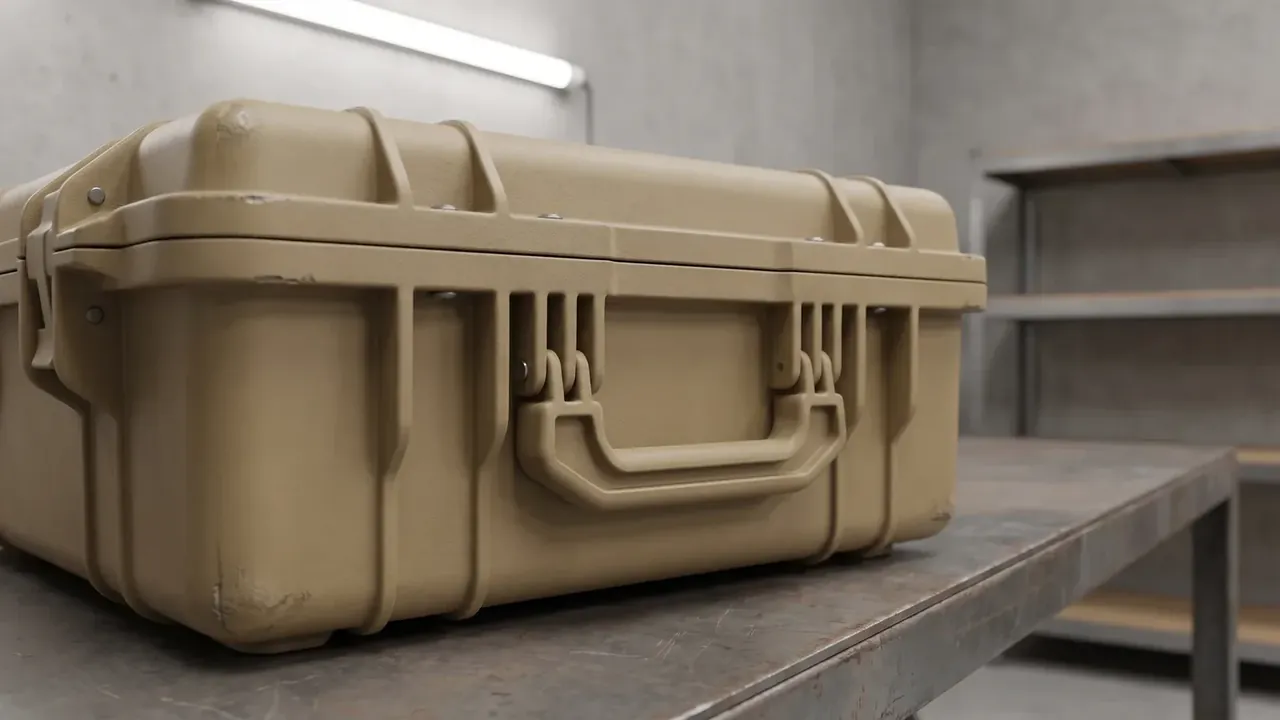
In a medical equipment after-sales tool case the shell is pushed around all day, so bumpers at 4 mm and metal latches carry the load long before anyone judges the insert.
| Forming route | Entry cost | Change-over | Feel and finish | Sensible batch |
|---|---|---|---|---|
| CNC-milled EVA | Programming and sample fee | New tool path, 30 min | Matte, fuzzy edges | 20 to 200 |
| Moulded tray | 30,000 to 80,000 RMB | Tool swap and setting, 4 h | Glossy, identical parts | Above 2,000 |
| Laminated PE board | Cutting die, a few hundred RMB | New die, 2 h | Stiff, replaceable | 200 to 1,000 |
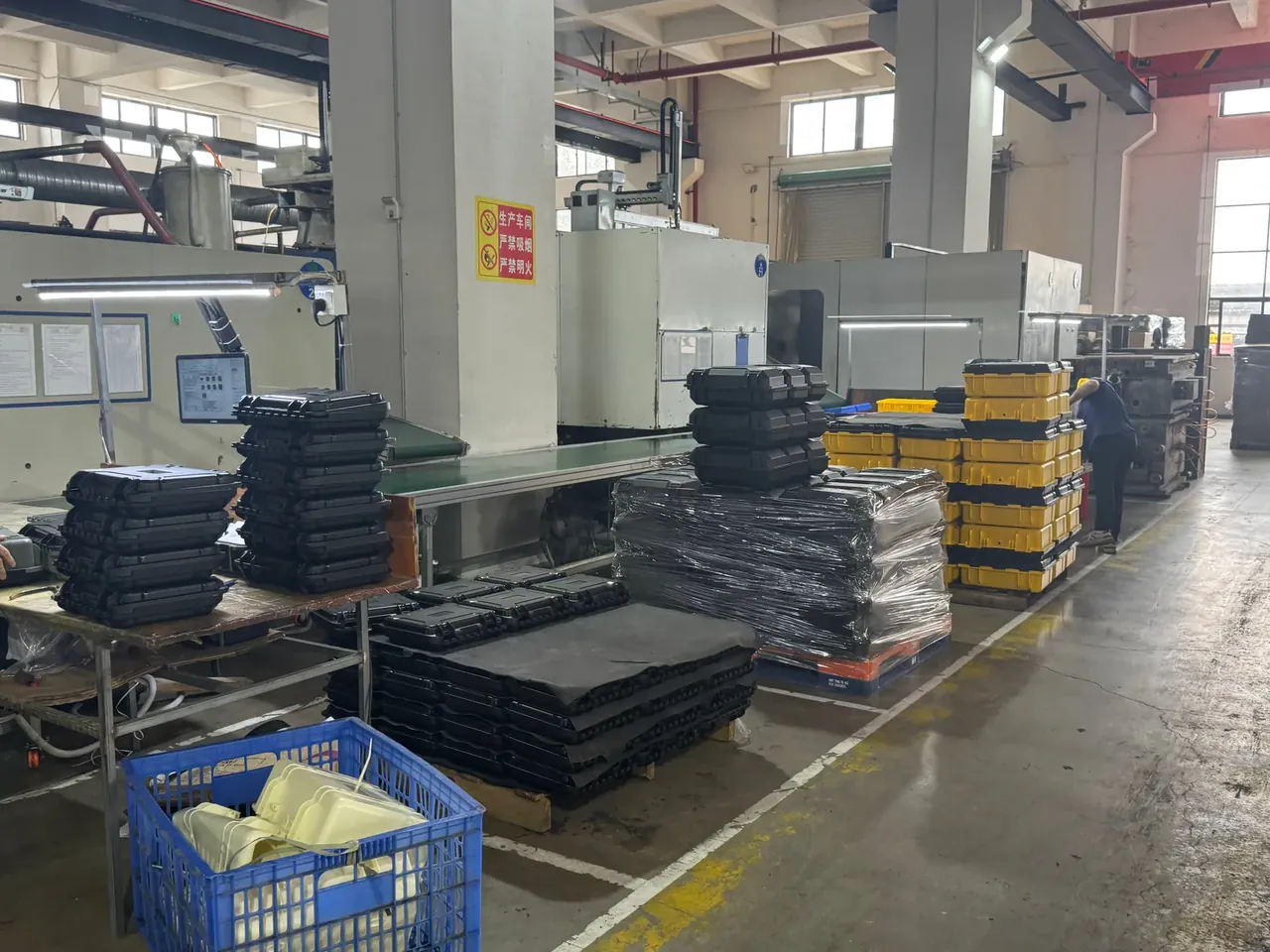
The EVA tool path is the drawing: change the tool list and the program changes with it, which is why a small order of a medical equipment after-sales tool case turns around in 30 min. A moulded tray holds pocket depth within 0.2 mm from the first part to the five-thousandth, where milled EVA drifts 0.5 mm between batches.
3、EVA Cutting Depth and Spacing
EVA at 60 kg/m³ is the compromise. At 30 kg/m³ the recess walls are soft and the tool leans over; at 90 kg/m³ too little travel is left and a drop passes the shock straight through. The 25% compression stress at 60 kg/m³ sits near 60 kPa, springy under a thumb yet able to carry 8 kg.
Depth follows tool thickness, and 10 mm of floor is the minimum, or the tool presses through to the case bottom.
| Tool type | Typical thickness | Suggested cut | Floor left |
|---|---|---|---|
| Torque screwdriver | 22 mm | 12 mm | 10 mm |
| Soldering iron and stand | 30 mm | 18 mm | 12 mm |
| Pliers and cutters | 15 mm | 8 mm | 7 mm |
| Meter or calibrator | 40 mm | 24 mm | 16 mm |
Leave 8 mm of wall between pockets so a finger fits down beside the tool; at 3 mm the foam crumbles from repeated picking until both pockets merge into one slot within six months. Cutter width drives the time: a 3 mm end mill cuts a 3 mm kerf in one pass, a 1 mm kerf doubles that, and 24 pockets in a medical equipment after-sales tool case is where the two costs balance.
4、The Batch Threshold for Moulded Trays
A tool at 30,000 to 80,000 RMB gates every moulded route. Twenty-four pockets of differing depth crowd the draft angles and ejector pins, so the quote drifts toward the top of that range.
| Cumulative volume | Tool amortisation | Part cost | Total per part |
|---|---|---|---|
| 200 | 400 RMB | 35 RMB | 435 RMB |
| 500 | 120 RMB | 28 RMB | 148 RMB |
| 2,000 | 25 RMB | 20 RMB | 45 RMB |
| 5,000 | 8 RMB | 16 RMB | 24 RMB |
Only at 2,000 parts does a moulded tray match milled EVA; split a medical equipment after-sales tool case into variants of 100 to 300 units and the mould is paid for, not used. PP shrinks 1.0% to 2.5%, which is 4 mm to 10 mm across a 400 mm tray, while ABS at 0.4% to 0.7% holds 1.6 mm to 2.8 mm and costs 6 to 10 RMB more per kilogram.
Change-over belongs in that sum too: a medical equipment after-sales tool case needs 30 min for a new EVA path, against 4 h for a mould swap.
5、Load and Drop Verification
An 8 kg load is a static figure: spread it, wait 24 h and measure residual deflection at the pocket floor, where anything past 1 mm fails. Compression set runs 25% deflection at 70 C for 22 h, and EVA at 60 kg/m³ lands between 0.5% and 6%.
The drop runs at 1.2 m on six faces with all 24 tools loaded, then three checks: a tool out of its pocket, a kerf split, latches that still close in one motion. Movement stays under 2 mm, and the tray-to-floor interface is the item signed off too early, since 1 mm of lift is invisible until a night in a vehicle slides the insert.
Cold drops are a separate run: inside a medical equipment after-sales tool case, PP and EVA harden at minus 20 C, travel shortens, and the thin pocket walls at the striking corner break first.
Conclusion
Set 24 pockets, an 8 kg tray load, a 1.2 m drop and a 30 min change-over side by side and the route picks itself: a moving tool list wants milled EVA, while a settled model at 2,000 units opens the moulded question. A 30,000 to 80,000 RMB tool is not a price argument, it is a volume argument.
This article deals only with the specification and design meaning on the container (case body) side, not with any handling, loading or use of the contents.
Related Reading
- Custom foam inserts for medical cases
- Tool case procurement and sampling
- Tool cases against equipment cases
- Tool case and timber crate costs
Related Products
- 8 Series — Gun Cases; Military Equipment Cases; Camera Equipment Cases; Drone Cases; Watch Cases; Knife Cases; First Aid Cases; Electronics Equipment Cases
- WL8-2812 PP Gun Case — model WL8-2812
- All protective cases and toolboxes: 7 series, 158 models