

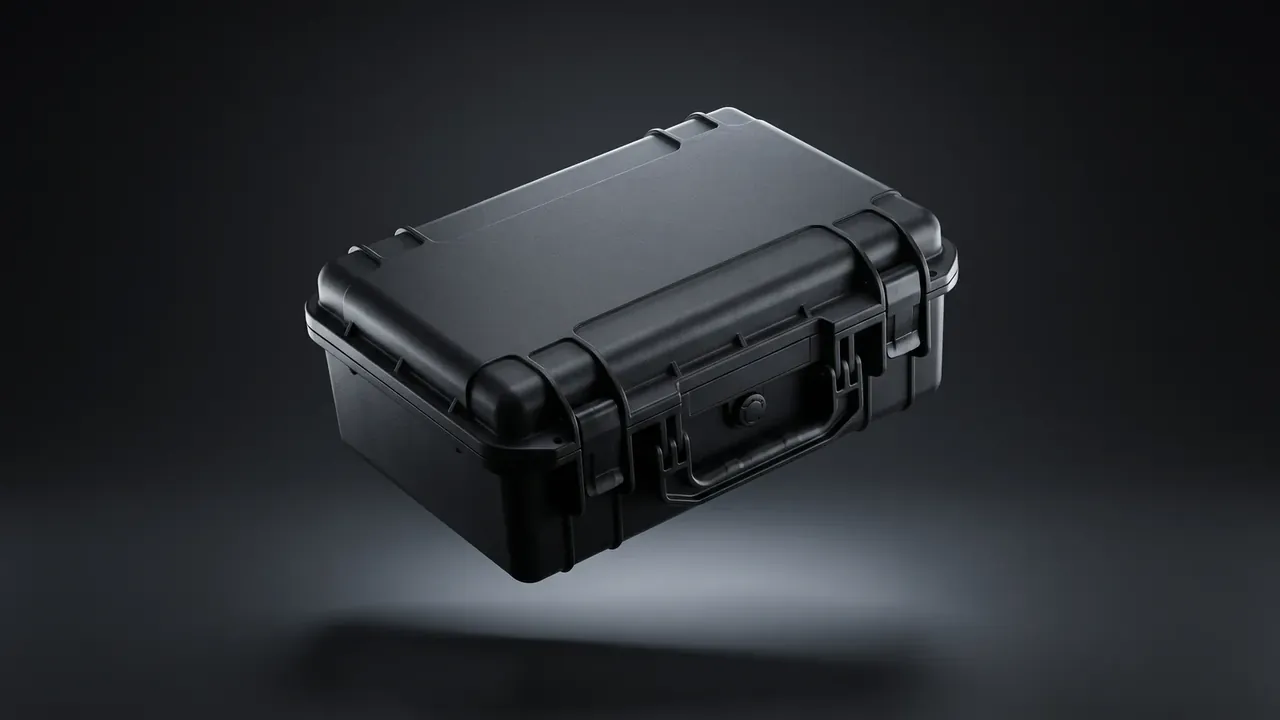
Quick answer: A Metal Ammunition Box is rarely a wrong choice and almost never the default one. Six measurable criteria — stack height, drop height, trip count, cost per trip, repairability and scrap value — show three situations that call for a moulded, rotomoulded or one-way wooden case instead.
Table of contents
- Six criteria for a Metal Ammunition Box comparison
- Against a moulded case: who cracks in deep cold
- Against a rotomoulded case: wall, weight, stack
- Against a wooden crate: price now, cost later
- FAQ
1. Six criteria for a Metal Ammunition Box comparison
Put two cases side by side on a bench and the eye goes to paint and latches. What decides whether a case is still on a rack in five years is six numbers: stack height, drop height, trip count, cost per trip, repairability and disposal route. None can be read off a photo.
The strength of a Metal Ammunition Box sits in the first four numbers; the weakness sits in the last two, which is why it gets crossed off some lists. Set the ruler down first and the comparisons below stop being an argument about steel gauge on one side and tooling cost on the other. The aim is not to rank two products but to name the property your operation cannot give up.
| Criterion | How to measure it | Typical landing point |
|---|---|---|
| Stack height | Load fully, press 24 hours, measure lid set | 4 to 6 high, set by gauge and ribs |
| Drop height | Load fully, drop 1.2 m on six faces and three corners | Folded corner deforms first, case stays closed |
| Trip count | Count round trips on one case, log latch failure | Past 15 trips and still serviceable |
| Cost per trip | Price divided by trip count | High price, low cost per trip |
| Repairability | Can it be straightened and repainted | Yes, with refinishing |
| Disposal route | Strip-down effort and scrap value | Priced as steel scrap, steady channel |
A criterion with no measurement method turns a comparison into an impression.
2. Against a moulded case: who cracks in deep cold
A moulded case wins on weight and on price. The same internal volume weighs 2.8 kg in polypropylene against roughly 5.2 kg in a Metal Ammunition Box.
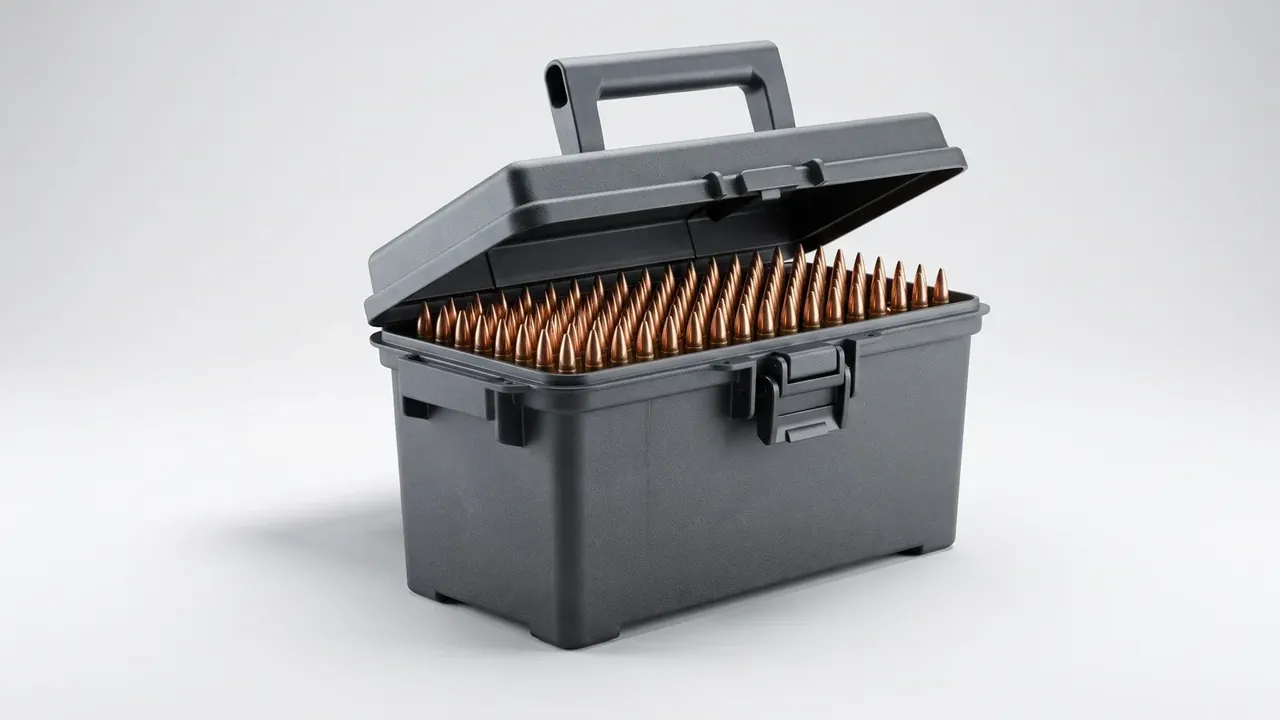
The performance gap shows up only in cold. Polypropylene loses impact toughness quickly around minus 20 C, so a 1.2 m corner drop tends to open a whitened crack. A 1.0 mm cold rolled sheet folded into a corner tends to dent instead, and the lid still closes once the dent is tapped out. In a cold store with frequent loading, that difference adds an inspection step to every shift.
| Item | Moulded case | Metal Ammunition Box |
|---|---|---|
| Empty weight, same volume | 2.8 kg | 5.2 kg |
| Corner drop at minus 20 C | Corner cracks | Corner dents, can be straightened |
| Unit purchase price | Low | About 1.6 times higher |
| Repair route | Essentially none | Straighten and repaint |
| Static and shielding | Needs conductive filler | Conductive through the body |
Weight difference gets multiplied by handling frequency. Price difference gets divided by trip count. Both belong on one sheet of paper.
3. Against a rotomoulded case: wall, weight, stack
Rotomoulding sells on a seamless body and a thick wall, both of which hold up in salt water, grit and rough handling. Wall thickness commonly reaches 8 mm, pushing empty weight to about 11 kg. The trade becomes a triangle — wall, weight, stack height, pick two.
A Metal Ammunition Box takes a different route: 1.0 mm sheet with folded edges and swaged ribs, putting stiffness into geometry rather than thickness. It carries the same 6 high stack at roughly half the dead weight.
Three situations favour the rotomoulded case:
- Long term open storage where UV and salt spray arrive together, and a weld seam is the first thing to fail;
- A requirement for a fully seamless seal with no metal edge anywhere in reach;
- A case that takes side pushes from a forklift, where sheet steel would keep a permanent crease.
Reverse the conditions and the economics swing back: frequent trips, high stacks and scrap value all favour the metal case.
4. Against a wooden crate: price now, cost later
A wooden crate costs about 90 yuan, a Metal Ammunition Box about 260 yuan. On first look that is close to a factor of three, and the gap holds only if the crate is used once and thrown away.
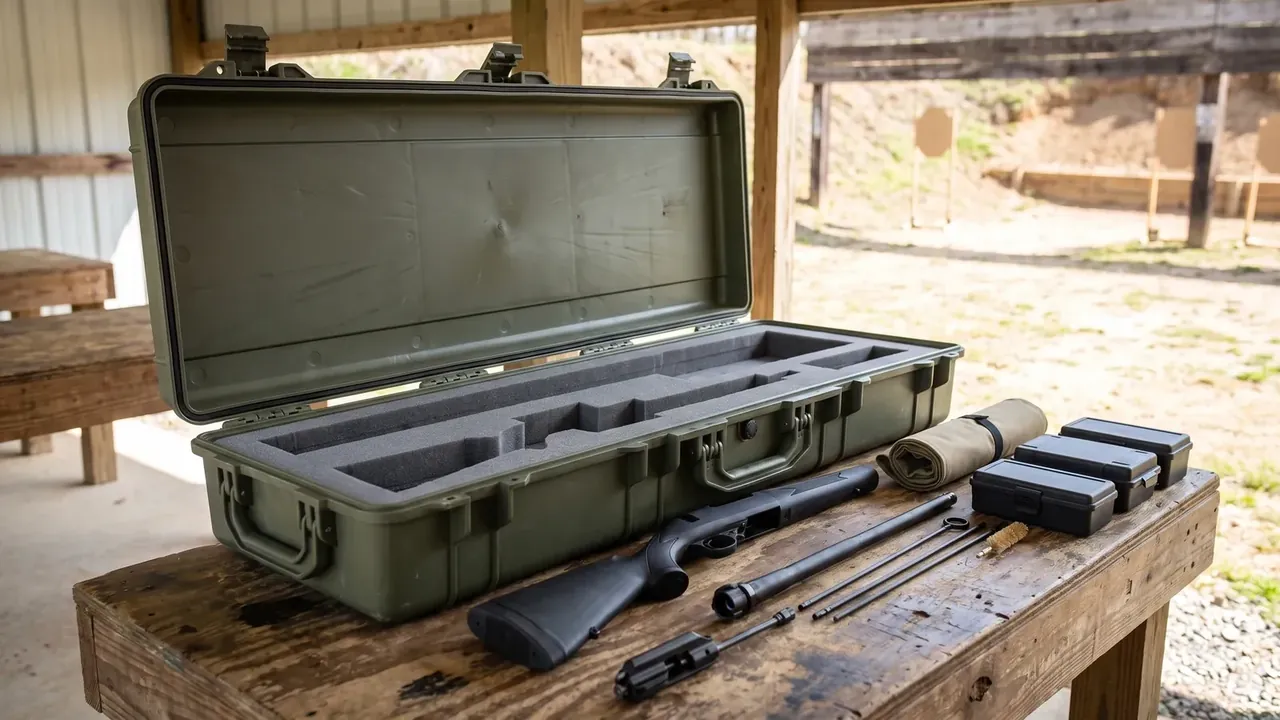
Spread over 15 trips, the metal option lands near 17 yuan per trip while the crate has to be rebuilt each time. The crate also carries two costs that never reach an invoice: moisture, which softens the board in a damp store and cuts stack height, and wood packaging treatment for cross-border freight.
The dividing line in this ledger is trip count, not unit price.
Conclusion
Run the six numbers and the picture is consistent: a Metal Ammunition Box pays off where trips are frequent, stacks are high and scrap value matters, and becomes a burden where delivery is one-way, isolation is required or no maintenance capacity exists. The goal is not the strongest case on the market but the one whose weakest property your operation can live with. That is why a Metal Ammunition Box belongs in the comparison and should never be the automatic pick.
This article discusses only the container (case body) side of specifications and design intent, and does not cover any handling, loading or use of the contents.
Related Reading
- Material options for a metal ammunition box
- Maintenance checks for a metal ammunition box
- Ammunition box versus the alternatives
Related Products
- 8 Series — Gun Cases; Military Equipment Cases; Camera Equipment Cases; Drone Cases; Watch Cases; Knife Cases; First Aid Cases; Electronics Equipment Cases
- WL8-2812 PP Gun Case — model WL8-2812
- All protective cases and toolboxes: 7 series, 158 models