

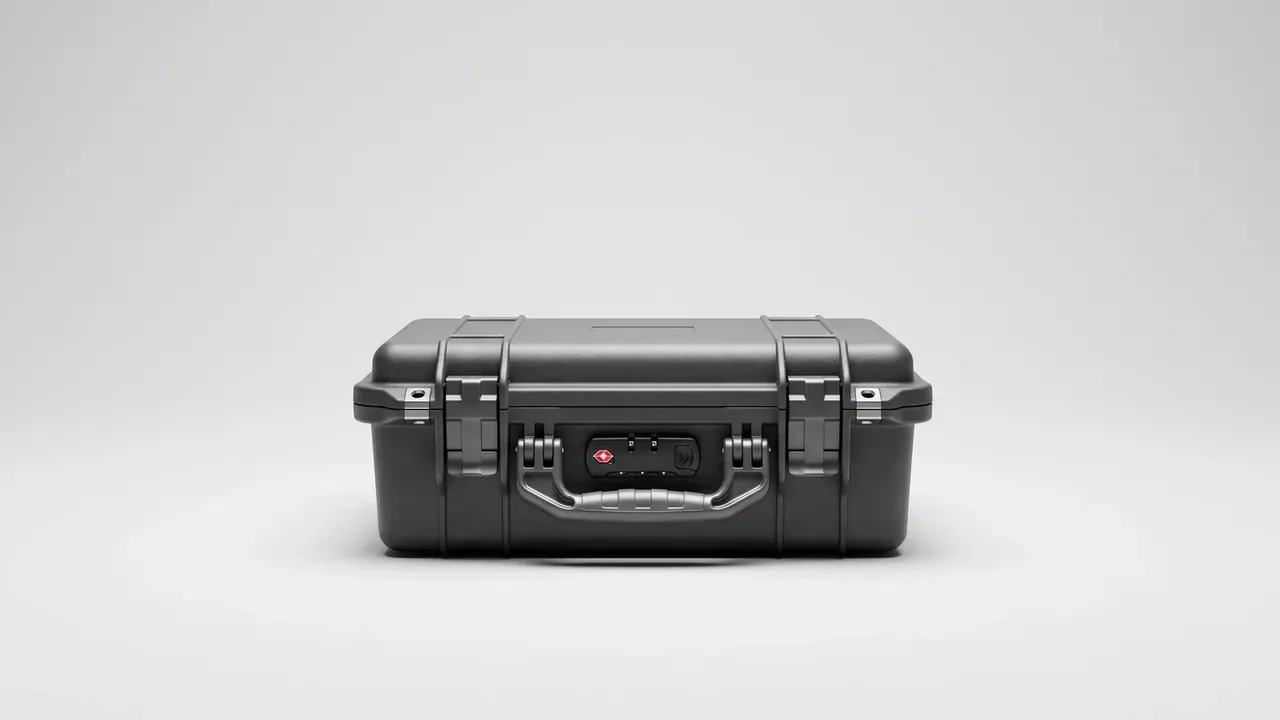
Quick answer: A metal ammunition box gets its behaviour from three process lines (sheet metal, surface treatment, assembly) and four numbers (sheet gauge, flange height, latch count, stacking tiers). Read those two sets and every figure on a datasheet has a place to sit.
Table of contents
- Three process lines behind a metal ammunition box
- Four numbers that set wall and stacking
- One gasket loop holds the ingress rating
- Four structures that get misread
- FAQ
1. Three process lines behind a metal ammunition box
Seven tenths of the cost of a metal ammunition box sits on three lines: forming, surface treatment, and assembly with sealing. Their cycle times never match, and the slowest sets delivery.
The sheet line runs from coil to blank to bend to spot weld, with a full seam weld along the gasket path. Cold rolled steel at 0.8 mm suits the light version, and the inside bend radius should stay at 2 mm or more; tighter, and the outer corner cracks after curing.
| Step | Control point | Typical deviation |
|---|---|---|
| Blanking | Flat pattern corrected for bend allowance | Corners out of square, lid will not seat |
| Bending | Inside radius of 2 mm or more | Outer corner splits, coating shows bare steel |
| Welding | 50 mm spot pitch, full seam on the gasket path | Pinholes that appear after pickling |
| Surface | Phosphate film 2 to 4 g per square metre, coating 60 to 80 microns | Thin film, blistering before 96 salt spray hours |
| Assembly | Gasket compression 25% to 30% | Over-compression, lid springs back and leaves a gap |
Surface treatment decides service life; assembly decides the ingress rating.
Ask for the process card, not the datasheet: parameters are copied, spot pitch is not.
2. Four numbers that set wall and stacking
Strength comes down to four numbers on a metal ammunition box: sheet gauge, flange height, latch count, stacking tiers.
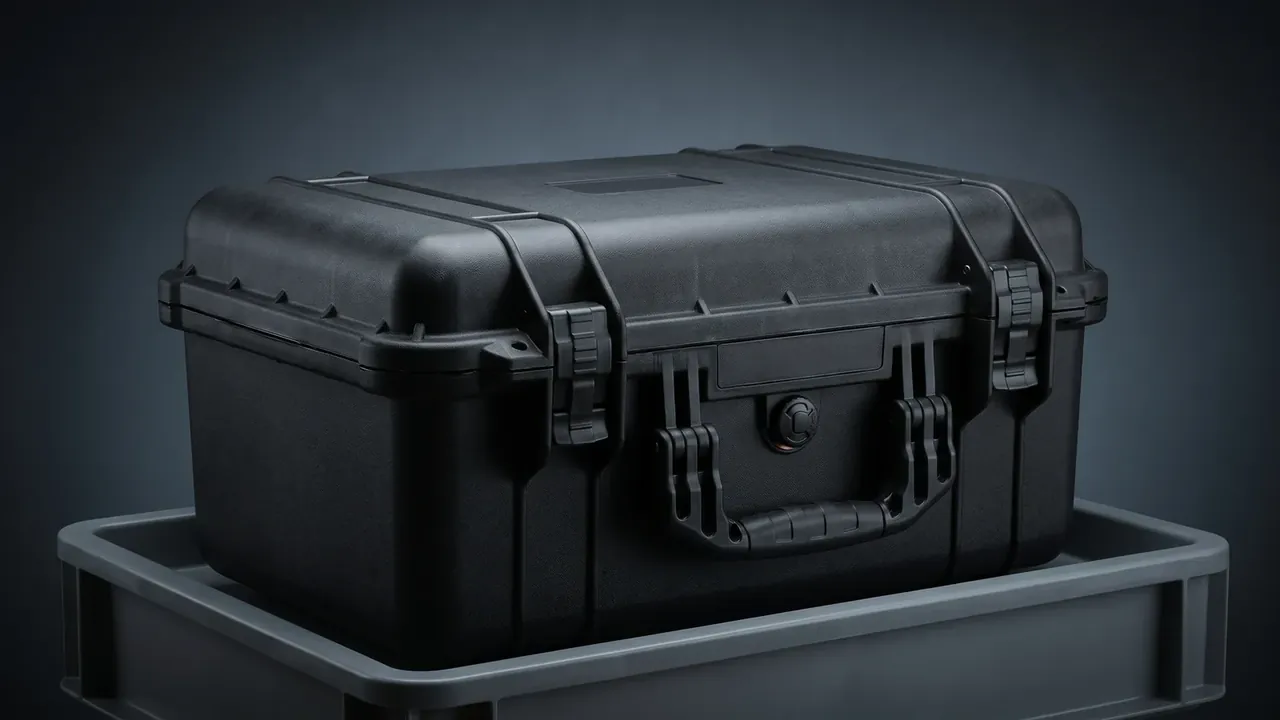
At 0.8 mm the wall carries a ten-kilogram load; 1.0 mm carries twenty-five. Raising the flange from 8 mm to 15 mm lifts the section modulus by roughly forty per cent. Small numbers, but they decide five tiers or three.
| Number | Usual value | What happens when it slips |
|---|---|---|
| Sheet gauge | 0.8 or 1.0 mm | 0.6 mm bulges under two loaded tiers |
| Flange height | 12 to 15 mm | At 8 mm the wall dents under hand pressure |
| Latches | Four, spaced no more than 300 mm apart | With two, the lid edge lifts at the centre |
| Stacking | Five tiers, 120 kg on the base unit | Beyond five, a pallet or frame is needed |
Gauge is the easiest figure to overstate. Five ultrasonic readings, lowest wins, beat any nominal value. Flange height is measured from the inside, since coating thickens the outside. Latches can be counted, but count the welds behind each anchor too. A floor pan without stiffening channels sags under load. The third tier then never sits flat, and only a loaded trial shows it.
3. One gasket loop holds the ingress rating
An ingress rating is a code on a datasheet; what produces it is one loop of expanded gasket.
Compression is the core figure: 25% to 30% is stable, below 20% the seal never lands, above 35% it takes a permanent set and the second closing leaks. Hardness must match the climate, since a soft cord stiffens in cold and a hard one refuses to bed.
- Section: a hollow O profile suits a flat groove, a solid rectangle suits a narrow one;
- Corners: moulded as one piece, because spliced corners are where water enters first;
- Groove depth: leave room for compression, since a shallow groove cannot load the cord and a deep one lets it wander;
- Ageing: standard EPDM holds compression set under 30% after 72 hours at 70 °C;
- Valve: it equalises pressure, and a box without one is noticeably harder to open after a thermal cycle.
Two details tell you whether sealing is real: moulded corners and vent holes at the groove bottom.
4. Four structures that get misread
Structural parts on a metal ammunition box look decorative until they fail.
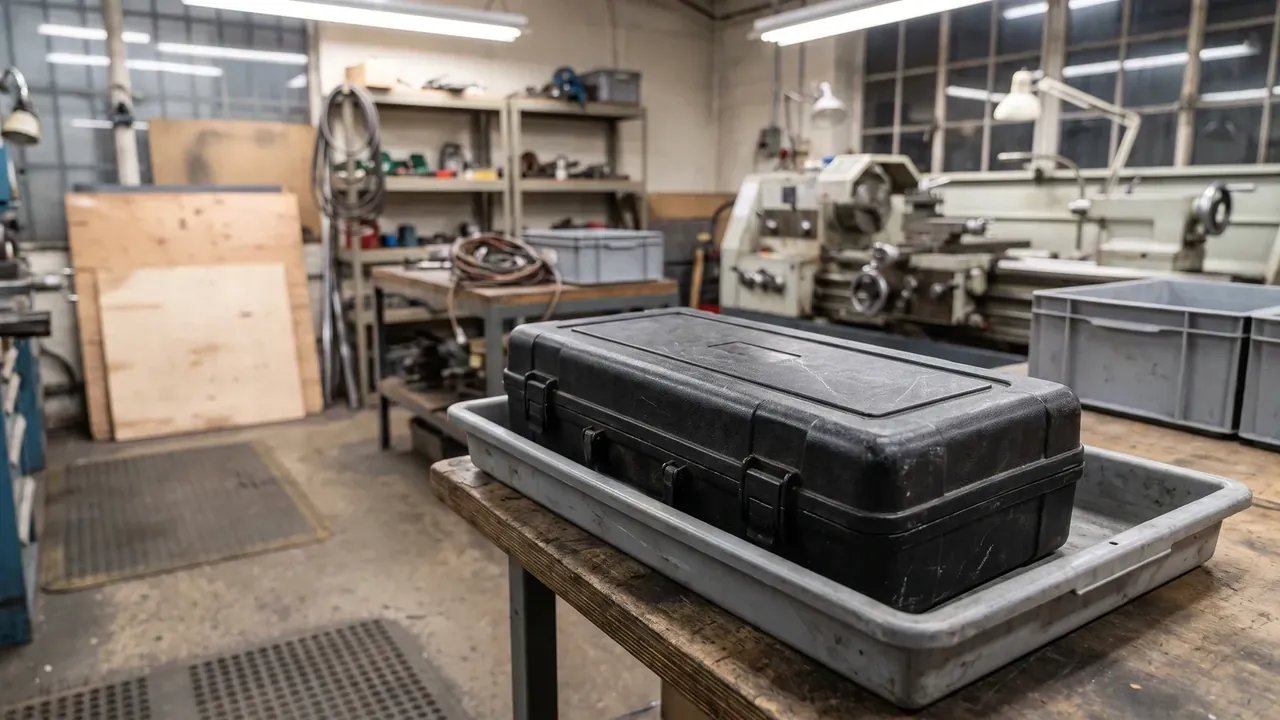
Hinges come first. External hinges are replaceable; internal ones save space, but a seized pin means dismantling. A stainless pin matters more than screw count.
The valve is second, usually set high on one side. It must breathe both ways; a one-way valve lets a pressure drop pull the gasket into its groove.
Latch anchors are third. Each is welded to the wall, and the weld carries the load; an anchor with two spot welds bends after one drop.
Feet are fourth. Under 8 mm of clearance the pan sits on the ground, moisture creeps under it, and the coating blisters.
None of that shows at unboxing; all of it shows in three years.
Conclusion
Datasheets run long, but three process lines and four numbers cover what matters. The process card proves the figures, moulded corners and vent holes prove the sealing, and the welds prove what the box looks like in three years. On that basis a metal ammunition box is easy to price honestly.
This article discusses only the container (case body) side of specifications and design intent, and does not cover any handling, loading or use of the contents.
Related Reading
- Basic structure and common types of ammunition boxes
- Service intervals and repair for metal boxes
- Steel, aluminium and engineering plastics compared
Related Products
- 8 Series — Gun Cases; Military Equipment Cases; Camera Equipment Cases; Drone Cases; Watch Cases; Knife Cases; First Aid Cases; Electronics Equipment Cases
- WL8-2812 PP Gun Case — model WL8-2812
- All protective cases and toolboxes: 7 series, 158 models