

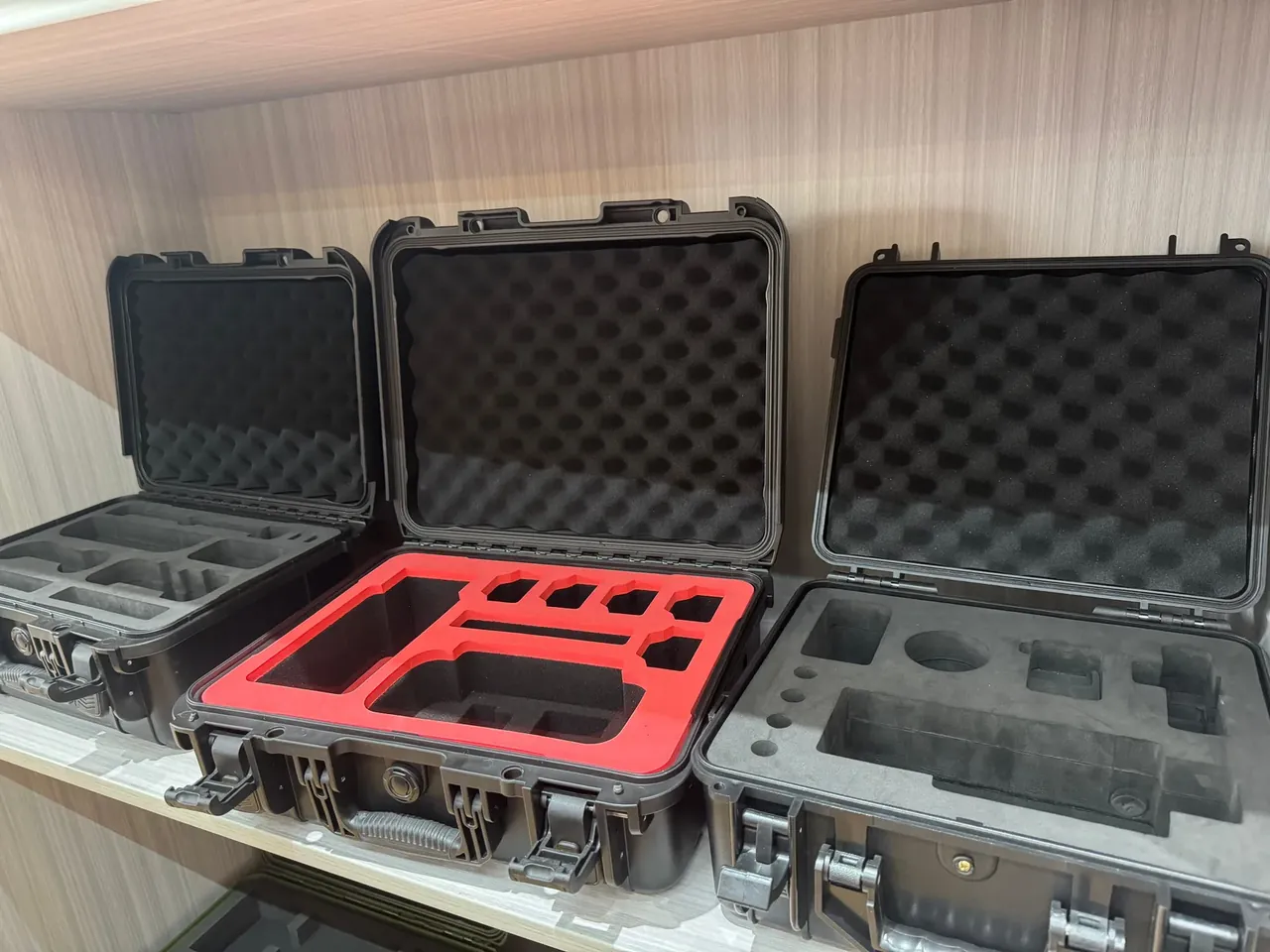
Quick answer: Meter & instrument display portable briefcase fixes an 88 mm rib pitch; after 45 C for 72 h the lid warp must stay under 0.55 mm to release the drawing.
Table of contents
- Meter & instrument display portable briefcase rib spacing
- Lid hold-down strip thickness
- Lid warp after the 45 C soak
- Lid gap on cooling recheck
- Rib pitch locked for display batches
- FAQ
1. Meter & instrument display portable briefcase rib spacing
A display tray does not sit flat on the floor of this shell; it rests on several transverse support ribs, and the open span between two ribs decides whether the tray middle has anything under it. With an outer size of 430×305×145 mm and an inner cavity of 380×260×100 mm, the box is moulded at a 3.5 mm wall, and the tray bridges the 380 mm direction. Meter & instrument display portable briefcase fixes that pitch at 88 mm by working back from the span: the 380 mm cavity is split into four bearing lengths, each landing on a rib, which keeps the unsupported stretch as short as it can be. At 70 mm the tray runs flat but the floor needs two extra ribs, and the 3.1 kg empty-shell budget is eaten by those webs. At 105 mm the ribs are fewer, yet the tray centre softens at 45 C before the soak is over. JUNZHIJIA records the choice on the batch inspection card before any rib line is drawn.
| Rib pitch grade | Tray free span | Lid warp after 72 h |
|---|---|---|
| 70 mm | short | 0.21 mm |
| 88 mm | medium | 0.38 mm |
| 105 mm | long | 0.61 mm |
Tray flatness is measured on its own first, so an initial bow is not charged to the pitch. Once that layer is separated, the later 72 h warp can be traced only to rib pitch and to the lid strip.
2. Lid hold-down strip thickness
The hold-down strip is the narrow land inside the lid that bears on the upper edge of the tray, and Meter & instrument display portable briefcase machines it to 6.4 mm, just where a 7 kg load cannot push the lid back open. The strip reaches down from the lid inner face and meets the high point of the tray edge on closing, pressing the tray back onto its ribs.
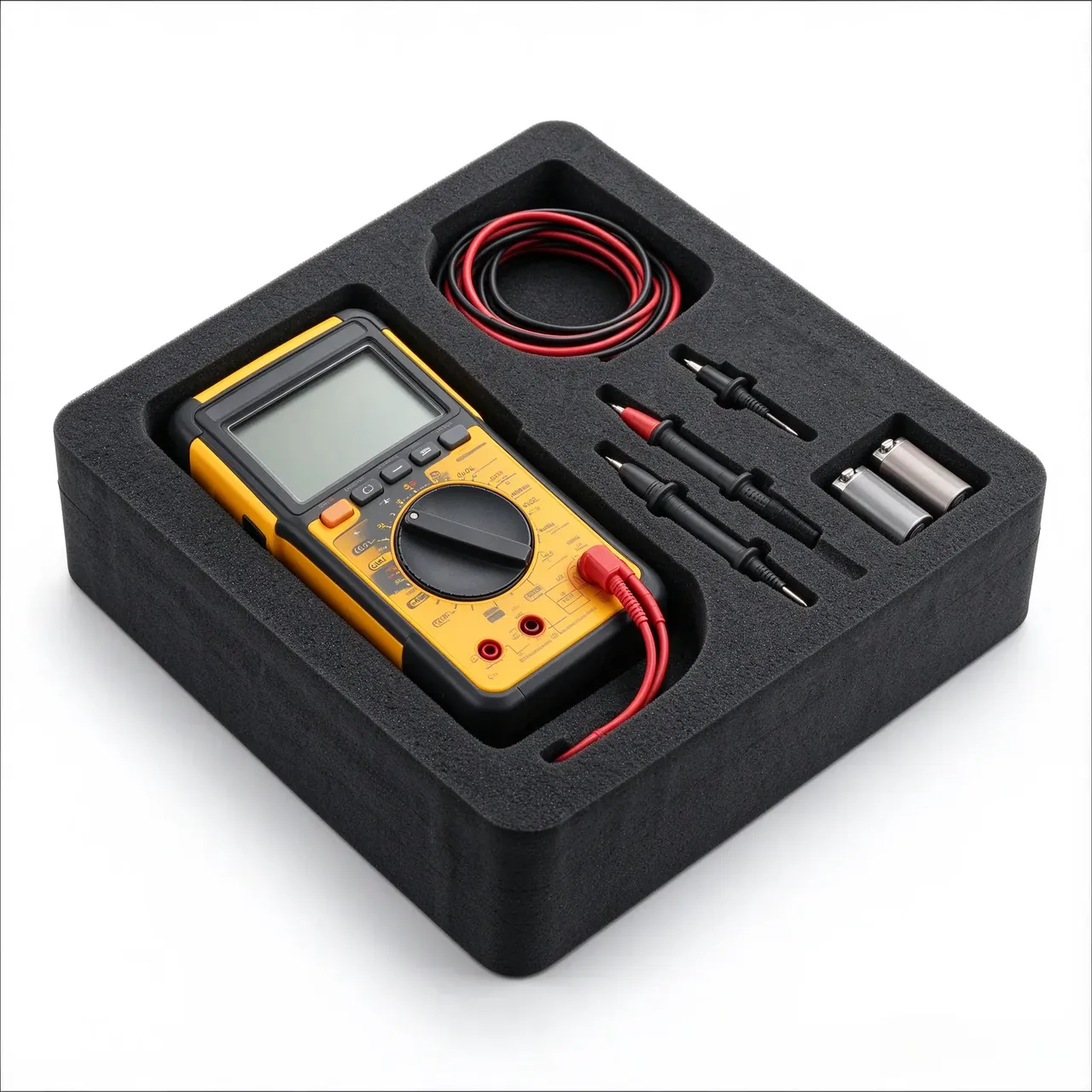
At 4.8 mm the strip itself is bent by the tray and loses its preload once 45 C softens it; at 8.0 mm the two latches, each rated 300 N, spend part of their travel pushing past the strip, so the lid mouth no longer seals evenly. The mouth carries a single gasket at 17 % compression and is checked against the IP65 method; a cocked lid loads the gasket unevenly and the 0.30 mm lid-gap limit cannot hold.
3. Lid warp after the 45 C soak
The closed shell goes into a 45 C room for 72 h, and the lid-warp reading of Meter & instrument display portable briefcase starts accumulating from that point. Warm air softens the lid skin and the strip-to-tray contact drifts toward the lid centre. At the seventy-second hour a surface plate and a feeler gauge are taken around all four lid edges, and the warp has to stay shorter than 0.55 mm.
| Soak period | Mid-lid movement | Largest edge spread |
|---|---|---|
| 24 h | 0.14 mm | 0.09 mm |
| 48 h | 0.27 mm | 0.16 mm |
| 72 h | 0.38 mm | 0.22 mm |
The reading is not a single peak. The card keeps all four edge readings and then takes their largest spread, which separates a pitch problem from a strip problem better than one number ever could.
4. Lid gap on cooling recheck
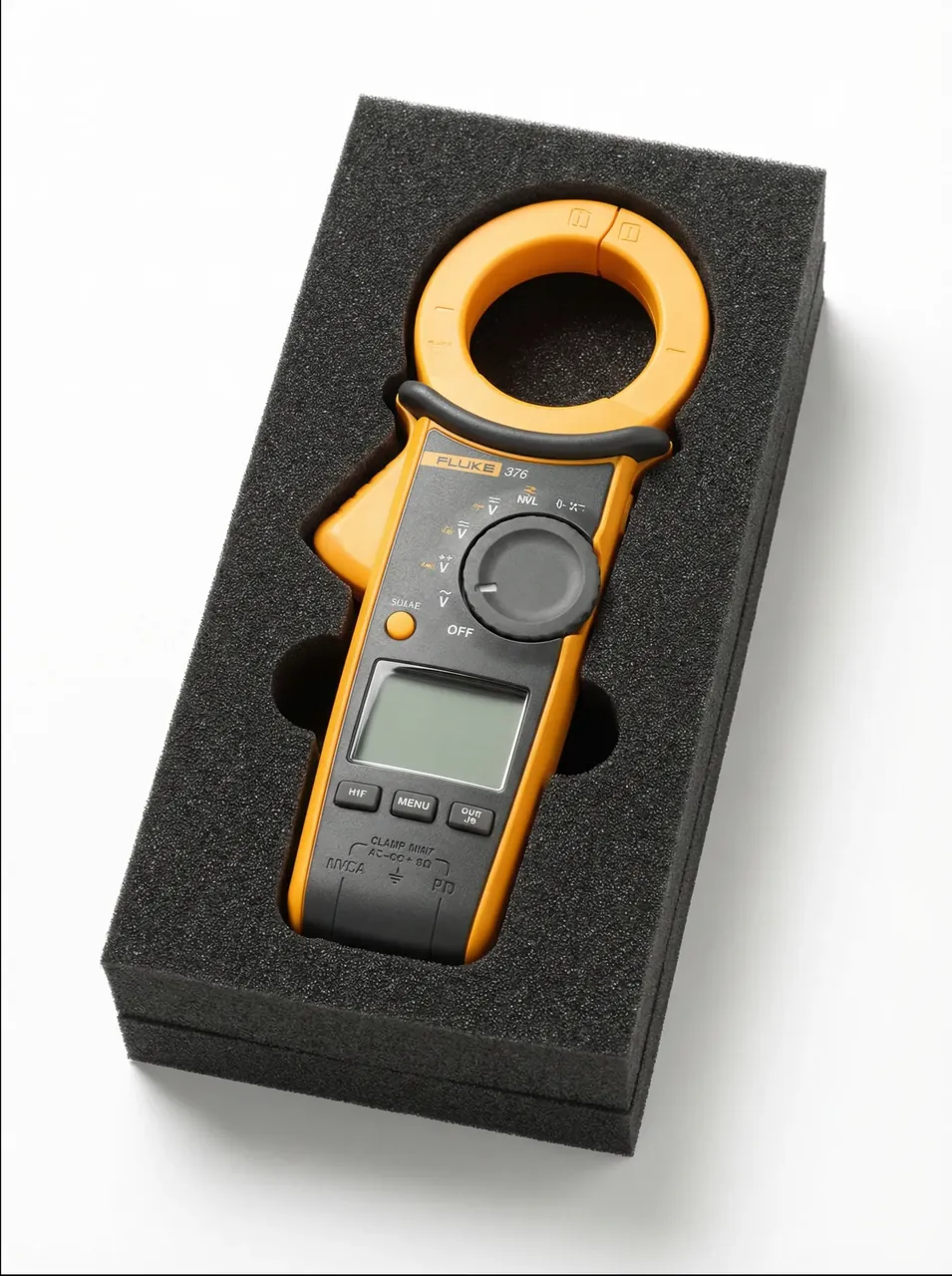
Back at room temperature and settled, the lid gap is read again, and Meter & instrument display portable briefcase uses this step to see whether the cooled lid returns to its seat. An elastic warp partly recovers; a permanent bow leaves the gap where it is. The gap must not exceed 0.30 mm, the two 300 N latches are closed at rated travel, and the same feeler gauge is used again after 4700 open-close cycles.
| Warp reading | Matched pitch | Gap after cooling |
|---|---|---|
| 0.21 mm | 70 mm | 0.12 mm |
| 0.38 mm | 88 mm | 0.24 mm |
| 0.61 mm | 105 mm | 0.37 mm |
Read together, the 105 mm row still holds 0.37 mm after cooling, past the 0.30 mm mark, while the 88 mm row settles at 0.24 mm with room to spare. Latches are not readjusted and the gasket is not swapped, so what is read is the true recovery of the drawing.
5. Rib pitch locked for display batches
Locking the value lines the three tables up against one batch of shells. Pitch, strip, soak period and warp reading are four separate sets of figures, yet the released drawing keeps only one pitch number, with the rest hung on the back of the inspection card as cross-checks. Meter & instrument display portable briefcase follows the rule of keeping the widest grade that still passes, rather than the safest one.
The pitch is locked at the widest grade whose warp at the seventy-second hour is still under 0.55 mm; any wider rib layout is kept out of the display-box drawing. That sentence goes onto the display-batch work card at JUNZHIJIA, and 88 mm becomes the drawing value; the 70 mm and 105 mm grades stay as samples.
Conclusion
Meter & instrument display portable briefcase ties 88 mm pitch, a 6.4 mm strip and the 45 C / 72 h warp reading into one locking chain, and a lid shorter than 0.55 mm with a gap under 0.30 mm is the only release. A 430×305×145 mm shell at 3.5 mm wall holds its mouth by these readings, not by piling on thickness. A display batch wants a level close, so Meter & instrument display portable briefcase accepts only the widest grade that still clears the table.
Related Reading
- Carrying Cases: Portable Structure & Everyday Handling Protection
- Instrument-Box Series: Precision, Detection, Analysis, Measurement & Calibration Boxes
- Instrument Case: Bonded Foam vs Dividers
- Measuring Instrument Case Applications: Lab, Field, Cleanroom
Related Products
- 8 Series — Gun Cases; Military Equipment Cases; Camera Equipment Cases; Drone Cases; Watch Cases; Knife Cases; First Aid Cases; Electronics Equipment Cases
- WL8-2812 PP Gun Case — model WL8-2812
- All protective cases and toolboxes: 7 series, 158 models