

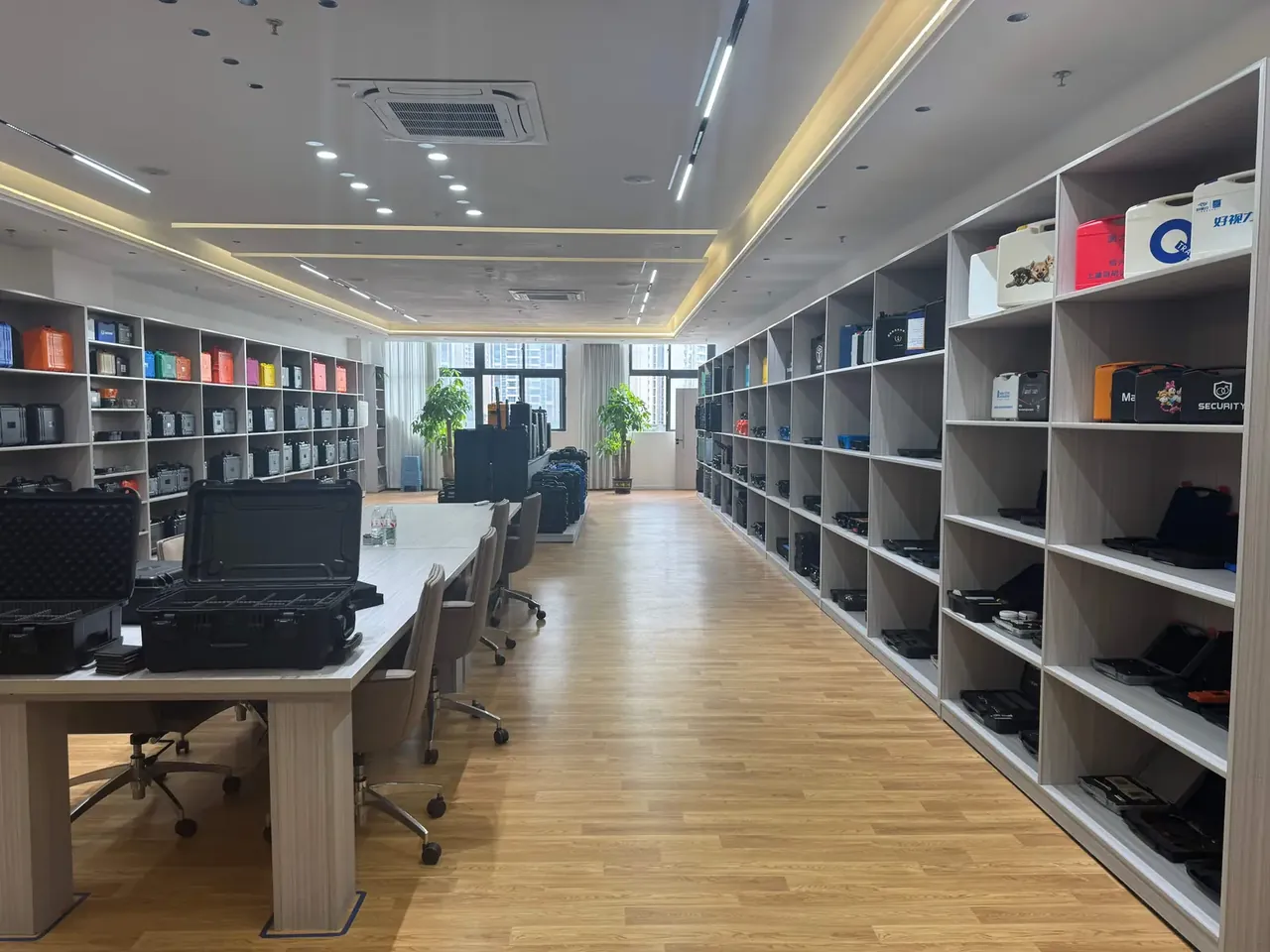
Quick answer: A Military Box is configured backwards from its scenario: who carries it, how far, and how long it sits. Those answers split use into five families, each with its own grips, insert, base and stacking.
Table of contents
- How the Scenario List Shapes a Military Box
- Storage and Transfer Scenarios
- Field Logistics and Emergency Supply
- Communications and Precision Equipment
- Training, Display and Long-Term Hold
- FAQ
1. How the Scenario List Shapes a Military Box
Scenario sets configuration, and configuration limits scenario. Start from a size table and you buy a Military Box that meets every figure and still feels wrong in the field.
| Scenario | Main constraint | Configuration focus | Common mismatch |
|---|---|---|---|
| Storage and transfer | Repeated handling, stacking | Flat top, forklift openings, ribs | Handles only, deforms two high |
| Field logistics | Manual carry, open storage | Two-person grips, sealing, hi-vis colour | One grip, too heavy when full |
| Precision equipment | Vibration, static, access | Dense insert, pockets, limits | One foam block, unload all |
| Training and display | Frequent opening, appearance | High-cycle hinges, colour control | Bought as hold, loose in months |
| Long-term hold | Static load, floor space | Stacking stability, seal margin | Bought as transfer, warps four high |
Mismatches are scenario faults, not quality faults: a transfer unit warps as a hold unit under the same load.
2. Storage and Transfer Scenarios
Storage and transfer is the baseline use: short distance, high frequency. More than 50 loading cycles a year counts as high; there the weak point is the latches, not the shell.
| Tier | Insert | Handling | Stacking |
|---|---|---|---|
| Short transfer | Single-layer foam | Hand or two-person carry | Two high |
| Long storage | Pocketed insert, top pad | Forklift openings, pallet | Four high |
| Long-term hold | Location blocks | Forklift openings | Four high, base checked |
Above 45 kg loaded, a case needs two-person grips or forklift openings; a clear height of 120 mm is the floor, below which the site reaches for a pry bar.
3. Field Logistics and Emergency Supply
The field constraint is the absence of equipment: no forklift, no pallet, no level ground. Here a Military Box is carried by two, lashed with rope and set down on soil.
Three things change: grips from one hand to two; a flat base to ribbed feet; sealing to a joint line you can check by eye.
A 30-person team at 8 litres of water and 2 kg of rations a day uses about 300 kg: seven 45 kg cases, plus two spares, fill one 1200 by 1000 mm pallet.
4. Communications and Precision Equipment
Precision equipment fears vibration and static, not water; in electronics the failure sits in the internal fixing.
The insert moves from one carved block to pockets: one cavity per item, 2 mm of interference, and finger notches at the lift points.
| Equipment | Insert | Fixing | Note |
|---|---|---|---|
| Handheld radio | Medium-density EVA | Side limits, top pad | Antenna slot separate |
| Portable terminal | High-density EVA | Corner limits | 5 mm at the screen |
| Cables and connectors | Low-density PE | Divided cells | Not with hard items |
| Spares and tools | Dual-layer foam | Cut-outs on top | Upper layer under 1 kg |
Static is the forgotten item: specify a dissipative grade with surface resistance between ten to the sixth and ten to the ninth ohm.
5. Training, Display and Long-Term Hold
A training or display Military Box may open 2,000 times a year, which decides hinge and latch cycle rating while the shell stops mattering.
Long-term hold is the opposite: fewer than four openings a year, all load in static weight and floor space. A four-high stack needs the base checked against four-high load; standing on end needs a bottom locating feature.
| Symptom | Real cause | Fix |
|---|---|---|
| Lid stops closing after months | Hold bought as transfer, joint warps | Add a joint rib or drop to two high |
| Latches loosen | 2,000 openings a year | Metal latches or a thicker seat |
| Marks on equipment | Density too low | Raise density or add limits |
| Base cracks on soil | Flat base, no ribbed feet | Ribbed base or a bearer board |
Display adds colour: the sample must match the production reference within ΔE 1.5, or the customer inspects against it and rejects the first batch.
Conclusion
Use is a set of constraints: who carries decides grips, how far decides base and stacking, how long decides shell and insert margin. Get the scenario right, and the Military Box is finally fit for the job.
This article discusses only the container (case body) side of specifications and design intent, and does not cover any handling, loading or use of the contents.
Related Reading
- How to choose a military box, in order
- Emergency supply case applications
- Logistics support boxes in the supply chain
- Space and layout of a field armoury
Related Products
- 8 Series — Gun Cases; Military Equipment Cases; Camera Equipment Cases; Drone Cases; Watch Cases; Knife Cases; First Aid Cases; Electronics Equipment Cases
- WL8-2812 PP Gun Case — model WL8-2812
- All protective cases and toolboxes: 7 series, 158 models