

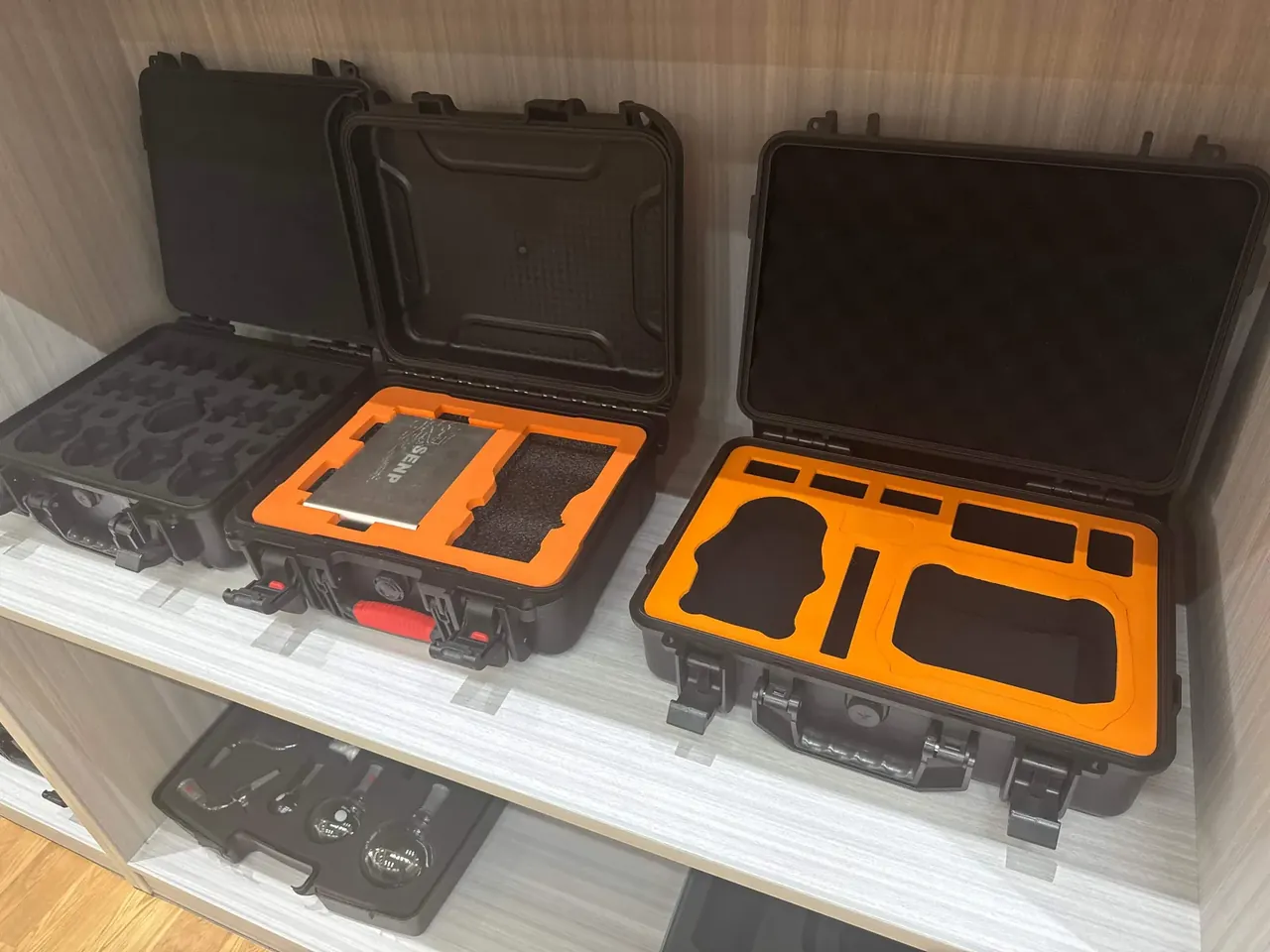
Quick answer: A military box should be compared on four measurable lines — structural strength, environmental sealing, handling fit and lifecycle cost — not on unit price. At equal volume a wooden crate is heavier and survives few trips, a plastic tote has neither the wall nor the gasket, and an aluminium flight case dents for good.
Table of contents
- Four Dimensions That Drive This Comparison
- Performance Against Wooden Packing Crates
- Performance Against Standard Plastic Totes
- Performance Against Aluminium Flight Cases
- Reading the Cost Over Eight Years
- FAQ
1. Four Dimensions That Drive This Comparison
Most comparisons settle on which box feels more solid, a poor basis for a purchase order. Four lines can be measured and written into a quotation request.
| Dimension | What to measure | Typical band |
|---|---|---|
| Structural strength | wall, stack load, drop height | 4–6 mm wall, 900 kg at five-high stack |
| Environmental sealing | gasket, lid compression | 0.8–1.2 mm compression |
| Handling fit | handles, forklift pockets, top flatness | top face within 2 mm |
| Lifecycle cost | purchase, repairs, disposal | amortised over eight years |
The first three rows decide whether a military box can do the job, the fourth whether it is worth the money. Sheets that fill in only the outer rows turn a protection gap into a price gap.
2. Performance Against Wooden Packing Crates
Wood wins on unit cost and on being built to any size in days, and loses on durability and paperwork. An export crate must be heat treated under ISPM 15, core held at 56 °C for 30 minutes before the mark goes on, costing several working days.
At 60 litres, a crate weighs about 11 kg against 6.8 kg for a rotomoulded military box. Forty units flown together carry 160 kg of dead weight.
Trip count divides them again: a crate survives two or three return legs before widened nail holes weaken the corners, while a body built for repeated opening lasts eight years and absorbs no moisture at 85% relative humidity.
3. Performance Against Standard Plastic Totes
A tote runs 1.5–2 mm thick to stay light and nestable; a rotomoulded military box body runs 4–6 mm, an injection moulded body 2.5–3.5 mm. Stiffness rises with the cube of thickness: 2 mm to 5 mm is roughly fifteenfold, the difference between surviving a 1.2 m drop on six faces and cracking a corner at 0.6 m.
Sealing is the part thickness cannot buy. A tote closes on a plain overlap with a gap near 0.3 mm, wide enough for driven rain; a sealed body uses a full-perimeter gasket and several latches, holding compression between 0.8 and 1.2 mm. Too little leaks, too much crushes the gasket into permanent set.
4. Performance Against Aluminium Flight Cases
A 1.5 mm aluminium sheet on an extruded frame weighs about 7.2 kg at the same volume and holds panels flatter, suiting optics that dislike flex.
The weakness is local load. Sheet aluminium barely recovers, so a corner impact leaves a dent that lifts the gasket off its seat, and one panel repair can reach a third of a new case. A polyethylene shell deflects and springs back, needing only a latch check; untreated steel hardware can show red rust after 96 hours of salt spray, while the shell does not corrode.
5. Reading the Cost Over Eight Years
Spread the options across eight years and the ranking inverts. At twenty trips a year and 25 kg per box, a crate is replaced more than three times and re-treated before each export, while a tote reaches replacement within two years.
| Cost line | Military box | Wooden crate | Plastic tote |
|---|---|---|---|
| First purchase (box = 1.00) | 1.00 | 0.35 | 0.12 |
| Replacements in 8 years | 0 | 3 | 5 |
| Gasket and hardware repair | 0.08 | 0.05 | 0.02 |
| Desiccant and liner | 0.06 | 0.18 | not applicable |
| Eight-year total | 1.14 | 1.28 | 0.72 |
The tote totals lowest but carries no seal and no stack load, so it belongs in in-plant transfer. On a humid long-haul route the saving returns as equipment repair, a cost never booked against the military box.
Conclusion
A military box comparison should not stop at the quotation. Strength, sealing, handling fit and lifecycle cost are what separate real options from lookalikes. Crates win on one-way cost, totes on light in-plant duty, aluminium on panel stiffness, each giving up durability. Fix the duty cycle and amortise honestly, and the place of a military box in a returnable fleet usually becomes obvious.
This article discusses only the container (case body) side of specifications and design intent, and does not cover any handling, loading or use of the contents.
Related Reading
- What a military box is and how it is classified
- Deriving size and load capacity from the use case
- Material trade-offs in ordnance packing boxes
- Rotomoulded cases against alternative structures
Related Products
- 8 Series — Gun Cases; Military Equipment Cases; Camera Equipment Cases; Drone Cases; Watch Cases; Knife Cases; First Aid Cases; Electronics Equipment Cases
- WL8-2812 PP Gun Case — model WL8-2812
- All protective cases and toolboxes: 7 series, 158 models