

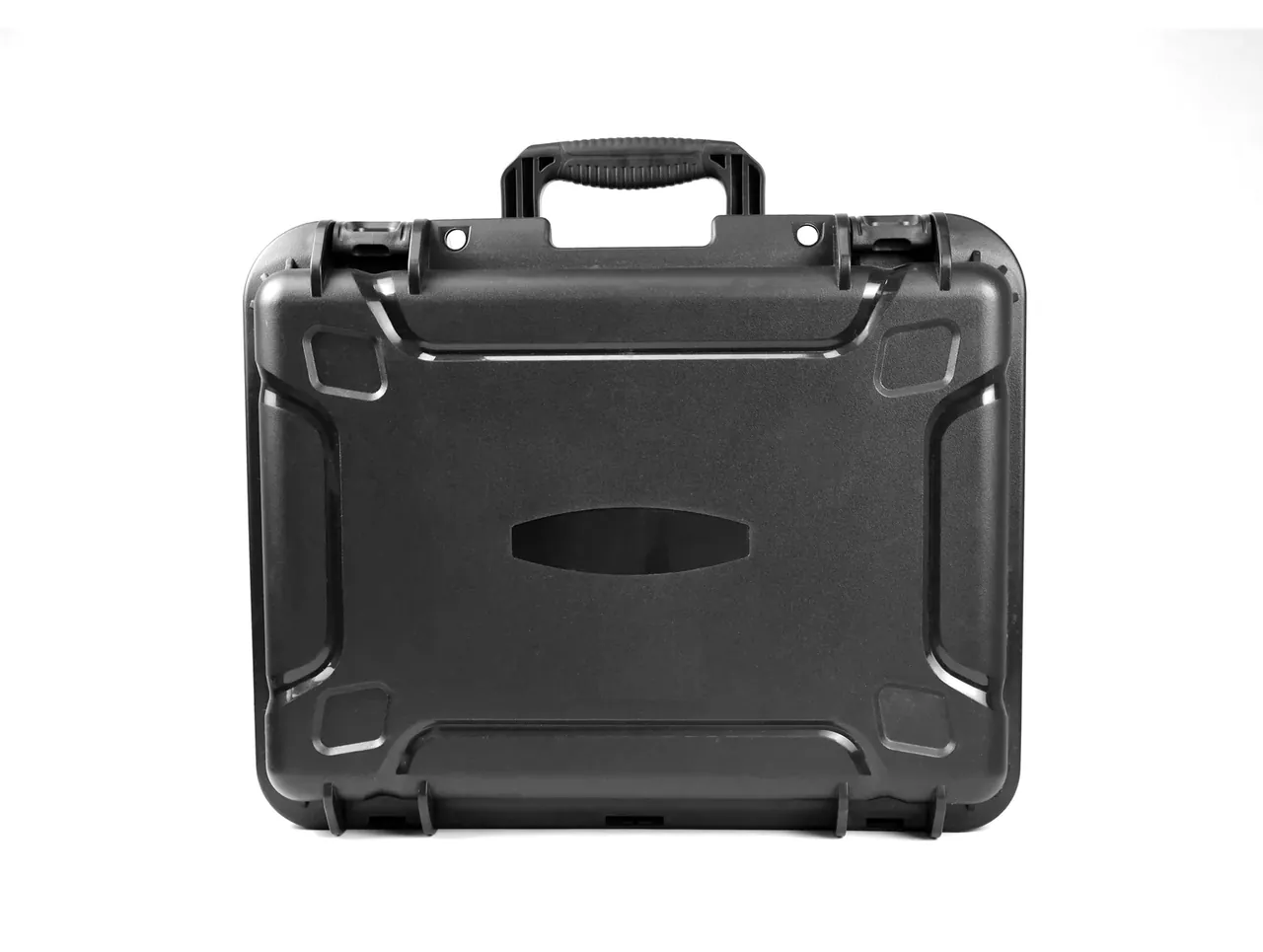
Quick answer: A military chemical agent container differs from an ordinary protective case in three places: two seals instead of one, a one-piece shell with no weld, and an interior that washes clean. It does not change what is inside; it separates the contents and keeps any escape within the box.
Table of contents
- Three lines that define a military chemical agent container
- Double sealing: main ring and secondary groove
- Corrosion: material, interior and metal parts
- Support without a dead volume
- Marking, traceability and seal tags
- FAQ
1. Three lines that define a military chemical agent container
Judge a case by three features, not by what it carried: two seals in series, no weld or exposed metal, and an interior that washes clean. Only with all three does it have a basis for keeping an escape inside.
A single ring performs well in static storage until it ages or is drawn out by negative pressure. Welds and rivets are where crevice corrosion starts, holding wash water for years.
| Line | How it is done | If simplified |
|---|---|---|
| Sealing | main ring plus groove | single ring fails alone |
| Structure | one-piece, no weld | crevice corrosion |
| Interior | radii, no dead corner | residue remains |
Every right angle inside is a place wash water enters and does not leave. A military chemical agent container is better off with one rib fewer than with a corner nobody can reach.
2. Double sealing: main ring and secondary groove
The main seal sits in the lid groove and works by compression. Below twenty percent rebound is too little and vibration works the lid open; above thirty the rubber takes a permanent set. Twenty to thirty is the working band.
The secondary groove sits inboard and shallower: it slows ingress once the main ring fails and gives that ring a relief path so negative pressure cannot pull it out. Two barriers in series multiply failure rates.
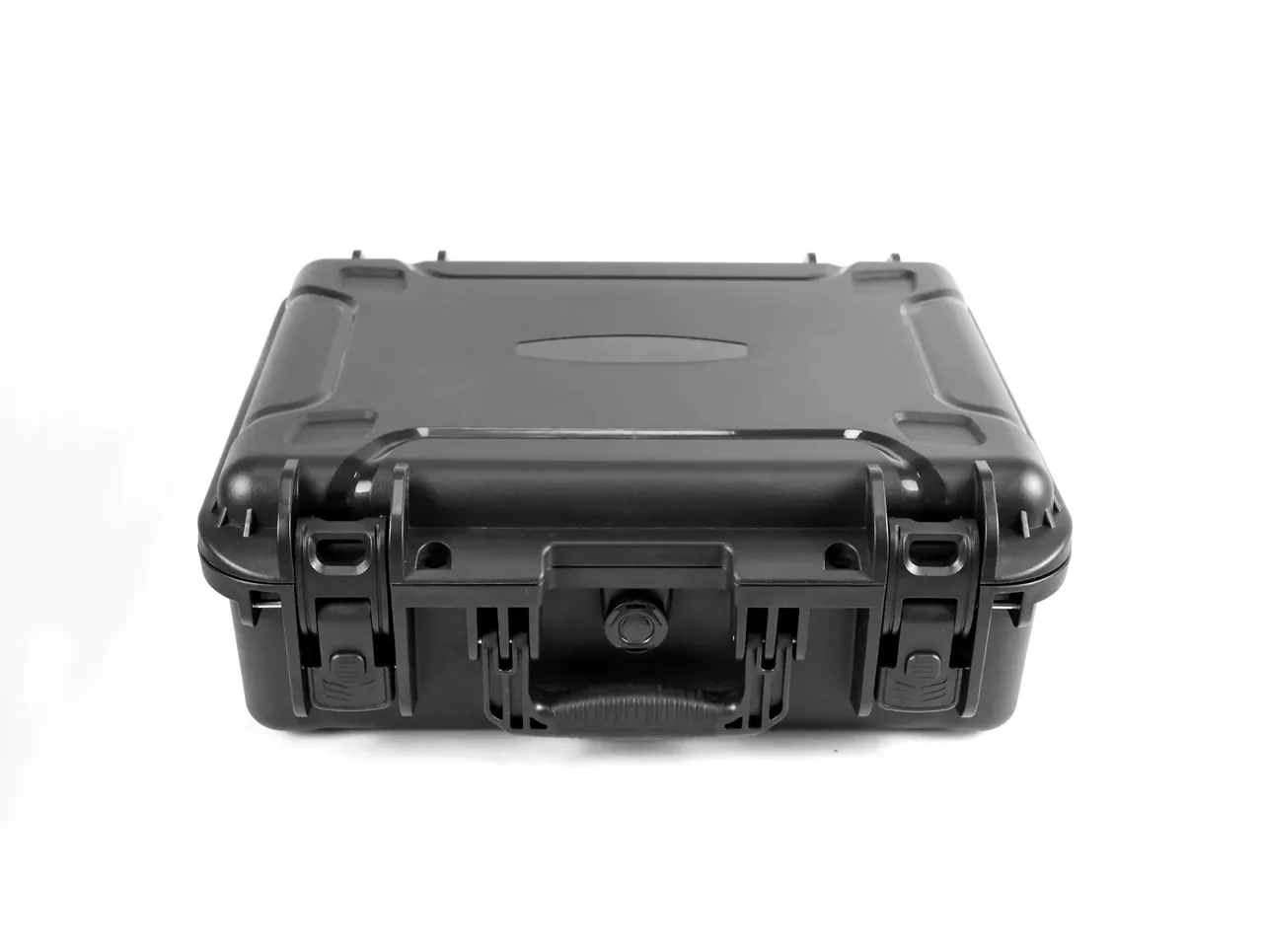
Compression comes from structure. An unbroken groove and a stiff lid matter more than rubber hardness; clamp a paper strip under the lid and any span that slides out is short.
The valve works against the seal: the better the seal, the harder a temperature difference is to equalise. A bidirectional valve with a hydrophobic membrane balances pressure without admitting vapour.
3. Corrosion: material, interior and metal parts
Shells are polypropylene or polyethylene alloy, inert to common acid, alkaline and salt solutions, and coating-free, so a scratch does not start pitting. One-piece moulding also removes the weld heat-affected zone.
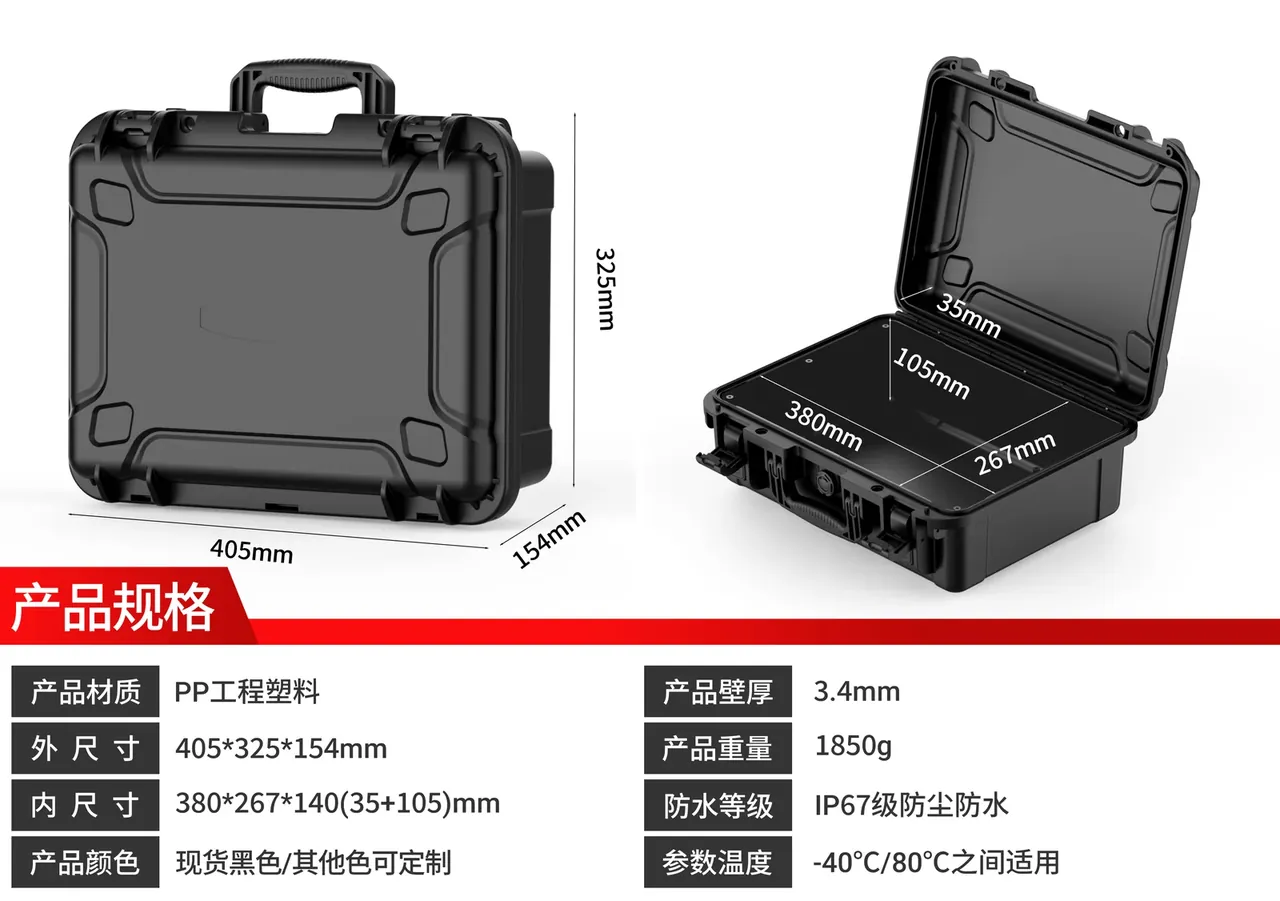
A 3.4 millimetre wall is mid-to-light and relies on ribs. Evenness matters more than the figure: rotomoulding thickens at corners and thins at panel centres.
Metal is the weak point. Hinge pins, latch springs and nameplate rivets should be 316 stainless or encapsulated; zinc-plated steel rusts within months under washdown.
4. Support without a dead volume
Support blocks stand five to ten millimetres off the base, not for cushioning but for drainage: liquid runs to a low point instead of pooling under a support face.
Foam must be closed-cell. Open-cell foam absorbs liquid, gains weight, loses rebound and locks it into pores where cleaning cannot reach.
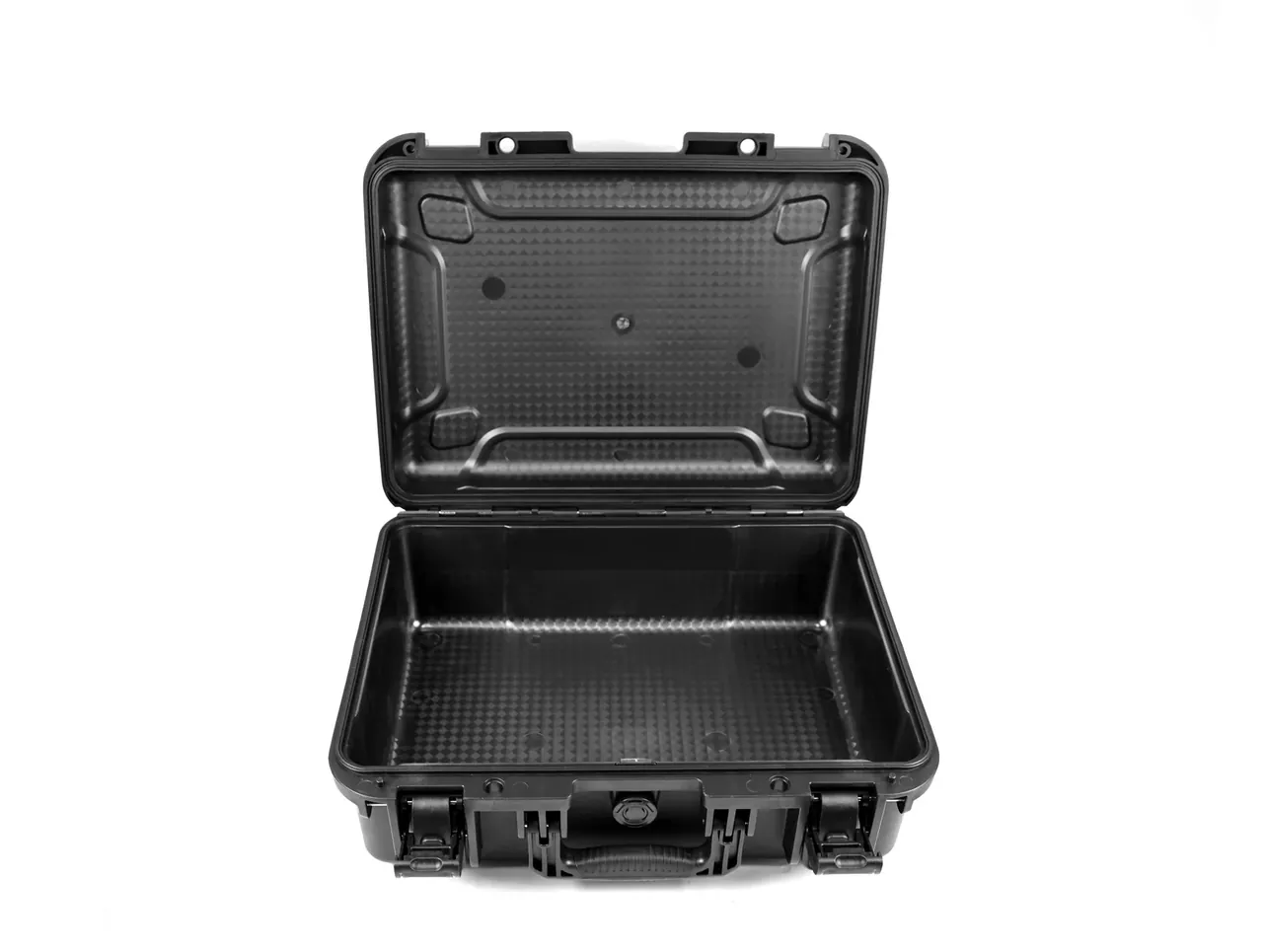
The dimple texture breaks up the liquid film so wash water carries residue away, and internal radii above three millimetres let brush and water reach the corner.
5. Marking, traceability and seal tags
The label recess is moulded in, half to one millimetre deep, holding the label below the surface. Marking on a military chemical agent container has to survive washing: paper blurs within weeks, while in-mould labels, laser marking or stainless plates last.
Four layers are marked: serial, batch, orientation, opening status. The last depends on a one-time tag and its post, moulded beside the latch, or the tag spans the keeper and snaps.
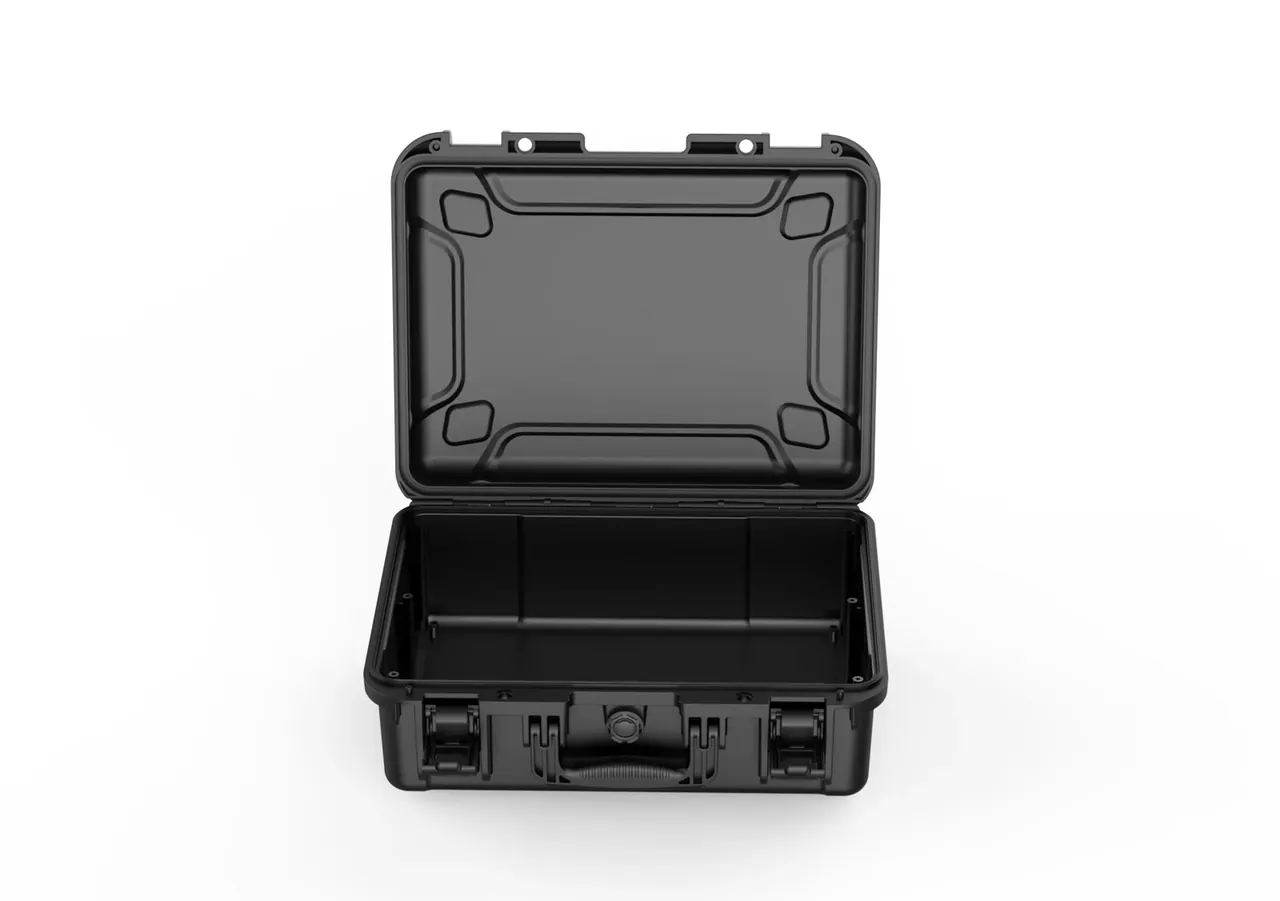
Colour coding sorts cases but cannot replace text; white on dark reads best and small lettering fails at three metres.
Conclusion
The design logic of a military chemical agent container reduces to three points: two seals, no weld, a washable interior. Miss one and the rest is discounted.
This article covers container-side specifications and design implications only, not the handling, loading or use of the contents.
Related Reading
- Hazmat transport case requirements
- What a pressure equalisation valve does
- Seal materials and ageing
- Rotomolded Cases: Rotational-Moulded Shell Structure & Pro…
Related Products
- 8 Series — Gun Cases; Military Equipment Cases; Camera Equipment Cases; Drone Cases; Watch Cases; Knife Cases; First Aid Cases; Electronics Equipment Cases
- WL8-2812 PP Gun Case — model WL8-2812
- All protective cases and toolboxes: 7 series, 158 models