


ADR governs road and IMDG governs sea transport of dangerous goods, and both require dangerous goods packaging to pass performance tests under the UN Recommendations and carry a UN packaging marking. For buyers in chemicals, energy and cross-border logistics, whether an ADR hazmat case and IMDG sea transport packaging are compliant decides whether cargo clears customs and is accepted by carriers.
Conclusion: a hazardous chemical transport case must complete drop, stacking, air-tightness or hydraulic tests to the correct dangerous goods packaging performance level, obtain a UN packaging marking consistent with its certificate, and account for content compatibility and double containment. This article reviews ADR and IMDG compliance points, marking identification, test items and an acceptance checklist.
Key terms and scope covered here include: ADR hazmat case, IMDG sea transport of dangerous goods, hazardous chemical transport case, dangerous goods packaging, UN packaging marking. Related guidance can be found in IP67 protective case and plastic protective box.
Table of Contents
- Application Scenarios and Protection Pain Points
- How to Choose Protection Rating: IP and IK
- Standards and Test Basis: IEC 60529 / MIL-STD-810H / ISTA
- Case Material and Structure
- Liner and Cushioning System
- Sealing, Latches and Pressure Valve
- Temperature, Humidity and Drying
- ESD and Static Protection
- Transport Adaptation: Air, Sea, Vehicle and Stacking
- Custom Liner and Compartment Layout
- OEM/ODM and JUNZHJIA Customization
- Procurement and Acceptance Checklist
- Maintenance, Spare Parts and Asset Management
- Selection Parameter Comparison
- Frequently Asked Questions
- Summary and Further Reading
Application Scenarios and Protection Pain Points
ADR governs road and IMDG governs sea transport of dangerous goods, and both impose classification, packing group and marking requirements on dangerous goods packaging. An ADR hazmat case and IMDG sea transport packaging must pass performance tests under the UN Recommendations and carry the corresponding UN packaging marking.
This section outlines typical use scenarios and failure modes for the hazmat transport case.
The hazmat transport case carries a high-value or high-risk payload. A single vibration, compression, moisture or temperature excursion can destroy goods, void data, cause compliance rejection or even a safety incident. Typical failures come from five sources: micro-vibration displacement, compression deformation, condensation from temperature change, seal failure and ESD. Ordinary wooden or foam boxes are unsealed, loosely lined and unlogged, so a dedicated protective solution is required.
Different transport modes need differentiated adaptation: air freight uses a pressure-equalization valve; sea freight wraps the case in anti-rust film with desiccant against condensation; vehicle transit uses straps to stop sliding under hard braking; palletized stacking respects each case rated load so fragile top units are not crushed. A packing list and serial number inside ease cross-region transfer and after-sales traceability.
Protection level for the hazmat transport case centers on two codes: IP and IK. The IP rating uses two digits, the first for dust (5 dust-protected, 6 dust-tight) and the second for water (4 splash, 5 jet, 7 temporary immersion). The IK code shows impact resistance (IK08 about 5 J, IK10 about 20 J). For outdoor and vehicle use start at IP65; for wading or liquid-exposed work choose IP67, and add IK08 or higher for critical contents.
JUNZHJIA supports custom foam liners and OEM/ODM prototyping sized to the actual content, can fit seals, latches and stainless parts by model, and can issue IP, drop, vibration and ESD test reports. Stable capacity is offered for B2B wholesale, distribution and global supply, supporting laboratory and system audits.
How to Choose Protection Rating: IP and IK
Dangerous goods packaging is classified by risk into Packing Groups I, II and III, corresponding to X, Y and Z performance levels; a UN packaging marking such as UN 4G/Y plus a serial number states the packaging type, performance level, year of manufacture and manufacturer code, and buyers should verify that the marking matches the certificate.
The first selection step is to define the IP and IK rating for the hazmat transport case.
Protection level for the hazmat transport case centers on two codes: IP and IK. The IP rating uses two digits, the first for dust (5 dust-protected, 6 dust-tight) and the second for water (4 splash, 5 jet, 7 temporary immersion). The IK code shows impact resistance (IK08 about 5 J, IK10 about 20 J). For outdoor and vehicle use start at IP65; for wading or liquid-exposed work choose IP67, and add IK08 or higher for critical contents.
The hazmat transport case should be specified against IEC 60529 (domestically GB/T 4208) for IP dust and water protection, MIL-STD-810H Method 516.8 for drop and random-vibration validation, UL 94 for flammability, and the IK code for impact resistance. Buyers should require the supplier to provide corresponding test reports to support tendering, system audits and customer factory inspections.
For equipment with circuits, chips or sensors, the liner should use anti-static foam and conductive coatings to control surface resistance per ESD protection practice, preventing electrostatic discharge and data corruption in transit. JUNZHJIA can configure an ESD liner by device type and supply test notes, which is especially critical for control boards, modules and electronics.
Case life depends on maintenance: replace hardened EPDM gaskets promptly, lubricate latches and hinges periodically, and clean liners with closed-cell material and appropriate disinfection. Keep a reference benchmark case for periodic sampling, and map case to content to accessory by model to support inventory, spare-part management and traceability.
For per-type liner practice, case seal materials is worth referencing.
Standards and Test Basis: IEC 60529 / MIL-STD-810H / ISTA
A hazardous chemical transport case must satisfy structural performance (drop, stacking, sealing) and also compatibility: the contents must not react with the case or liner, and acids, bases and solvents require chemical resistance plus double containment (inner packaging plus outer packaging).
A compliant hazmat transport case must be backed by standards and test evidence.
The hazmat transport case should be specified against IEC 60529 (domestically GB/T 4208) for IP dust and water protection, MIL-STD-810H Method 516.8 for drop and random-vibration validation, UL 94 for flammability, and the IK code for impact resistance. Buyers should require the supplier to provide corresponding test reports to support tendering, system audits and customer factory inspections.
Sealing uses a continuous full-perimeter EPDM gasket with multiple butterfly latches and stainless hinges forming a rigid body. For wading or high-altitude air freight, add a pressure-equalization valve to avoid difficult opening or water ingress from pressure differentials. Latches can accept padlocks or seals to prevent accidental opening and asset loss in transit.
Temperature and humidity are silent killers for precision and electronic contents: condensation rusts circuits and drifts readings. Place desiccant and a humidity indicator card inside for visual monitoring, and let the contents equilibrate to ambient temperature before use after a cross-climate trip. A temperature-humidity logger records the journey for traceability, which is standard redundancy for industrial and cold-chain transport.
Acceptance should write compartments, test reports and traceability into the purchase specification: no displacement on fit test, no rattle when inverted; full-wrap suspension with zero compression points; critical parts in upward hard compartments clear of walls; continuous gasket; ESD liner confirmed for electronics; temperature control and logging confirmed for cold-chain class. All met means pass, with a reference case kept for benchmark sampling.
Case Material and Structure
IMDG sea transport additionally considers stacking load, salt spray, condensation and segregation requirements; for flammable and oxidizing substances, dangerous goods packaging must resist static and sparks, and latches and metal parts should be spark-free.
Case material directly sets the service life and protection ceiling of the hazmat transport case.
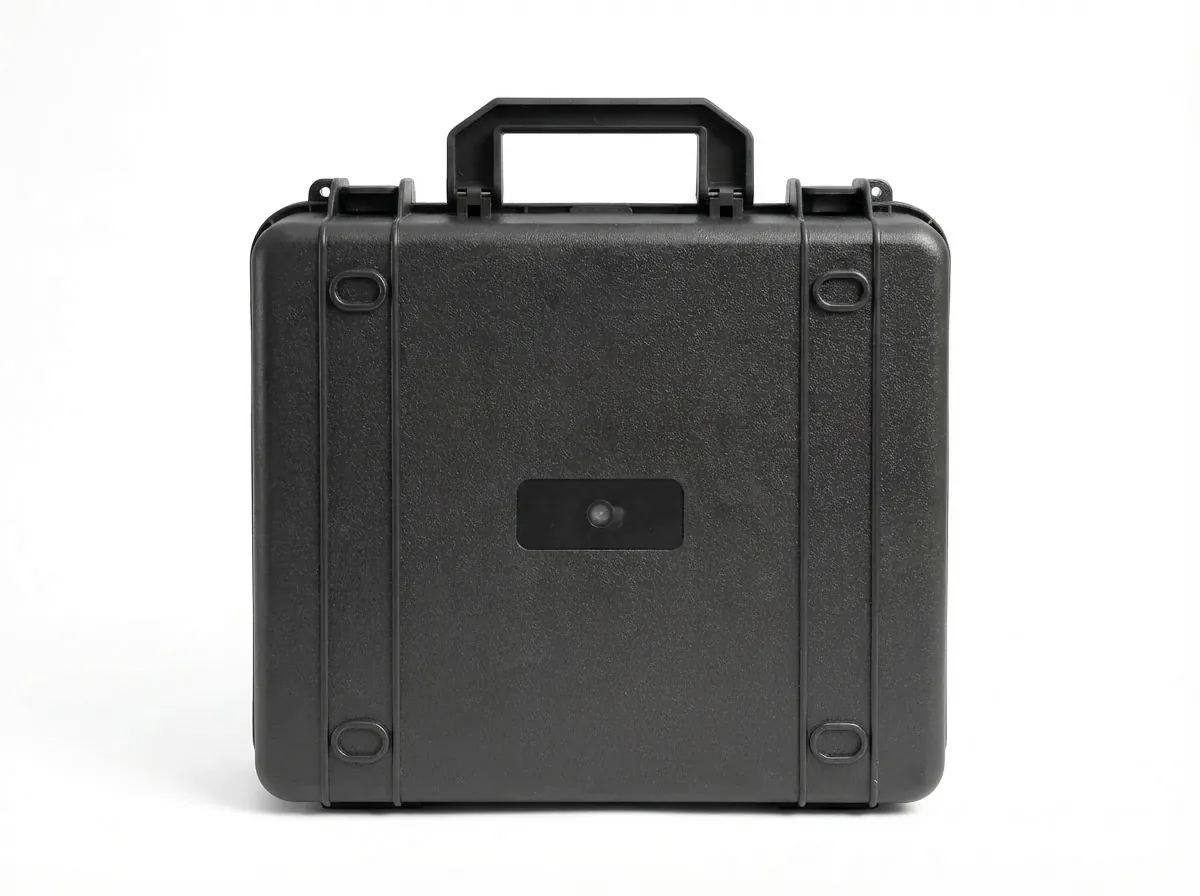
Prefer injection-molded modified PP or PP plus glass-fiber with 3 to 5 mm walls and reinforced corners; heavy-duty variants can use ABS, PC or aluminum-frame structures. The lid carries a full-perimeter EPDM gasket and multiple butterfly latches that form a rigid assembly. Add UV-stabilized masterbatch for outdoor use and target UL 94 V-0 flammability. Anti-slip ribs and fork pockets at the base ease palletizing and stacking.
For selection, compare by use environment, transport mode and whether the contents are sensitive: outdoor and liquid-exposed use chooses IP67 with a pressure valve; electronics need an ESD liner; cold-chain and medical use needs temperature control and logging. Writing protection level, test reports and traceability into the contract technical clause markedly lowers transport risk.
Different transport modes need differentiated adaptation: air freight uses a pressure-equalization valve; sea freight wraps the case in anti-rust film with desiccant against condensation; vehicle transit uses straps to stop sliding under hard braking; palletized stacking respects each case rated load so fragile top units are not crushed. A packing list and serial number inside ease cross-region transfer and after-sales traceability.
| Material | Wall / Structure | Use Case | Protection Note |
|---|---|---|---|
| --- | --- | --- | --- |
| Modified PP | 3-5mm injection | General industrial | Light, tough, chemical-resistant |
| PP+GF | Reinforced ribs | Heavy & frequent handling | High rigidity, low deflection |
| ABS | Medium wall | Lightweight portable | Good impact resistance |
| PC | Optional clear | Need to view interior | Heat-resistant, transparent |
| Aluminum / rotomolded | Metal frame or double wall | Oversized, heavy, cold chain | Highest rigidity, enhanced insulation |
Liner and Cushioning System
UN tests include drop, stacking, air-tightness (liquids) and hydraulic (liquids), with prescribed sequence and sample numbers; the validity period and re-test requirements of dangerous goods packaging certificates must be maintained to regulations so that a lapsed certificate does not block clearance.
The liner is the core of cushioning and positioning for the hazmat transport case.
The liner follows a full-wrap suspension, hard shell for critical parts, and modular principle: the main unit is fully wrapped in cross-linked EVA for cushioning, while critical parts sit in independent hard-shell compartments that prevent compression and scratches. Modular cutting gives every item its own cavity, so a model change only replaces a local insert, lowering tooling cost and enabling batch delivery.
Custom liner cut to the actual content shape is the key to a zero-compression-point design: first fix cavity positions from 3D data or physical scanning, then cut cross-linked EVA and hard shells so every item is independently suspended and critical parts never touch the wall. Modular live cells support multiple items in one case, improving carry and on-site quick access.
For equipment with circuits, chips or sensors, the liner should use anti-static foam and conductive coatings to control surface resistance per ESD protection practice, preventing electrostatic discharge and data corruption in transit. JUNZHJIA can configure an ESD liner by device type and supply test notes, which is especially critical for control boards, modules and electronics.
| Liner Part | Function | Use Case |
|---|---|---|
| --- | --- | --- |
| Cross-linked EVA wrap | Shock cushioning | All units and contents |
| Hard-shell compartment | Anti-crush, anti-scratch | Precision parts / instruments |
| Anti-static foam | ESD protection | Circuits / electronics |
| PCM + insulated interior | Thermostatic | Medical cold chain / transplant |
| Seamless disinfectable interior | Hygiene protection | Mortuary / medical |
Sealing, Latches and Pressure Valve
JUNZHJIA can supply custom hazmat transport cases and OEM/ODM for ADR and IMDG scenarios, with liner and double-containment design, and issue structural performance and related test documents for B2B supply in chemicals, energy and cross-border logistics.
Sealing and latches decide whether the hazmat transport case stays clean and leak-free.
Sealing uses a continuous full-perimeter EPDM gasket with multiple butterfly latches and stainless hinges forming a rigid body. For wading or high-altitude air freight, add a pressure-equalization valve to avoid difficult opening or water ingress from pressure differentials. Latches can accept padlocks or seals to prevent accidental opening and asset loss in transit.
Temperature and humidity are silent killers for precision and electronic contents: condensation rusts circuits and drifts readings. Place desiccant and a humidity indicator card inside for visual monitoring, and let the contents equilibrate to ambient temperature before use after a cross-climate trip. A temperature-humidity logger records the journey for traceability, which is standard redundancy for industrial and cold-chain transport.
Case life depends on maintenance: replace hardened EPDM gaskets promptly, lubricate latches and hinges periodically, and clean liners with closed-cell material and appropriate disinfection. Keep a reference benchmark case for periodic sampling, and map case to content to accessory by model to support inventory, spare-part management and traceability.
Custom liner cut to the actual content shape is the key to a zero-compression-point design: first fix cavity positions from 3D data or physical scanning, then cut cross-linked EVA and hard shells so every item is independently suspended and critical parts never touch the wall. Modular live cells support multiple items in one case, improving carry and on-site quick access.
Temperature, Humidity and Drying
ADR governs road and IMDG governs sea transport of dangerous goods, and both impose classification, packing group and marking requirements on dangerous goods packaging. An ADR hazmat case and IMDG sea transport packaging must pass performance tests under the UN Recommendations and carry the corresponding UN packaging marking.
Temperature and humidity are hidden risk sources during transport of the hazmat transport case.
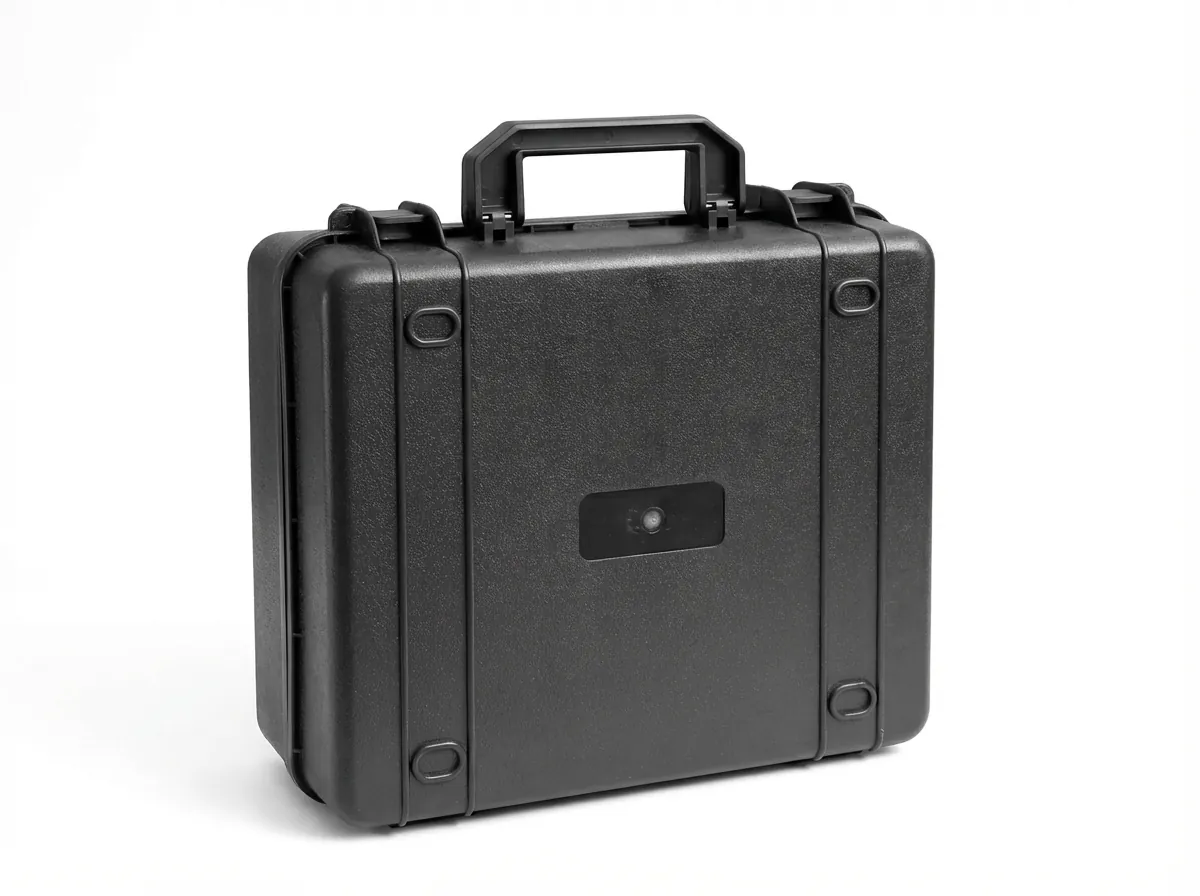
Temperature and humidity are silent killers for precision and electronic contents: condensation rusts circuits and drifts readings. Place desiccant and a humidity indicator card inside for visual monitoring, and let the contents equilibrate to ambient temperature before use after a cross-climate trip. A temperature-humidity logger records the journey for traceability, which is standard redundancy for industrial and cold-chain transport.
For equipment with circuits, chips or sensors, the liner should use anti-static foam and conductive coatings to control surface resistance per ESD protection practice, preventing electrostatic discharge and data corruption in transit. JUNZHJIA can configure an ESD liner by device type and supply test notes, which is especially critical for control boards, modules and electronics.
JUNZHJIA supports custom foam liners and OEM/ODM prototyping sized to the actual content, can fit seals, latches and stainless parts by model, and can issue IP, drop, vibration and ESD test reports. Stable capacity is offered for B2B wholesale, distribution and global supply, supporting laboratory and system audits.
For selection, compare by use environment, transport mode and whether the contents are sensitive: outdoor and liquid-exposed use chooses IP67 with a pressure valve; electronics need an ESD liner; cold-chain and medical use needs temperature control and logging. Writing protection level, test reports and traceability into the contract technical clause markedly lowers transport risk.
ESD and Static Protection
Dangerous goods packaging is classified by risk into Packing Groups I, II and III, corresponding to X, Y and Z performance levels; a UN packaging marking such as UN 4G/Y plus a serial number states the packaging type, performance level, year of manufacture and manufacturer code, and buyers should verify that the marking matches the certificate.
The hazmat transport case containing circuits and electronics must be protected against static.
For equipment with circuits, chips or sensors, the liner should use anti-static foam and conductive coatings to control surface resistance per ESD protection practice, preventing electrostatic discharge and data corruption in transit. JUNZHJIA can configure an ESD liner by device type and supply test notes, which is especially critical for control boards, modules and electronics.
JUNZHJIA supports custom foam liners and OEM/ODM prototyping sized to the actual content, can fit seals, latches and stainless parts by model, and can issue IP, drop, vibration and ESD test reports. Stable capacity is offered for B2B wholesale, distribution and global supply, supporting laboratory and system audits.
Prefer injection-molded modified PP or PP plus glass-fiber with 3 to 5 mm walls and reinforced corners; heavy-duty variants can use ABS, PC or aluminum-frame structures. The lid carries a full-perimeter EPDM gasket and multiple butterfly latches that form a rigid assembly. Add UV-stabilized masterbatch for outdoor use and target UL 94 V-0 flammability. Anti-slip ribs and fork pockets at the base ease palletizing and stacking.
Temperature and humidity are silent killers for precision and electronic contents: condensation rusts circuits and drifts readings. Place desiccant and a humidity indicator card inside for visual monitoring, and let the contents equilibrate to ambient temperature before use after a cross-climate trip. A temperature-humidity logger records the journey for traceability, which is standard redundancy for industrial and cold-chain transport.
Transport Adaptation: Air, Sea, Vehicle and Stacking
A hazardous chemical transport case must satisfy structural performance (drop, stacking, sealing) and also compatibility: the contents must not react with the case or liner, and acids, bases and solvents require chemical resistance plus double containment (inner packaging plus outer packaging).
The hazmat transport case must adapt to multiple transport modes.
Different transport modes need differentiated adaptation: air freight uses a pressure-equalization valve; sea freight wraps the case in anti-rust film with desiccant against condensation; vehicle transit uses straps to stop sliding under hard braking; palletized stacking respects each case rated load so fragile top units are not crushed. A packing list and serial number inside ease cross-region transfer and after-sales traceability.
Acceptance should write compartments, test reports and traceability into the purchase specification: no displacement on fit test, no rattle when inverted; full-wrap suspension with zero compression points; critical parts in upward hard compartments clear of walls; continuous gasket; ESD liner confirmed for electronics; temperature control and logging confirmed for cold-chain class. All met means pass, with a reference case kept for benchmark sampling.
Sealing uses a continuous full-perimeter EPDM gasket with multiple butterfly latches and stainless hinges forming a rigid body. For wading or high-altitude air freight, add a pressure-equalization valve to avoid difficult opening or water ingress from pressure differentials. Latches can accept padlocks or seals to prevent accidental opening and asset loss in transit.
Prefer injection-molded modified PP or PP plus glass-fiber with 3 to 5 mm walls and reinforced corners; heavy-duty variants can use ABS, PC or aluminum-frame structures. The lid carries a full-perimeter EPDM gasket and multiple butterfly latches that form a rigid assembly. Add UV-stabilized masterbatch for outdoor use and target UL 94 V-0 flammability. Anti-slip ribs and fork pockets at the base ease palletizing and stacking.

Custom Liner and Compartment Layout
IMDG sea transport additionally considers stacking load, salt spray, condensation and segregation requirements; for flammable and oxidizing substances, dangerous goods packaging must resist static and sparks, and latches and metal parts should be spark-free.
Custom liner cut to content shape is the key to a zero-compression-point hazmat transport case.
Custom liner cut to the actual content shape is the key to a zero-compression-point design: first fix cavity positions from 3D data or physical scanning, then cut cross-linked EVA and hard shells so every item is independently suspended and critical parts never touch the wall. Modular live cells support multiple items in one case, improving carry and on-site quick access.
The liner follows a full-wrap suspension, hard shell for critical parts, and modular principle: the main unit is fully wrapped in cross-linked EVA for cushioning, while critical parts sit in independent hard-shell compartments that prevent compression and scratches. Modular cutting gives every item its own cavity, so a model change only replaces a local insert, lowering tooling cost and enabling batch delivery.
For selection, compare by use environment, transport mode and whether the contents are sensitive: outdoor and liquid-exposed use chooses IP67 with a pressure valve; electronics need an ESD liner; cold-chain and medical use needs temperature control and logging. Writing protection level, test reports and traceability into the contract technical clause markedly lowers transport risk.
Sealing uses a continuous full-perimeter EPDM gasket with multiple butterfly latches and stainless hinges forming a rigid body. For wading or high-altitude air freight, add a pressure-equalization valve to avoid difficult opening or water ingress from pressure differentials. Latches can accept padlocks or seals to prevent accidental opening and asset loss in transit.
OEM/ODM and JUNZHJIA Customization
UN tests include drop, stacking, air-tightness (liquids) and hydraulic (liquids), with prescribed sequence and sample numbers; the validity period and re-test requirements of dangerous goods packaging certificates must be maintained to regulations so that a lapsed certificate does not block clearance.
JUNZHJIA can provide hazmat transport case capability from prototyping to mass production.
JUNZHJIA supports custom foam liners and OEM/ODM prototyping sized to the actual content, can fit seals, latches and stainless parts by model, and can issue IP, drop, vibration and ESD test reports. Stable capacity is offered for B2B wholesale, distribution and global supply, supporting laboratory and system audits.
Prefer injection-molded modified PP or PP plus glass-fiber with 3 to 5 mm walls and reinforced corners; heavy-duty variants can use ABS, PC or aluminum-frame structures. The lid carries a full-perimeter EPDM gasket and multiple butterfly latches that form a rigid assembly. Add UV-stabilized masterbatch for outdoor use and target UL 94 V-0 flammability. Anti-slip ribs and fork pockets at the base ease palletizing and stacking.
The hazmat transport case should be specified against IEC 60529 (domestically GB/T 4208) for IP dust and water protection, MIL-STD-810H Method 516.8 for drop and random-vibration validation, UL 94 for flammability, and the IK code for impact resistance. Buyers should require the supplier to provide corresponding test reports to support tendering, system audits and customer factory inspections.
The liner follows a full-wrap suspension, hard shell for critical parts, and modular principle: the main unit is fully wrapped in cross-linked EVA for cushioning, while critical parts sit in independent hard-shell compartments that prevent compression and scratches. Modular cutting gives every item its own cavity, so a model change only replaces a local insert, lowering tooling cost and enabling batch delivery.
For model-based volume customization, the flow in MIL-STD-810H explained can serve as a reference.
Procurement and Acceptance Checklist
JUNZHJIA can supply custom hazmat transport cases and OEM/ODM for ADR and IMDG scenarios, with liner and double-containment design, and issue structural performance and related test documents for B2B supply in chemicals, energy and cross-border logistics.
Writing the acceptance points of the hazmat transport case as a checklist markedly lowers risk.
Acceptance should write compartments, test reports and traceability into the purchase specification: no displacement on fit test, no rattle when inverted; full-wrap suspension with zero compression points; critical parts in upward hard compartments clear of walls; continuous gasket; ESD liner confirmed for electronics; temperature control and logging confirmed for cold-chain class. All met means pass, with a reference case kept for benchmark sampling.
Sealing uses a continuous full-perimeter EPDM gasket with multiple butterfly latches and stainless hinges forming a rigid body. For wading or high-altitude air freight, add a pressure-equalization valve to avoid difficult opening or water ingress from pressure differentials. Latches can accept padlocks or seals to prevent accidental opening and asset loss in transit.
Temperature and humidity are silent killers for precision and electronic contents: condensation rusts circuits and drifts readings. Place desiccant and a humidity indicator card inside for visual monitoring, and let the contents equilibrate to ambient temperature before use after a cross-climate trip. A temperature-humidity logger records the journey for traceability, which is standard redundancy for industrial and cold-chain transport.
Protection level for the hazmat transport case centers on two codes: IP and IK. The IP rating uses two digits, the first for dust (5 dust-protected, 6 dust-tight) and the second for water (4 splash, 5 jet, 7 temporary immersion). The IK code shows impact resistance (IK08 about 5 J, IK10 about 20 J). For outdoor and vehicle use start at IP65; for wading or liquid-exposed work choose IP67, and add IK08 or higher for critical contents.
Maintenance, Spare Parts and Asset Management
ADR governs road and IMDG governs sea transport of dangerous goods, and both impose classification, packing group and marking requirements on dangerous goods packaging. An ADR hazmat case and IMDG sea transport packaging must pass performance tests under the UN Recommendations and carry the corresponding UN packaging marking.
Long-term reliability of the hazmat transport case depends on maintenance and asset management.
Case life depends on maintenance: replace hardened EPDM gaskets promptly, lubricate latches and hinges periodically, and clean liners with closed-cell material and appropriate disinfection. Keep a reference benchmark case for periodic sampling, and map case to content to accessory by model to support inventory, spare-part management and traceability.
Different transport modes need differentiated adaptation: air freight uses a pressure-equalization valve; sea freight wraps the case in anti-rust film with desiccant against condensation; vehicle transit uses straps to stop sliding under hard braking; palletized stacking respects each case rated load so fragile top units are not crushed. A packing list and serial number inside ease cross-region transfer and after-sales traceability.
Acceptance should write compartments, test reports and traceability into the purchase specification: no displacement on fit test, no rattle when inverted; full-wrap suspension with zero compression points; critical parts in upward hard compartments clear of walls; continuous gasket; ESD liner confirmed for electronics; temperature control and logging confirmed for cold-chain class. All met means pass, with a reference case kept for benchmark sampling.
The hazmat transport case should be specified against IEC 60529 (domestically GB/T 4208) for IP dust and water protection, MIL-STD-810H Method 516.8 for drop and random-vibration validation, UL 94 for flammability, and the IK code for impact resistance. Buyers should require the supplier to provide corresponding test reports to support tendering, system audits and customer factory inspections.
Selection Parameter Comparison
Dangerous goods packaging is classified by risk into Packing Groups I, II and III, corresponding to X, Y and Z performance levels; a UN packaging marking such as UN 4G/Y plus a serial number states the packaging type, performance level, year of manufacture and manufacturer code, and buyers should verify that the marking matches the certificate.
Finally, a comparison table summarizes the selection dimensions of the hazmat transport case.
For selection, compare by use environment, transport mode and whether the contents are sensitive: outdoor and liquid-exposed use chooses IP67 with a pressure valve; electronics need an ESD liner; cold-chain and medical use needs temperature control and logging. Writing protection level, test reports and traceability into the contract technical clause markedly lowers transport risk.
The hazmat transport case should be specified against IEC 60529 (domestically GB/T 4208) for IP dust and water protection, MIL-STD-810H Method 516.8 for drop and random-vibration validation, UL 94 for flammability, and the IK code for impact resistance. Buyers should require the supplier to provide corresponding test reports to support tendering, system audits and customer factory inspections.
Protection level for the hazmat transport case centers on two codes: IP and IK. The IP rating uses two digits, the first for dust (5 dust-protected, 6 dust-tight) and the second for water (4 splash, 5 jet, 7 temporary immersion). The IK code shows impact resistance (IK08 about 5 J, IK10 about 20 J). For outdoor and vehicle use start at IP65; for wading or liquid-exposed work choose IP67, and add IK08 or higher for critical contents.
The hazmat transport case carries a high-value or high-risk payload. A single vibration, compression, moisture or temperature excursion can destroy goods, void data, cause compliance rejection or even a safety incident. Typical failures come from five sources: micro-vibration displacement, compression deformation, condensation from temperature change, seal failure and ESD. Ordinary wooden or foam boxes are unsealed, loosely lined and unlogged, so a dedicated protective solution is required.
Frequently Asked Questions
Question: How should the protection rating and compliance requirements of the hazmat transport case be determined?
Answer: Determine the rating and compliance requirements by the use environment and the contents. Routine plants and indoor sites use IP54 to IP65; outdoor, vehicle and rain-snow environments call for IP65; wading and liquid-exposed work should go straight to IP67 with a pressure-equalization valve. For impact, read the IK code and choose IK08 (about 5 J) or higher for critical contents. Confirm IP per IEC 60529 (domestically GB/T 4208), validate drop and vibration per MIL-STD-810H Method 516.8, and reference UL 94 for flammability. If a specific industry applies (dangerous goods, medical cold chain), add that industry's test and certificate requirements to the contract technical clause so non-compliance is not discovered after delivery.
Question: How to prevent transit vibration from causing failure or drift of the contents?
Answer: Micro-vibration is the enemy of precision and sensitive contents. The countermeasure is full-wrap suspension: wrap the main unit in cross-linked EVA and place critical parts in independent hard-shell compartments so the contents are zero-compression and clear of walls, then add secondary shock isolation and center the mass. Before transit confirm transport modes such as fastening; on site, equilibrate temperature before use. Add an ESD liner for circuit-bearing contents and temperature control with full logging for cold-chain use. JUNZHJIA can fit seals by content model and issue vibration test reports to support tendering and system audits.
Question: Why does content with circuits or electronics need ESD protection?
Answer: Electrostatic discharge can punch through control boards, sensors and electronics in microseconds, causing soft failure or permanent damage that often only shows up on site. The hazmat transport case liner should introduce anti-static foam and conductive coatings to keep surface resistance in the ESD-safe range, with conductive ground straps to bleed accumulated charge. Boards, modules and instruments especially need a dedicated ESD compartment and humidity monitoring. JUNZHJIA can configure an ESD liner by content type and supply test notes, which matters for B2B volume supply.
Question: How do temperature and humidity affect the contents, and how to manage them?
Answer: Condensation from temperature change rusts circuits, lowers insulation and drifts readings; long-term moisture also breeds mold and corrodes contacts. Place desiccant and a humidity indicator card inside the hazmat transport case for visual monitoring, and add a temperature-humidity logger on long journeys for a traceable file. After a cross-climate trip, equilibrate to ambient before use to avoid thermal shock. Medical cold-chain and transplant use relies on phase-change cold storage and an insulated interior to hold the target temperature, with the temperature record handed over with the contents. Managing moisture plus traceability markedly lowers the chance of arrival failure.
Question: How to choose sealing and latches?
Answer: Use a continuous full-perimeter EPDM gasket with multiple butterfly latches and stainless hinges forming a rigid body. For wading or high-altitude air freight add a pressure-equalization valve to prevent hard opening or water ingress from pressure differentials. Latches should accept padlocks or seals to prevent accidental opening and asset loss. At acceptance confirm the gasket is continuous with no break and there is no rattle when inverted. For medical and hygiene use the seal also prevents leakage, so gasket and interior must resist disinfectants; for frequently opened service cases, choose metal hinges and latches to extend service life.
Question: What is the advantage of a custom liner over generic foam?
Answer: Generic foam only fills voids and cannot guarantee zero compression or suspended positioning. A custom liner is cut from 3D data or physical scanning so each item gets its own cavity and critical parts stay clear of walls; modular live cells support multiple items in one case and speed on-site access. A content change only swaps a local insert, cutting tooling cost and lead time. JUNZHJIA supports OEM/ODM prototyping, can fit seals and stainless parts by model, serves B2B wholesale and global supply, and can tailor liners for cold-chain or dangerous-goods needs.
Question: What documents and physical checks are needed to accept the hazmat transport case?
Answer: Documents should at least include the IP report (IEC 60529 / GB/T 4208), drop and vibration reports (MIL-STD-810H Method 516.8, ISTA), plus an ESD report for circuit class and optionally UL 94 for flammability; industry use adds the corresponding certificate (for example a dangerous goods packaging certificate or a medical cold-chain temperature record). Physical acceptance: no displacement on fit test, no rattle when inverted; full-wrap suspension with zero compression points; critical parts in upward hard compartments clear of walls; continuous gasket; ESD liner confirmed for electronics; temperature control and logging confirmed for cold chain. All met means pass, with a reference case kept for benchmark sampling.
Question: Can JUNZHJIA do OEM/ODM and global supply?
Answer: Yes. JUNZHJIA supports custom foam liners and OEM/ODM prototyping sized to the actual contents, can fit seals, latches and stainless parts by model, and can issue IP, drop, vibration and ESD test reports to support system audits. Stable capacity is offered for B2B wholesale, distribution and global supply, with dedicated adaptation for testing validation, dangerous goods, medical cold chain and hygienic transfer scenarios, helping customers convert transport loss and compliance risk into quantifiable cost.
Summary and Further Reading
The core requirement for a hazmat transport case is that the contents arrive still serviceable and compliant: set IP/IK and industry compliance by the use environment, apply full-wrap suspension, leak-proof sealing and moisture or cold-chain management, and keep traceable records. Writing test reports, certificates and traceability into the contract technical clause keeps both transport and compliance risk under control. JUNZHJIA can customize to the actual contents and issue reports, making the hazmat transport case a practical solution. See also ISTA transport testing procedure, IP67 protective case and plastic protective box.
Further Reading