

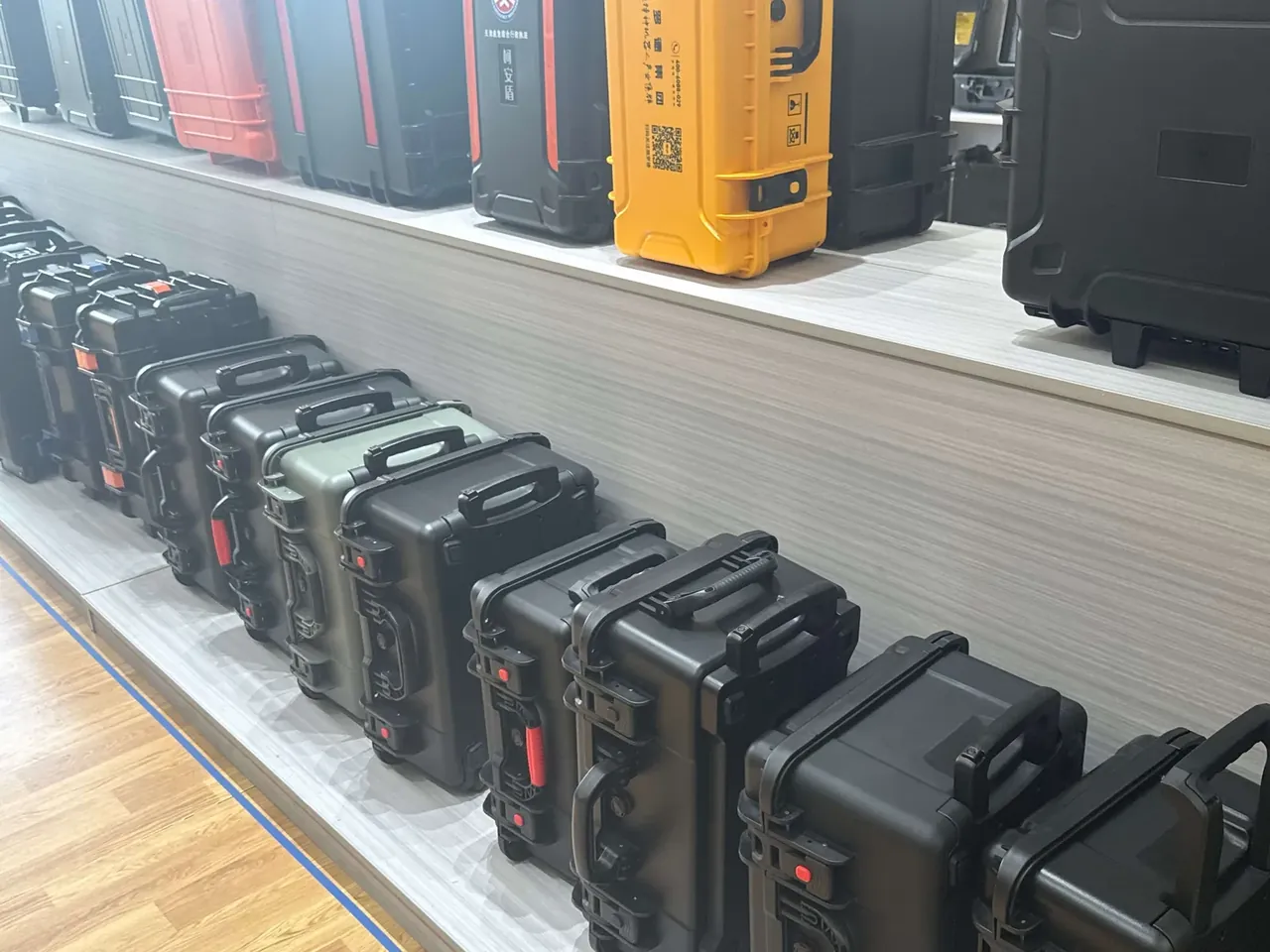
Quick answer: A military firearm storage case is bought for one of four settings: a fixed armoury room, a vehicle on escort duty, a field deployment, or a range turning stock over daily. They differ less in protection rating than in three numbers: openings per day, carry distance and stack height.
Table of contents
- Four Scenarios a Military Firearm Storage Case Has to Serve
- Fixed Storage in Armoury Rooms
- Vehicle Movement and Field Deployment
- Range and Equipment Room Turnover
- Setting Configuration Priorities
- FAQ
1. Four Scenarios a Military Firearm Storage Case Has to Serve
Sort scenarios by three actions: who opens the case, how often, and where it goes next. Those actions decide which stress accumulates.
An armoury room is mild: shelf storage, one or two openings a day, static load and humidity. Escort duty is the reverse, with several vehicle loadings a week, vibration and a wide temperature swing. Field deployment adds dust and carrying, while range turnover wears hardware hardest.
| Scenario | Openings per day | Configuration focus |
|---|---|---|
| Armoury room | 1 to 2 | base stiffness, sealing |
| Escort duty | 3 to 6 | tie-downs, latch safety |
| Field deployment | 2 to 4 | shell toughness, IP rating |
| Range turnover | over 10 | hinge and latch life |
Read it once and a military firearm storage case is four products wearing one name. One model stretched across all four fails in the latches, not the shell.
2. Fixed Storage in Armoury Rooms
An armoury runs on one number per level and one position per case. Shelf pitch is commonly 400 mm and the number sits along the lid edge.
Rifle cavities usually measure 1180 by 420 by 150 mm, enough for a rifle plus an optic. At 6.8 kg empty, two staff swap a shelf without a trolley; three levels put 120 kg on the bottom case.
The cabinet split is simple: a cabinet answers who may enter, a case answers where an item sits. A numbered case with a seal position lets a handover record two numbers.
3. Vehicle Movement and Field Deployment
Escort work is a restraint problem before a protection problem. Two straps run along the short side and anchor on reinforced side bosses, never on the handle, which deforms and lets the gasket leak.
Temperature is the second limit: a cargo bay reaches 60 °C in summer sun and -40 °C on a winter night, so latches must open and the gasket stay flexible. Cold drop and hot soak tests prove it.
| Stage | Risk | Case feature |
|---|---|---|
| Loading | case slides, strap crushes wall | side bosses, strap channels |
| In transit | vibration, latch creeps open | two-point latches with pins |
| Unloading | corner impact | rubber caps, ductile shell |
| Open storage | rain, dust | IP67 sealing, base drain |
Coastal sites should specify hardware against 96 hours of neutral salt spray, since standard plating shows white rust after 48 hours.
4. Range and Equipment Room Turnover
A range opens a military firearm storage case more than ten times a day, so the focus moves from shell to hardware: hinge pin diameter, latch spring quality, buckle holding force. A latch point rated 350 N keeps the lid shut under a sideways push.
The insert follows the counting habit: long channel cuts in EVA at 30 mm thickness and 45 kg/m³ density, with finger notches for gloved hands. Below 35 kg/m³ the channel walls collapse.
The return step is easily missed: cases go back onto the shelf by number, otherwise positions drift while the count still matches.
5. Setting Configuration Priorities
Budgets split differently: an armoury order spends on sealing, an escort order must solve the tie-down interface, a range order pushes money into hardware.
| Scenario | First priority | Safe to compromise |
|---|---|---|
| Armoury room | base stiffness, stack stability | handle style |
| Escort duty | tie-downs, latch safety | insert precision |
| Field deployment | drop tolerance, IP rating | cosmetic finish |
| Range turnover | hinge and latch life | sealing class |
The method is plain: count openings per day, measure carry distance, check stack height. Those three numbers settle the configuration of a military firearm storage case; where they conflict, openings per day wins.
Conclusion
The scenario question reduces to three numbers: openings per day, carry distance and stack height. An armoury trades sealing for stability, an escort case a fixed interface for safety, a range case hardware life for speed. Put those numbers in the purchase list and a military firearm storage case becomes something a buyer can accept.
This article discusses only the container (case body) side of specifications and design intent, and does not cover any handling, loading or use of the contents.
Related Reading
- Military firearm storage case selection: from one rifle to a full squad
- How a field armoury is organised and equipped
- Weapon storage cabinets in a unit arms room
- Equipment case layouts for special forces detachments
Related Products
- 8 Series — Gun Cases; Military Equipment Cases; Camera Equipment Cases; Drone Cases; Watch Cases; Knife Cases; First Aid Cases; Electronics Equipment Cases
- WL8-2812 PP Gun Case — model WL8-2812
- All protective cases and toolboxes: 7 series, 158 models