

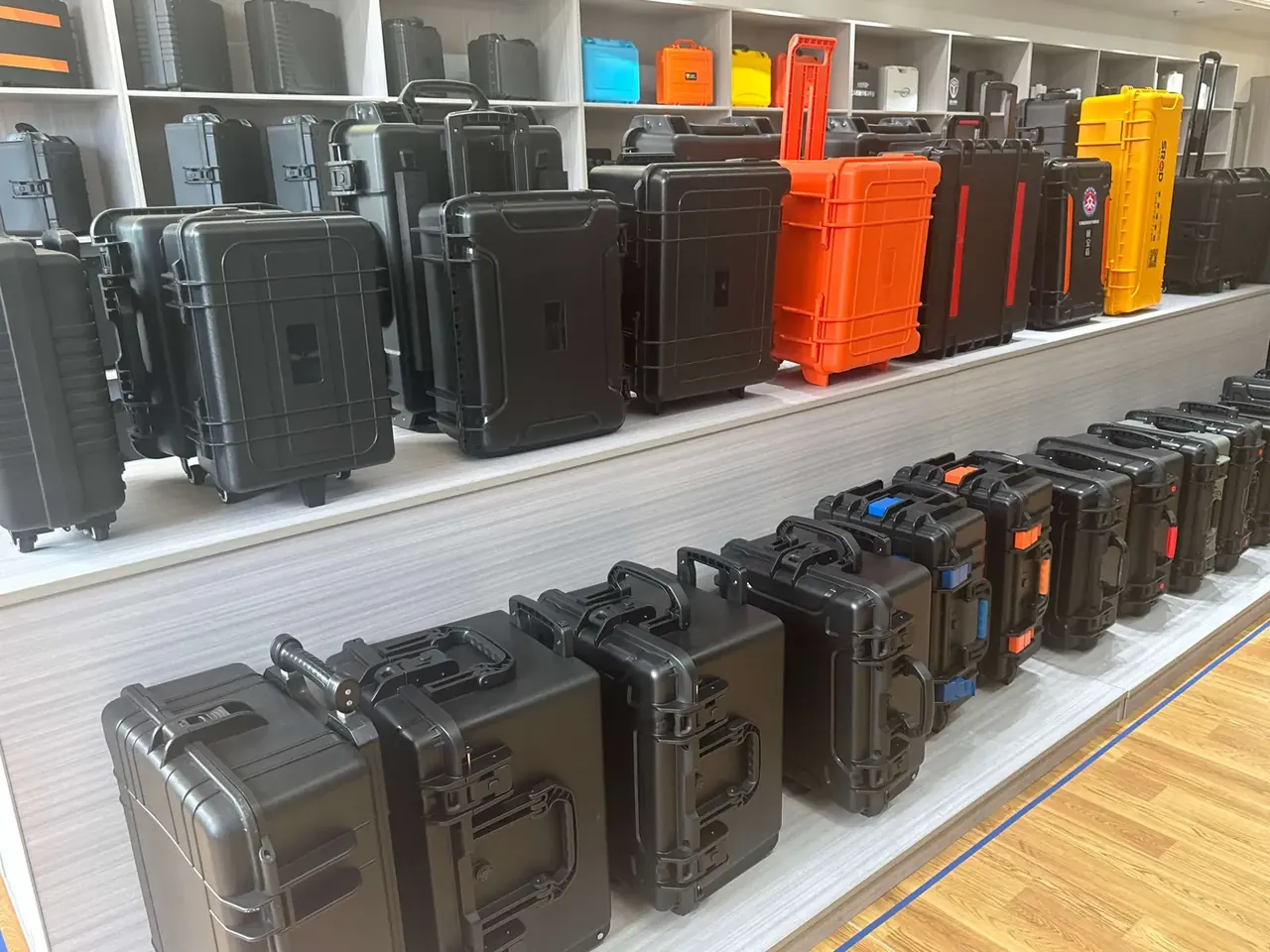
Quick answer: A Military Firearm Storage Case stays serviceable through three tiers: a 90-second pre-shift latch and groove check, a 60-day test with gauges and a torque wrench, and a 365-day teardown that lifts the gasket and weighs the desiccant. Change the gasket at four years or 250 cycles.
Table of contents
- Inspection Tiers for a Military Firearm Storage Case
- Gasket Compression and Air-Tightness Checks
- Latch and Hinge Torque Management
- Crack, Distortion and Retirement Limits
- Records, Spares and Storage Climate
- FAQ
1. Inspection Tiers for a Military Firearm Storage Case
Intervals for a Military Firearm Storage Case follow cycles and exposure, not the calendar. The pre-shift card takes 90 seconds: both latches engaged, no grit in the gasket groove, no chalky ribs, handle rivets tight.
The 60-day test uses instruments: ten open-close cycles by ear, a feeler gauge from 0.05 mm around the lid seam, a torque wrench on each screw. The 365-day teardown lifts the gasket, checks the groove and weighs the desiccant. A Military Firearm Storage Case can be pulled at any tier; started corrosion cannot be undone.
| Tier | Interval | Items | Tools | Pass mark |
|---|---|---|---|---|
| Pre-shift | Every issue | Latches, groove grit, ribs, rivets | Eyes and hand | All four clear |
| Functional | 60 days | Hinge feel, lid seam, torque | Feeler gauge, wrench | Seam within 0.3 mm |
| Teardown | 365 days | Gasket, groove marks, desiccant | Calipers, balance | Gain under 10 percent |
2. Gasket Compression and Air-Tightness Checks
Gaskets age first, so the line belongs on paper. Silicone cord at 55±5 Shore A runs at 22 to 28 percent compression: below 20 percent the seam never seals, above 32 percent the cord flattens.
Whitening and permanent set are defects, and mould on the groove wall means damp storage. Lay the cord flat for 24 hours; under 88 percent recovery means residual set above 12 percent. Bake a sample at 80 °C for 72 hours and scrap batches shifting more than 6 Shore A.
Replace at four years or 250 cycles. A coastal Military Firearm Storage Case reaches the line by year four, a dry store by year five.
| Condition | Sign | Action |
|---|---|---|
| Sound | Even rebound, no permanent set | Clean and keep |
| At the line | Residual set above 12 percent | Replace the cord |
| Failed | Crazed, split, mould in groove | Replace, inspect groove |
3. Latch and Hinge Torque Management
A loose latch spreads gasket compression unevenly until one stretch of seam leaks. Latch seats take M6 screws at 2.2 to 2.6 N·m, re-torqued every 120 days; above 3.0 N·m the plastic boss splits.
Hinges are judged on pin clearance and drag. Past 0.4 mm of radial clearance the lid shifts sideways and shears the gasket. At 0.6 mm of cam wear a Military Firearm Storage Case gets a new latch set, never a shim.
| Part | Measure | Acceptable | Action |
|---|---|---|---|
| Latch screw | Torque | 2.2 to 2.6 N·m | Re-torque or replace |
| Latch cam | Wear depth | Under 0.6 mm | Replace latch set |
| Hinge pin | Radial clearance | Under 0.4 mm | New pin or seat |
4. Crack, Distortion and Retirement Limits
Damage to a Military Firearm Storage Case splits into repairable and terminal. A crack longer than 60 mm, or through the wall, leaves too little section for stacking. Lid flatness beyond 1.2 mm cannot be sealed by a new gasket, and six gauge readings against a steel rule settle it.
Repairs must clear one test: load to rating, stack five high, 72 hours, unload, reject above 2.5 mm deflection. A Military Firearm Storage Case repaired this way carries a tighter limit than a new one.
| Item | Threshold | Action |
|---|---|---|
| Body crack | Over 60 mm or through-wall | Retire |
| Lid flatness | Over 1.2 mm | Retire |
| Deflection after stacking | Over 2.5 mm | Downgrade to storage |
5. Records, Spares and Storage Climate
A records sheet needs five fields: case number, in-service date, accumulated cycles, last gasket change, latest verdict. Without a cycle count it is decoration, because the limit is counted in closings. Hold spares at 8 percent of the fleet.
Keep stores at 5 to 30 °C and below 65 percent humidity, and shade cases near windows: polyethylene chalked by 1000 hours of UV loses impact strength. Specify metal parts against 480 hours of neutral salt spray. Above 70 percent humidity for three days, weigh desiccant at 180 days.
Conclusion
Maintenance is less about diligence than about writing judgement down as numbers: a 0.3 mm seam, 2.2 to 2.6 N·m of torque, 12 percent residual set, a 60 mm crack and 1.2 mm of flatness. Post those figures on the store wall and the pre-shift card becomes a verifiable routine for a Military Firearm Storage Case.
This article discusses only the container (case body) side of specifications and design intent, and does not cover any handling, loading or use of the contents.
Related Reading
- Fixing the specifications of a Military Firearm Storage Case
- Service cycles for war reserve cases
- Preventing case damage inside a warehouse
- Inspection flow for military supply cases
Related Products
- 8 Series — Gun Cases; Military Equipment Cases; Camera Equipment Cases; Drone Cases; Watch Cases; Knife Cases; First Aid Cases; Electronics Equipment Cases
- WL8-2812 PP Gun Case — model WL8-2812
- All protective cases and toolboxes: 7 series, 158 models