

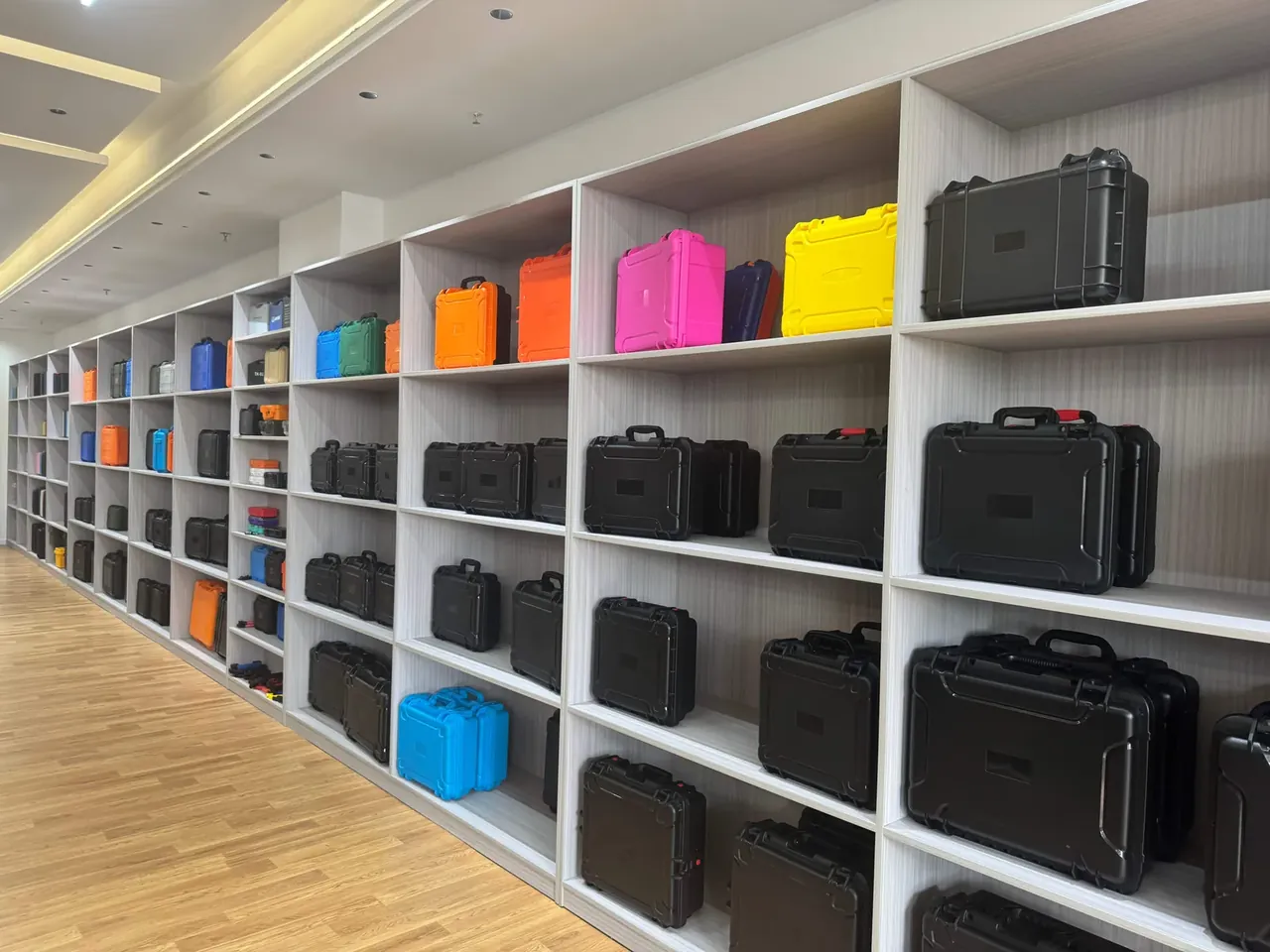
Quick answer: A military firearm storage case passes acceptance when every check is sorted into critical, major and minor tiers, each tier carries a fixed sample size and decision number, and the release decision rests on measured values.
Table of contents
- Military Firearm Storage Case Acceptance in Three Tiers
- Form and Dimension Checks
- Seal Integrity and Temperature Cycling
- Drop Stack and Handle Pull Tests
- Batch Release and Retest Intervals
- FAQ
1. Military Firearm Storage Case Acceptance in Three Tiers
What stalls an incoming inspection is rarely a failed measurement; it is a missing decision rule. A workable military firearm storage case acceptance procedure sorts every check into three tiers and fixes a sample size and decision number for each.
Critical items stay short: a through crack after a 1.2 m drop on six faces, three edges and one corner; a latch that springs open once closed; a batch plate that disagrees with the delivery note. One hit rejects the lot. Major items cover seal, stacking and hinge life; minor items may be sorted and resubmitted.
| Tier | Examples | Decision |
|---|---|---|
| Critical | Through crack, latch pops open, wrong plate | One unit rejects the lot |
| Major | Pressure drop, stacking set, handle pull | AQL 1.0, Ac 2 Re 3 at n 80 |
| Minor | Colour difference, print offset, flash | Ac 2 Re 3 at n 20, sorting allowed |
2. Form and Dimension Checks
Flatness at the lid joint is the check most often skipped. Run a 0.3 mm feeler gauge around the closed joint; it must not enter. Diagonals on a 600 mm case must agree within 3 mm and parting line mismatch stays under 0.5 mm. Measure after four hours at 23 plus or minus 2 C and 50 percent humidity, since a warm part cools out of tolerance.
Hinge alignment is judged by hand: the pin should push home without a mallet. Root thickness at the hinge boss stays at 4.5 mm or more and axial play after 5,000 cycles under 0.4 mm. A military firearm storage case print offset must hold 1 mm in a consistent direction, since random drift points to a loose screen clamp.
3. Seal Integrity and Temperature Cycling
Pressure testing charges the case to 500 Pa, holds 60 seconds and allows a 5 percent drop at most. Water testing is blunter: 30 cm for 30 minutes with three layers of absorbent paper inside, weight gain 0.5 g or less. Pressure passing while water fails usually means the sealing face collapses under load.
| Test | Condition | Limit |
|---|---|---|
| Pressure | 500 Pa, 60 s | Drop 5 percent max |
| Water | 30 cm, 30 min | Gain 0.5 g max |
| Heat | Plus 60 C, 4 h | No sag, latch one hand |
| Cold | Minus 40 C, 4 h | No crack after drop |
| Damp heat | 40 C, 93 percent RH, 48 h | No rust, seal retest |
Gasket compression is the hidden variable. A 3.0 mm groove with a 4.0 mm cord gives 25 to 30 percent; below 20 percent the cord cannot recover when cold. Two cycles of minus 40 C and plus 60 C, four hours each, then a military firearm storage case seal retest, reveal permanent set.
4. Drop Stack and Handle Pull Tests
Drop testing runs 1.2 m onto six faces, three edges and one corner, ten impacts, on samples held at minus 40 C for four hours and dropped within five minutes. Scuffing and whitened edges are not defects; a through crack or a released latch is.
Stacking puts 500 kg on the top face for 24 hours, measured one hour after unload, residual set under 3 mm. Handle pull is 300 kg for one minute with movement under 1 mm. A military firearm storage case usually gets a second latch cycle after the stack test, because stacking set amplifies misalignment.
5. Batch Release and Retest Intervals
A military firearm storage case programme triggers first article inspection on a new mould, a material change, a shift change and a restart after seven days idle. Records capture melt at 210 to 230 C, mould at 40 to 50 C, packing pressure at 45 MPa and M5 screws at 1.2 N m.
Two units per lot are retained for 12 months from the same mould and shift as the shipment. Type testing repeats every six months. Release has three outcomes only: pass, sort and reinspect, or reject the lot.
Conclusion
An acceptance standard earns its keep when each line lands on a number, an action and a named decision maker. Three critical items, a fixed sample size and a 12 month retention period remove most of the room for argument, and a written military firearm storage case acceptance standard saves more than any single site inspection.
This article discusses only the container (case body) side of specifications and design intent, and does not cover any handling, loading or use of the contents.
Related Reading
- Factory inspection and batch traceability
- Quality control points on the assembly line
- Transit packaging standards for firearm cases
- Selection criteria for storage cases
Related Products
- 8 Series — Gun Cases; Military Equipment Cases; Camera Equipment Cases; Drone Cases; Watch Cases; Knife Cases; First Aid Cases; Electronics Equipment Cases
- WL8-2812 PP Gun Case — model WL8-2812
- All protective cases and toolboxes: 7 series, 158 models