

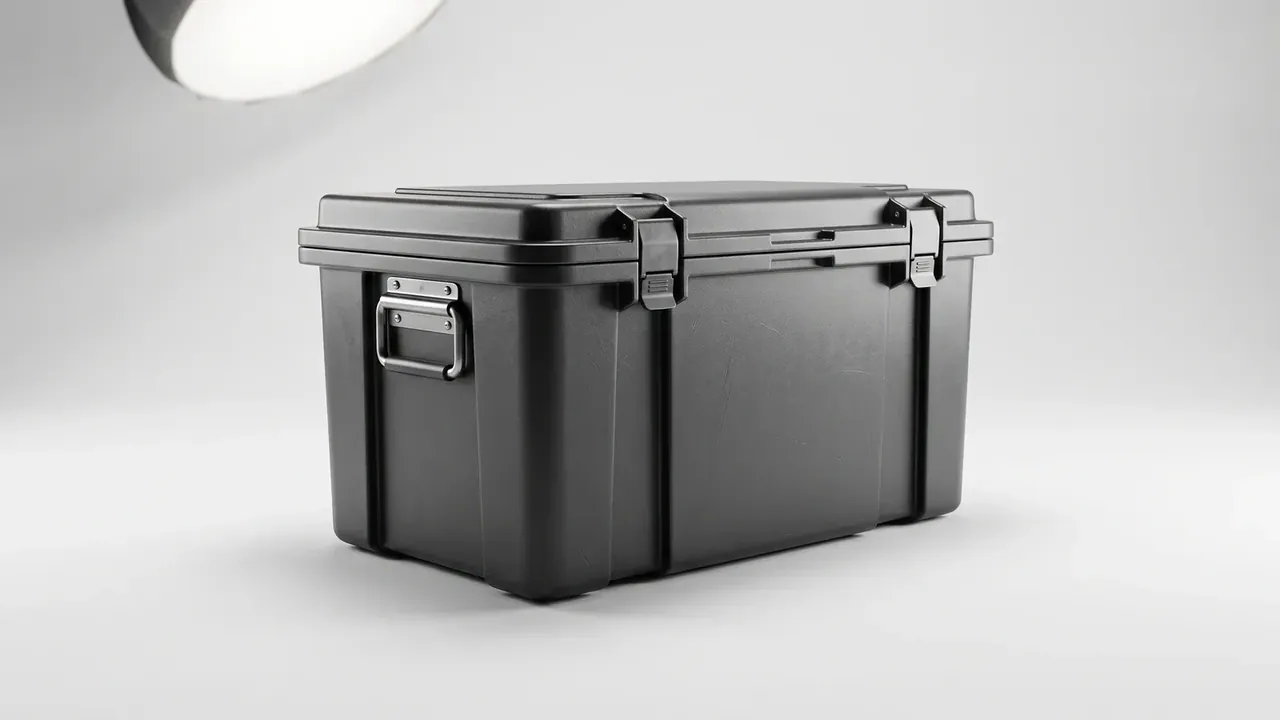
Quick answer: A military flight case carries four jobs across an air movement: prove itself sound before loading, pass load into the aircraft structure once inside, leave a state the next handler can read, and give a verdict on whether it flies again. The checkpoints run in that order and cannot be merged. A defect missed at the first becomes a restraint failure in the cabin; a missing handover record leaves the last inspection guessing.
Table of contents
- Pre-load inspection: start at the latches and the lid seam
- In-cabin restraint: where the four loads go
- Handover: leaving a state the next person can read
- Post-flight inspection: three verdicts
- Checkpoints for the four stages
- FAQ
1. Pre-load inspection: start at the latches and the lid seam
A military flight case should be inspected from the load-bearing parts outward: latches, hinges, riveted handle points, then the lid seam. Scratches change nothing structural. Loose hardware is amplified by cabin differential and restraint loads.
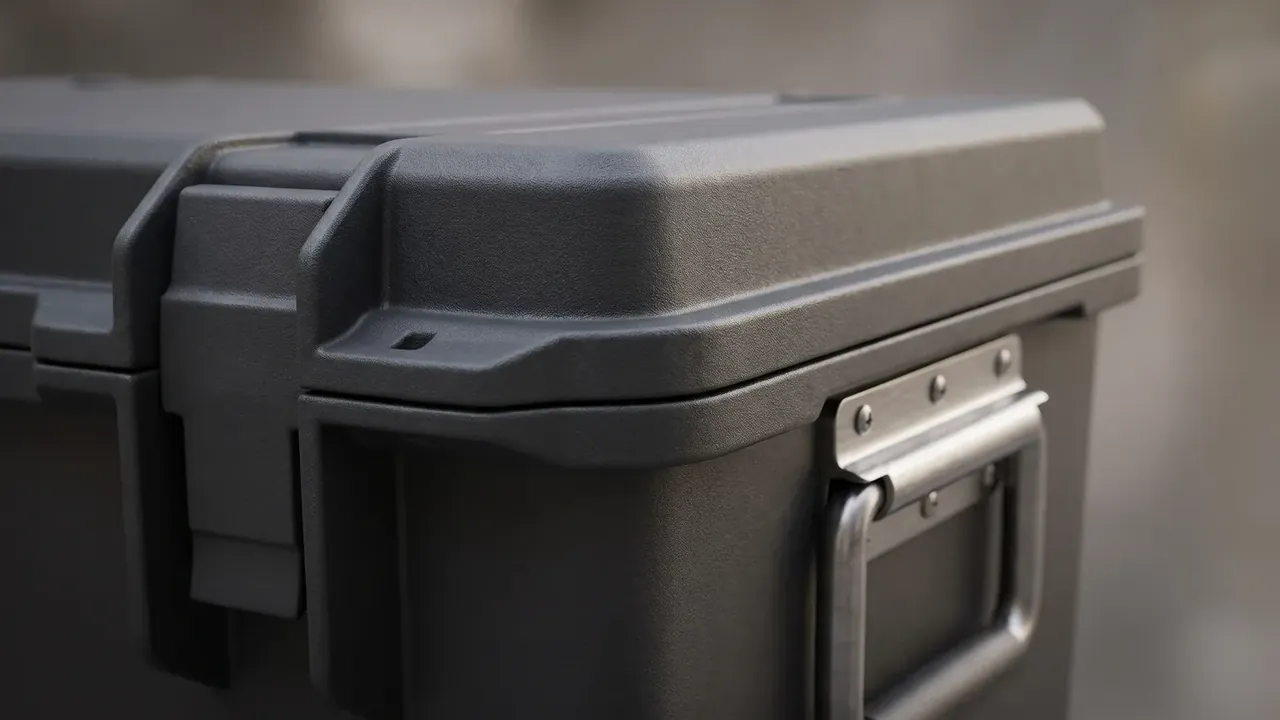
The corner above gathers the checks: a black draw latch on the lid edge, a riveted stainless spring handle beside it, the closing lip between lid and body, orange-peel texture from rotomoulding. Press the handle for rivet movement, work the latch for pin clearance, then run a finger along the seam. The latches compress the gasket only; a body bent outward or a cracked seat keeps the case on the ground.
2. In-cabin restraint: where the four loads go
Inside the cabin a military flight case resists four loads: forward braking, lateral sway, vertical bounce, and lid bulge from pressure. Each needs its own part: straps and track forward, chocks or net sideways, base contact vertically, a valve for the bulge.
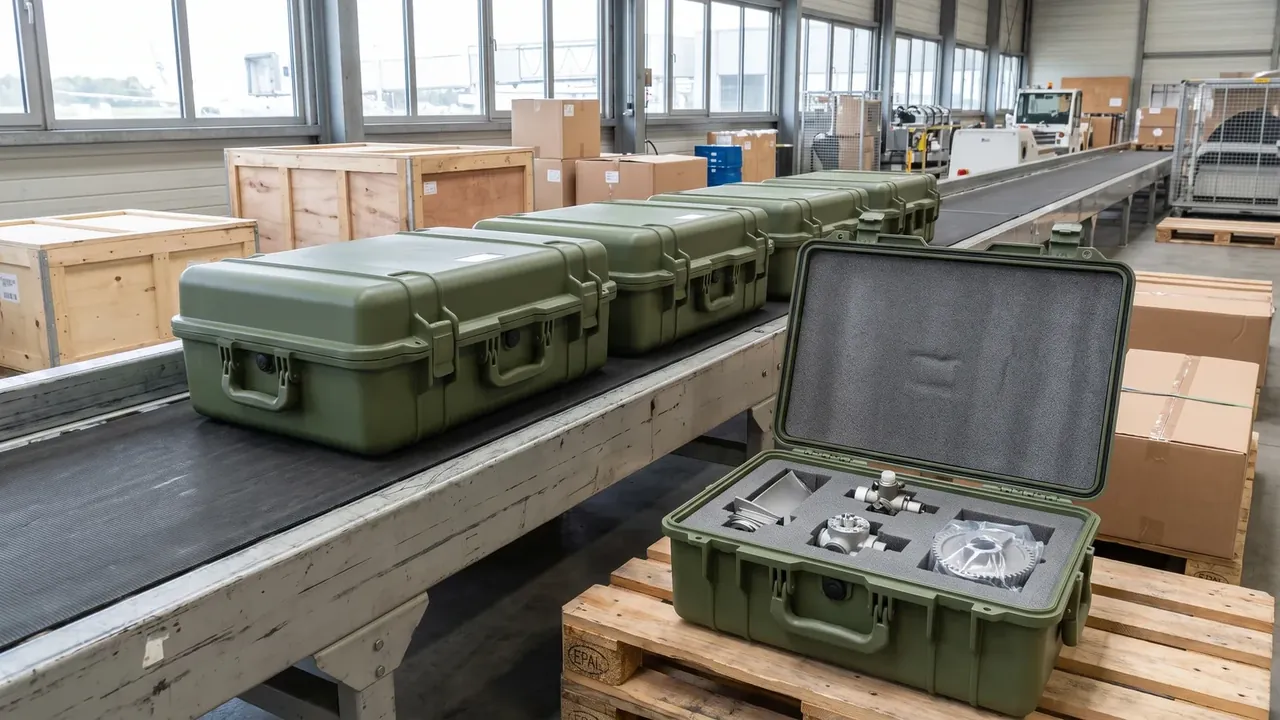
The conveyor above carries three olive cases, one open on a pallet with metal bodies set in grey foam. A moulded boss seated against the pallet stops a military flight case sliding when the forklift starts; straps alone only hold it down as it rubs. Run each strap over a rib, pad the edges, leave a finger of slack.
3. Handover: leaving a state the next person can read
Handover is not a signature. It is the moment a military flight case has to let the next person judge three things without opening it: fresh impact damage, a broken seal line, and whether the restraint kit travelled along.
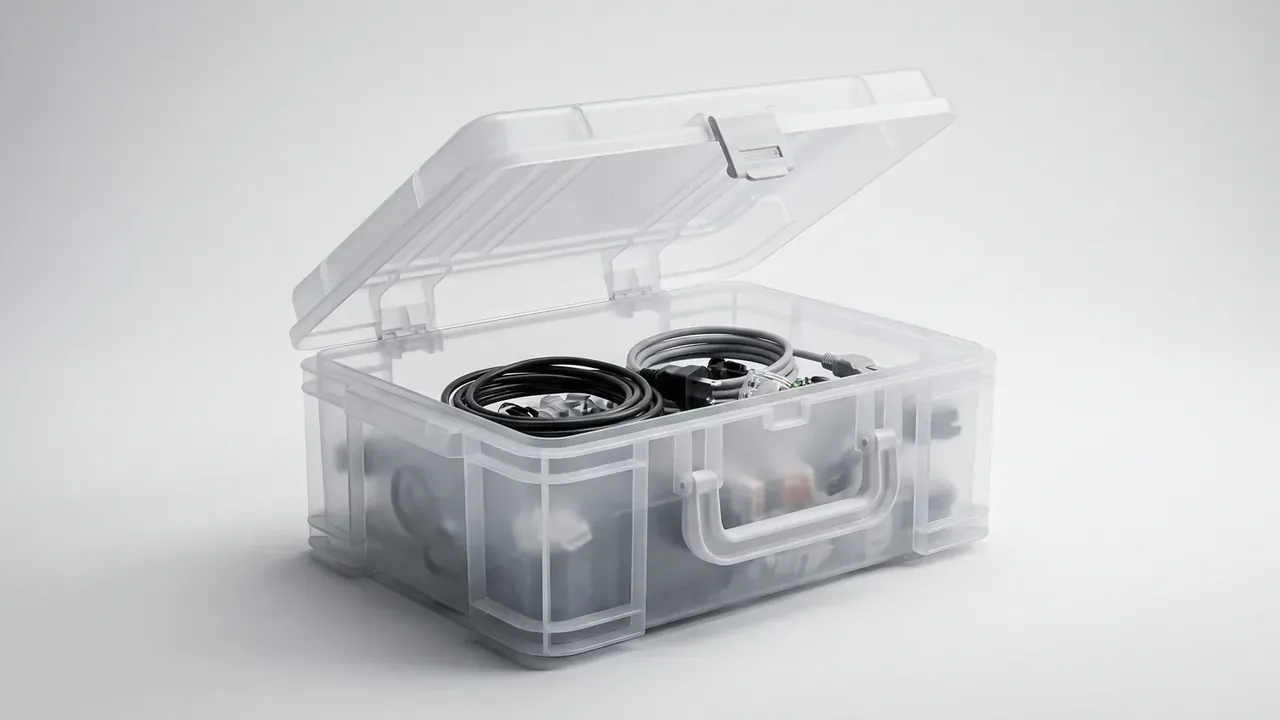
The clear case above is open, two coils of black cable and metal connectors inside, its lid hinged to the body. Opening breaks the restraint state, so handover belongs at a bench where the lid stands on its hinge. The record carries three items: serial, condition, and the count of restraint parts.
4. Post-flight inspection: three verdicts
Post-flight inspection is not a repeat of the first check; it decides whether a military flight case enters another movement. Three verdicts: serviceable, restricted to ground use, or withdrawn for repair. The evidence is shell distortion, seal face condition and hardware clearance, not age.
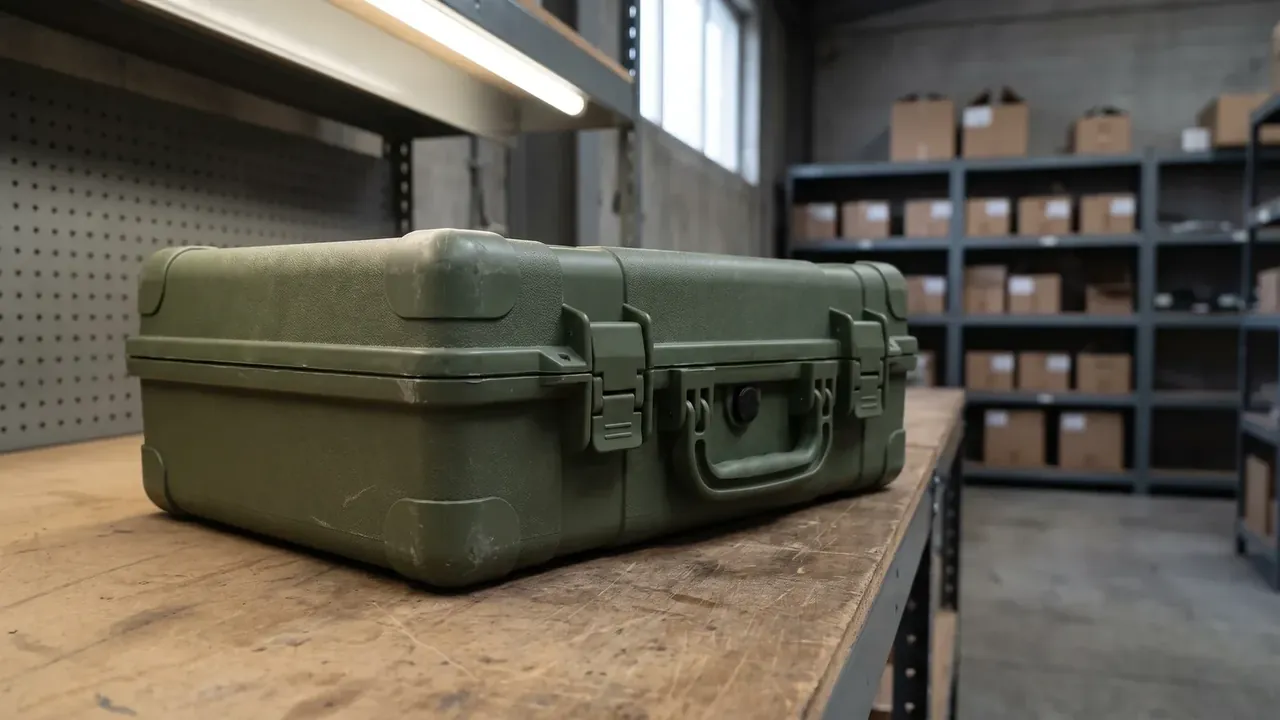
The olive case above sits closed on a wooden bench, one latch and one folding handle facing out, boxed shelving behind. Such a bench lets a military flight case be checked properly: flat support, a lid pressed shut by hand, room to turn it over. Three movements settle it: walk the closed seam, press each corner and listen, lay the case on its side.
5. Checkpoints for the four stages
Reduce the four stages to one table, keeping only items that can be settled on the spot.
| Stage | What to look at | Passes when | Action if not |
|---|---|---|---|
| Pre-load | Latches, hinges, rivets | No movement, no cracks | Change hardware |
| In cabin | Anchors and straps | Over a rib, a finger of slack | Re-tie |
| Handover | Serial and kit | Readable closed, count matches | Re-mark |
| Post-flight | Shell and seal face | No set, no witness mark | Restrict or withdraw |
In a military flight case the handover row is the one usually skipped. If the serial cannot be read with the lid closed, nothing after it can be traced.
Conclusion
Set one checkpoint per stage and ask one question: can this state be handed to the next. Pre-load answers soundness, in-cabin load path, handover traceability, post-flight remaining life. When a military flight case can be re-checked on the spot, turnaround stops depending on memory.
This article covers container-side specifications and design implications only.
Related Reading
- Sizing a military flight case to aircraft loading limits
- Compliance and pressure equalization for military air transport cases
- Configuring transit cases for depot and field movement
- Structural requirements and cushioning for airdrop cases
Related Products
- 8 Series — Gun Cases; Military Equipment Cases; Camera Equipment Cases; Drone Cases; Watch Cases; Knife Cases; First Aid Cases; Electronics Equipment Cases
- WL8-2812 PP Gun Case — model WL8-2812
- All protective cases and toolboxes: 7 series, 158 models