

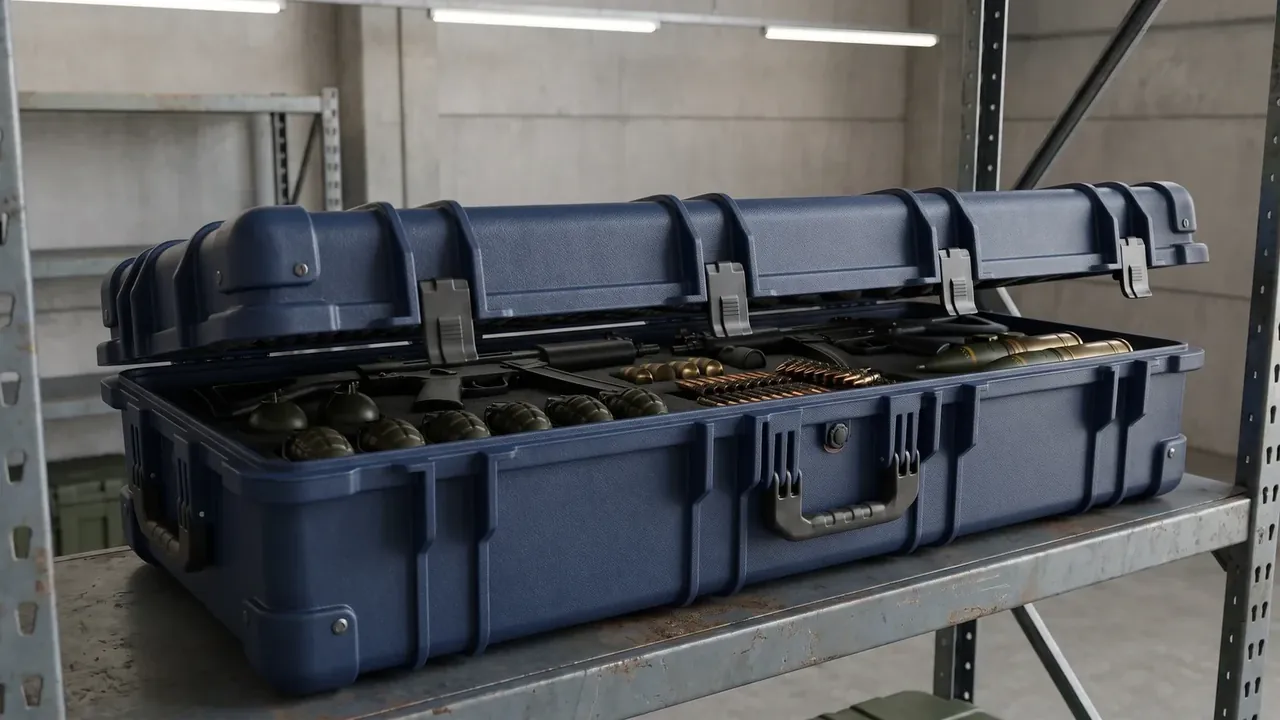
Quick answer: At one 600 x 400 x 300 mm cavity, a military flight case weighs 6.8 kg and costs about CNY 2.9 per trip. Aluminium saves 1.4 kg but costs CNY 10.5; plywood holds six trips at CNY 43.3; a plastic tote cracks at the first metre drop.
Table of contents
- How a military flight case compares with four alternatives
- Impact gap: the same drop, five results
- Weight gap: empty mass and payload loss
- Reuse cycles and cost per trip
- Repairability: what can be fixed
- FAQ
1. How a military flight case compares with four alternatives
The comparison holds only on one cavity and one service life. At 600 x 400 x 300 mm, aluminium, plywood, plastic totes and soft bags all fit. What separates them is mass, impact response, cycles and repair.
On price alone a plywood crate at CNY 260 beats CNY 880; over cycles it lands at CNY 43.3 against CNY 2.9.
| Option | Empty mass | Payload | Cycles | Per trip |
|---|---|---|---|---|
| Military flight case | 6.8 kg | 60 kg | 300 | CNY 2.9 |
| Aluminium case | 5.4 kg | 45 kg | 120 | CNY 10.5 |
| Plywood crate | 9.2 kg | 35 kg | 6 | CNY 43.3 |
| Plastic tote | 2.6 kg | 18 kg | 40 | CNY 2.4 |
| Soft bag | 1.8 kg | 12 kg | 25 | CNY 7.2 |
2. Impact gap: the same drop, five results
One condition, five results: 30 kg payload, 1.0 m corner drop onto concrete. Peak acceleration reads 45 g for a military flight case, 62 g aluminium, 120 g plywood, 180 g a tote and 240 g a soft bag.
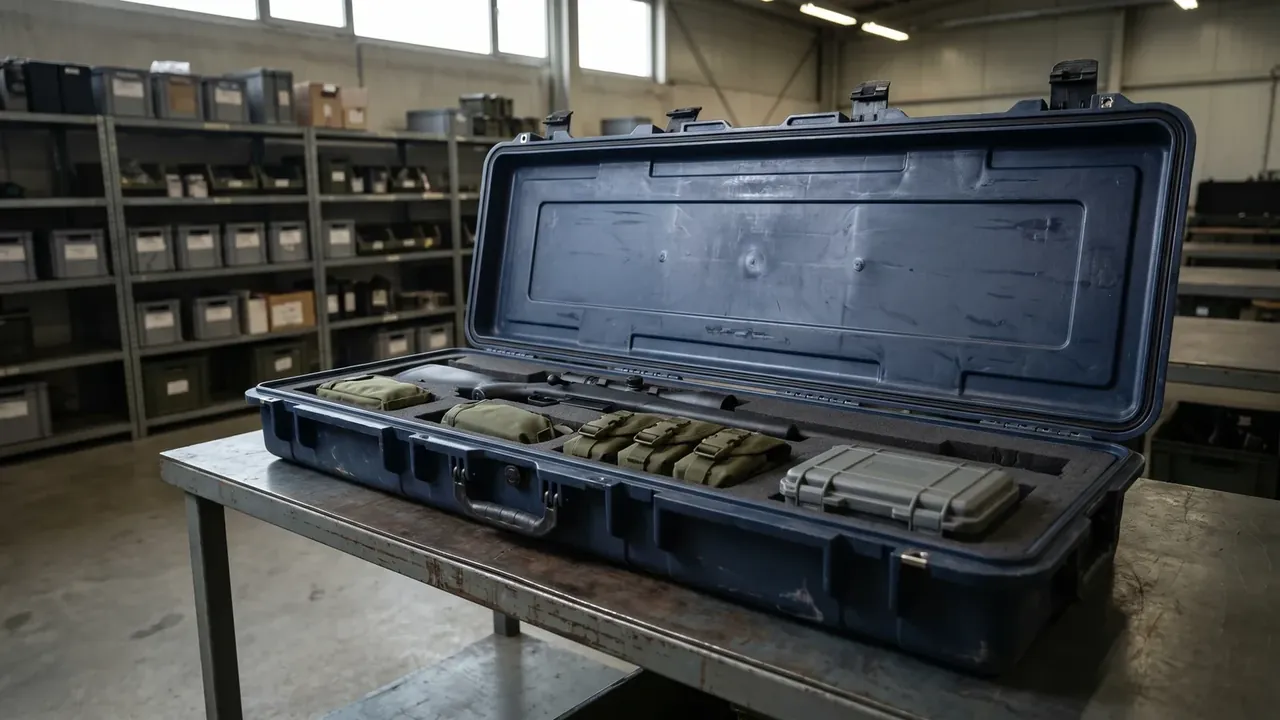
Most precision items sit between 45 g and 180 g on their allowable curve, so the choice fixes the rework rate.
| Option | Peak | After the drop |
|---|---|---|
| Military flight case | 45 g | Scuffed corners, latches fine |
| Aluminium case | 62 g | 3 mm dent, rivets loose |
| Plywood crate | 120 g | Corners deformed, panel split |
| Plastic tote | 180 g | 40 mm side crack |
| Soft bag | 240 g | Fabric worn, zip burst |
3. Weight gap: empty mass and payload loss
Four kilos per unit is invisible until twenty fly: 80 kg of chargeable weight. Return legs double it, since an empty case is billed at what it weighs.
Shell and ribs are 4.1 kg of the 6.8 kg, hardware 1.3 kg. Aluminium saves 1.4 kg by thinning the wall and dropping cushion structure, so drop energy reaches the load almost unchanged.
4. Reuse cycles and cost per trip
Cycles count to the first repair, not to a catalogue figure: 300 for a military flight case, 120 aluminium, 6 plywood, 40 a tote, 25 a soft bag.
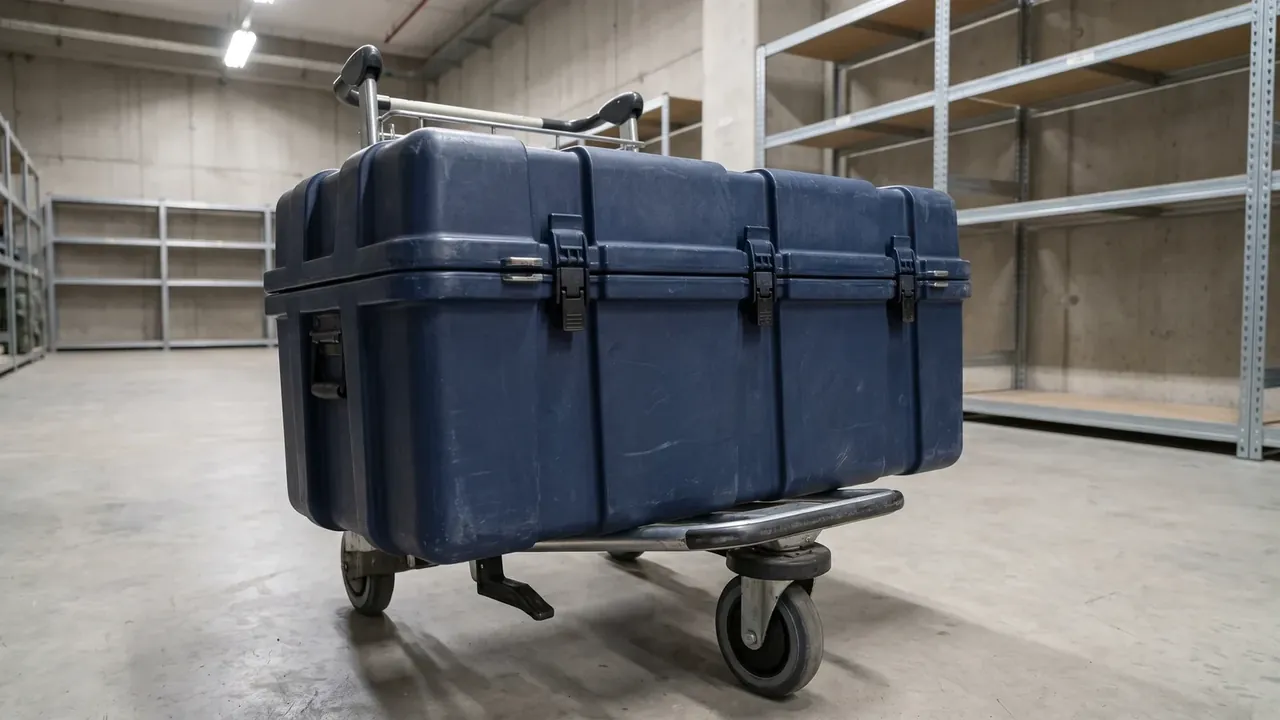
Six for plywood is moisture, not material: a 12 mm panel takes up 12 percent water in 24 hours, gains 0.8 kg and loses a fifth of its strength.
The tote's CNY 2.4 is earned at 18 kg and short hauls; at 60 kg the first drop ends the run.
5. Repairability: what can be fixed
Repairability has three measures: what failed, the fix time, and the strength left.
Latches, hinges and handles are separate parts: a set swaps in 15 minutes for CNY 45 and strength is unchanged. Aluminium needs rivets drilled and a patch; plywood is re-nailed and loses thirty percent.
| Repair | Time | Cost | Strength left |
|---|---|---|---|
| Latch or hinge swap | 15 min | CNY 45 | 100% |
| Riveted patch | 40 min | CNY 130 | 85% |
| Re-nailed panel | 60 min | CNY 70 | 70% |
| Welded crack | 20 min | CNY 30 | 70% |
| Sewn fabric | 25 min | CNY 20 | 60% |
Spares tell the same story: standard hardware means two latch sets cover a fleet, while patches are cut to corner shape and stocked by model.
Conclusion
Each alternative has a place: aluminium saves mass, plywood saves cash, totes are flexible. None delivers 60 kg payload, a 45 g peak and 300 cycles at once. Put price, cycles and repair time in one table and the per-trip figure is CNY 2.9, earned by a structure that can be repaired. The last step is running a military flight case through your route.
This article discusses only the container (case body) side of specifications and design intent, and does not cover any handling, loading or use of the contents.
Related Reading
- Using air-movement cases across equipment transfers
- Protective case enquiries: quotes and lead times
- Military air transport cases against other shipping formats
- Rotomoulded cases against alternative shell types
Related Products
- 8 Series — Gun Cases; Military Equipment Cases; Camera Equipment Cases; Drone Cases; Watch Cases; Knife Cases; First Aid Cases; Electronics Equipment Cases
- WL8-2812 PP Gun Case — model WL8-2812
- All protective cases and toolboxes: 7 series, 158 models