

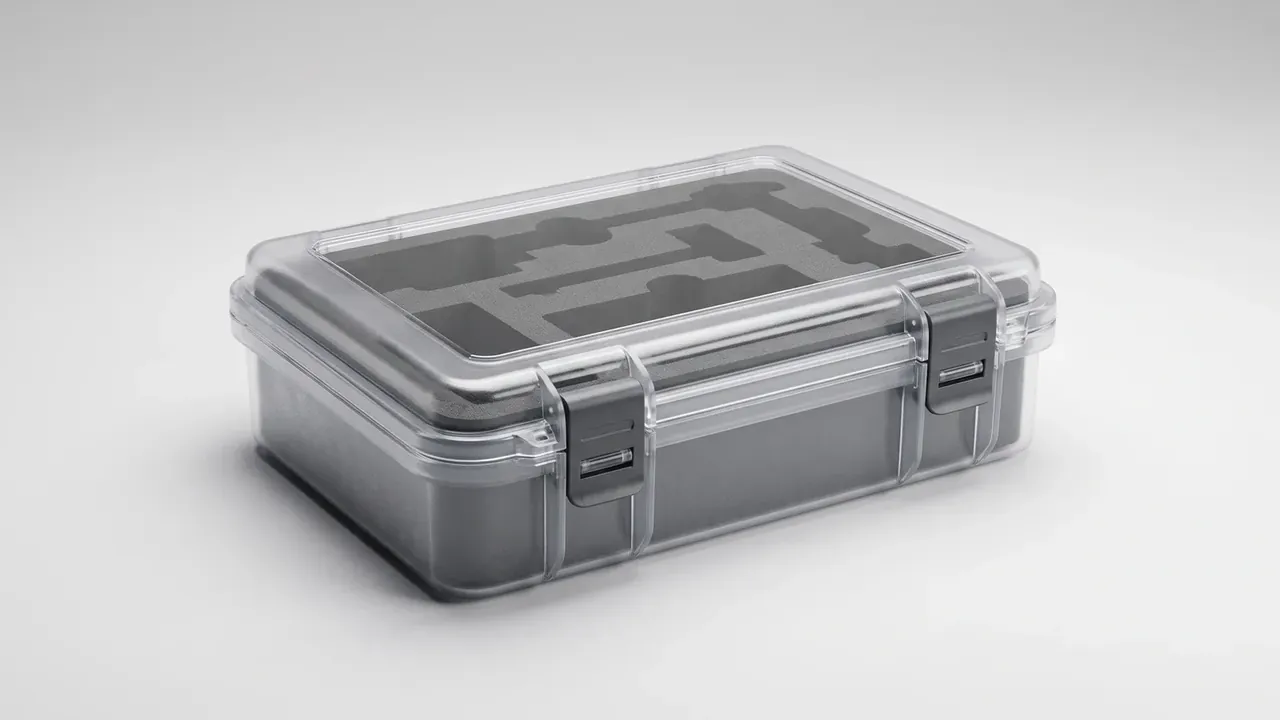
Quick answer: The dividing line is the design input, not the label. An aviation case serves one-item turnaround, its ceiling set by riveted extrusion and panels. A military air transport case is built for repeated handling, stacking, tie-down and pressure cycling: one-piece shell, thicker walls, ribs, continuous gasket, pressure valve. Certification is a report naming what was tested, in what state, against which criterion.
Table of contents
- Military air transport case: shell process and wall thickness
- Cavity, liner and pressure equalization
- Tie-down and stacking interfaces
- In-plant movement: where the gap shows first
- From claim to test report, and when an aviation case is enough
- FAQ
1. Military air transport case: shell process and wall thickness
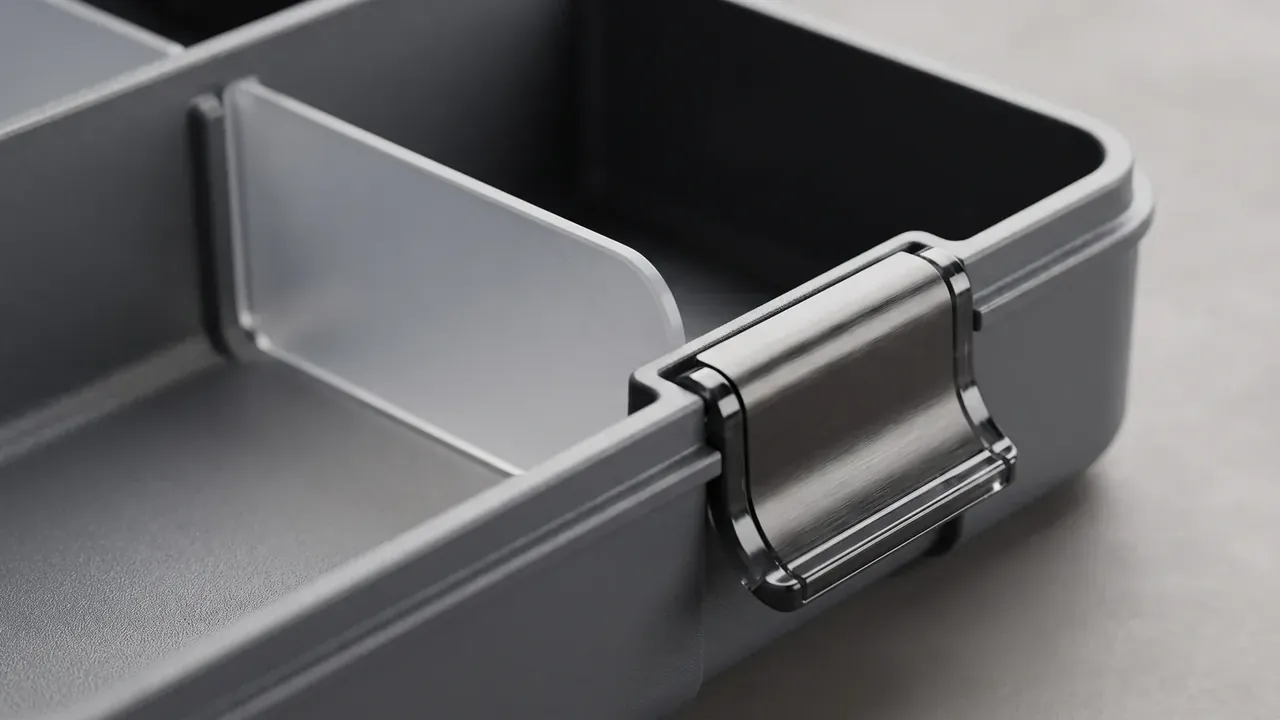
An aviation case assembles extrusion and panels, so strength sits in the frame; a military air transport case carries load through a one-piece shell where thickness and ribs are structure.
- Assembled panels: seams and rivet holes concentrate stress and work loose.
- One-piece moulding: no inside seam, so a knock does not open into a crack.
| Aspect | Standard aviation case | Military air transport case |
|---|---|---|
| Shell | Extrusion plus plywood, joined | One piece, thickness varied by zone |
| Load path | Frame, rivet, panel | Continuous through the curve |
| Ribs | Rare; stiffness from extrusion | Sets on lid and base |
Judge thickness at base bearing surface, lid centre and corner, not one figure.
2. Cavity, liner and pressure equalization
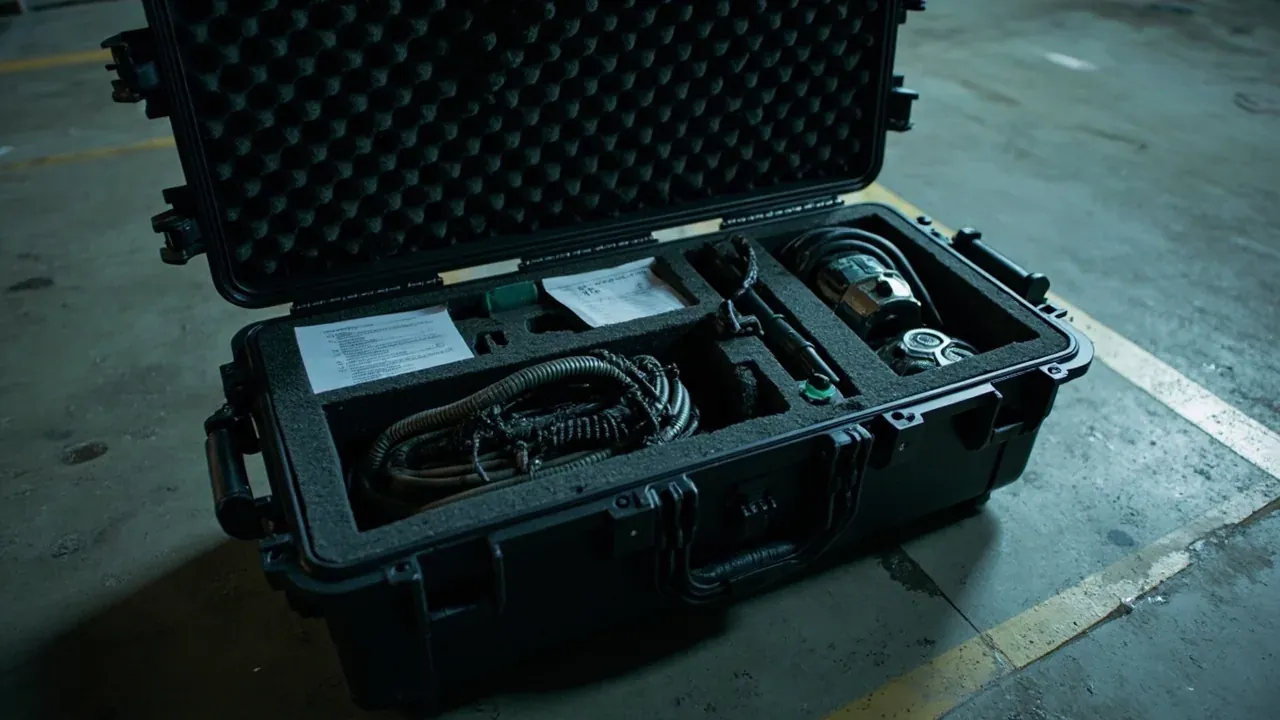
An aviation case offers an empty cavity with a thin liner; the military version treats the cavity as structure, with foam, dividers, compression face and sealing face designed together.
- Full-cavity foam: both halves routed so a point load spreads over an area;
- Removable dividers: slots moulded with the shell, so a layout change needs no new case;
- Continuous gasket: one seal round the full perimeter, no corner joint.
An unsealed cavity suits short, unpressurised turnaround; once sealed, the differential flexes the gasket until water enters at a corner. A pressure valve releases it without admitting water. Grade wording should read designed to IP67 structure, subject to a report.
3. Tie-down and stacking interfaces
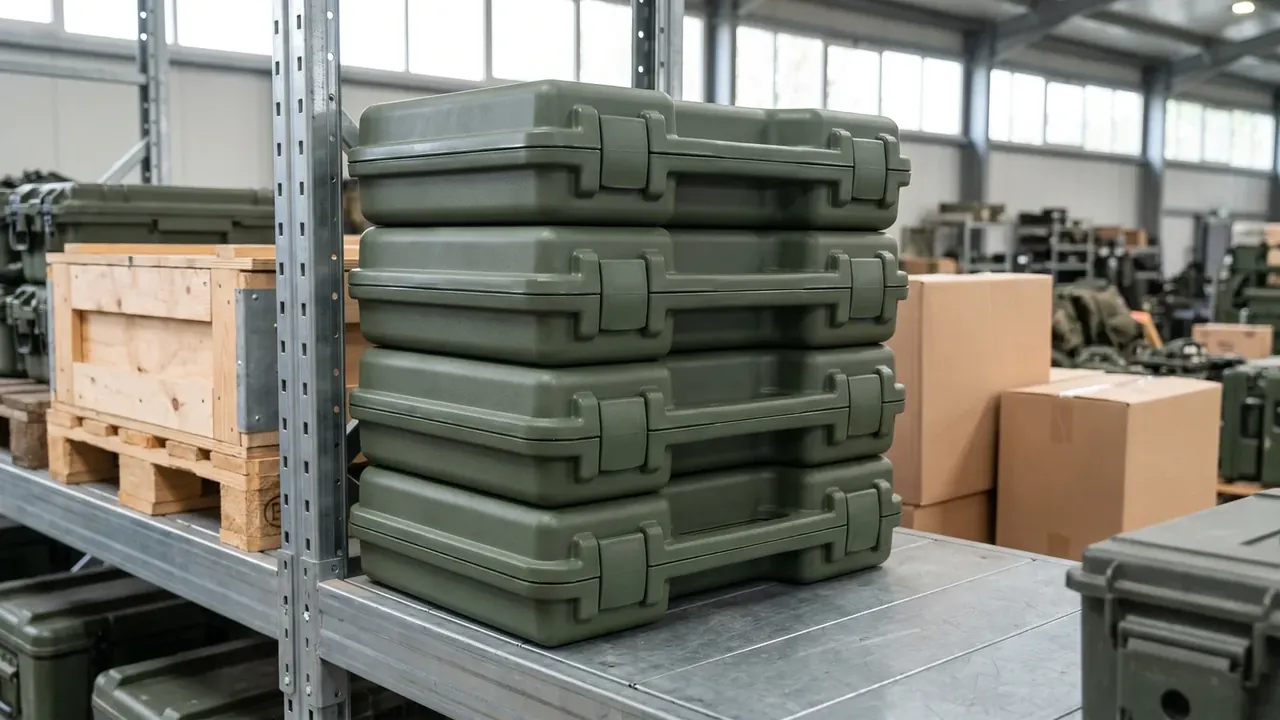
An aviation case is dimensioned for its own weight plus one item; a military one also carries what presses above and straps alongside.
- Tie-down points: moulded corners; aluminium caps are edge protection, not anchors;
- Base: flat spreads stack load; castors gather it into a few spots;
- Fork pockets: moulded into the shell, they outlast bolt-on brackets.
Creep is the hidden factor: a thermoplastic shell deforms slowly under static load, faster as it warms, so the layers permitted at 20 °C are not those at 40 °C.
4. In-plant movement: where the gap shows first
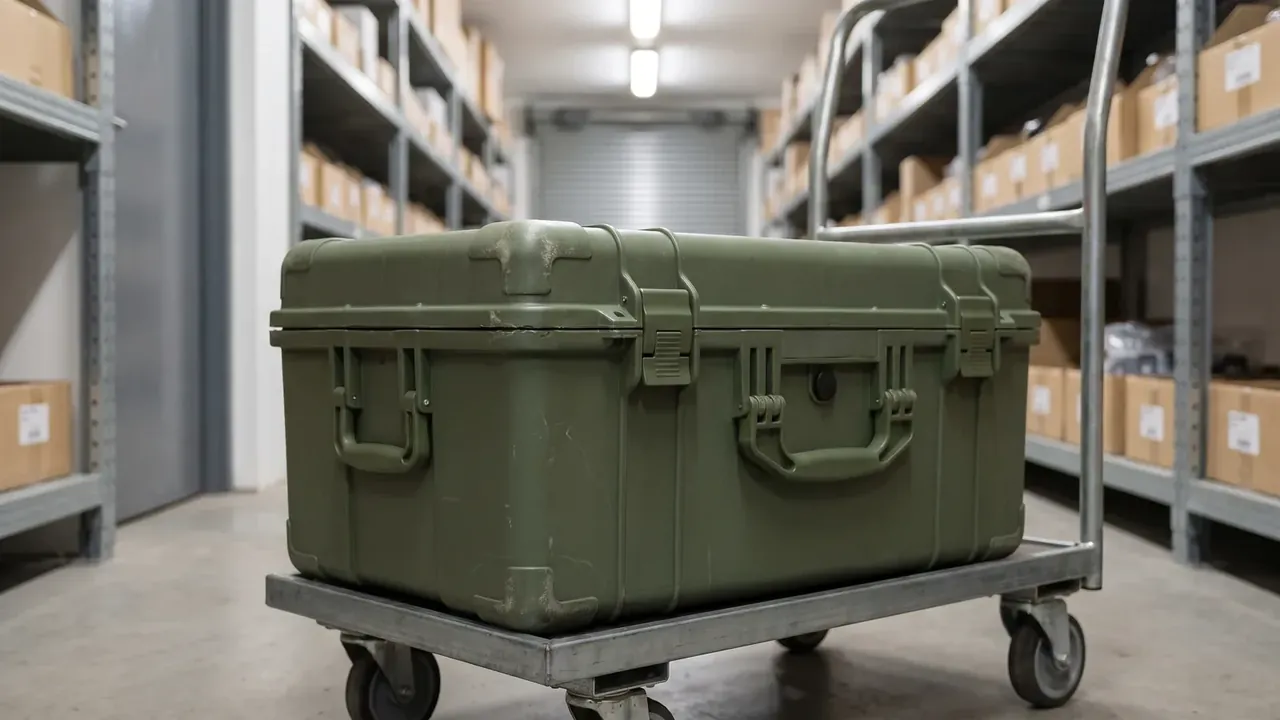
Handling before loading: aisles, carts, racking, short repeated moves. The aviation case is ahead on weight, rolling and outline; the military one pays in weight and returns capability.
Still serviceable after a knock: a dented shell closes and seals where a pierced panel lets plywood take water, and a moulded surface has no seam to trap dirt.
5. From claim to test report, and when an aviation case is enough
Certification is checkable evidence, not a sticker. Wording should read designed to the relevant grade, subject to a third-party report answering three questions: was this revision tested, in what internal state, against which criterion.
- Coverage: drop, stacking, vibration, sealing and immersion, salt spray, temperature cycling, matched to the load profile;
- Sample state: liner type, ballast and preconditioning stated;
- Consistency: thickness, ribs and hardware match drawing and sample;
- Clause alignment: the tender criterion is the one on the conclusion page.
An aviation case is enough when four conditions hold:
- Turnaround is infrequent, the case returns for inspection;
- No long-term stacking, or two layers briefly;
- No tie-down requirement;
- Little pressure swing, or the items carry their own cushioning.
With two or three of the four, the gap shows by the fourth turnaround: loose latches, a flattened gasket, a sagging lid.
Conclusion
Fix the sequence in four steps: write the load profile, covering handling count, layers, duration, tie-down and pressure swing; check the shell's load path; check that cavity and seal handle cushioning and differential together; test every claim against a report. An aviation case suits light, unstacked, low-frequency work; where turnaround and stacking repeat, the military case costs less.
The scope here is the container (case body) alone: its dimensions, structure and the wording of its grade. Nothing about how items inside are handled, loaded or used falls within it.
Related Reading
- Case protection requirements for air transport
- What the ATA 300 airline case standard covers
- How a case pressure equalization valve works
- Wall thickness and case strength
- MIL-STD-810H and case compliance
Related Products
- 8 Series — Gun Cases; Military Equipment Cases; Camera Equipment Cases; Drone Cases; Watch Cases; Knife Cases; First Aid Cases; Electronics Equipment Cases
- WL8-2812 PP Gun Case — model WL8-2812
- All protective cases and toolboxes: 7 series, 158 models