

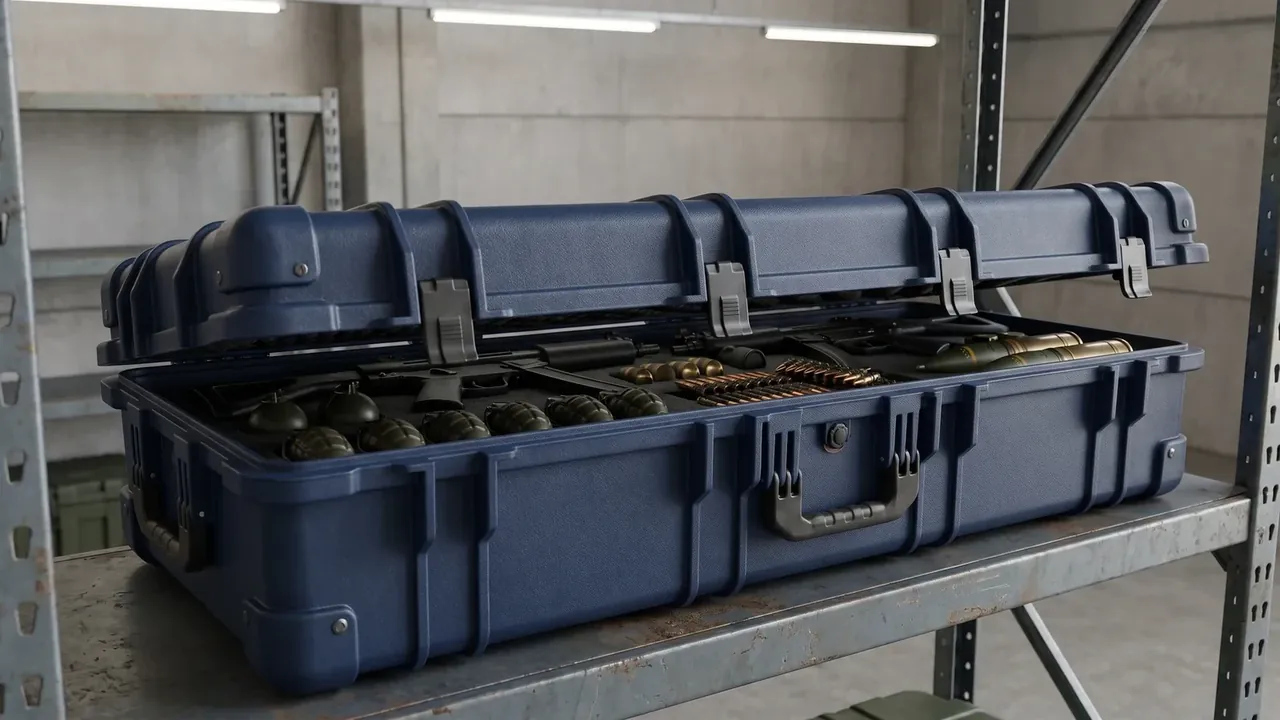
Quick answer: Acceptance of a military flight case runs in two layers: five incoming tests (appearance, dimensions, sealing, drop, salt spray) and a counting sampling plan. A key item failure rejects the lot, and every reading goes into a record kept 36 months.
Table of contents
- The Five Incoming Tests for a Military Flight Case
- Appearance and Dimensions: Gauges, Points, Tolerances
- Sealing and Drop: Two Destructive Checks
- Sampling: Lot Size, Sample Size and Acceptance Numbers
- Verdicts and the Record Sheet
- FAQ
1. The Five Incoming Tests for a Military Flight Case
Incoming inspection of a military flight case answers one question: can this lot enter the warehouse. Five items run look first, measure second: appearance, dimensions, sealing, drop, salt spray. The last three destroy the sample.
| Item | Method | Criterion | Sampling |
|---|---|---|---|
| Appearance | Visual, 1000 lux | No crack, no scratch through skin, sink under 0.5 mm | Full |
| Dimensions | Tape, laser meter | Plus or minus 1.5 mm, diagonal under 2.5 mm | 5 per lot |
| Sealing | Air at 20 kPa, 60 s | Drop under 1 kPa | 3 per lot |
| Drop | 1.2 m, 10 drops | No crack, no release, gap under 2 mm | 1 per 500 |
| Salt spray | Neutral, 48 h | Rating not below 9 | 1 per lot |
The order cannot be swapped: a cracked shell sent to the sealing rig is a crack being inflated, and an out-of-tolerance case sent to the drop rig lands off its ribs.
2. Appearance and Dimensions: Gauges, Points, Tolerances
Appearance is judged at 1000 lux from 500 mm, with countable criteria: no cracks, no scratch through the skin, sink marks under 0.5 mm, none on the seal face.
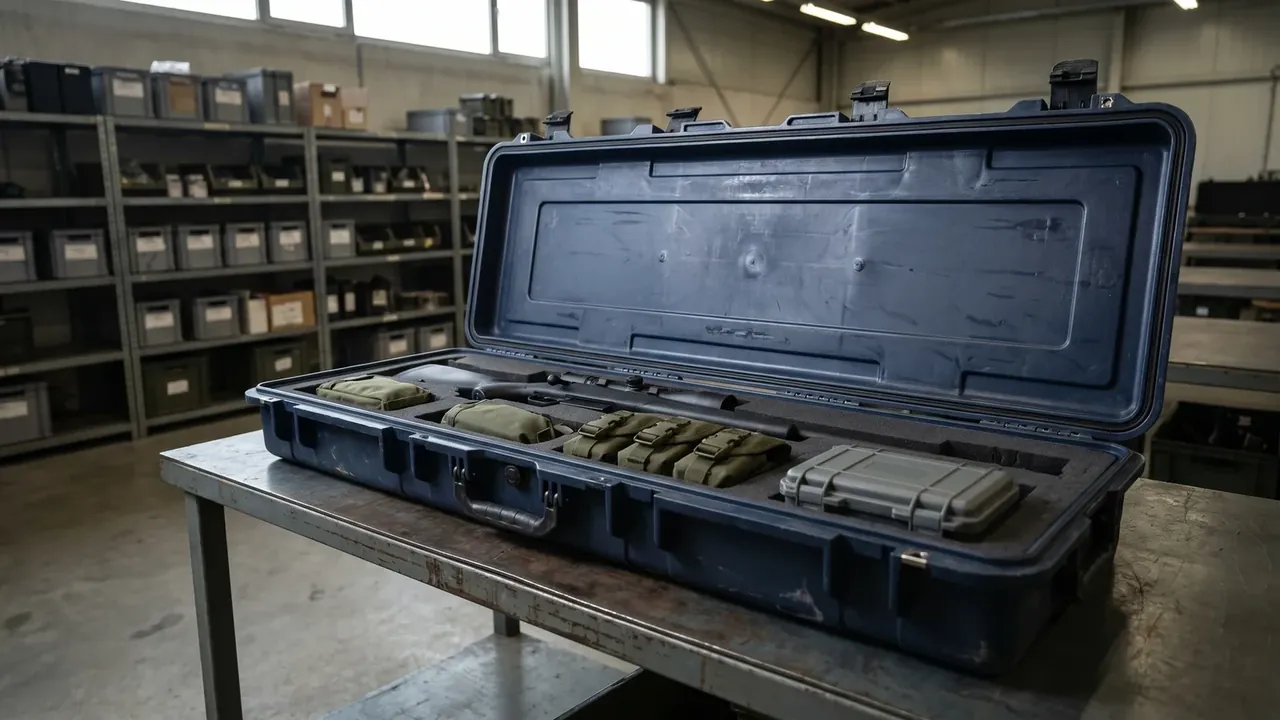
Dimensions are taken at three points: external length, width and height, cavity diagonal, lid-to-body offset. A diagonal spread above 2.5 mm means a twisted body; an offset above 1.0 mm shears the gasket.
Gauges belong in the standard: a 3 m tape outside, a laser meter on the diagonal, a feeler gauge on the offset, checked against a master part.
3. Sealing and Drop: Two Destructive Checks
Sealing uses air rather than water, because it leaves a number. Charge the latched case to 20 kPa through the equalisation valve, hold 60 seconds, pass anything losing under 1 kPa. A failure is checked for a continuous gasket imprint first.
Drop runs from 1.2 m onto concrete: one corner, three edges, six faces, ten drops. No shell crack, no latch release, lid gap no wider than 2 mm.
Salt spray runs 48 hours neutral, rating not below 9, against hardware only. Rusted latches lose half their pull force within six months.
4. Sampling: Lot Size, Sample Size and Acceptance Numbers
Lot release for a military flight case uses counting sampling at general level II, acceptance quality limit 1.0. Sample size follows lot size, not order urgency.
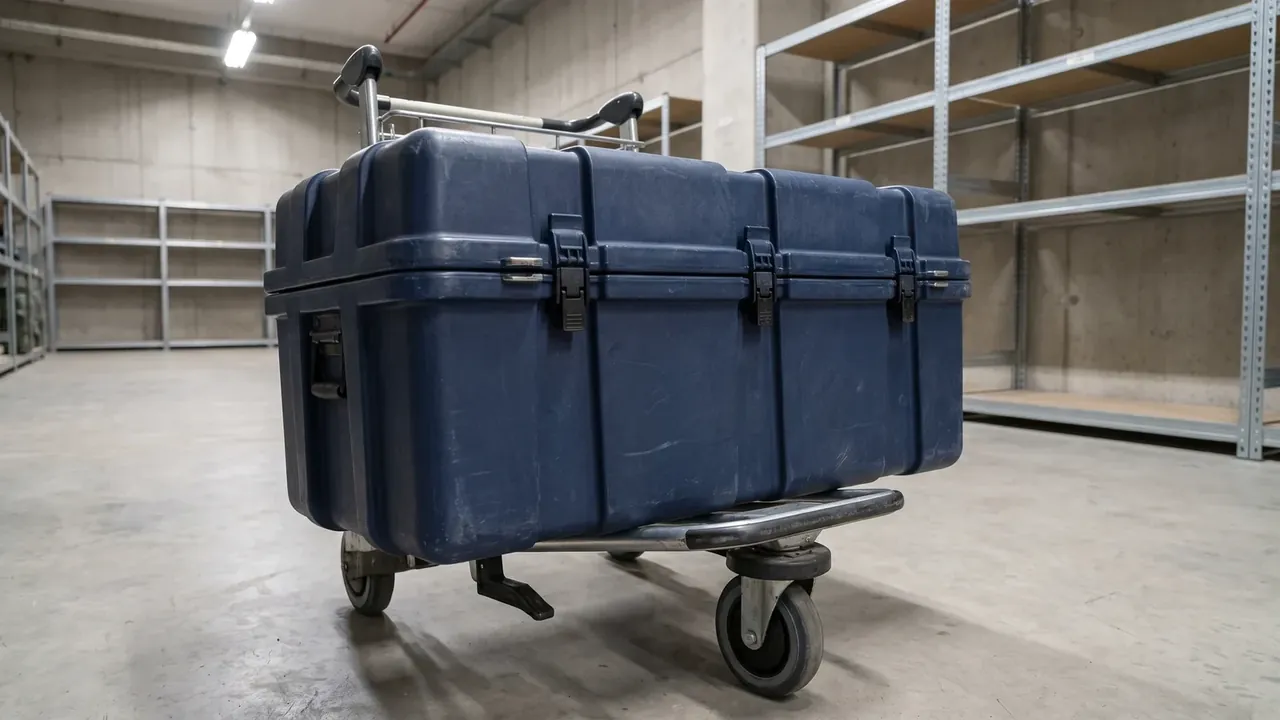
Key items skip the table: sealing takes 3 cases per lot, drop takes 1 per 500; one failure among those four rejects the lot.
| Lot size | Code | Sample | Accept | Reject |
|---|---|---|---|---|
| 51 to 90 | E | 13 | 0 | 1 |
| 91 to 150 | F | 20 | 0 | 1 |
| 151 to 280 | G | 32 | 1 | 2 |
| 281 to 500 | H | 50 | 1 | 2 |
| 501 to 1200 | J | 80 | 2 | 3 |
Ordinary items: at or below the acceptance number the lot passes, at or above the rejection number it fails.
5. Verdicts and the Record Sheet
Three verdicts exist: accept, reject, re-inspect after rework. Rework covers appearance and dimensions only; a sealing or drop failure points to a process fault no single repair represents.
| Field | Entry rule |
|---|---|
| Lot number | Match the delivery note |
| Sample size | Number drawn, never below the table |
| Test item | One of the five, never merged |
| Reading | Number plus unit, never pass or normal |
| Verdict | Accept or reject, one per reading |
| Inspector, date | Signature and date |
Records stay 36 months. Three lots failing the same item means a mould or process problem, not a lot problem; only records show it.
Conclusion
Standards exist so two people reach one verdict: five items with fixed methods and criteria, a sampling table with fixed sample sizes, a record sheet with fixed fields. An argument becomes a lookup, and that is where acceptance for a military flight case rests.
This article discusses only the container (case body) side of specifications and design intent, and does not cover any handling, loading or use of the contents.
Related Reading
- Using military flight cases in equipment airlift
- Air transport compliance and pressure equalisation
- Quality control points on the case assembly line
- Incoming inspection for supply cases
Related Products
- 8 Series — Gun Cases; Military Equipment Cases; Camera Equipment Cases; Drone Cases; Watch Cases; Knife Cases; First Aid Cases; Electronics Equipment Cases
- WL8-2812 PP Gun Case — model WL8-2812
- All protective cases and toolboxes: 7 series, 158 models