

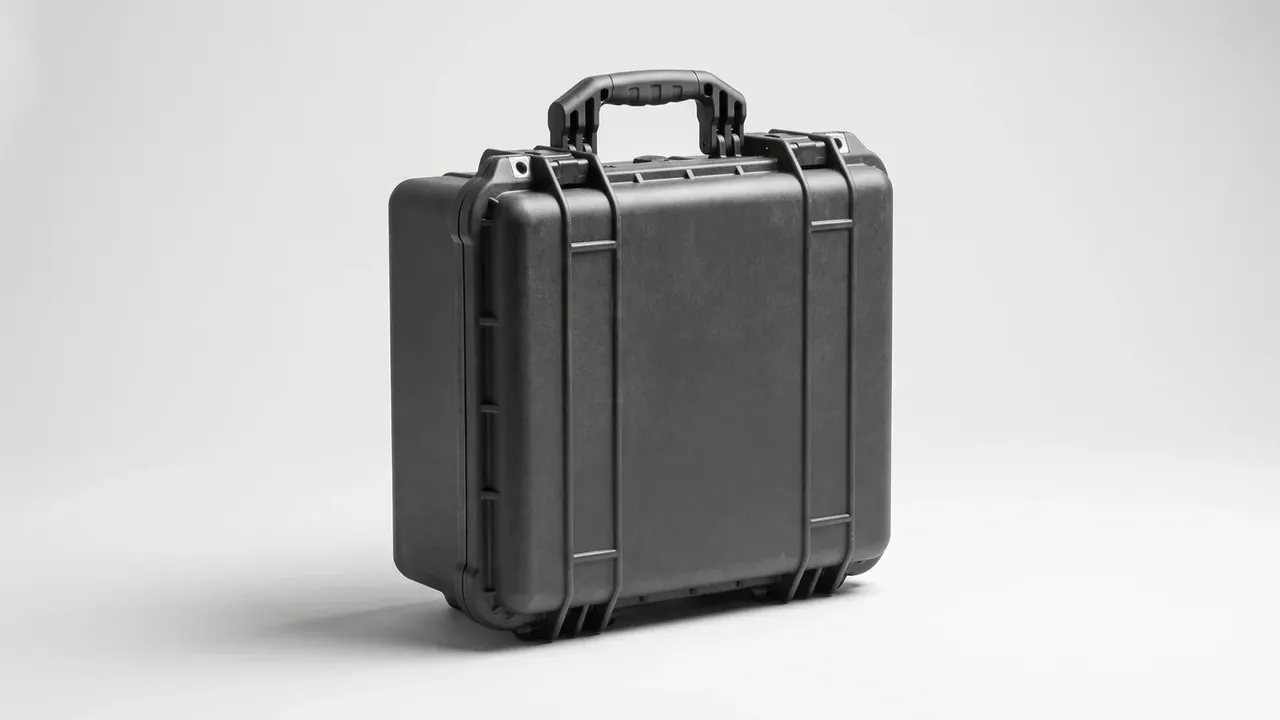
Quick answer: A military grade plastic protective case is best judged by five measurable criteria: wall and structure, seal and pressure balance, impact and drop, environmental resistance, and serviceability. The first three decide whether it survives one accident; the last two decide whether it is still in service five years later.
Table of contents
- Five Criteria That Define a Military Grade Plastic Protective Case
- Criterion One: Wall Thickness and Body Structure
- Criterion Two: Seal Groove and Pressure Equalisation Valve
- Criterion Three: Corner Buffering and Drop Height
- Criteria Four and Five: Environmental Resistance and Serviceability
- FAQ
1. Five Criteria That Define a Military Grade Plastic Protective Case
"Military grade" has no mandatory definition in the case trade. Treated as a certificate it is led by wording; treated as a self-check list the talk moves to calipers.
| Criterion | Measurable item | How to check |
|---|---|---|
| Wall | 4–8 mm wall, 80–120 mm rib pitch | Caliper three points |
| Seal | Groove, 25%–30% compression, 5–10 kPa valve | Lit phone inside |
| Drop | 1.2 m, six faces, three edges, one corner | Match test weight |
| Environment | -30 to 60 °C, 48/96 h salt spray | Ask for resin grade |
| Serviceability | Latch, pin and liner replaceable | Time a latch swap |
The first three cover one accident, the last two the years after.
2. Criterion One: Wall Thickness and Body Structure
Injection-moulded PP cases run 4–6 mm and rotomoulded bodies 6–8 mm; below 4 mm the flat panels creep outward under stacking load and drop energy goes straight into the corners.
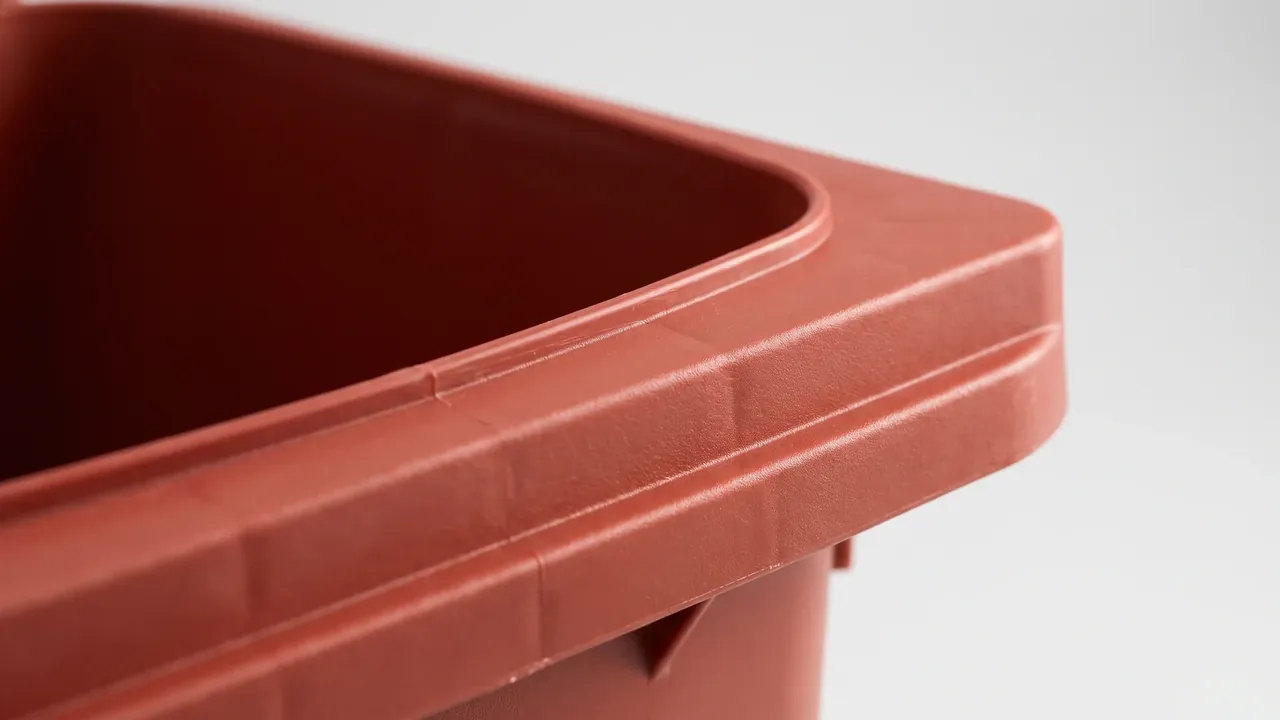
Rib pitch matters more than rib count. Ribs at 80–120 mm centres and 3–5 mm tall raise the bending section without much mass; tighter spacing brings weld lines, which carry only 60–70% of parent wall strength.
Corners follow the same logic: R3–R5 outside spreads impact along an arc, and at an identical 5 mm wall a military grade plastic protective case with radiused corners shows shorter cracks.
3. Criterion Two: Seal Groove and Pressure Equalisation Valve
A seal is a groove problem: the O-ring needs its own channel and 25%–30% compression. Too little and it will not seat; too much and it takes a set.
| Seal part | Practice | What to look for |
|---|---|---|
| Perimeter groove | Moulded U-channel, no bonded strip | Gaps and flash |
| O-ring | Silicone or EPDM, 4–6 mm cord | Section and joint alignment |
| Pressure valve | Screw-in body, hydrophobic membrane | Membrane grade |
A closed cavity gains pressure difference as temperature or altitude changes; a case moved from 20 °C to -10 °C can see tens of kilopascals of vacuum. On a military grade plastic protective case the valve cracks at 5–10 kPa.
4. Criterion Three: Corner Buffering and Drop Height
The first contact point in a fall is almost always a corner. Either an external bumper absorbs it or short internal ribs spread the load across a face; a thin corner shell cracks a path into the cavity.
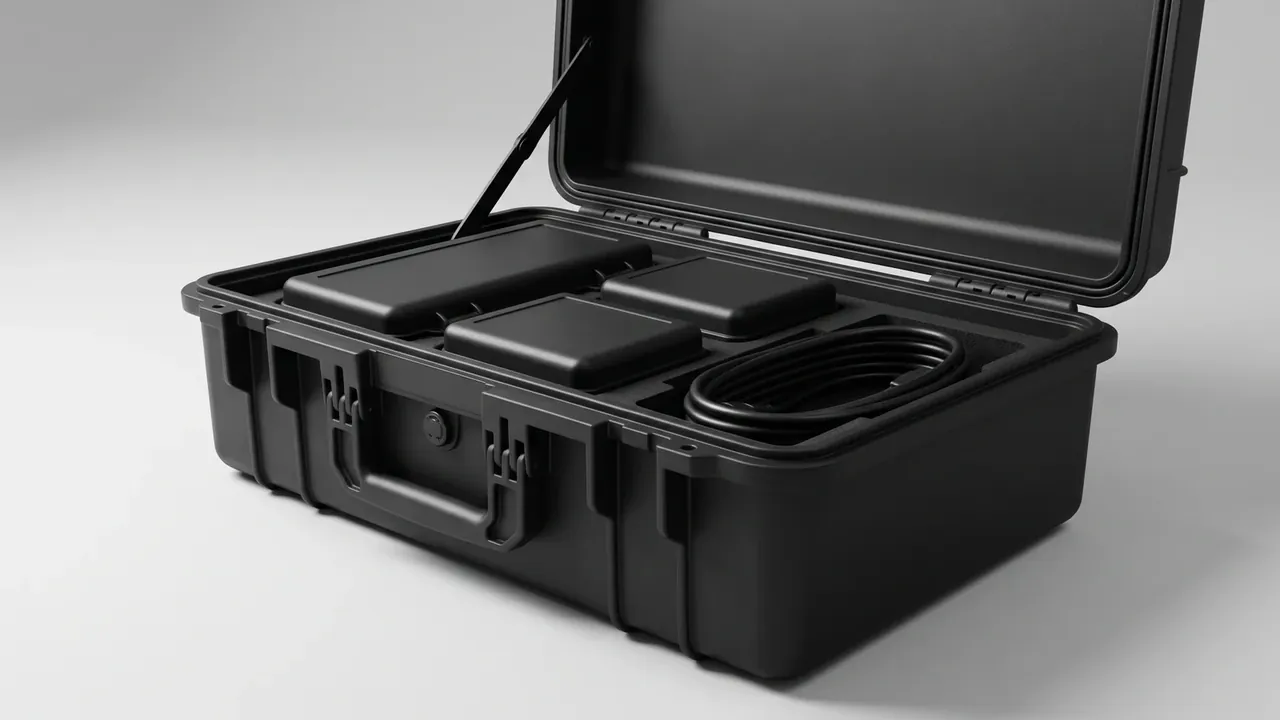
Write the drop as "1.2 m, six faces, three edges, one corner, loaded" rather than rugged. The figure matches the release height of two people carrying a case.
Latches are the weak link. A good latch pops open under impact and closes again. Metal latches need a bushed pivot, nylon latches need glass reinforcement, and both need a cycle figure: 3,000 is a floor, 5,000 a long life.
5. Criteria Four and Five: Environmental Resistance and Serviceability
The usual window is -30 to 60 °C, but the ends test different things. Cold tests embrittlement: below -20 °C PP loses impact strength fast and can shatter off a tailgate.
| Exposure | Requirement | Observation |
|---|---|---|
| Cold | 4 h at -30 °C then drop | Corner cracking |
| Heat | 72 h stacked at 60 °C | Panel sag, warping |
| Salt spray | 48 h or 96 h neutral fog | Rust sites |
Salt spray for 48 h covers coastal transport, 96 h long sea voyages; hinge pins and latch springs fail before the body does.
Serviceability decides what a military grade plastic protective case costs over a decade. A replaceable latch, a pull-out hinge pin and a detachable liner separate a ten-year case from a three-year one.
Conclusion
Selecting a military grade plastic protective case means converting a vague phrase into five sets of numbers. Take the table into the workshop and check each line once. The goal is not a louder label but figures a third party can verify, which is what a military grade plastic protective case should mean.
This article discusses only the container (case body) side of specifications and design intent, and does not cover any handling, loading or use of the contents.
Related Reading
- Selection points for injection moulded protective cases
- PP versus ABS case material
- Structure and sealing requirements for waterproof hard cases
- Shockproof case buffer structure and specifications
Related Products
- 8 Series — Gun Cases; Military Equipment Cases; Camera Equipment Cases; Drone Cases; Watch Cases; Knife Cases; First Aid Cases; Electronics Equipment Cases
- WL8-2812 PP Gun Case — model WL8-2812
- All protective cases and toolboxes: 7 series, 158 models