

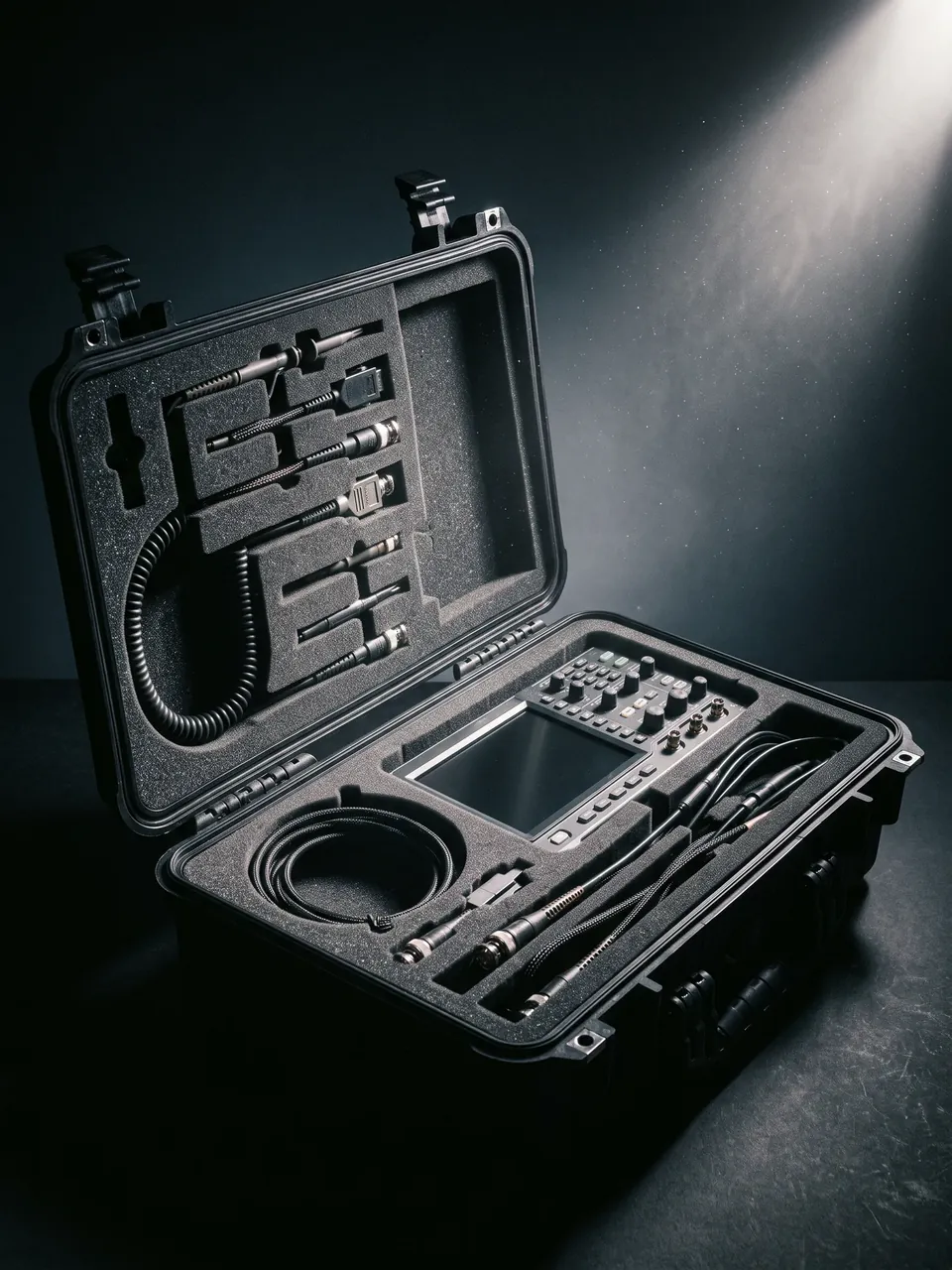
Quick answer:Buying military instrument sealed protective container wholesale comes down to three numbers on 500 units: ±0.5 mm on the outside, 0.3 mm of mouth flatness, and -3 kPa held for 60 s with no more than 0.2 kPa of drop. Sample 5%, keep 3 units per batch as a reference, and expect 25 days.
Table of contents
- What a wholesale order fixes
- Dimensional spread within a batch
- Gasket and airtightness consistency
- Colour, print and batch shade
- Packing, stacking and acceptance
- FAQ
1. What a wholesale order fixes
The difference between wholesale and retail is not unit price, it is consistency. Retail lets you pick one case off the shelf; wholesale puts 500 on a ship, and the buyer receives the average of the batch. One out-of-tolerance unit becomes a problem with the whole lot.
Pin four things before anything else: how much resin goes in one run, how many cavities the mould has, the ceiling on a single batch, and how many units are kept as references. One cavity, 500 units, 3 references is a stable combination at this scale; past 800 units, mould temperature drift starts to show up in wall thickness.
Quotations forget tooling amortisation: a mould rated at 300,000 shots spreads 6 times more tooling cost over the first 500 than over a reorder, so write that line down or the second-year price jumps.
Lead time comes from three steps: a 30 s moulding cycle, gasket fitting and leak testing. The first two set the takt, the third is the bottleneck: sampling 5% of 500 means 25 units at 60 s of hold plus 40 s of clamping, 40 minutes per station, hence two fixtures.
2. Dimensional spread within a batch
Dimensional spread is the first hidden cost of a wholesale order. A 1 mm difference in the outside means a rack will not accept the case; 2 mm means the stack leans. Holding ±0.5 mm comes from the mould and the process, never from sorting afterwards.
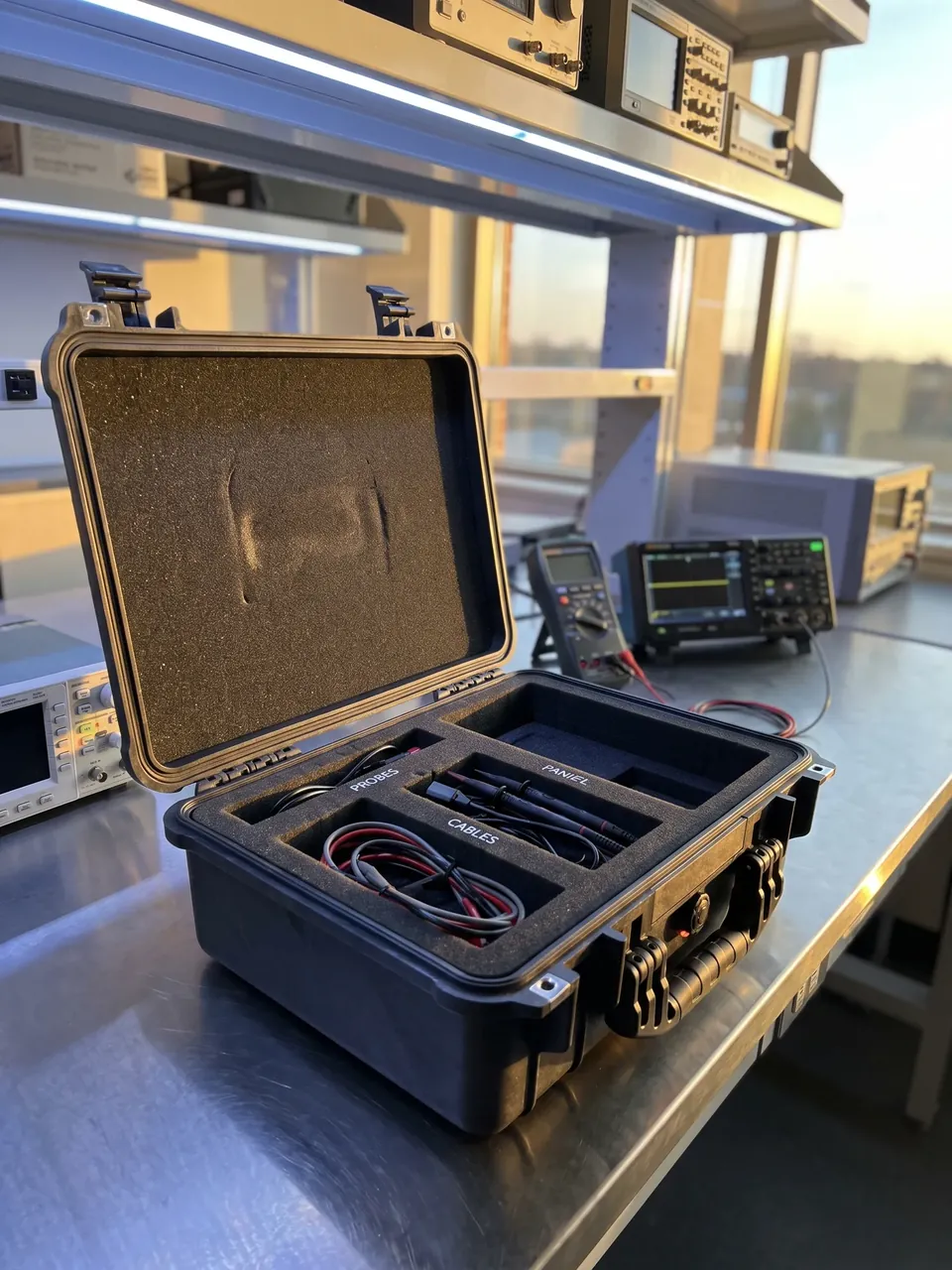
Shrinkage drives the spread. PP shrinks 1.2%–1.8%, so moving a wall from 2.8 mm to 3.2 mm opens 0.4 mm between two points on the same case. Use uniform wall sections and hold rib thickness at 60% of the main wall, and shrinkage evens out.
| Check | Tolerance | Gauge |
|---|---|---|
| Outside length and width | ±0.5 mm | Vernier caliper |
| Clear depth | ±0.8 mm | Depth gauge |
| Mouth flatness | 0.3 mm | Straight edge plus feeler |
| Base warp | 0.5 mm | Surface plate, dial gauge |
| Batch shade | ΔE ≤2 | Colorimeter |
Flatness deserves more attention than the outside. Past 0.3 mm the gasket compresses unevenly and the leak test fails, yet the deviation is invisible before assembly — you only see light under a straight edge on a surface plate. Making it a full inspection before delivery is cheaper than rework.
Mould cooling also shows up here. When core and cavity differ by more than 8℃, the two sides of the shell shrink out of step and the mouth ends up 0.3 mm wider at one end. That pattern is stable, so process tweaks will not fix it; the water circuit needs changing.
3. Gasket and airtightness consistency
The gasket is the part most likely to slip in volume. Across batches from one extrusion line, hardness can vary by 5 Shore A, and at equal compression the harder batch seals better while the softer one loses rebound in the cold.
Leak testing needs one fixed method: -3 kPa held 60 s with a drop no greater than 0.2 kPa, measured after 4 h of soaking at 23℃. Test a case straight out of a 5℃ store and the drop doubles, which produces false rejections.
Joint position decides where it leaks. A joint-free ring costs 20% more and buys one less unknown; if a joint is unavoidable, put it on the straight run near the hinge, away from the corners, and bond it rather than butting the ends.
Seven out of ten water complaints trace back to compression set. Silicone cord should stay under 25% set after 24 h at 70℃. Above that, a case left through one summer will show a gasket that no longer returns to thickness when it is opened.
4. Colour, print and batch shade
Colour is where arguments start. ΔE 2 on black is still acceptable to the eye; at ΔE 3 a joint looks grey. Write ΔE ≤2 into the contract with a physical swatch, which is worth far more than the word black.
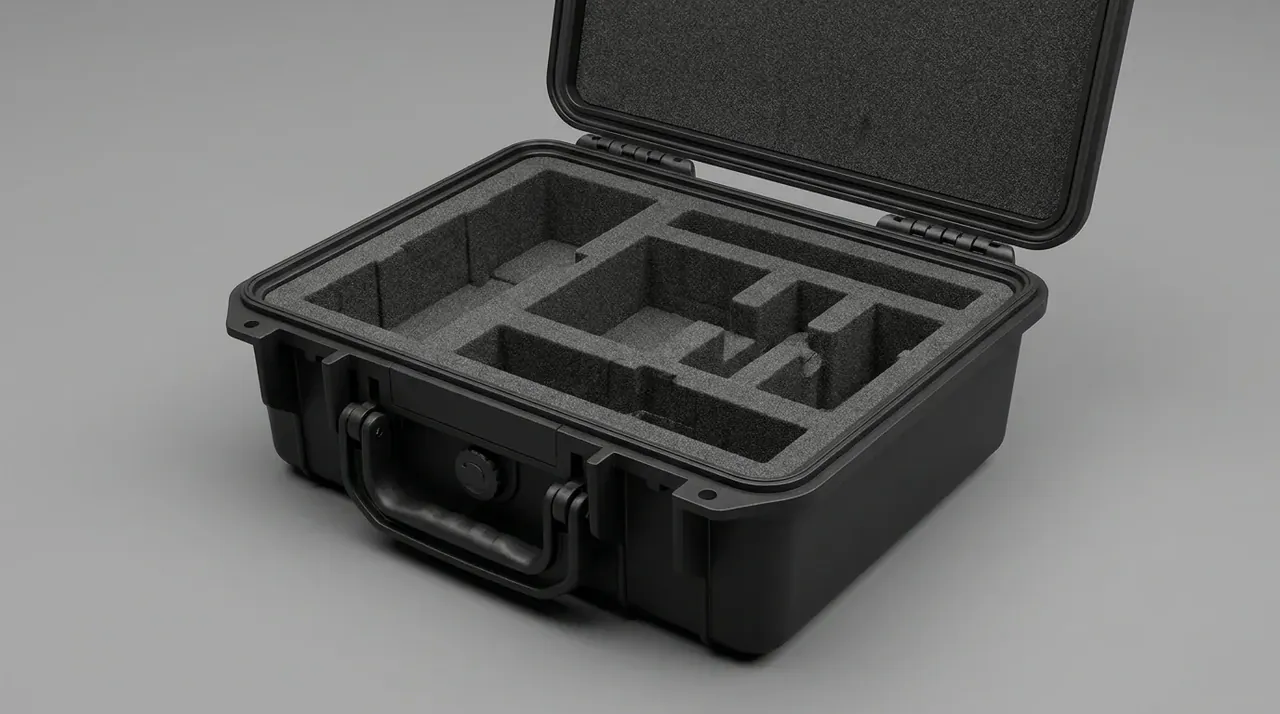
Shade drifts from three sources: masterbatch ratio, barrel temperature and regrind content. At 10% regrind the colour barely moves; at 25% it darkens, and because every batch of regrind starts from a different base, the drift compounds. Fix the regrind ratio and the supplier, and do not chase the spot market.
Print durability follows service: the surface is matte and pebbled, so ink needs pretreatment. Flame-treated shells survive 50 alcohol wipes, untreated ones smear on the first, so put it in the acceptance criteria.
In-mould labels suit permanent marking. They last as long as the shell for about 1.8 yuan per unit, but changing the label means changing a mould insert. If the marking is fixed for years, in-mould wins; if the number changes annually, print plus a sticker is more flexible.
5. Packing, stacking and acceptance
Unit packing sets the damage rate. EPE corner protectors plus a PE bag hold corner damage under 0.3%; a carton with no corners typically loses 2% on long-haul groupage, which is 10 units of rework in a 500-unit order.
| Stage | Practice | Criterion |
|---|---|---|
| Unit pack | EPE corners plus PE bag | Corner damage ≤0.3% |
| Pallet | 24 units on 1200×1000 mm | Total height ≤1.8 m |
| Sampling | 5% appearance and leak test | 3 reference units per batch |
Pallet layout should match the buyer's racking. A 1200×1000 mm pallet takes 24 units, stretch-wrapped with two straps, stacked 6 high to 1.8 m, which clears both road and sea limits. Past 1.8 m the load needs an oversize permit and the freight doubles.
Acceptance runs in three passes: count, appearance, airtightness. Count against the bill of lading, check scratches, shade and print on a 5% sample, leak test 5% and keep 3 units per batch as references for 12 months.
Tie the balance payment to the acceptance report rather than the shipping date. Paying on dispatch looks tidy but pushes all transport risk onto the buyer; 30% on acceptance keeps both sides invested in doing the sampling properly.
Conclusion
Five numbers make military instrument sealed protective container wholesale controllable: 500 units a batch, ±0.5 mm outside, 0.3 mm mouth flatness, -3 kPa for 60 s with 0.2 kPa of drop, and ΔE 2. Put them in the contract annex, add 5% sampling and 3 reference units, and batch consistency has something to hold onto. Unit price is the last thing to negotiate, not the first.
This article discusses container-side specifications and design implications only, and does not cover any handling, loading or use of the contents.
Related Reading
- How batch incoming inspection works
- Common standards for case assembly
- What drives custom foam cost
- Wholesale terms for ESD instrument cases
Related Products
- 8 Series — Gun Cases; Military Equipment Cases; Camera Equipment Cases; Drone Cases; Watch Cases; Knife Cases; First Aid Cases; Electronics Equipment Cases
- WL8-2812 PP Gun Case — model WL8-2812
- All protective cases and toolboxes: 7 series, 158 models