

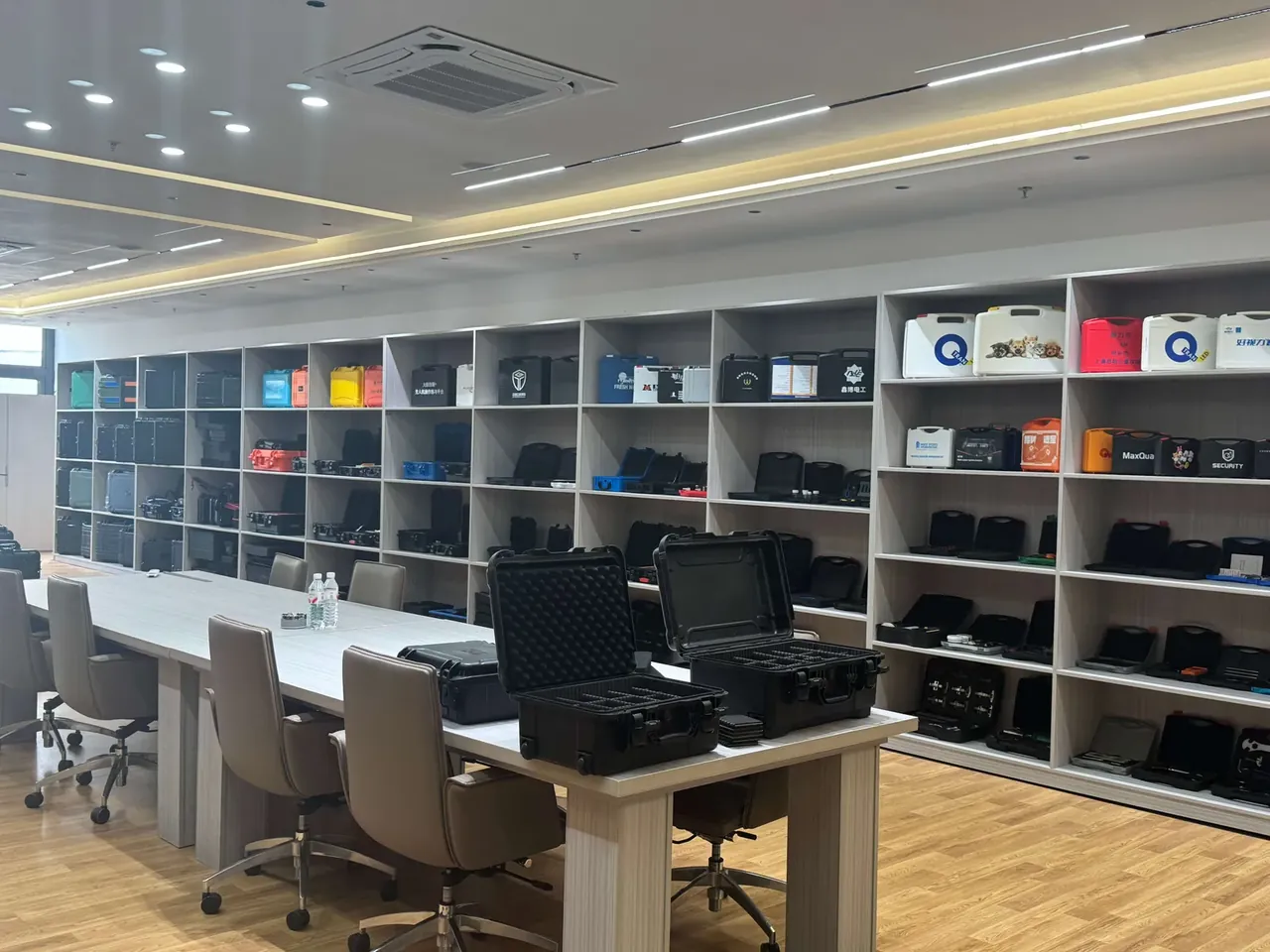
Quick answer: A military packing box is configured by the scene it serves. Storage turns on stack load and humidity, road and rail on vibration and lashing, air freight on pressure and cold, field use on salt spray, maintenance on how often the lid opens. Most scene changes are met by swapping foam, valves and labels.
Table of contents
- How Scenarios Shape a Military Packing Box
- Scene One: Long-Term Warehouse Storage
- Scene Two: Road and Rail Movement
- Scene Three: Air Freight and Field Storage
- Scene Four: Maintenance Loops and Spares
- FAQ
1. How Scenarios Shape a Military Packing Box
Built to one drawing, a military packing box behaves differently in a warehouse, a truck body, a cargo hold and open ground. Four stress families explain it: sustained static load, random vibration, pressure and temperature swing, and salt spray with ultraviolet light. Scenario work ranks them, then reinforces the matching side of the design.
Most differences sit in four places: foam, valve, seal grade and external marking. Frame, wall and latches carry over, which is why one military packing box family serves several scenes.
2. Scene One: Long-Term Warehouse Storage
The warehouse is the mildest scene and the longest. A normal store runs between 15 °C and 25 °C, keeps humidity below 60% and holds stock beyond 12 months, so the box meets static load and slow moisture uptake.
Configuration aims at stability: a flat pad for broad support, dividers so items never touch, desiccant at 30 g/m³ changed every six months, and three tiers at most. Labels face the aisle, saving box movement at stock checks.
Humidity logging is skipped most often: above 65% the paper labels wrinkle and condensation follows on the foam, so a logger sampling every 30 minutes replaces guesswork. Most warehouse failures are damp failures.
3. Scene Two: Road and Rail Movement
An eight-hour road leg delivers roughly 1.5 g of random vibration through the floor; rail shunting produces longitudinal shocks near 3 g along the car, the direction in which a case slides.
| Stage | Vibration or shock | Duration | Countermeasure |
|---|---|---|---|
| Road cruising | 1.5 g | 8 hours | 20 mm EVA pad |
| Road braking | 2 g longitudinal | Instant | Chocks, straps |
| Rail shunting | 3 g longitudinal | Instant | Corner guards |
Foam changes to a cut cavity, the pocket 3 mm shallower than the item for side grip, with a 20 mm EVA pad underneath. Any gap to the truck wall above 50 mm must be filled, or the box runs forward under braking, so two straps sit at one third of the body length.
4. Scene Three: Air Freight and Field Storage
At cruise the hold sits near the equivalent of 2400 m, about 0.75 atm, and runs six hours; temperature can fall to -20 °C, where polypropylene loses much of its impact resistance. For air use the wall should not drop below 3 mm, and the lid needs a relief valve.
Field use is a different set of numbers: a 20 K day-night swing, humidity above 85% in the rainy season, 30 days of exposure, 48 hours of salt spray on the coast. Emphasis moves to seal and surface: gasket compression at the upper end, UV stabiliser, a light colour against solar gain, 10 mm feet clear of standing water. Neither scene allows a check on site, so valves, seals and markings must be right before the lid closes.
5. Scene Four: Maintenance Loops and Spares
Maintenance is where the lid moves most. One team opens the same military packing box about five times a week, so the foam sees repeated insertion rather than sustained load.
| Feature | Warehouse | Road and rail | Air and field |
|---|---|---|---|
| Foam | Pad plus dividers | Cut cavity | Cavity plus barrier film |
| Valve | None | None | Relief valve |
| Marking | Card pocket | Print plus pocket | Print plus reflector |
Foam becomes a block held by hook-and-loop tabs at four corners, so a change of load takes about three minutes, and a spare gasket stays in the lid. Labels must be editable: a magnetic plate beats a card pocket where markings change weekly. In service, the life of a military packing box depends on how easily foam and labels change.
Conclusion
Scenario work reduces to one comparison: warehouse by humidity, movement by vibration and lashing, air by pressure and cold, field by salt spray, maintenance by openings. That ranking decides foam, valves, seals and markings, while the body carries over. Set the scene first, and a military packing box stops being over-specified in one place and short in another.
This article discusses only the container (case body) side of specifications and design intent, and does not cover any handling, loading or use of the contents.
Related Reading
- Supply case practice for the transport stage
- Packaging standards and pressure limits for air transport cases
- Inspection items and replacement lines for military packing boxes
- Military packing box compared with alternative solutions
Related Products
- 8 Series — Gun Cases; Military Equipment Cases; Camera Equipment Cases; Drone Cases; Watch Cases; Knife Cases; First Aid Cases; Electronics Equipment Cases
- WL8-2812 PP Gun Case — model WL8-2812
- All protective cases and toolboxes: 7 series, 158 models