

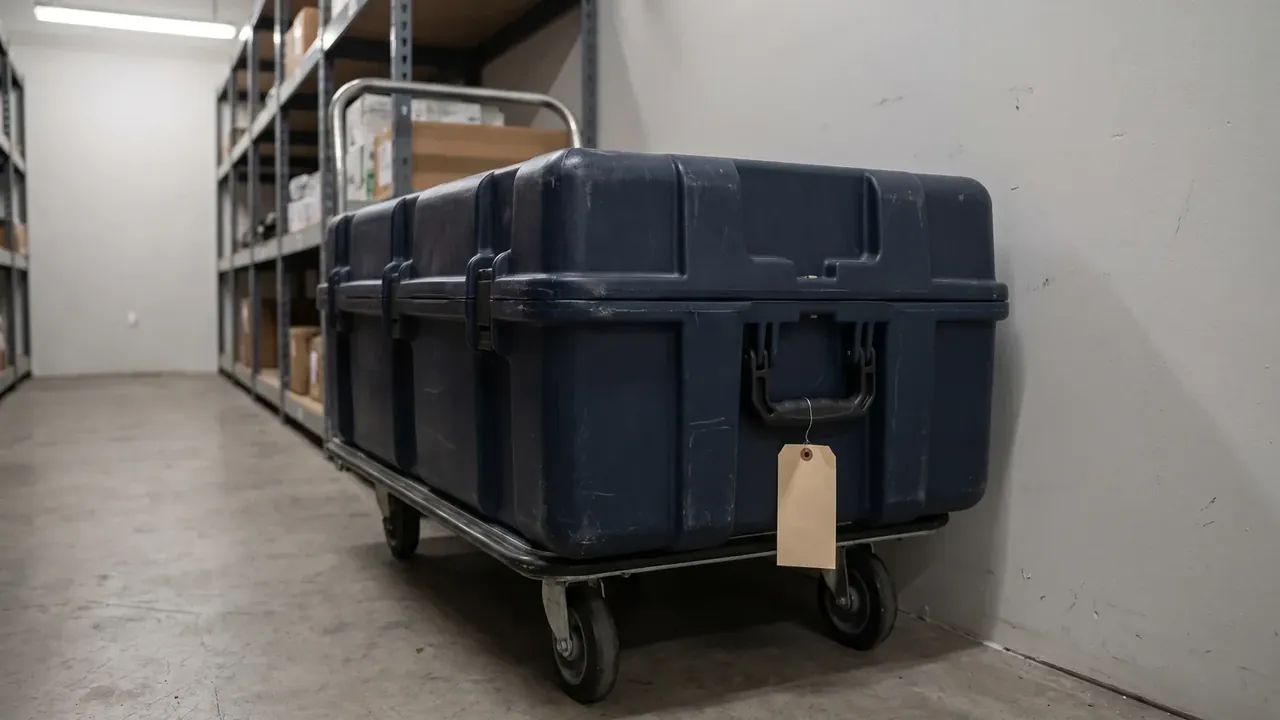
Quick answer: A Military Power Equipment Case runs two separated bays in one shell, with a 40 mm vent, fine mesh and a temperature rise held to 12 K or less.
Table of contents
- Splitting a Military Power Equipment Case into two bays
- Where the heat leaves: two vents and a 200 mesh screen as one calculation
- What holds the temperature rise to 12 K
- Ground studs and bond resistance: keeping IP65 after the holes are cut
- Four latches, four stacking layers and the order of the 1.2 m retest
- FAQ
1. Splitting a Military Power Equipment Case into two bays
Heat and grounding compete inside one shell. A Military Power Equipment Case divides the interior into 2 bays, battery on one side and inverter on the other, split by a moulded partition.
The split is not about looking tidy. Heat sits on one side and the ground point on the other.
| Bay | What it carries | Structural value |
|---|---|---|
| 2 bays | Battery and inverter | Moulded centre partition |
| Hot side | Vent openings | Two 40 mm holes |
| Ground side | Studs and bond | Two M8 studs |
| Full lid rim | Seal face | Benchmarked to IP65 |
That way, a Military Power Equipment Case turns where to drill and where to conduct into a question of position.
2. Where the heat leaves: two vents and a 200 mesh screen as one calculation
The number of openings is settled first: only 2 vents of 40 mm diameter, on the diagonal of the hot side so air has a way in and out. Widen the bore and the 200 mesh spans further and sags. A Military Power Equipment Case pairs bore and mesh as one decision.
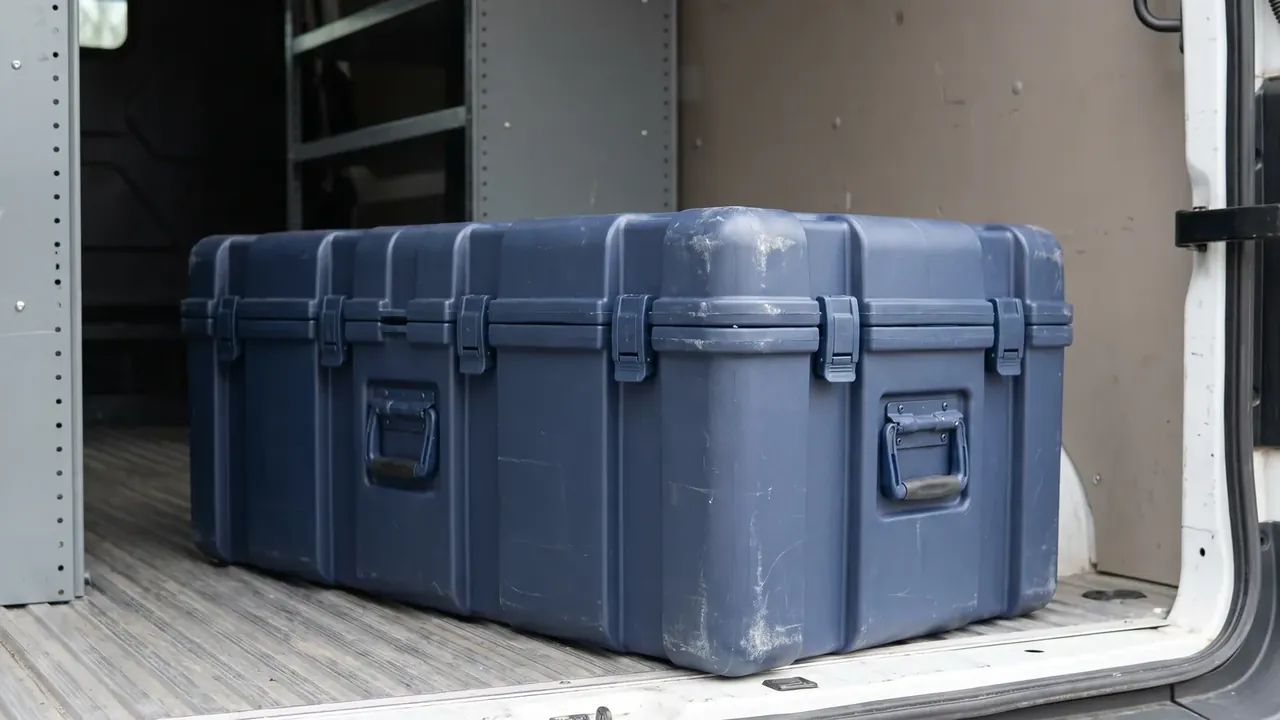
Venting and dust arrest are one contradiction, and solving only one side fails. Open the holes wide and fine dust settles on the partition and stud roots, so bond resistance creeps up. Make the mesh denser and airflow area is eaten away and internal rise will not come down. So the two 40 mm openings and the 200 mesh are verified as a pair: size the bore from airflow, fix the mesh from dust arrest, then confirm the rise holds at 12 K or less. A Military Power Equipment Case would rather concentrate the risk in 2 openings; a 7.6 kg shell carrying 19 kg keeps the holes out of the load band below the handle.
3. What holds the temperature rise to 12 K
A rise of 12 K or less is the internal value relative to ambient, not one part's surface temperature. It rests on the open area of the two 40 mm vents, the 200 mesh pass-through, the air gap between the 2 bays and the free cavity left by the 19 kg payload.
| Constraint | What is measured | Value |
|---|---|---|
| Temperature rise | Interior versus ambient | 12 K or less |
| Openings | Vent holes | Two 40 mm holes |
| Dust arrest | Mesh | 200 mesh |
| Ambient | Working range | Minus 30 to 65 degrees Celsius |
No single item is enough. The bore gives a path, the mesh discounts it, the partition gap decides whether heat reaches the vent side, and the leftover cavity decides whether heat is carried off or stored. A Military Power Equipment Case measures at both ends of minus 30 and 65 degrees Celsius, where convection is weak and ambient near the ceiling. The 520 by 380 by 250 mm cavity minus the 19 kg payload leaves the space that actually convects.
4. Ground studs and bond resistance: keeping IP65 after the holes are cut
The ground side is structural. Two M8 studs sit on reinforced bosses in the non-hot bay, joined by a strap judged at 10 milliohms or less. A Military Power Equipment Case lists keeping IP65 after the holes are cut as its own retest line.
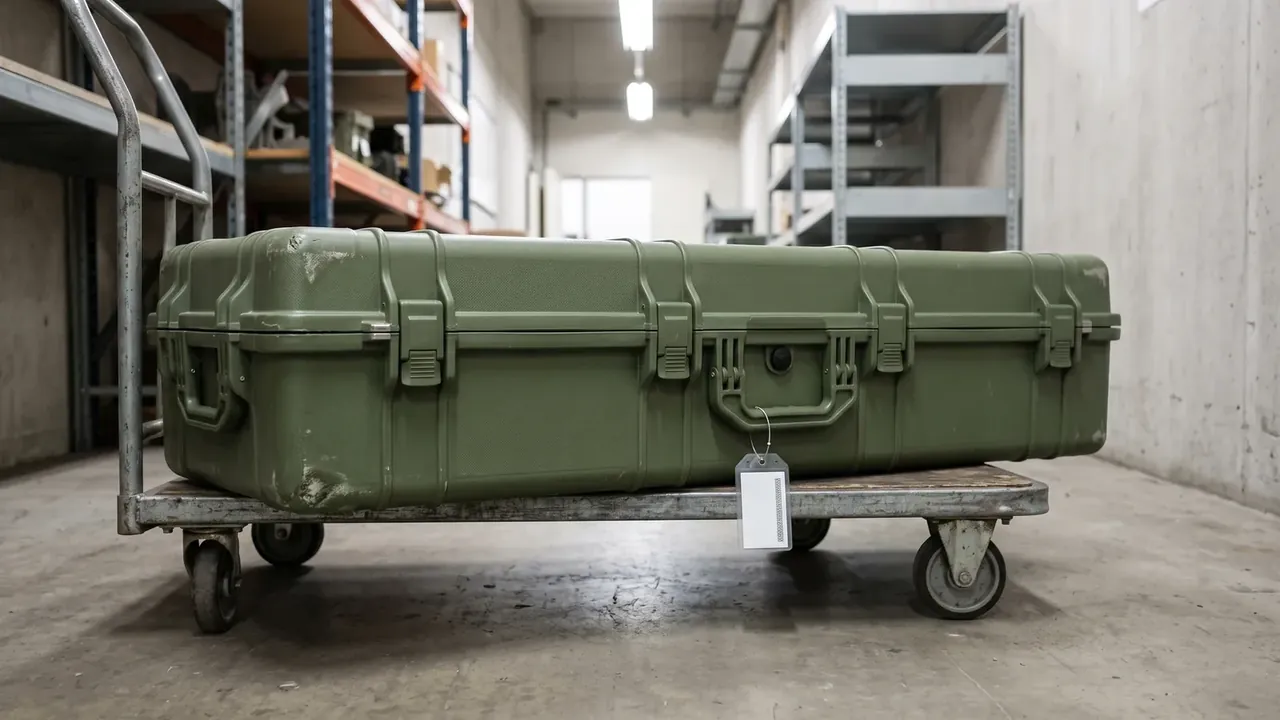
Order cannot be reversed. The two M8 bosses are moulded in first, then the two 40 mm holes are cut, then the 200 mesh and lid gasket are fitted; fit the gasket before drilling and swarf presses into the seal face, which fails the IP65 method. Bond at 10 milliohms or less is measured after the mesh is fitted, since the frame changes contact pressure.
| Value | Corresponding part | Retest method |
|---|---|---|
| 10 milliohms or less | Stud-to-stud bond | Measured after mesh fit |
| Two M8 studs | Ground studs | Torque checked one by one |
| IP65 | Lid rim after drilling | Verified by method |
| 460 N | Single latch | Checked with four closed |
A Military Power Equipment Case puts grounding and sealing in one table because they share a wall: studs conduct, holes breathe, the gasket keeps water out.
5. Four latches, four stacking layers and the order of the 1.2 m retest
The numbers converge on retest: 4 latches at 460 N each, 4 stacking layers, a 1.2 m drop. A 580 by 440 by 300 mm outer size, a 520 by 380 by 250 mm cavity, a 4.2 mm wall, and a 7.6 kg shell carrying 19 kg decide the load on the bottom lid.
The retest runs in a fixed order. First check the 4 latches near 460 N, then look for gasket set after 4 stacking layers, then carry out the 1.2 m drop. Afterward, confirm the bond still reads 10 milliohms or less, verify by the IP65 method that the drilled areas still seal, and only then measure rise at both ends of minus 30 to 65 degrees Celsius for 12 K or less. A Military Power Equipment Case writes that sequence onto the retest card.
Conclusion
A Military Power Equipment Case folds heat and electrical constraints into one shell: 2 divided bays, two 40 mm vents with a 200 mesh holding rise to 12 K or less, two M8 studs holding the bond at 10 milliohms or less, and a seal still benchmarked to IP65 after drilling. Ask how the bays split first, then how the holes and mesh pair up.
Related Reading
- Structure and selection of military equipment protective cases
- Openings and sealing in military communication equipment cases
- Insulation and protection in power inspection equipment cases
- Standards and rating benchmarks for tactical equipment cases
Related Products
- 8 Series — Gun Cases; Military Equipment Cases; Camera Equipment Cases; Drone Cases; Watch Cases; Knife Cases; First Aid Cases; Electronics Equipment Cases
- WL8-2812 PP Gun Case — model WL8-2812
- All protective cases and toolboxes: 7 series, 158 models