

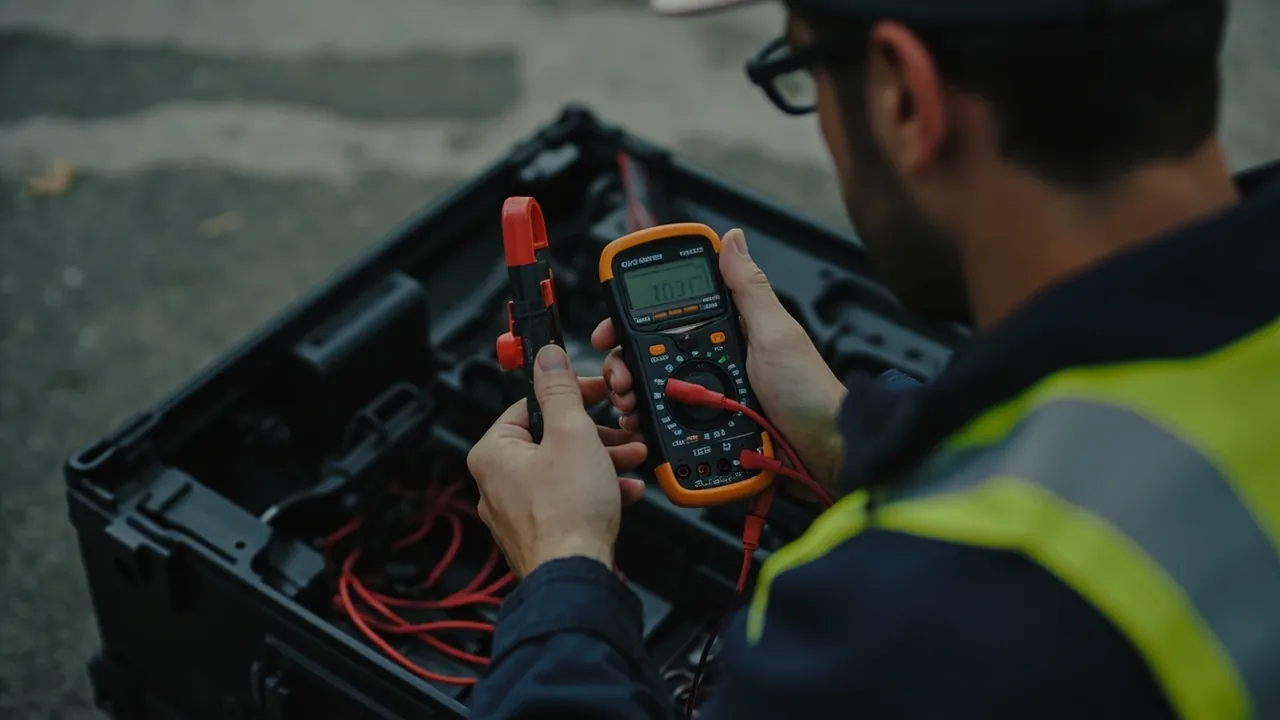
Choosing a protective case for power inspection equipment comes down to one sentence: first identify the real hazards across the four typical working environments of substations, overhead line corridors, distribution rooms and mountain patrol routes, namely moisture and condensation, contamination and salt spray, dust, drops and transport vibration, and thermal cycling; then set the three core specifications from those hazards, which are the sealing and ingress rating of the shell (IP67 capability is recommended), the cushioning and restraint scheme of the insert, and the electrical safety boundary of the shell material; finally settle the case format, volume and accessories according to how the case is carried, whether by hand, on the shoulder, as a wheeled trolley or stacked in a vehicle. One point that is most often confused has to be made clear first: a protective case provides physical protection, not primary insulation for live working. A dust-proof and moisture-proof plastic shell does not in itself constitute a voltage-withstand barrier. Every insulation resistance test, voltage detection and grounding operation must be carried out with dedicated insulating safety tools that are periodically proof-tested to their own specifications, such as insulating gloves, insulating operating poles, voltage detectors and grounding cables, and once an instrument is taken out of the case its surface must be confirmed dry and clean before it is energized. What the protective case genuinely solves is a different problem: keeping thermal imaging cameras, partial discharge testers, clamp meters, insulation resistance testers, patrol drone payloads and GNSS field controllers, equipment that is expensive and sensitive to accuracy, free from damage by water, dust, contamination and impact during mountain crossing, wading, rain, fog, sand and long-term vehicle vibration, and keeping them in a state where they are ready to use and their readings do not drift. The sections below cover equipment and risks, real field conditions, the electrical boundary, sealing and protection ratings, insert cushioning, and then the selection process together with incoming inspection.
Table of Contents
- What Equipment Does Power Inspection Actually Carry and What Does Each Item Fear?
- Real Conditions in Substations and Line Corridors: Moisture, Contamination, Salt Spray and Thermal Cycling
- The Electrical Safety Boundary: What a Case Can Do and What It Absolutely Cannot
- Shell, Sealing and Protection Rating: IP Codes, Gaskets and Pressure Equalization Valves
- Insert Cushioning and Case Format: Keeping Instruments Steady in a Vehicle and on Mountain Trails
- Selection Process, Scenario Configuration and Incoming Inspection Checklist
- Frequently Asked Questions (FAQ)
- Conclusion
- Further Reading
What Equipment Does Power Inspection Actually Carry and What Does Each Item Fear?
Power inspection differs from ordinary industrial maintenance in that it runs two threads at once: the safety requirements of a high-voltage environment and the reliability requirements of precision instruments. Only by sorting typical carried equipment by its characteristics can you decide what the case actually has to protect.
Typical Inspection Equipment and Its Failure Mechanisms
| Equipment class | Typical items | What it fears most | Key packaging requirement |
|---|---|---|---|
| --- | --- | --- | --- |
| Infrared temperature measurement | Thermal imaging camera, handheld thermometer, online temperature terminal | Lens contamination and condensation, moisture in the detector, optical path shift after impact | Separate lens bay, desiccant, shock absorption |
| Partial discharge detection | PD tester, ultrasonic, TEV and high-frequency CT sensors, signal cables | Sensor dampness, contaminated BNC or SMA connectors, broken cables | Connector protection, cable routing grooves, dry environment |
| Electrical measurement | Insulation resistance tester, clamp meter, multimeter, earth resistance tester | Reading drift from damp leads, water ingress into the body, drops | Moisture protection, isolation of leads from the main unit, cushioning |
| Drone and payload | Multirotor patrol aircraft, lenses, batteries, controller, gimbal | Water vapor, vibration that degrades gimbal damping, battery short circuits | Isolated battery bay, vent valve, cushioning, weight control |
| Communication and positioning | GNSS field controller, RTK equipment, body camera, tablet | Cracked screen, dampness, cold-related power loss | Screen protection, separate bay, thermal buffering |
| Accessories and consumables | Test leads, clamps, grounding cables, voltage detectors, labels, hand tools | Mutual scratching, loss, dampness-related failure | Zoned storage, fast visual inventory |
| Personal protective equipment | Insulating gloves, goggles, spare helmets | Compression set, dampness, contamination | Separate storage, no contact with oils |
Behind this table lies a shared pattern: most failures of inspection equipment are not "broken on the spot" but "slowly becoming inaccurate." Reading drift in an insulation resistance tester, temperature error in a thermal camera, sensitivity loss in a PD sensor, all of these happen with no visible change in appearance, and their common root causes are moisture, contamination and repeated vibration.
Four Damage Mechanisms
- Moisture and condensation. This is the most insidious killer on electrical sites. Relative humidity is very high along line corridors at dawn and overnight. Taking a still-cold case out of an air-conditioned vehicle into warm humid outdoor air, or moving an instrument straight from cold surroundings into an indoor space, forms condensation on circuit boards and connectors. Condensation is dangerous because it creates a continuous conductive film across surfaces that were previously insulating, raising leakage current, corrupting readings, and in severe cases causing a short.
- Contamination and salt spray. Contamination levels around substations are generally not low. Industrial dust, salts in alkaline regions and salt spray along coasts form a fouling layer on bushings and insulators, and the same layer settles into housing seams, metal contacts and threads. Once a fouling layer absorbs moisture its conductivity rises significantly, which is one reason instruments corrode noticeably faster in coastal regions than inland.
- Dust and particles. In distribution room refurbishments, civil construction zones and windy sandy sections, fine dust enters lenses, key gaps, fans and vent holes. Long-term accumulation wears mechanical structures, blocks air paths and interferes with touchscreens.
- Impact, vibration and stacking load. Pickup truck beds, walking transfers across mountain terrain and carrying cases while climbing towers all produce continuous vibration with occasional impact. For precision electronics the damage from vibration is cumulative: solder joint fatigue, loose connectors, backed-out screws and micro-displacement of potentiometers and encoders are typical. When cases are stacked, the bottom case carries the weight of everything above it for long periods, and if the shell lacks bending stiffness the case mouth slowly deforms and locally unloads the gasket.
Real Conditions in Substations and Line Corridors: Moisture, Contamination, Salt Spray and Thermal Cycling
Case selection has to return to the actual site. Conditions vary greatly between roles, and buying "the thickest and heaviest case available" across the board adds carrying burden instead of protection.
Hazard Ranking by Typical Working Environment
| Working scenario | Primary hazards | Secondary hazards | Basic requirement for the case |
|---|---|---|---|
| --- | --- | --- | --- |
| Indoor substation and indoor switchgear area | Dust, occasional spray, handling knocks | Electromagnetic environment, oil stains | IP65 or better, oil-resistant easy-clean surface |
| Outdoor substation and open-type equipment area | Sun and rain, thermal cycling, contamination | UV aging, gasket aging | IP67 capability, UV-resistant material, weather-resistant gasket |
| Overhead line corridor and tower base | Rain, mud, grass, insects, drops | Long carry, abrasion while climbing | Light weight, carry comfort, drop resistance, easy to drain and clean |
| Coastal and salt spray regions | Salt spray corrosion, high humidity | Rusting hardware | Corrosion-resistant hardware, fresh-water rinsable, desiccant |
| Mountain and forest transfers | Drops, vibration, wading on tracks | Large temperature swings, day-night humidity extremes | High cushioning, shell strength, anti-slip feet |
| Night emergency repair | Poor visibility, rushed access, occasional rain | Fast identification | Clear zoning, reflective marking area, label slot |
The Hidden Effect of Thermal Cycling
Apart from humidity, thermal cycling is the second environmental variable that power inspection has to handle. Interior vehicle temperatures can climb very high under daytime sun, then drop sharply overnight or at high-altitude sections. High temperature accelerates gasket aging and degrades foam rebound after long compression. Low temperature makes some plastics brittle and reduces lithium battery output. Case materials therefore have to be judged on their service temperature range and especially their low-temperature toughness. One important reason PP (polypropylene) is widely used in outdoor cases is that it stays tough at low temperature and resists brittle cracking, while ABS has the advantage in rigidity, surface hardness and dimensional stability, suiting cases where appearance and precision matter more.
The Electrical Safety Boundary: What a Case Can Do and What It Absolutely Cannot
This is the section where users in the power industry most need an unambiguous answer. The core conclusion was already stated above, and here is why it holds and what the correct practice is.
Why a Plastic Protective Case Cannot Serve as an Insulating Barrier
Whether an object may serve as primary insulation for live working depends on whether its dielectric performance has been proof-tested to specification and is retested periodically, not on whether it looks thick or feels non-conductive. Dedicated insulating safety tools such as gloves, operating poles, voltage detectors, grounding cables and insulating mats undergo preventive testing at prescribed intervals after manufacture with records retained, and they are visually checked for validity dates and condition before each use. A plastic protective case is developed for sealing, impact resistance, weatherability and low weight. Its design inputs were never clearances, creepage distances or dielectric strength, and therefore:
- Once the shell surface is damp, contaminated or covered with conductive dust, its surface insulation resistance drops significantly.
- No clearance or creepage distance whatsoever is guaranteed between the metal parts of the case, including latches, hinge pins and inserts.
- The gasket is designed against liquid water and solid dust, not against surface tracking.
The correct formulation is therefore: a protective case protects against environment and transport, not against voltage. Any work on or near live parts must use dedicated insulating safety tools and follow their management requirements.
What the Case Actually Contributes in Electrical Work
Once the boundary is clear, the value of the case becomes sharper. It does three things.
- It preserves the usability of the insulating safety tools themselves. Insulating gloves that sit damp in a vehicle, are contaminated with oil or are crushed out of shape lose much of their reliability. Giving them a dry, clean, zoned, unloaded storage enclosure is basic protection for those tools.
- It prevents measurement misjudgment caused by damp instruments. A damp insulation resistance or earth resistance tester can return distorted values, and distorted data is more dangerous than no data. Keeping the case interior dry is one link in keeping the measurement chain trustworthy.
- It prevents cross-contamination from the previous site. Access is frequent in the field, and if everything shares one box with a wet bottom, contaminants transfer between instruments and end up on line equipment. Sensible zoning and easy-to-clean interior surfaces reduce exactly this.
One Site Rule That Cannot Be Skipped
After removing insulating gloves, voltage detectors, grounding cables or similar safety tools from the case, always perform a visual and simple functional check before use: is it still within its validity period, is there any damage, is it damp or contaminated. Boxes can be expensive and seals can be excellent, but only the user knows the maintenance state of that particular case, so this rule must not be dropped.
Shell, Sealing and Protection Rating: IP Codes, Gaskets and Pressure Equalization Valves
With the safety boundary settled, we can return to the technical choice of the case itself.
How to Read an IP Rating
The IP code (IEC 60529, GB/T 4208 domestically) consists of two digits: the first is protection against solid foreign objects including dust, the second is protection against water.
| Rating | Dust meaning | Water meaning | Relevance to power inspection |
|---|---|---|---|
| --- | --- | --- | --- |
| IP54 | Dust protected (limited ingress, no adverse effect on safety or operation) | Splashing water | Minimum baseline for indoor distribution rooms and similar dry environments |
| IP65 | Dust protected | Low-pressure water jets | Handles rain; not for immersion or heavy rinsing |
| IP66 | Dust protected | Powerful water jets | For wave-like strong jets and high-pressure washing |
| IP67 | Dust protected | Temporary immersion (30 minutes under specified conditions) | Baseline safety for accidental immersion, wading and storage in heavy rain |
For most power inspection work, IP67 capability is the recommended baseline, because what you face are low-probability, high-loss events: the case sitting in a pickup bed in a downpour, spray while crossing a shallow stream on the track, or the case standing on pooled water during a night repair. IP67 does not cover "being submerged every day"; it covers "the equipment survives if something goes wrong." Always remember that an IP rating is a test result on a new case under standard laboratory conditions, and real long-term effectiveness depends on gasket maintenance and latch compression stability.
Sealing Is Three Things Combined, Not One Part
A protective case seals through three elements acting together, and none can be missing.
- Shell rigidity. The shell provides a reference plane that does not change shape under external load or temperature. If side walls deform significantly under compression, the mouth is pulled out of true and the sealing faces no longer meet evenly. This is why outdoor cases carry a network of reinforcement ribs: they raise bending stiffness substantially without adding much wall thickness or weight.
- A full-perimeter elastic gasket. Usually seated in a groove in the lid and made of an elastomer such as EPDM, silicone or TPE, its job is to fill the microscopic gap between body and lid.
- Latch compression force and distribution. This is the link most often overlooked. Sealing comes from compression, not from covering. A case whose lid merely rests in place, leaving the gasket uncompressed, still admits water and dust. Look at latch count and spacing: roughly two for a small case, four for a medium one, six or more for a large one, spaced as evenly as possible. That is the precondition for uniform compression around the full perimeter.
Four Overlooked Long-Term Failure Points
| Part | Typical failure | How to judge | Action |
|---|---|---|---|
| --- | --- | --- | --- |
| Gasket | Hardening with age, grit embedded, local permanent set | Check whether the section still springs back and whether flat spots remain | Clean with water regularly, replace when needed |
| Latches | Loss of compression, loose action, hooked open by debris | Whether closing still gives a clear self-lock feel | Choose recessed latches, inspect for cracks periodically |
| Case mouth and corners | Corner cracking that deforms the mouth | Inspect all eight corners for fine cracks | Use radiused corner transitions, avoid heavy impacts |
| Pressure valve | Membrane blocked so no differential can vent | A gentle puff of air confirms it breathes | Replace when blocked, avoid strong solvents |
Should You Specify a Pressure Equalization Valve?
If the work involves air transport, line patrol at high altitude, or a case that regularly moves between low and high elevation, a pressure equalization valve should be mandatory. It uses a microporous membrane that lets gas through while blocking liquid water and dust, automatically balancing pressure so the lid is not deformed by differential pressure and the case can be opened on return to low altitude. Note that it equalizes pressure, not humidity, so desiccant remains necessary.
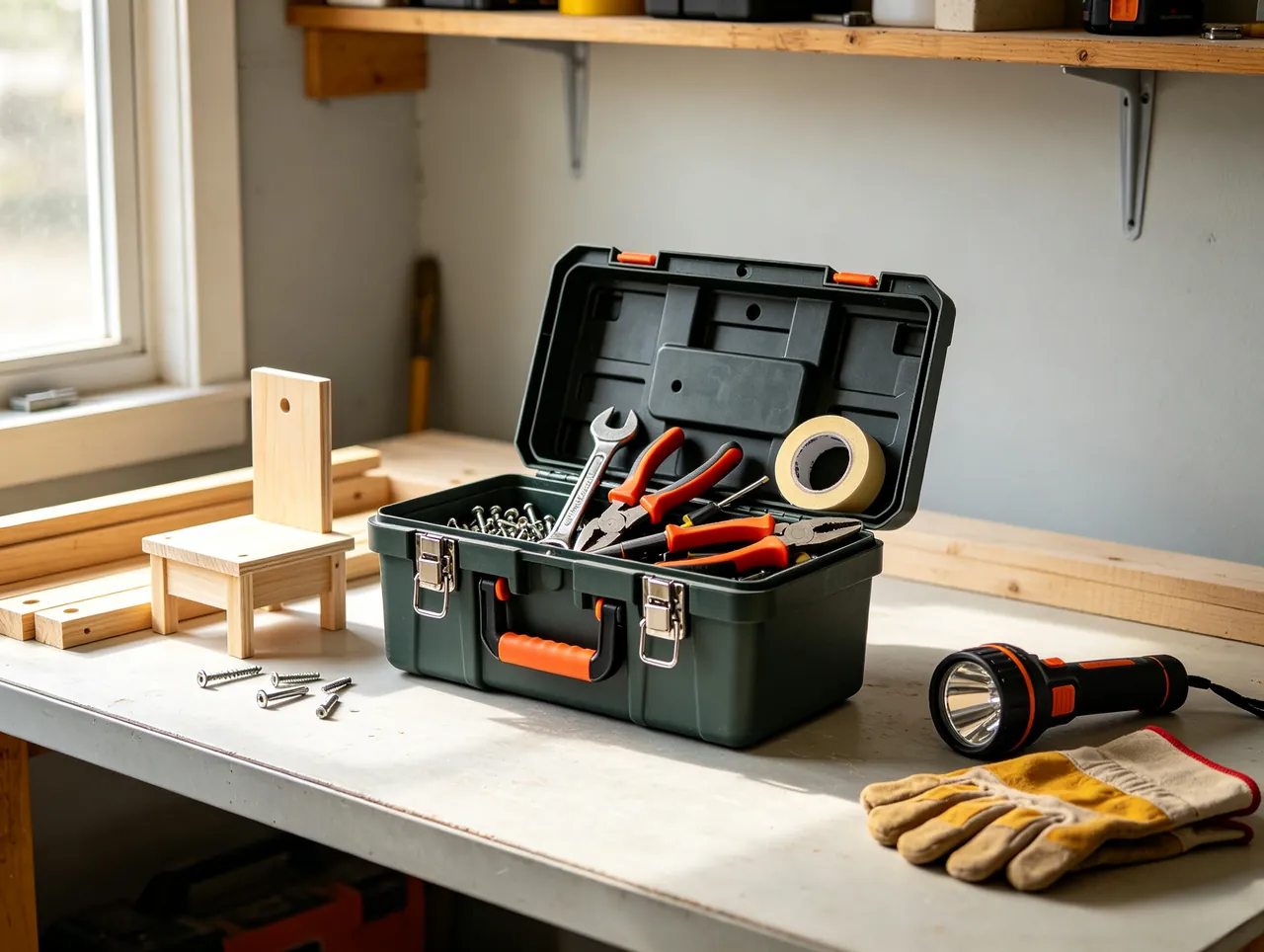
Insert Cushioning and Case Format: Keeping Instruments Steady in a Vehicle and on Mountain Trails
Precision electronics are sensitive to vibration. The job of cushioning is to lengthen the deceleration process of an impact and lower the peak acceleration transmitted to the device.
Choosing Insert Material
| Material | Structure | Cushioning and forming behavior | Water absorption | Best use in power inspection |
|---|---|---|---|---|
| --- | --- | --- | --- | --- |
| EVA (ethylene-vinyl acetate) | Closed-cell | Good rebound, thermoformable, moderate damping | Very low | Custom molded trays, main instrument bays |
| EPE (expanded polyethylene) | Closed-cell | Soft, long cushioning travel | Low | Lightweight filler blocks, wrapping layers |
| PE foam | Closed-cell | Firm, tear resistant | Very low | Dividers, structural support layers |
| EPP | Closed-cell | Survives repeated impact, recovers well | Very low | Repeated drops and long-term vehicle vibration |
| PU sponge | Open-cell | Soft, conforms well | High, absorbs water | Avoid in humid conditions, dry environments only |
Power inspection should prefer closed-cell systems, because those materials do not absorb water, will not turn into a reservoir in a humid environment, and will not trap equipment in a permanently damp microclimate. That single point separates field work from dry indoor use.
Choosing Between Three Insert Formats
- Pick and pluck foam. Pre-cut into a grid of small cubes that are pulled out to match the equipment outline. No tooling, adjustable on site, low cost; the downside is that cube edges tear with frequent access and the stacked-layer construction is only average in long-term durability. Good for teams still settling their equipment list.
- Pre-cut foam. Cavities cut precisely by die or CNC against a fixed inventory. High conformity, easy access, tidy appearance; the downside is that a change in the list means redoing it. Good for repair crews with standardized kits.
- Custom molded insert. Thermoformed or CNC-carved cavities matching the equipment outline exactly. The most stable restraint, controllable cushioning paths, the ability to add finger access, layered tiers and a dedicated desiccant pocket. Suited to batch purchasing and standardized configurations where repeatability across units matters.
Five Practical Rules for Cushion Design
- Leave enough foam around every item. Provide at least 20 to 30 mm of foam thickness around each cavity, and the same cushioning layer at the bottom and under the lid. Equipment touching the case wall is the most common mistake and the most common hidden risk.
- No equipment-to-equipment contact. Main units and lenses, PD sensors and cable adapters must be separated by foam walls so they cannot knock against each other in transit.
- Heavy items low, center of gravity central. Battery packs, power adapters and metal tools belong in the lower part of the case.
- Isolate lithium batteries. They need their own bay with no contact against metal objects, both for safety and so they can be pulled out quickly for air travel.
- Keep desiccant and a hygrometer permanently inside. This turns humidity from a feeling into a readable number. Keep relative humidity below 60 percent, ideally in the 40 to 55 percent band.
Volume Estimation Method
Do not buy the case first and cram equipment in. List the inventory first and derive the volume from it.
- List every item, measuring actual outside dimensions including leads, probes and any attached hoods, not the bare body dimensions.
- Compute the bounding volume of each item as length times width times height.
- Add them and multiply by a margin factor of 1.4 to 1.8. The low end corresponds to tight packing with thin dividers, the high end to thick cushioning plus finger access space.
- Only with the target internal volume in hand select the matching standard case size.
Carrying Method and Case Format
| Carrying method | Applicable scenario | What to check |
|---|---|---|
| --- | --- | --- |
| Hand carry | Short moves inside a distribution room, total weight under 15 kg | Handle ergonomics, soft-touch overmolding |
| Shoulder carry | Mountain patrol, tower climbing, long walking transfers | Whether strap anchors use metal inserts, whether there are anti-slip feet |
| Trolley-wheeled | Large substation rounds, airport transfers, multi-case crew moves | Quiet wear-resistant wheels, recessed handle, stackability |
| Vehicle stacking | Repair vans, stacked in a pickup bed | Stacking locators and the ability to strap the stack down |
Selection Process, Scenario Configuration and Incoming Inspection Checklist
A Six-Step Selection Process
- List the equipment. Include probes, cables, batteries and accessories, and measure real outside dimensions.
- Map the working conditions. Decide whether the primary site is an indoor substation, an outdoor yard, a line corridor or a coastal or mountain route, and identify whether the leading hazard is moisture, dust, dropping or thermal cycling.
- Set the protection rating. Where fieldwork, rain, wading, coastal work or air transfer is involved, choose a case with IP67 capability; where altitude or large temperature swings occur, add a pressure equalization valve.
- Set the insert format. Pick and pluck for a changing list, pre-cut for a fixed one, custom molded for standardized batches, with closed-cell materials preferred.
- Set the volume and carrying method. Derive internal volume with the 1.4 to 1.8 margin factor, then choose hand, shoulder or wheeled carrying by total weight and travel distance.
- Set the management accessories. Desiccant, hygrometer, label slots, reflective marking areas and equipment numbering zones.
Common Mistakes
- Mistake one: treating the case as an insulating tool. A case is not a voltage-withstand barrier. Live work requires dedicated insulating safety tools that are periodically proof-tested.
- Mistake two: looking at the IP rating and ignoring maintenance. Aged or gritty gaskets and loose latches invalidate the nominal rating, so clean and inspect them on a schedule.
- Mistake three: putting desiccant in and forgetting it. Desiccant saturates. Once it changes color, dry or replace it, and shorten the interval in humid seasons.
- Mistake four: opening the case the moment you arrive. Coming from cold surroundings into warm humid indoors, let the closed case acclimatize first to avoid rapid condensation.
- Mistake five: substituting an ordinary storage box. Ordinary boxes have no full-perimeter seal, no cushioning insert and insufficient rigidity; they exclude dust and nothing else.
- Mistake six: storing lithium batteries together with metal tools. If a metal object bridges the terminals the short-circuit risk is severe, so a separate bay is mandatory.
- Mistake seven: stacking as high as possible. Excess stacking keeps the bottom case under load indefinitely. Before stacking, confirm that stacking locators exist and the stack height is reasonable.
Incoming Inspection and Routine Maintenance Checklist
- Seal visual check. After closing, inspect along the lid edge to confirm the gasket is compressed evenly with no local gaps.
- Open and close feel. Latches should seat crisply with a clear self-lock, consistent across a batch.
- Foam rebound. Press and release; it should recover without collapse or crumbling.
- Desiccant and hygrometer. Confirm they are fitted and that the hygrometer reads normally.
- Pressure equalization valve, if fitted. Confirm the body is intact and not blocked.
- Hardware and feet. Metal parts free of rust, all feet present and secure.
- Care after every trip. Clean out dust, dirt and grass, let the case dry before closing it for storage, and wipe the gasket with clean water periodically, avoiding strong solvents.
Frequently Asked Questions (FAQ)
Q: Does a case for power inspection really need IP67 capability? A: IP67 capability is recommended as the baseline for outdoor power inspection. Outdoor substation areas, line corridors and coastal sections all involve heavy rain, wading or a case standing on wet ground, and IP67 withstands temporary immersion under standard test conditions, covering those low-probability, high-loss events. Bear in mind that an IP rating is a test result on a new case under standard conditions, and that long-term effectiveness depends on gasket care and latch compression. If equipment moves only inside indoor switchgear rooms that are clean and dry, IP54 to IP65 is generally considered sufficient.
Q: Can a plastic protective case replace insulating gloves or an insulating mat? A: Absolutely not. A plastic case is designed for sealing, impact resistance, weatherability and low weight, not for dielectric strength or voltage withstand, and no clearance or creepage distance is guaranteed between its metal parts. Work on or near live parts must use dedicated insulating safety tools that undergo periodic preventive testing with records retained and a visual check before and after each use. The proper role of the case is to protect those insulating tools from moisture, oil and crushing damage.
Q: Readings are inaccurate right after taking an instrument out of the case. What causes that? A: Moisture and contamination are the most common causes. Condensation on the instrument surface or on connectors creates an extra conductive path, biasing insulation resistance and earth resistance measurements low and raising leakage current in the electronic measurement circuits. The correct handling is to let the closed case acclimatize to ambient temperature before opening it, then visually confirm that the body and leads are dry and clean, wiping them with a dry clean cloth and letting them settle briefly if needed before starting the measurement. Where long-term storage in humidity is unavoidable, keep plenty of desiccant and a hygrometer in the case.
Q: Which insert material should I use, EVA or EPE? A: Both are closed-cell and neither absorbs water, so both suit humid environments. The key is division of labor rather than an either-or choice. EVA has higher density, better formability and stronger support, suiting main equipment bays and custom molded trays. EPE is lighter and offers longer cushioning travel, suiting wrapping layers, filler blocks and vibration damping layers. For a combination like power inspection, with valuable instruments, humid conditions and long-term vehicle vibration, the usual approach is EVA cavities to fix the shape combined with EPE layers to absorb road energy. Open-cell PU sponge should be avoided because it absorbs water and becomes a water source in damp conditions.
Q: How should a drone patrol kit be packed? A: Three points. First, batteries need their own isolated bay with no metal contact, which also makes them easy to manage and carry on flights. Second, the airframe and gimbal assembly are the precision parts, so the cavity should let the airframe float with adequate foam thickness all around and a dedicated soft contact surface facing the lens. Third, if air transport or high-altitude sections are involved, fit a pressure equalization valve while retaining the IP67 seal. Cables and small parts belong in mesh pockets or zip bags so nothing loose scratches lenses.
Q: How long before hardware rusts in coastal regions? A: There is no single answer, because rusting speed depends on the base material and surface treatment, the local chloride concentration and how often the case is maintained. Three things are controllable: choose corrosion-resistant hardware such as stainless steel or well-treated alloys; rinse the exterior and hardware with fresh water and dry the case after every coastal task; and avoid long-term storage of cases in damp enclosed spaces. Address any rust on latches or hinge pins promptly, because corrosion reduces latch compression and therefore sealing.
Q: Can I close the case for storage right after washing it? A: It is not advisable. After washing, everything inside and out must be fully dried, especially the seal groove and the foam surface, because closing a damp case for long storage creates a stable high-humidity microclimate, which is the main driver of instrument dampness and mold. The correct sequence is: rinse with clean water to remove salt and dirt, wipe dry, leave the lid open in a ventilated place until completely dry, and only then check the desiccant and hygrometer and close the case for storage in a dry place.
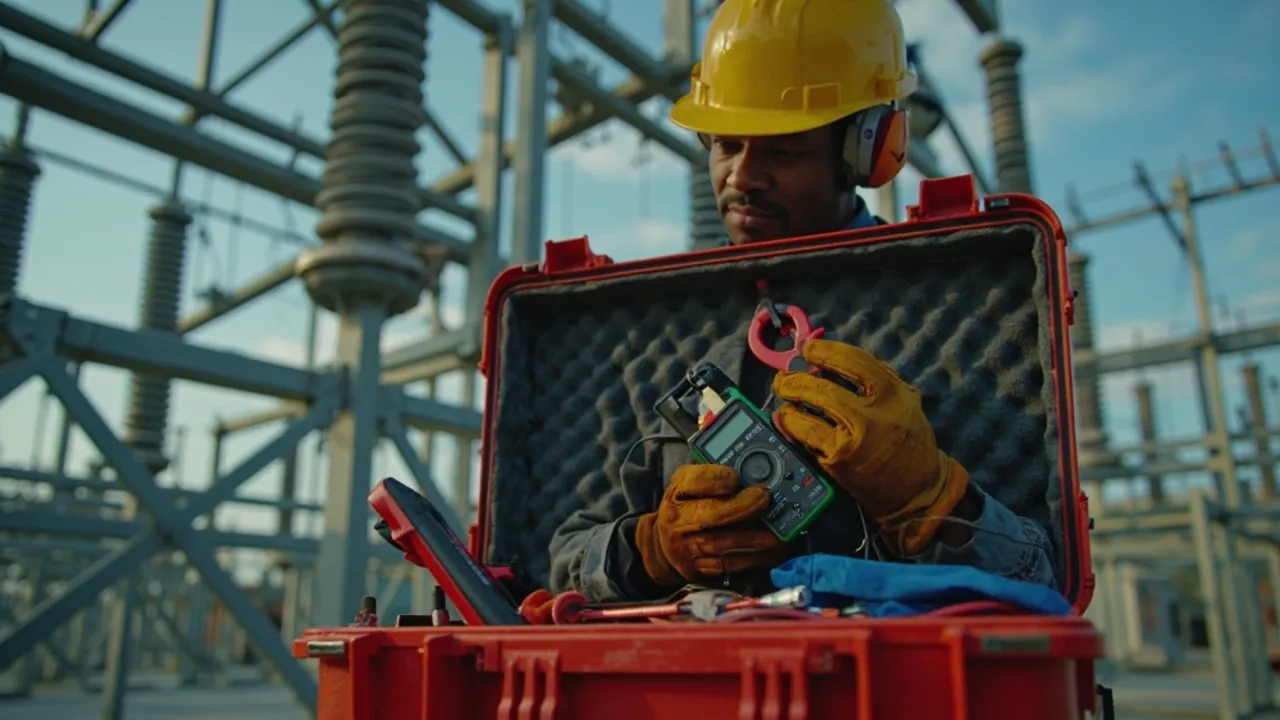
Conclusion
Selecting a protective case for power inspection is essentially about drawing the boundary first and then designing the system. The boundary is one sentence: the case handles environment and transport, the insulating safety tools handle voltage, and the two can never substitute for each other. With that settled, the practical order is: list the complete equipment inventory for the role and estimate bounding volume from real dimensions including leads and probes, then apply the 1.4 to 1.8 margin factor to get internal volume; then set the protection rating from working conditions, choosing a full-perimeter sealed structure with IP67 capability for outdoor, rainy-season, coastal, wading and air-transfer scenarios, and adding a pressure equalization valve where altitude or large temperature swings occur; then set the insert, pick and pluck for a changing list, pre-cut for a fixed one, custom molded trays for standardized batches, with closed-cell EVA or EPE preferred to avoid water absorption; finally choose hand, shoulder or a stackable trolley-wheeled case by total weight and carrying distance. The usage side decides the outcome just as much: hold relative humidity below 60 percent and replace desiccant on schedule, let the case acclimatize before opening it after cold exposure, clean off dust and contamination after every return and rinse away salt spray with fresh water, and inspect gasket resilience and latch compression regularly. A nominal protection rating is the result for a new case under standard conditions; real long-term effectiveness comes from maintenance. KeXin New Materials (Guangdong) Co., Ltd. was founded in 2014 and is located in Zhongshan City, Guangdong Province, with a factory of about 18,000 square meters, more than 80 machines and over 100 staff. Its protective-case line is marketed globally under the brand kexinMaterials and domestically under the JUNZHJIA product-line brand, covering more than 150 specifications, offering IP67 capability and environmental suitability validation against MIL-STD-810H. The company operates under ISO9001 and meets REACH, California Prop 65 and RoHS requirements, holds more than 20 utility model and design patents, and provides one-stop OEM and ODM customization from product design, mold manufacturing and injection molding to logo printing and tray and liner production. For bulk quotations, specification sheets or customization projects, please schedule through the contact page or inquiry form on this site.
Further Reading
- What Does IP67 Mean for a Protective Case and Where Does It Apply?
- How Does an Outdoor Protective Case Protect Internal Electronics?
- How Do Outdoor Protective Cases Handle Rain and Humid Environments?
- What Kind of Tool Box Suits Outdoor Work?
- What Is the Difference Between a Waterproof Tool Box and a Normal One?
- How Do Outdoor Protective Cases Handle High and Low Temperatures?
- What Factors Matter When Customizing Protective-Case Foam?
- Why Is a Shockproof Tool Box Suited to Transporting Precision Tools?
- Which Industries Benefit From a Wheeled Tool Box?