

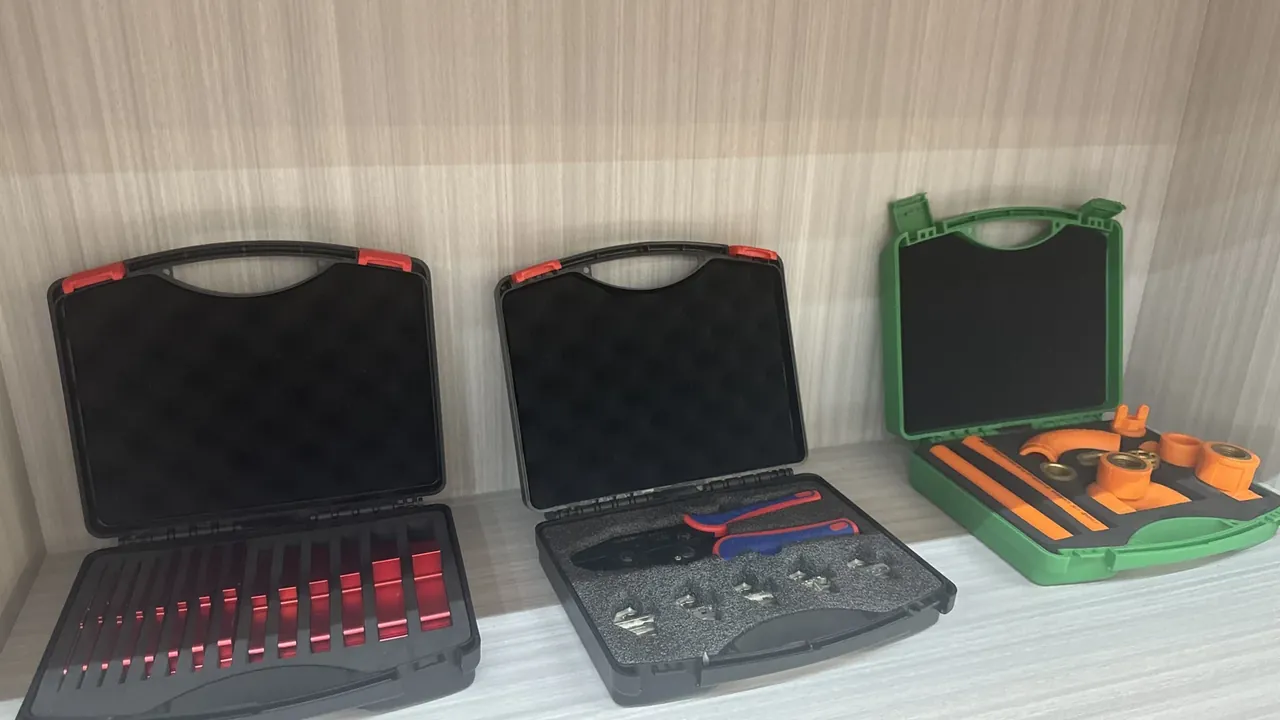
Quick answer: A military supply transport case acceptance standard works when every item yields a reading, every reading has a limit, and every limit carries a defect class and a disposition right. Fix items, sampling, classes and retention, and any inspector reaches the same verdict.
Table of contents
- What a Military Supply Transport Case Standard Must Judge
- Sampling Plans and Acceptance Numbers
- Defect Classes and Limit Values
- Test Reports and Retention
- Quarantine and Re-inspection
- FAQ
1. What a Military Supply Transport Case Standard Must Judge
Acceptance starts before anyone opens a case. Replace adjectives with readings: acceptable appearance lets two inspectors disagree, no through-crack at 600 mm under D65 light leaves one answer. Each clause needs four columns: item, method, limit, record.
Work splits into eight groups, from appearance and cavity to sealing, drop and marking. Every limit must be a ceiling or a range, since complies with the drawing is no limit.
| Check | Method | Limit | Record |
|---|---|---|---|
| Appearance | Visual, D65, 600 mm | No through-crack, flash under 0.3 mm | Appearance sheet |
| Cavity | Tape and bore gauge, three points per axis | 0 to plus 2.5 mm | Dimension sheet |
| Wall thickness | Ultrasonic, minimum of five points | Not below drawing minus 0.3 mm | Thickness log |
| Sealing | Air at 20 kPa, hold 120 s | Decay 1.0 kPa or less | Pressure curve |
| Stacking | 600 kg on the lid, 40 Celsius, 1 hour | Set 4 mm or less | Deformation record |
| Drop | 3 hours at minus 30 Celsius, then 1.1 m | No through-crack, latches closed | Drop record |
Limits need an environment too: sealing at 23 Celsius, stacking at 40 Celsius, hardware through 96 hours of salt spray.
2. Sampling Plans and Acceptance Numbers
Sample by batch, never by pallet. A military supply transport case batch is one mould, one resin grade and one continuous shift; mixed pallets are split first.
Use general inspection level II: AQL 4.0 for appearance, 1.5 for function, 6.5 for marking. Three limits exist because consequences differ; one AQL either lets marking hold a batch or averages a sealing fault away.
| Batch size | Sample | Appearance | Function |
|---|---|---|---|
| 151 to 280 | 32 | 3 | 1 |
| 281 to 500 | 50 | 5 | 2 |
| 501 to 1200 | 80 | 7 | 3 |
| 1201 to 3200 | 125 | 10 | 5 |
Destructive military supply transport case checks stay outside the plan: four units for the drop, two for the stack, from three cavities across the stack height. The buyer names the sampler.
3. Defect Classes and Limit Values
Classify a military supply transport case batch first. Class A: pressure decay above 2.0 kPa, broken latch, wall 0.5 mm under minimum. Class B: dimensions within 1 mm, stack set of 4 to 6 mm. Class C: colour shift, flow marks, marking offset within 2 mm.
| Class | Typical defect | Verdict | Disposition |
|---|---|---|---|
| A, critical | Decay over 2.0 kPa, broken latch, thin wall | Reject | Quarantine, sort or remake |
| B, major | Dimensions within 1 mm, set of 4 to 6 mm | Concession or rework | Written concession, 30 days |
| C, minor | Colour shift, flow marks, marking offset | Accept by count | Three pieces upgrade to B |
A concession is never a verbal yes: state a quantity cap, a window of 30 days and the permitted use. Three pieces of one defect upgrade it to Class B; two consecutive concessions trigger review.
4. Test Reports and Retention
A military supply transport case report is worth the readings it preserves: report number, sample-to-batch link, a verdict per item, gauge numbers with calibration dates, signatures and curves.
Retention follows use: six years for routine batches, fifteen for key and export orders, indexed by batch with the mould number. Review closes within 24 hours, and third-party reports older than 18 months are repeated.
5. Quarantine and Re-inspection
A failed batch is quarantined, red-tagged and stored apart. Re-inspection doubles the sample and covers the failed item plus what it affects: thin walls bring the stacking test, sealing brings gasket compression.
Verdicts come within 72 hours. Passing stock is released, downgraded use needs written approval, a failed batch returns in full. Two consecutive failures put the military supply transport case supplier into review, with three clean batches before normal sampling returns.
Pass rate, concession and re-inspection rate belong on one monthly scorecard tied to order allocation, so acceptance presses back on the line.
Conclusion
An acceptance standard is measured by how easily a third person reproduces each line. Fix items, limits, sampling and classes into the contract annex, keep the paper by batch, and the military supply transport case standard decides batches instead of describing them.
This article discusses only the container (case body) side of specifications and design intent, and does not cover any handling, loading or use of the contents.
Related Reading
- Setting size, wall and load for a transport case
- Incoming inspection points for supply cases
- How transport cases serve logistics support
- Quotation, MOQ and lead time
Related Products
- 8 Series — Gun Cases; Military Equipment Cases; Camera Equipment Cases; Drone Cases; Watch Cases; Knife Cases; First Aid Cases; Electronics Equipment Cases
- WL8-2812 PP Gun Case — model WL8-2812
- All protective cases and toolboxes: 7 series, 158 models