

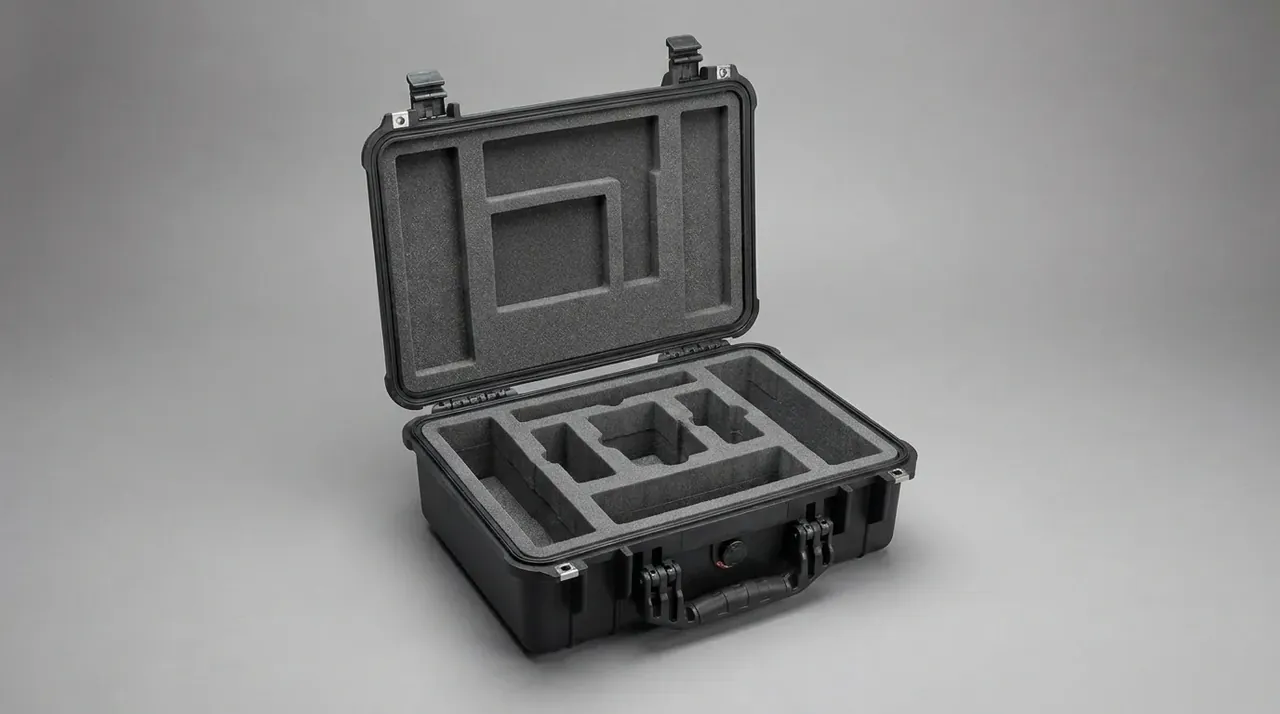
Quick answer: A Military/tactical medic portable kit box keeps its wipeable liner lint-free through 350 wipes and holds divider shift within 0.9 mm after a 1.0 m drop.
Table of contents
- Divider layout of the Military/tactical medic portable kit box
- Peel strength of the wipeable liner
- Linting judgement after wiping cycles
- Divider displacement measurement after drop
- Lid compression frame and handle load transfer
- FAQ
1. Divider layout of the Military/tactical medic portable kit box
The Military/tactical medic portable kit box cuts 6 dividers from a 445×305×160 mm inner clear space, two long and four short, with the count fixed on the mould sheet so batch units are not adjusted one by one. The shell takes a 3.6 mm wall at 500×360×220 mm outside; divider roots drop into floor slots moulded in one shot, and no shim is added at assembly. The 4.0 kg empty figure and the 8 kg rating are filed apart, with side load shared by the root slots and the lid compression frame. Long dividers carry the main restraint, short ones separate bays, and top edges stay clear of the lid liner. Slot depth and divider insertion are calibrated on the first article, and incoming checks cover slot width and root gap only.
Shift is judged at 0.9 mm or less; the method sits in section 4.
2. Peel strength of the wipeable liner
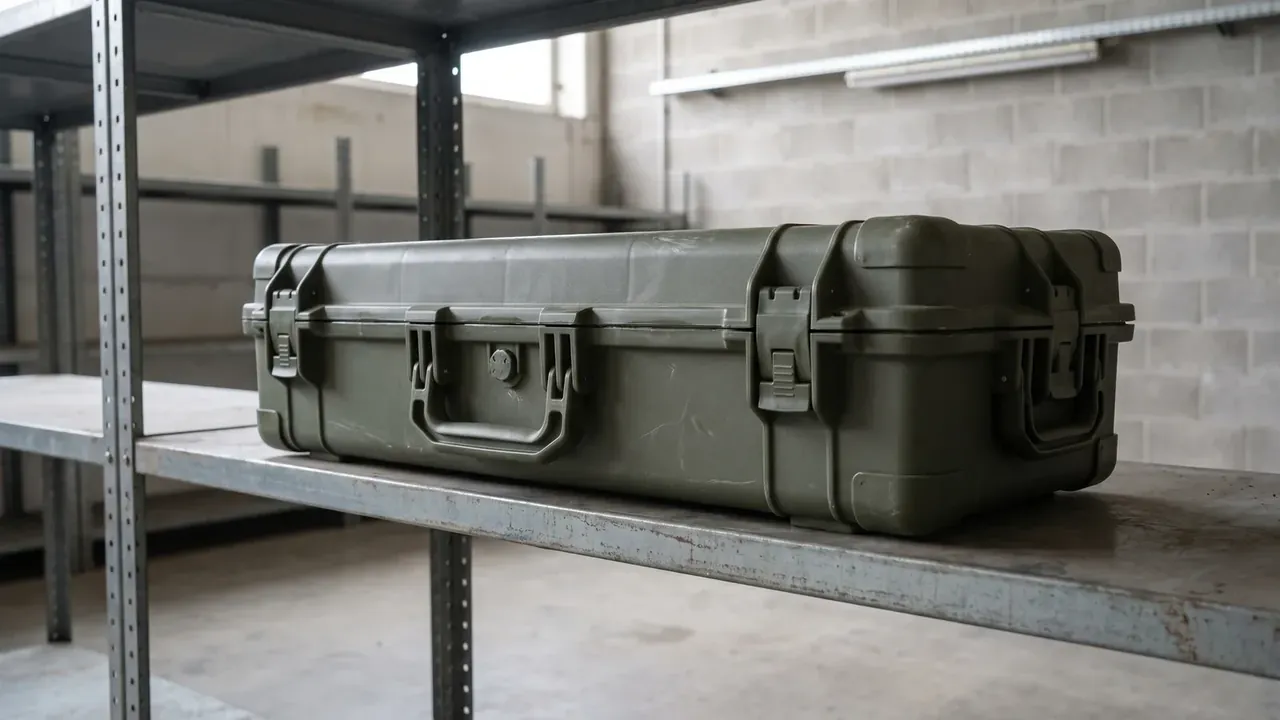
The Military/tactical medic portable kit box lines its floor and divider sides with a wipeable liner bonded at a peel strength benchmarked to 11 N/25 mm or more: a 25 mm strip is pulled at a steady 180 degrees. Liner and shell come from one batch, and the bond-face roughness is logged before laying. The surface takes a low-roughness route, leaving no fibre fuzz, no impression-edge peel and no debris in slot roots. A 70% ethanol wipe medium runs 350 cycles on the liner face only; readings cover peel strength and linting, and nothing placed in the bays is recorded.
| Wipe batch | Peel strength | File slot |
|---|---|---|
| First 70 | 11 N/25 mm or more | Baseline |
| Mid 210 | 11 N/25 mm or more | Process |
| Final 350 | 11 N/25 mm or more | Decision |
The final 350 row decides acceptance. If peel strength on the Military/tactical medic portable kit box falls below 11 N/25 mm, the bond face is checked before the slot edge; the shell is not scrapped on that reading.
3. Linting judgement after wiping cycles
After the Military/tactical medic portable kit box finishes 350 wipe cycles, three liner points are checked alongside divider sides and root slots for fuzz, edge peeling and slot debris. The mid 210 row is a process read only, and lid and floor liner are filed apart. The ring pressed by the frame carries its own impression mark, kept apart from the floor liner. All three zones must show no linting before the 350 row is marked; a doubt returns to the 11 N/25 mm line. One 350 cycle on the Military/tactical medic portable kit box yields one staged card, and the IP65 check sits on a separate list.
| Divider zone | Linting check | Pass mark |
|---|---|---|
| Long divider side | Surface fibre fuzz | Pass if none |
| Short divider side | Impression-edge peel | Pass if none |
| Root slot | Slot debris | Pass if none |
4. Divider displacement measurement after drop
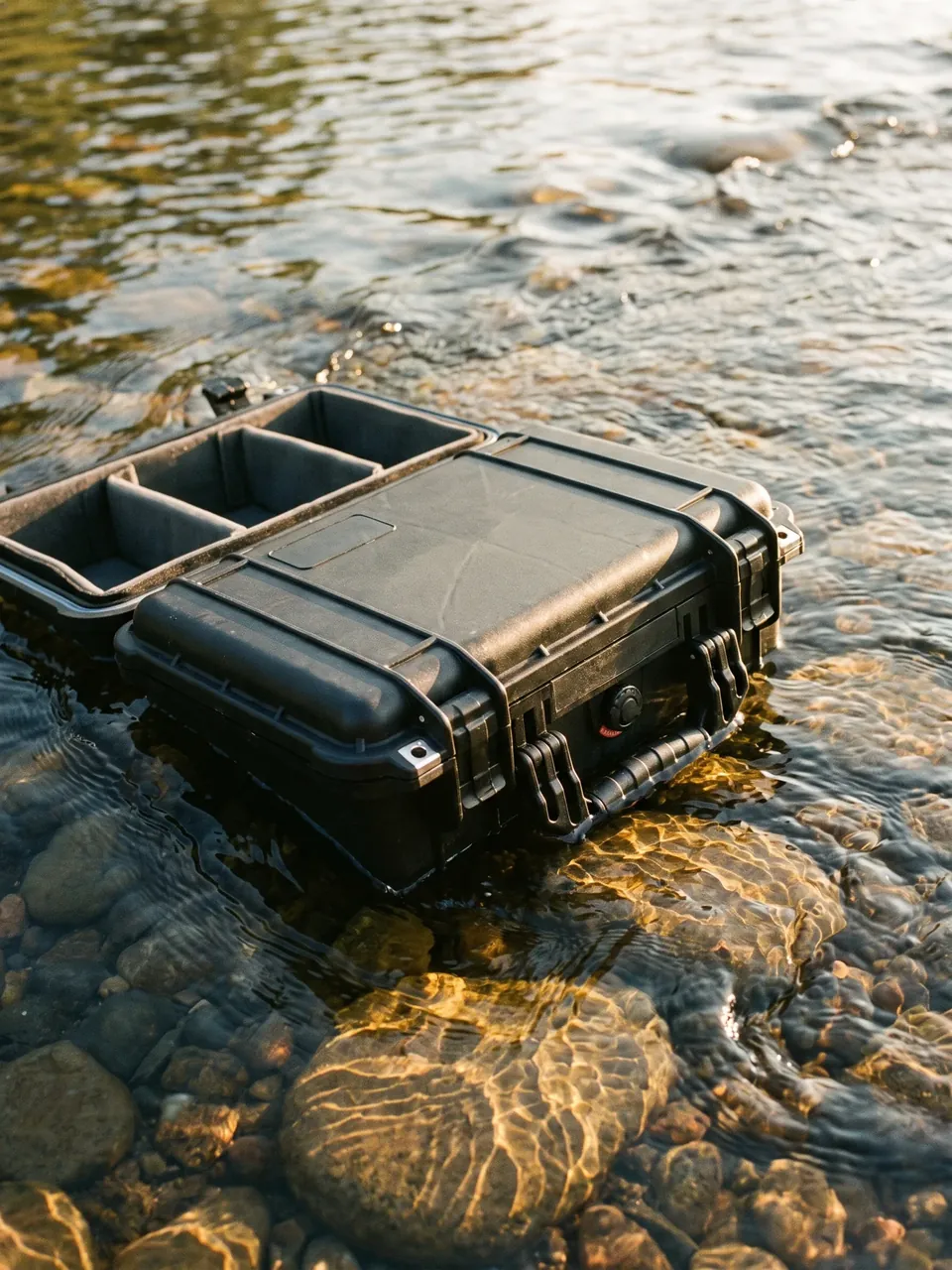
After a 1.0 m drop of the Military/tactical medic portable kit box, the 6 divider roots are checked for looseness, then a calliper reads top-edge offset against the slot datum; the pass line is 0.9 mm or less. Short-divider figures are filed apart from the long ones, the cross-joint gap is re-read before and after the drop, and the two latches at 355 N each are re-read on both sides of it.
| Shift limit | Condition | Baseline |
|---|---|---|
| 0.9 mm or less | After 1.0 m drop | Decision |
| Initial | Before drop | Baseline |
| Re-read | After 3200 cycles | Life |
The 0.9 mm row is the criterion. After 3200 open-close cycles the Military/tactical medic portable kit box stops on the rig, and re-check targets divider top edges and root slots with the same calliper. An over-limit figure is traced first to slot fit, then to frame press height, before the liner layer is questioned or any new reading is added.
5. Lid compression frame and handle load transfer
On the Military/tactical medic portable kit box the lid compression frame presses the 6 divider top edges lightly, with frame height matched to the shell stop from one tool pair. A 310 N handle pull spreads through the seat into the 3.6 mm wall on a separate path, and both values sit apart in the first-article record. The IP65 seal-face check follows the displacement re-read, and seat displacement after the 310 N pull is logged on its own card. The handle seat root is a thickened boss moulded from the same resin as the shell.
JUNZHIJIA files the Military/tactical medic portable kit box frame press height, the 310 N reading and the first article together, while 500×360×220 mm outside, 445×305×160 mm inside and the 3.6 mm wall stay as moulded. Only the liner layer and dividers are replaceable, so the size chain stays closed and the 1.0 m drop and 3200 cycles share one baseline card.
Conclusion
The Military/tactical medic portable kit box gathers four shell-side figures, peel strength of 11 N/25 mm or more, no linting through 350 wipes of 70% ethanol, divider shift within 0.9 mm after a 1.0 m drop and a 310 N handle pull, onto one sheet across liner bonding, the wipe rig, drop gauging and load transfer. JUNZHIJIA files each value by inspection method, and the post-3200-cycle re-read uses the first-article baseline, covering shell, lid, dividers and measurement items only.
Related Reading
- Field medical case shell-side specification boundaries
- Medical device transit case stacking and liner data
- Medical case wiping and surface resistance compared
- Protective case outgoing inspection checklist
Related Products
- 8 Series — Gun Cases; Military Equipment Cases; Camera Equipment Cases; Drone Cases; Watch Cases; Knife Cases; First Aid Cases; Electronics Equipment Cases
- WL8-2812 PP Gun Case — model WL8-2812
- All protective cases and toolboxes: 7 series, 158 models