

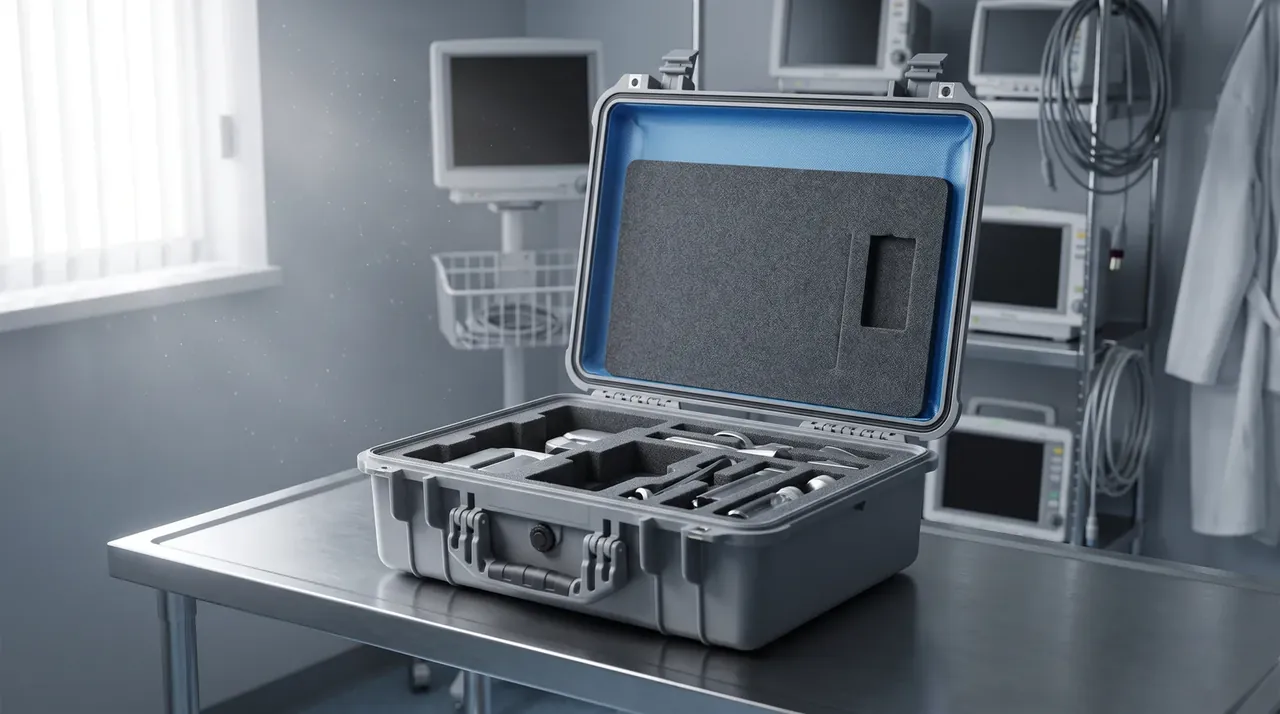
Quick answer: A mine rescue case is layered by hand, not by category: lighting within 15 s, the self-rescuer at 30 s, the first-aid pack at 45 s.
Table of contents
- Layers follow the order of the hand
- Three moves between 15 s and 30 s
- When 35 ℃ and 95% RH make gloves slip
- Where 368 J of a 1.5 m drop lands
- FAQ
1. Layers follow the order of the hand
A mine rescue case is opened on the roadway floor, lid flipped back, the operator crouched under a headlamp throwing flat white glare. Searching is the slowest thing anyone does in that posture, so the layers follow the hand rather than the category.
The outer layer carries lighting and spare cells: 2 headlamps at 12 h each and 4 spare sets, which rotate into 72 h of light. In the first half-minute after a power cut nothing matters more, so this layer has no buckle and no bag, only a hook.
The middle layer holds the oxygen self-rescuer upright under a waist clamp, and the CO meter at 0–500 ppm with its face up. One hinged flap is allowed, hung from the lid side so it never lands on the gear.
The lid opens to 100°, which puts its inner face down and its mass behind the rear edge, so a crouched operator needs no free hand.
The inner layer is the first-aid pack, one soft bag with a single tab left out. It sits furthest from the hand, so the tab is the longest in the case and a 50 mm reflective strip shows between dividers.
| Module | Quantity | Access s |
|---|---|---|
| Headlamps and spare cells | 2 units + 4 sets | 15 |
| Oxygen self-rescuer | 1 unit | 30 |
| CO meter | 1 unit | 30 |
| First-aid pack | 1 set | 45 |
2. Three moves between 15 s and 30 s
The three times on a mine rescue case were not picked: they were counted backwards from the moves. Lid open, flap lifted, bag drawn: 5 s each, with zero moves on the outer layer, one in the middle and two inside, plus the reach and the pull. That lands on 15 s, 30 s and 45 s.
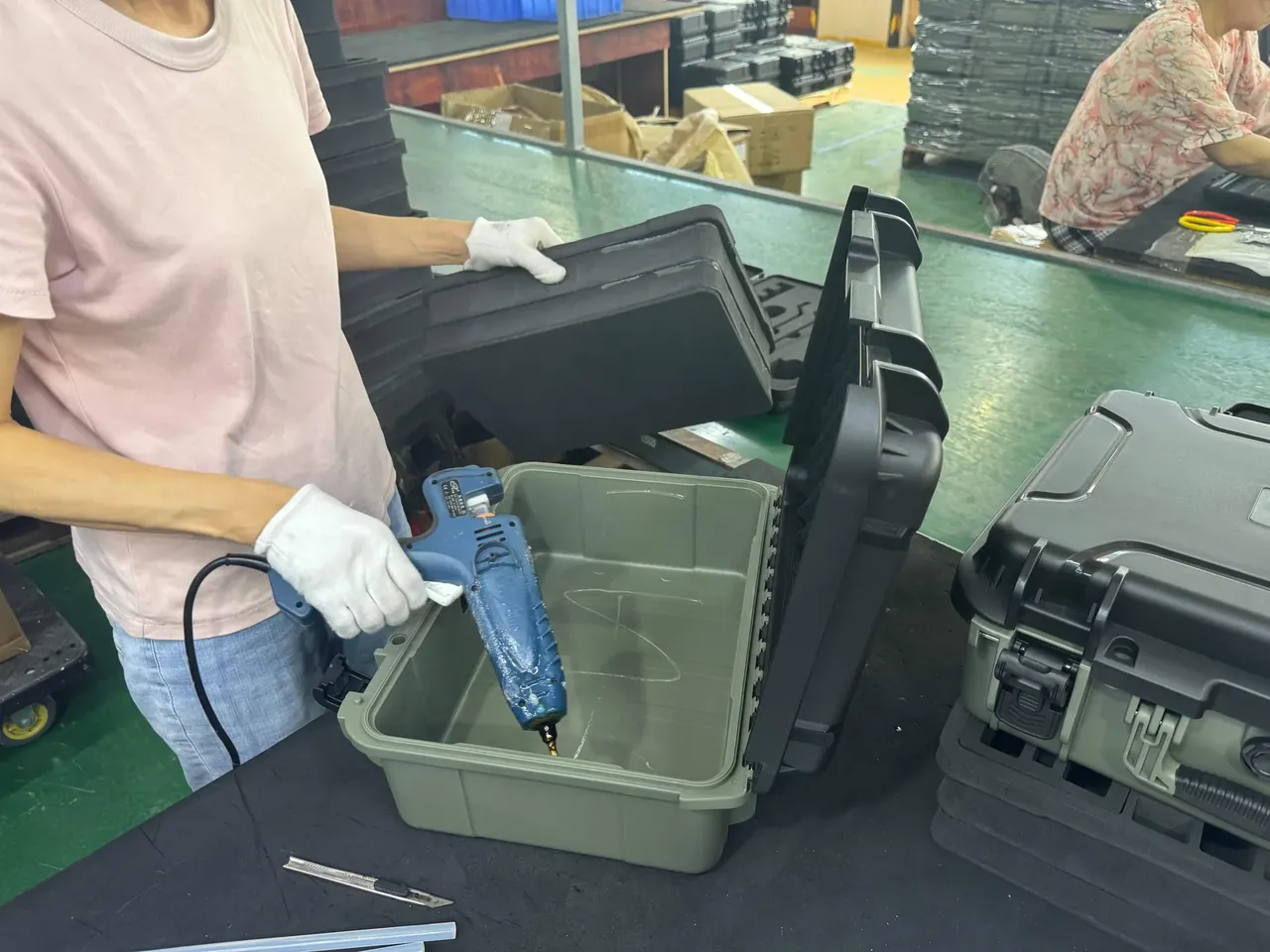
The 15 s layer is hardest because it happens in complete darkness. The lamp is the light source, so the reach cannot depend on seeing: two lamps hang left and right and either hand finds one first. Spare cells sit two to a pocket, opening outward, so a thumb slides a pair free.
The 30 s layer costs one flap and is the only one where direction matters. The self-rescuer clamp is rigid plastic with a strap over it: pinch the strap, lift 30 mm, and it releases. The CO meter works the other way, pressed down then pushed forward, so the gestures stay distinct in the dark.
The 45 s layer is not about speed. It is about not being blocked: the pack sits deepest, and the corridor clears only once the front layers are out.
| Quantity | Module | Packing |
|---|---|---|
| 2 units | Headlamps | One each side, on outer hooks |
| 4 sets | Spare cells | Two per pocket, opening outward |
| 1 unit | Oxygen self-rescuer | Upright, clamp plus strap |
| 1 set | First-aid pack | Inner soft bag, tab exposed |
3. When 35 ℃ and 95% RH make gloves slip
At 35 ℃ and 95% RH the operator sweats, water pools inside the glove and grip falls away. On a mine rescue case, what a hand finds in 12 s in a dry workshop takes 15 s underground; the extra 3 s goes into confirming the hold — found it, pinch it, drag it, do not drop it.
Humidity shows up worst the moment the lid opens. Internal air sits 2–3 ℃ below the roadway, so the first wet breath condenses on the inner rim as a film, dividers turn slick and foam takes on water. Closed-cell foam answers that: under 1% uptake, and the surface wipes dry with a cloth.
The 50 mm strip is not there to be seen: it is there to be felt. Headlamp spill lifts it a shade brighter than its surroundings and gives the hand a reference; with no light at all, it stands 2 mm proud of the divider and works as a tactile edge.
| Access s | Target module | Tactile marker |
|---|---|---|
| 15 | Headlamps and cells | Rigid hook, 50 mm strip |
| 30 | Oxygen self-rescuer | Strap raised 3 mm |
| 45 | First-aid pack | Extended tab, 20 mm proud |
4. Where 368 J of a 1.5 m drop lands
At 25 kg and 1.5 m the mine rescue case arrives with 368 J. That rules out wall thickness alone: four double-curved corners, wall section from 3 mm to 5 mm, and the load path split onto two ribs. After the drop the diagonal moves under 2 mm and the lid still closes.
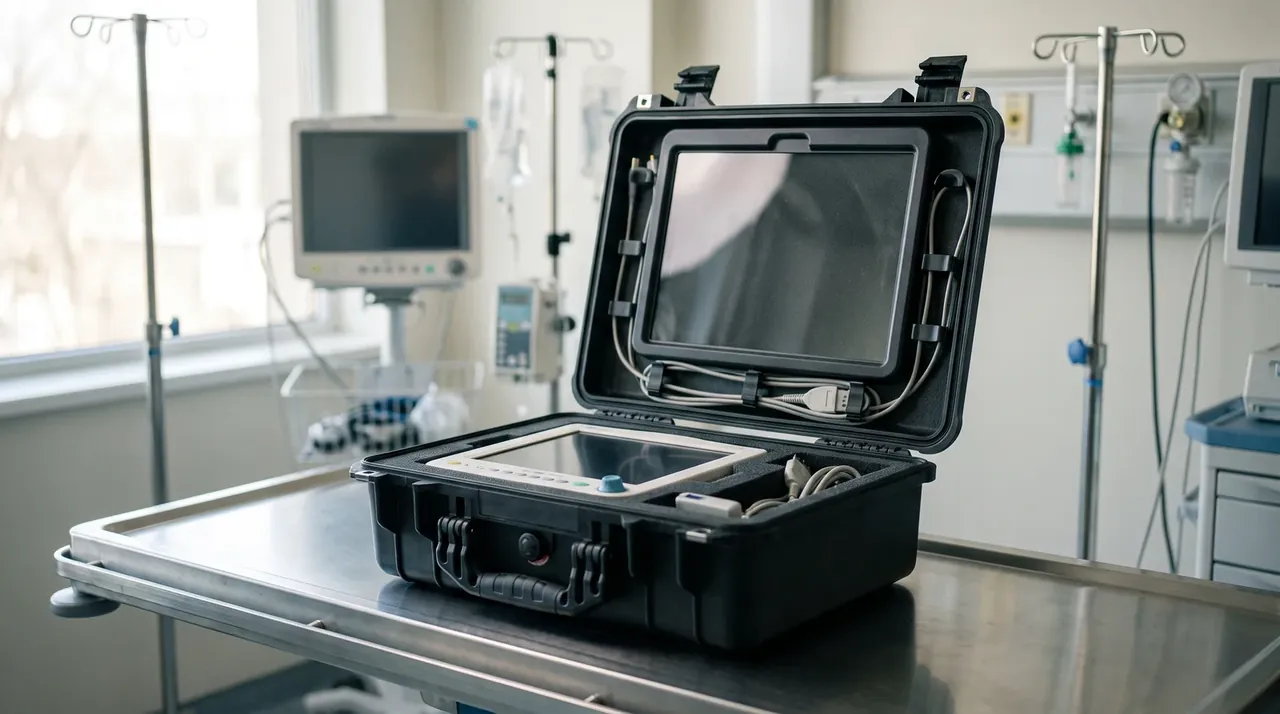
The 25 kg is also the carrying threshold. One person moves 25 kg a short distance and no more, and a roadway is usually too narrow for two people side by side, so a mine rescue case gets two handles at 380 mm above the base. Carried front and back, the centre of mass sits between the hands and the case stops pitching.
Weight also multiplies shear on the latches. Metal-core latches set 1 mm past centre do not pop on landing; the cost is 15 N more to open.
Conclusion
A mine rescue case is designed for the hand, not the inventory. Three layers in the order a glove reaches them, at 15 s, 30 s and 45 s, match zero, one and two moves. At 35 ℃ and 95% RH the glove slips, so the 50 mm strip and the 3 mm strap lip become coordinates; at 25 kg and 1.5 m the impact is 368 J, and corners and latches are sized for it. Settle those and nobody searches for a lamp.
Related Reading
- How fire rescue cases hold breaking tools
- Configuring a rescue case end to end
- Module layout in firefighting equipment cases
- Protecting heavy mine machinery in transit
Related Products
- 8 Series — Gun Cases; Military Equipment Cases; Camera Equipment Cases; Drone Cases; Watch Cases; Knife Cases; First Aid Cases; Electronics Equipment Cases
- WL8-2812 PP Gun Case — model WL8-2812
- All protective cases and toolboxes: 7 series, 158 models