


Quick answer: A missile box runs on three clocks — 15 days for sealing faces and the relief valve, 90 days for foam and desiccant, 360 days for air tightness and stack load. Each clock carries one number that decides replacement, so the next shift does not re-invent the judgement.
Table of contents
- Inspection Tiers for a Missile Box
- Cleaning Sealing Faces and Pressure Valves
- Foam Compression Set and the Replacement Line
- Latch and Hinge Fatigue Counting
- Desiccant Regeneration and Life Extension Records
- FAQ
1. Inspection Tiers for a Missile Box
The interval follows the failure, not the calendar. A gasket degrades in weeks once humidity reaches the groove, foam takes a season to lose its set, and a rotomoulded shell chalks under UV over years. Three clocks on one page: 15 days, 90 days, 360 days, each faster than the failure it watches.
The store overrides the chart. Where the daily swing passes 20 °C, the sealing check on a missile box drops from 15 days to 7; at a coastal depot rated to 480 hours of salt spray, hinges join the monthly round.
Four columns are enough: interval, part, criterion. The criterion must be a number; feels gritty reads differently on the next shift.
| Interval | Part | Criterion |
|---|---|---|
| 15 days | Sealing face, valve port | Bubbles, or salt at the port |
| 90 days | Foam, desiccant | Foam below 27 mm |
| 360 days | Air tightness, stack load | Over 8% drop in 5 min |
Keep the decay curve instead of a tick: 20 kPa falling to 18.2 kPa in 5 minutes is healthy, 15 kPa means a channel across the sealing face.
2. Cleaning Sealing Faces and Pressure Valves
Cleaning protects groove geometry, not gloss. The groove is 4.5 mm deep and the land 12 mm wide, and one grain of sand at the bottom can halve contact stress. Use a pH 7 cleaner at 40 °C, brush along the groove, rinse, and let the case stand 4 hours.
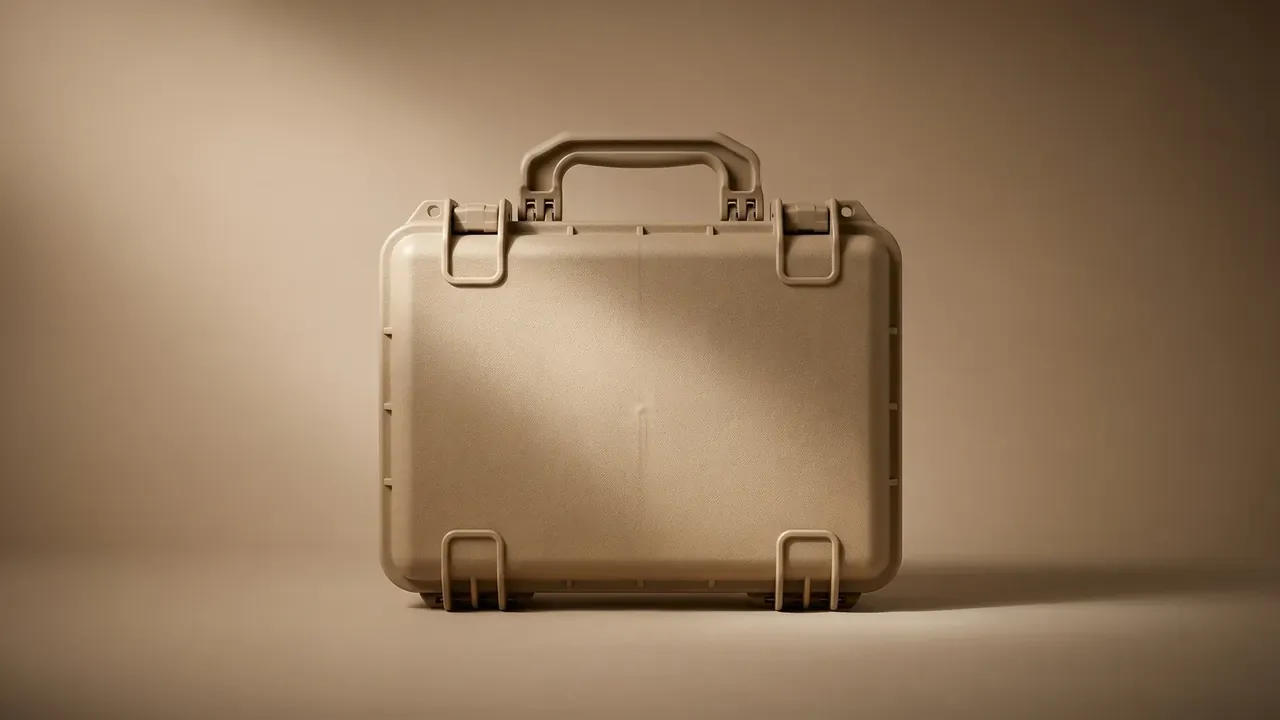
Solvents are out. Acetone swells the HDPE skin by 0.3 mm, then seeps on the second closure. Salt bloom comes off with 5% citric acid dabbed on for 2 minutes at most.
The valve must pass air at 35 kPa and reseat within 3 seconds of release.
| Part | Usual soil | Cleaning |
|---|---|---|
| Seal groove | Sand, old grease | Soft brush, neutral cleaner |
| Valve disc | Salt, oil film | 5% citric acid dab |
The disc is a calendar part on any missile box, swapped at 24 months whatever it looks like. Rubber in a -40 °C to 60 °C cycle gains 12 points of hardness and returns in over 5 seconds.
3. Foam Compression Set and the Replacement Line
Foam fails by thinning, not tearing. A 30 mm EVA block in a missile box, under 102 kg in a 40 °C store, typically measures 27.6 mm once the lid opens, a compression set near 12%.
Three limits run in parallel: residual thickness below 27 mm, local crush past 2 mm, block offset beyond 3 mm. The first two describe cushioning, the third describes location: a shifted block pushes load into one corner. Replace the whole block, never patch a corner: a glued offcut lifts peak acceleration from 45 g to 60 g.
4. Latch and Hinge Fatigue Counting
A latch is a fatigue part, counted in closures rather than years. Draw latches lose about 18% of preload after 6000 closures — 2.7 years at 6 openings a day, 7 months at 30. Two posts using the same missile box can differ 4x in interval.
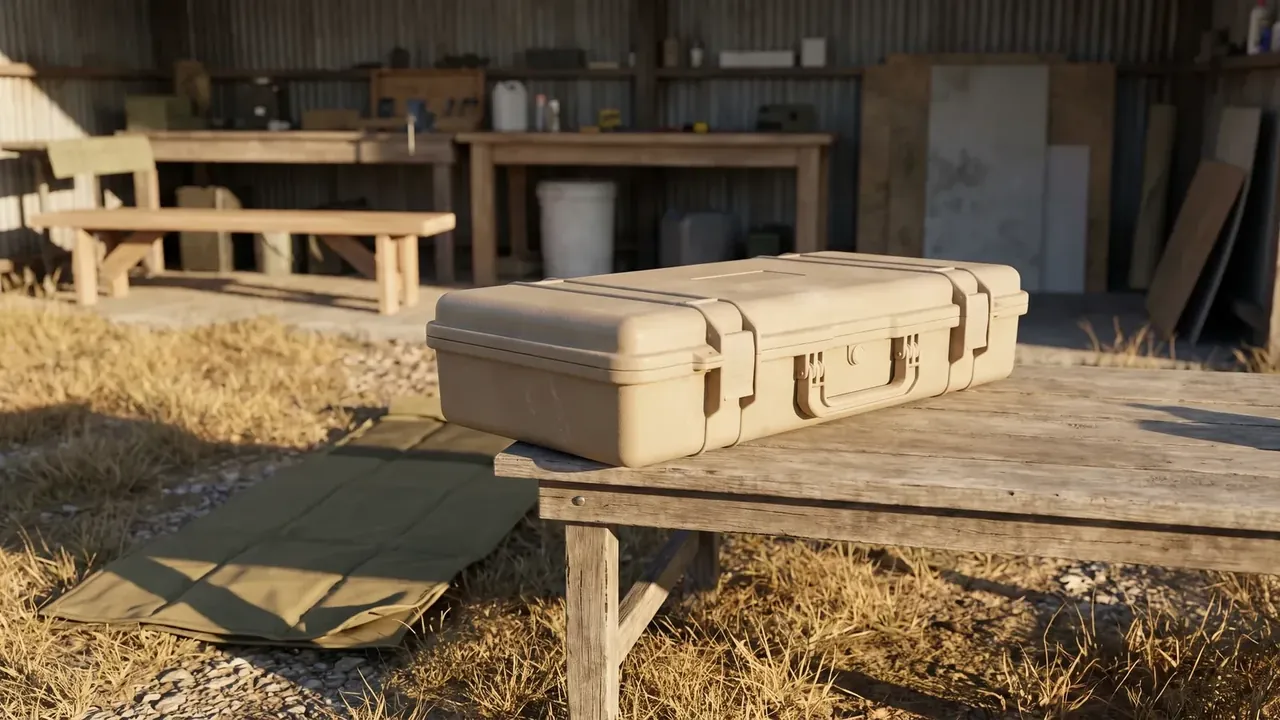
Judge a missile box latch by free play and torque. Push the latch body after closing: past 0.8 mm of travel the preload is gone. Hinge bolts re-torque to 6 N·m, and past 8 N·m the brass insert cracks.
| Part | Count basis | Criterion | Action |
|---|---|---|---|
| Draw latch | 6000 closures | Free play over 0.8 mm | Replace as a pair |
| Hinge pin | 36 months | Gap over 0.15 mm | New pin and bush |
Silicone grease, not engine oil. Oil stiffens at -40 °C and lifts hinge torque from 2 N·m to 6 N·m, so a winter lid takes two people.
5. Desiccant Regeneration and Life Extension Records
Half of life extension is humidity. Each missile box carries 800 g of silica gel, sized to hold the cavity under 45% RH. The gel nears saturation at a 32% weight gain, where 2 hours at 120 °C restores it; after 8 cycles capacity falls 15%, so the 9th charge is new stock.
Records follow the box number, not the batch: one card per missile box listing last inspection date, decay value and desiccant weight.
This routine moves service life from 8 years to 12, at 18 minutes of inspection per case per year and 2 planned stoppages.
Conclusion
What makes maintenance stick is numbers a storekeeper can read: 27 mm of foam, 0.8 mm of free play, a 32% weight gain, a 24-month disc. Set the clocks by failure speed, keep the card with the box number, and a missile box usually moves from 8 years to 12.
This article discusses only the container (case body) side of specifications and design intent, and does not cover any handling, loading or use of the contents.
Related Reading
- Matching cavity size to cushioning layout
- Derusting metal shells and swapping seals
- Securing and monitoring a case in long transit
Related Products
- 8 Series — Gun Cases; Military Equipment Cases; Camera Equipment Cases; Drone Cases; Watch Cases; Knife Cases; First Aid Cases; Electronics Equipment Cases
- WL8-2812 PP Gun Case — model WL8-2812
- All protective cases and toolboxes: 7 series, 158 models