

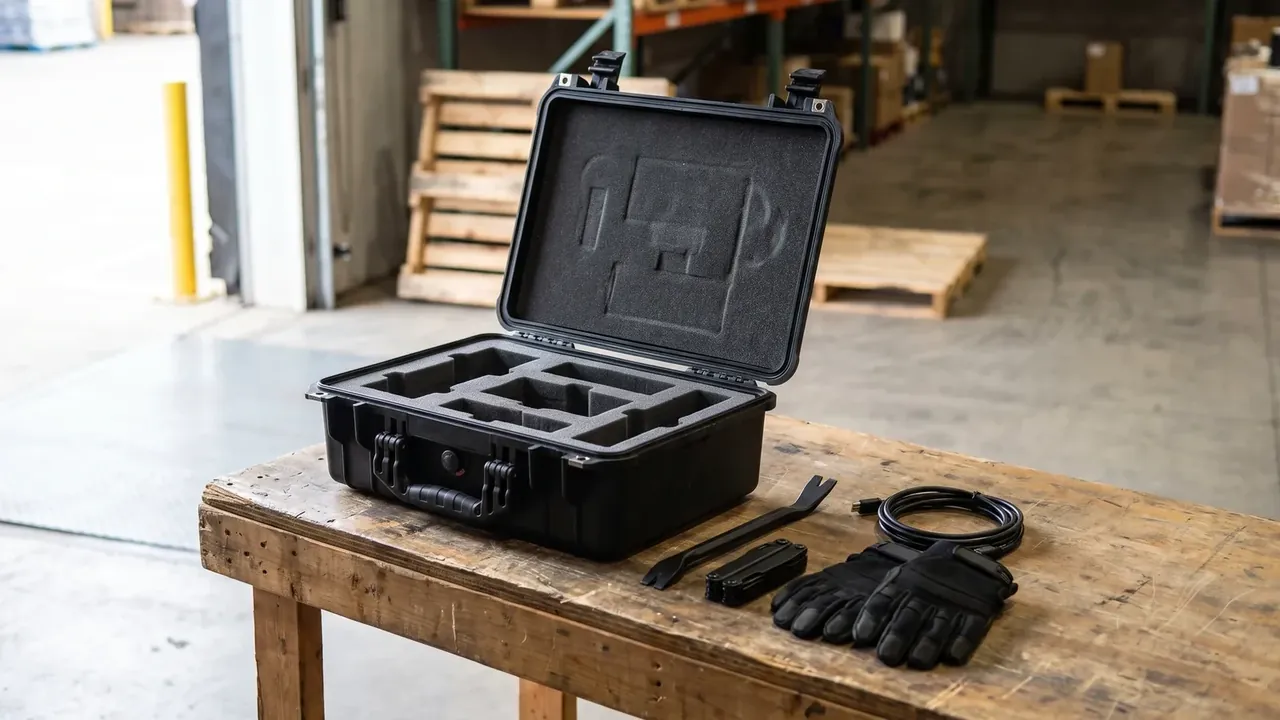
Quick answer: Two cases quoted 15% to 18% apart usually look identical. Five field readings, taken in 20 minutes, show which cost block was cut.
Table of contents
- Where the Money Sits in a Missile Warhead Container
- Five Field Tests That Separate Good From Cheap
- Wall Uniformity Decides Year-Three Sealing
- Three Acceptance Moves for Latches and Valve
- What to Inspect First When the Quote Is 15% Lower
- FAQ
1. Where the Money Sits in a Missile Warhead Container
A missile warhead container priced at 1580 divides into 4 blocks: shell 42%, hardware and sealing 18%, foam 16%, inspection and freight 14%, with 10% for overhead. Cheap cases cut hardware and inspection, the two blocks buyers read least.
The shell resists cutting: a 1420 mm by 560 mm by 520 mm cavity at 8.5 mm wall weighs 46 kg empty, so powder and machine time are fixed. The spread sits in latch grade, valve count, and pre-shipment leak testing.
| Block | Share | Cheap version | Cost later |
|---|---|---|---|
| Shell | 42% | Wall at 7.2 mm | Corner crack, 380 |
| Hardware | 18% | Zinc-plated latch | Rust at 96 hours, 96 |
| Foam | 16% | EVA at 45 kg/m³ | 30% set, 1200 |
| Inspection | 14% | 10% sampling | Batch rework |
2. Five Field Tests That Separate Good From Cheap
A missile warhead container inspection should not stop at appearance. Five readings take 20 minutes with a tape, an ultrasonic gauge, a feeler gauge, a torque wrench and a 0.6 class pressure gauge.
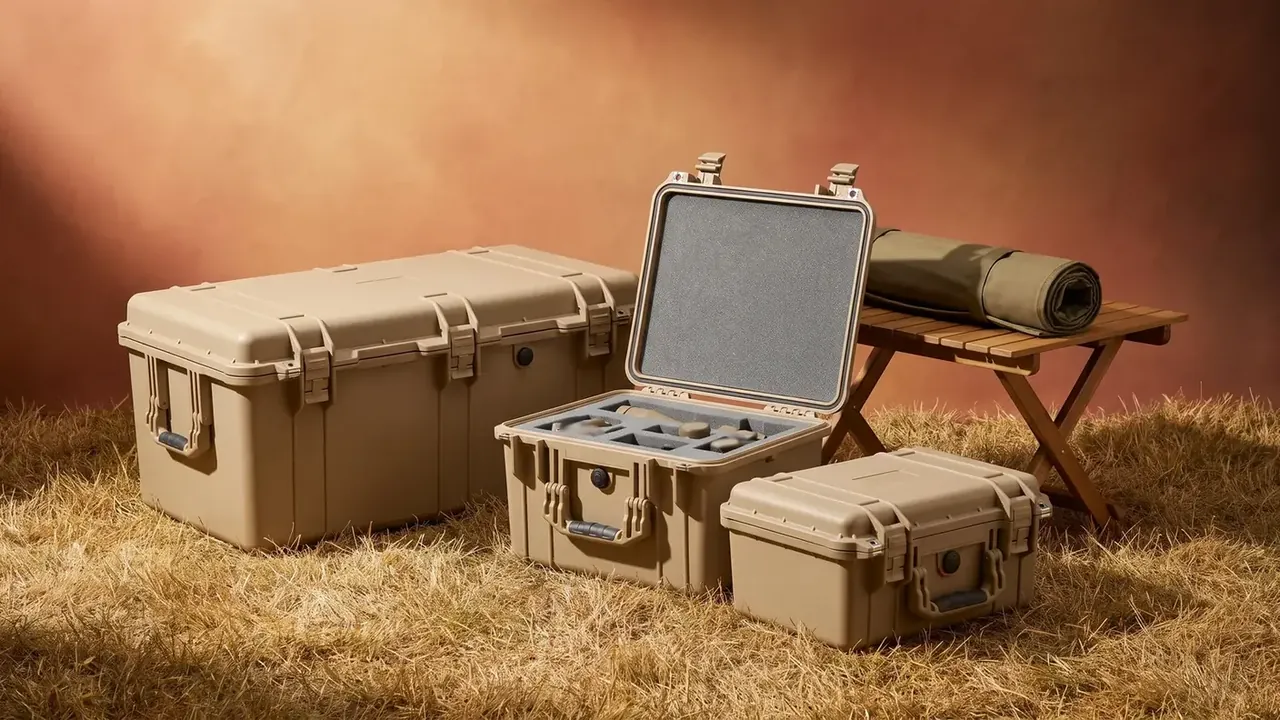
Diagonal spread first: over a 1420 mm by 560 mm cavity the diagonals should differ by 3 mm or less, and 5 mm means uneven cooling that tilts the lid. Then a 12-point range within 0.8 mm, 2.5 mm flatness, 180 to 220 N latch load, and 0.5 bar held 90 seconds.
| Test | Tool | Pass line |
|---|---|---|
| Diagonal spread | Tape | 3 mm or less |
| 12-point wall range | Ultrasonic | 0.8 mm |
| Lid flatness | Feeler gauge | 2.5 mm |
| Latch load | Torque wrench | 180 to 220 N |
| Valve hold | Pressure gauge | 0.02 bar in 90 s |
3. Wall Uniformity Decides Year-Three Sealing
On a missile warhead container, thicker is not better; even is. An 8.5 mm nominal says the average, while the 12-point range says whether mould temperature is controlled.
One 20-unit batch read 6 points at 8.3 to 8.7 mm, 4 at 7.9 to 8.2 mm and 2 corners at 7.2 mm, a 1.5 mm range. Between -40 °C and 60 °C that corner moves 0.3 mm more than the flats, and a gasket held at 25% compression slowly loses rebound.
| Point | Nominal | Cheap batch | Controlled |
|---|---|---|---|
| Base centre | 8.5 mm | 8.6 mm | 8.5 mm |
| Bottom corner | 8.5 mm | 7.2 mm | 8.1 mm |
| 12-point range | 0.8 mm | 1.5 mm | 0.6 mm |
A batch held to 0.6 mm showed 12% compression set against 22% for the first, and those 10 points decide whether the case seals at year 3. Write it in: corners never below 85% of nominal.
4. Three Acceptance Moves for Latches and Valve
A missile warhead container acceptance routine has to be doable on the dock and signable on the spot. Three moves cover force, cold feel and corrosion.
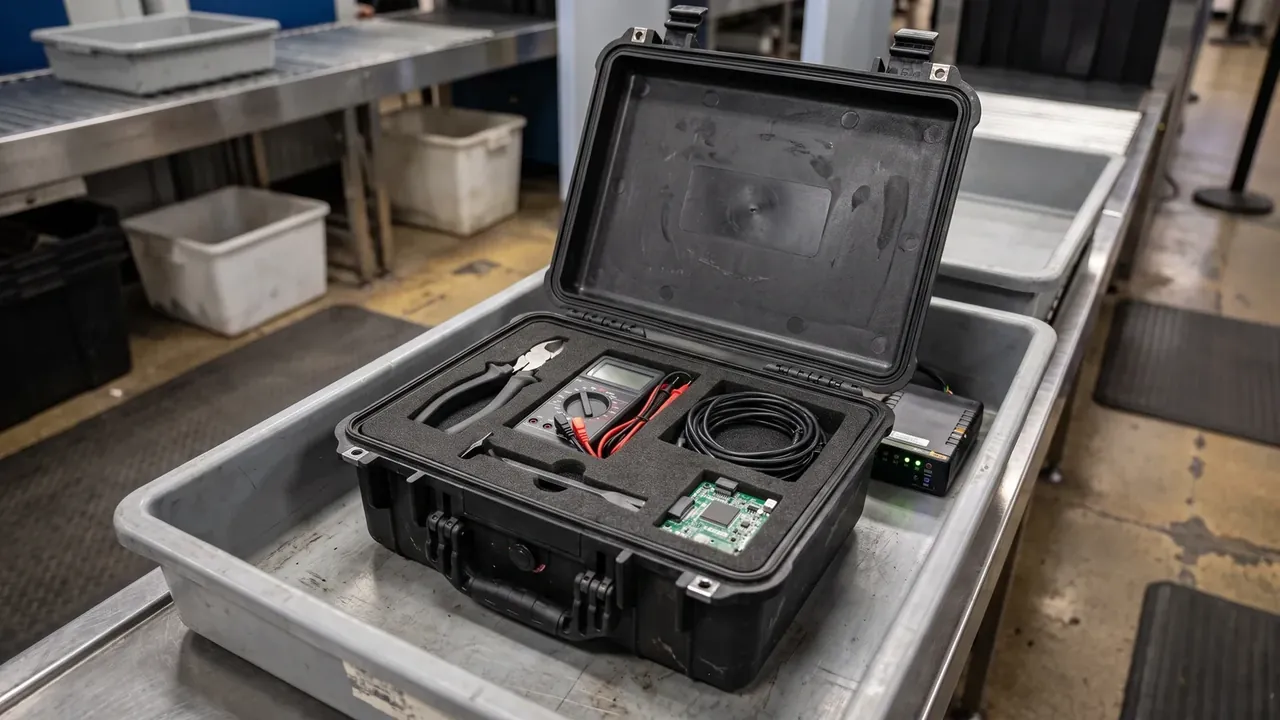
Torque first: 4 latches should each read 180 to 220 N, since under 180 N pops open after a 3-hour vibration run and over 240 N over-compresses the gasket. Cold second: 4 hours at -40 °C, then one open and close inside 30 seconds without binding.
Salt spray third: 480 hours, discoloration tolerated but no rust or pitting on a 304 tongue, where zinc-plated carbon rusts at 96 hours. Then the valve through one -40 °C to 60 °C cycle, reading repeated.
5. What to Inspect First When the Quote Is 15% Lower
When two missile warhead container quotes sit 15% apart, check the latch and the foam first. A 304 latch swapped for zinc-plated carbon saves 24 per unit, 96 across 4, or 6% of 1580.
Foam from 60 kg/m³ to 45 kg/m³ saves 38, or 2.4%. Add 10% sampling and board packing, and 15% is accounted for.
| Item | Supplier A | Supplier B | Gap |
|---|---|---|---|
| Unit price | 1580 | 1343 | Below |
| Latch | 304 stainless | Zinc-plated carbon | 96 |
| Foam | 60 kg/m³ | 45 kg/m³ | 38 |
| Leak test | 100% | 10% sampling | 21 |
| Packing | Wood crate | Board | 42 |
The right call is lifetime cost: over 5 years with 12 openings a year, the cheap case spends about 260 a year on a latch set and a liner rebuild, the dearer one 180 on gaskets.
Conclusion
Choosing a missile warhead container means turning a 15% gap into 5 measurable numbers: 3 mm diagonal spread, 0.8 mm wall range, 2.5 mm flatness, 180 to 220 N latch load, 0.02 bar drop in 90 seconds. On the line the cheaper case is a fair buy; off the line the saving returns as rework in year 2.
This article discusses only the container (case body) side of specifications and design intent, and does not cover any handling, loading or use of the contents.
Related Reading
- How the shell is actually rotomolded
- Working from payload to cavity and load rating
- Storage scenarios compared side by side
- Where long-case inspections differ
Related Products
- 8 Series — Gun Cases; Military Equipment Cases; Camera Equipment Cases; Drone Cases; Watch Cases; Knife Cases; First Aid Cases; Electronics Equipment Cases
- WL8-2812 PP Gun Case — model WL8-2812
- All protective cases and toolboxes: 7 series, 158 models