

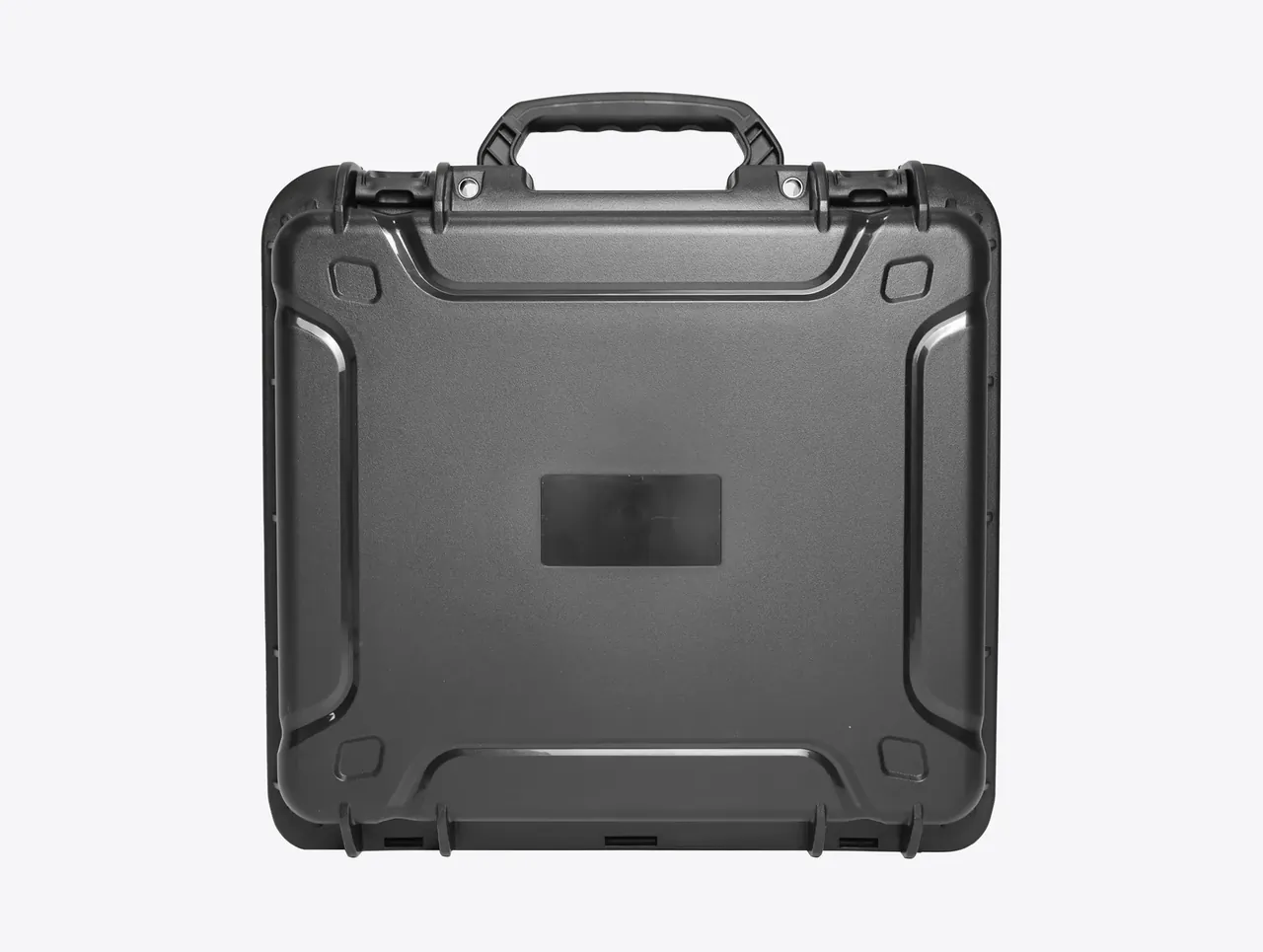
Quick answer: Read a missile warhead container datasheet for five figures: internal size, wall with ribs, seal type and rating, stack load, valve and lock points. Outer dimensions only say whether it fits in a vehicle; internal size says whether the item fits.
Table of contents
- The five figures a missile warhead container datasheet must give
- Dimensions: where outer and inner figures differ
- Wall and weight: what 4.2 mm proves
- Ingress rating: IP67 is not double sealing
- Temperature, stacking and cushioning
- FAQ
1. The five figures a missile warhead container datasheet must give
Datasheets print outer size and single-box load, which only answer whether the box fits. Five others decide daily use: internal size, wall with rib layout, seal type and rating, load on the bottom tier, and valve and lock points.
| Item | Usual wording | What to ask |
|---|---|---|
| Internal size | length, width, depth | is depth net of the rim |
| Wall | one figure | average or thinnest point |
| Rating | IP67 | depth and duration tested |
| Stack load | per box | tiers allowed, for how long |
| Locking | latch count | keepers on bosses |
2. Dimensions: where outer and inner figures differ
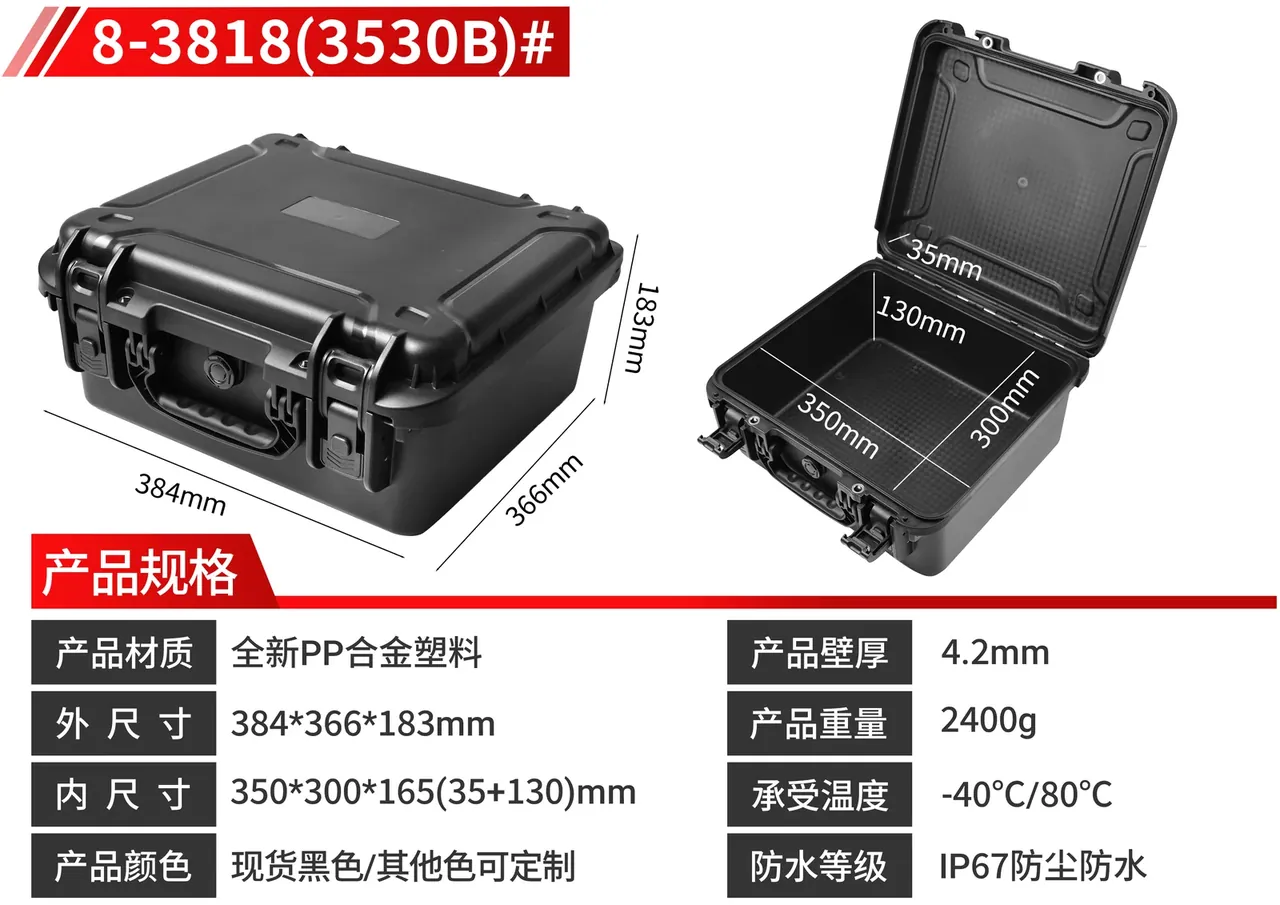
A worked example: outer 384 by 366 by 183 millimetres, inner 350 by 300 by 165. Length differs by 34, width by 66, height by 18 — close to twice the wall, so lid and base carry no extra structure.
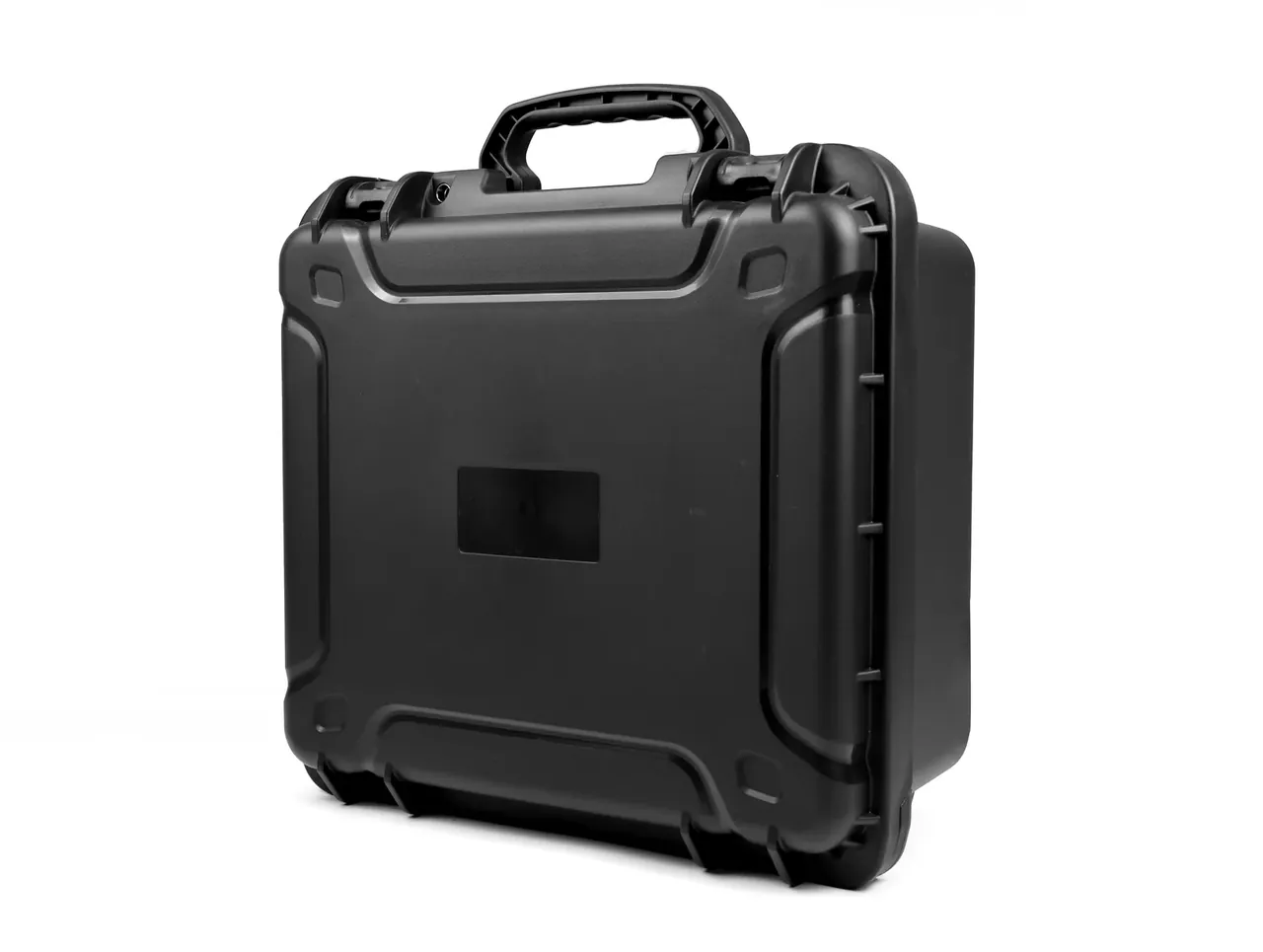
Internal depth splits into 35 in the lid and 130 in the base. Usable height is 165 minus the foam above and below: 30 millimetres each leaves 105.
Keep the gap to five to ten millimetres: less and it will not come out, more and the foam must be thicker.
3. Wall and weight: what 4.2 mm proves
The example lists a 4.2 millimetre wall and 2400 grams, which check each other. Outer area is about 0.55 square metres, so weight over area is 4.3 kilograms per square metre; polypropylene at 0.9 density gives 3.8. The gap is local thickening at ribs, hinges and bosses.
That spots a padded claim: 6 millimetres at 3 kilograms means material never went into the wall; 3 at 6 means it sits in filler.
Thickness is not the goal. At 4.2 millimetres this is a mid-range rotomoulded wall; stiffness comes from ribs — outer main ribs, a lid ring rib, skids underneath — closing a loop so bending becomes frame action.
4. Ingress rating: IP67 is not double sealing
IP67 is two digits: 6 for dust-tight, 7 for short immersion without ingress, usually one metre of static water for thirty minutes. It describes a result, not a structure; a passing box may use one thick ring or two in series.
Double sealing is the structural means: a main ring in the lid groove plus a secondary groove inboard that slows ingress when the first fails and stops that ring being drawn out by negative pressure. In series, failure rates multiply.
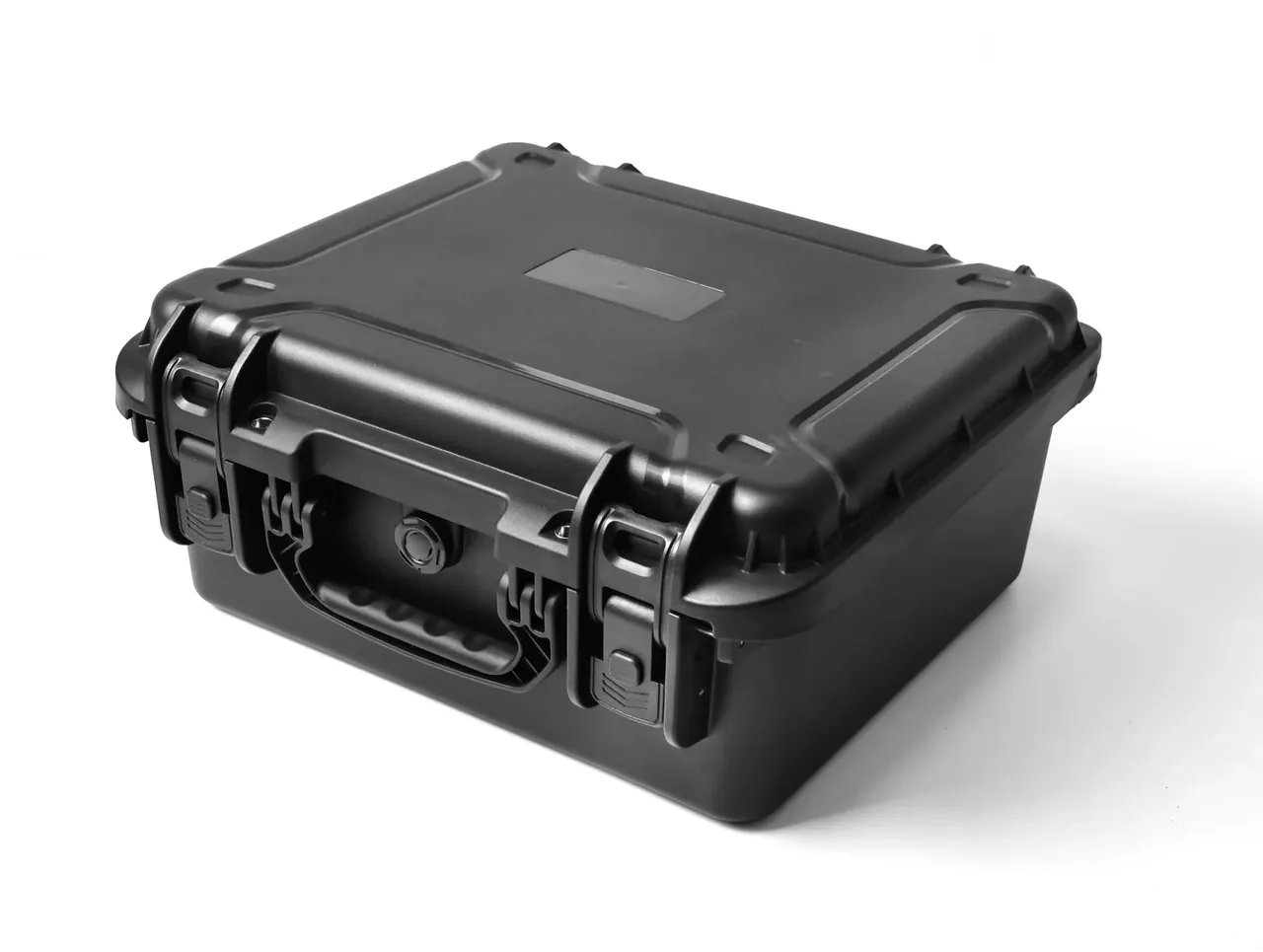
Never verify sealing from a certificate. Clamp a paper strip under the lid and pull it around; a span that slides out is short of compression. Then check the valve seat.
5. Temperature, stacking and cushioning
The example states minus 40 to plus 80 Celsius, where the material neither softens nor deforms — not an impact range. Polypropylene loses impact strength below minus 20, so cold-drop performance depends on grade and wall.
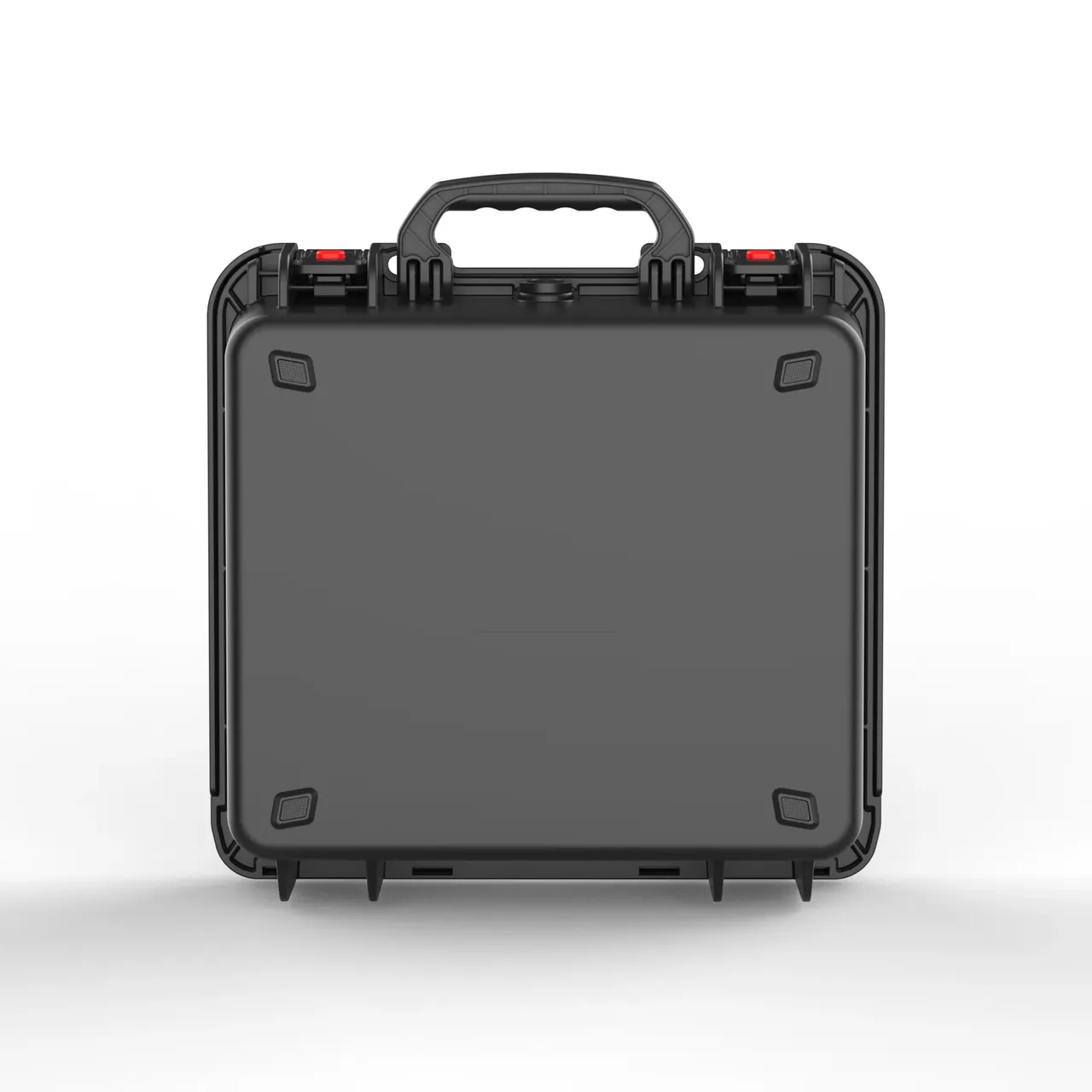
Stacking is calculated at the bottom tier: a 50 kilogram single-box rating over three tiers puts over 100 kilograms on the base. Put tiers, duration and temperature into the requirement.
Thicker foam softens shock but shrinks volume and adds weight, and a heavier box carries more impact energy; fix net volume first.
Conclusion
A missile warhead container datasheet is worth little as numbers and a lot when each matches a test condition: size against net height, wall against weight per square metre, rating against groove and valve.
This article covers container-side specifications and design implications only, not the handling, loading or use of the contents.
Related Reading
- Rotomolded Cases: Rotational-Moulded Shell Structure & Pro…
- What a pressure equalisation valve does
- Seal materials and ageing
- Stacking and securing transport packaging
Related Products
- 8 Series — Gun Cases; Military Equipment Cases; Camera Equipment Cases; Drone Cases; Watch Cases; Knife Cases; First Aid Cases; Electronics Equipment Cases
- WL8-2812 PP Gun Case — model WL8-2812
- All protective cases and toolboxes: 7 series, 158 models