

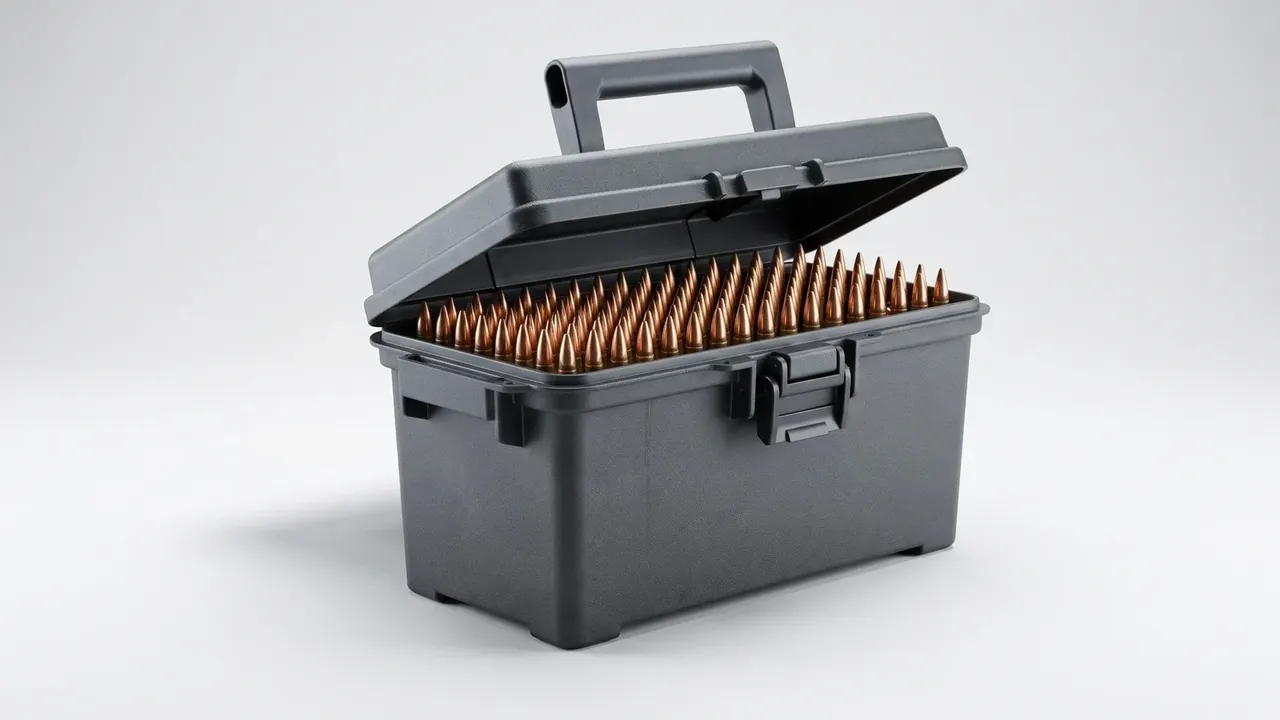
Quick answer: Acceptance is not a folder of certificates; it is three layers of criteria turned into five measurements. This page gives the tool, tolerance and limit for each, plus where rework, concession and rejection divide.
Table of contents
- Three Layers of Acceptance Criteria for a Missile Warhead Container
- Five Field Measurements and the Tools Behind Them
- Pressure Decay and Rain: Reading the Numbers
- Three Routes for Non-Conforming Units
- Sampling Ratios and the Release Sheet
- FAQ
1. Three Layers of Acceptance Criteria for a Missile Warhead Container
In September 2025 a lot of 60 units arrived with complete paperwork and pass written against pressure decay. Retesting found four at 0.31 kPa. The contract annex said 0.25 kPa and the cited standard 0.3 kPa; for a missile warhead container the contract wins, so those four were rejected.
Each layer does one job: the contract carries numbers, the standard methods, the shop procedure actions.
| Layer | What it governs | Which wins in a conflict |
|---|---|---|
| Contract annex | Cavity, wall, decay, sampling figures | Wins; copied onto the sheet |
| Standards | Test method, tool tolerance, environment | Method yes, figure no |
| Shop procedure | Who measures, point count, who signs | Never weaker than both |
The clause most often missing is the point count: four or twelve on one seal face can flip the verdict.
Cite standards with a year; a bare number drifts to a new edition in 3 years while the sheet quotes the old figure.
2. Five Field Measurements and the Tools Behind Them
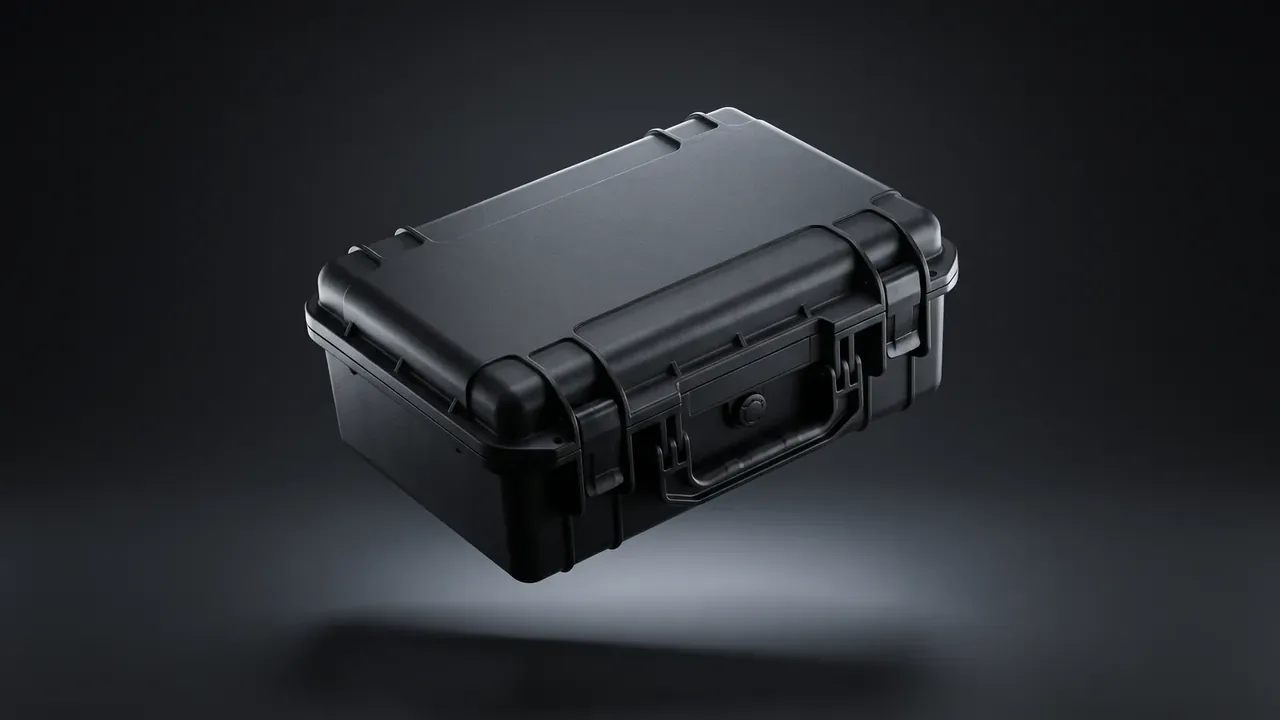
On a missile warhead container nothing comes out on arrival day: external checks first, then the lid for seal and load work, 22 minutes per unit with two people.
| Item | Tool | Tolerance | Limit |
|---|---|---|---|
| Cavity size | Tape and inside micrometer | 0.5 mm | 1080 x 450 x 390 mm, 3 points per axis |
| Wall thickness | Ultrasonic gauge | 0.01 mm | 5.8 mm nominal, 9-point minimum 5.3 mm |
| Seal flatness | Straight edge and feeler | 0.02 mm | Within 0.15 mm |
| Load test | Weights on a jig | 1 kg | 42 kg for 24 hours, sag under 1.2 mm |
| Latch torque | Torque wrench | 0.1 N·m | 4.2 N·m on 5 units |
Nine wall points: three on the base, one per side wall, two on the lid. A minimum at a base corner is normal; one mid-lid is a mould question, not a handling one.
Every gauge needs a calibration certificate that day, and the ultrasonic unit one check on a reference block; drift beyond 0.02 mm means swap it.
Measure all three axes. An insert that eats 10 mm of a 390 mm depth will foul the lid long before the tape shows a problem.
3. Pressure Decay and Rain: Reading the Numbers
The decay test on a missile warhead container holds 20 kPa for 5 minutes and allows no more than 0.25 kPa of loss. Read at 30 seconds to cancel thermal equalisation, then at 5 minutes.
Rain runs 30 minutes at a 30-degree angle and 100 litres per square metre per hour; moisture in the liner fails the unit, standing water is not the criterion.
Two cycles from -40°C to +71°C with 4 hours of soak come next, then a repeat decay test. Damp heat runs 48 hours at 95% humidity, judged within 2 hours of removal.
Decay is the easiest result to fake: two consecutive failures reject the unit, and no best-of-three.
Record readings on the spot; gauges resolve 0.01 kPa, and a line saying only pass cannot be traced later.
4. Three Routes for Non-Conforming Units
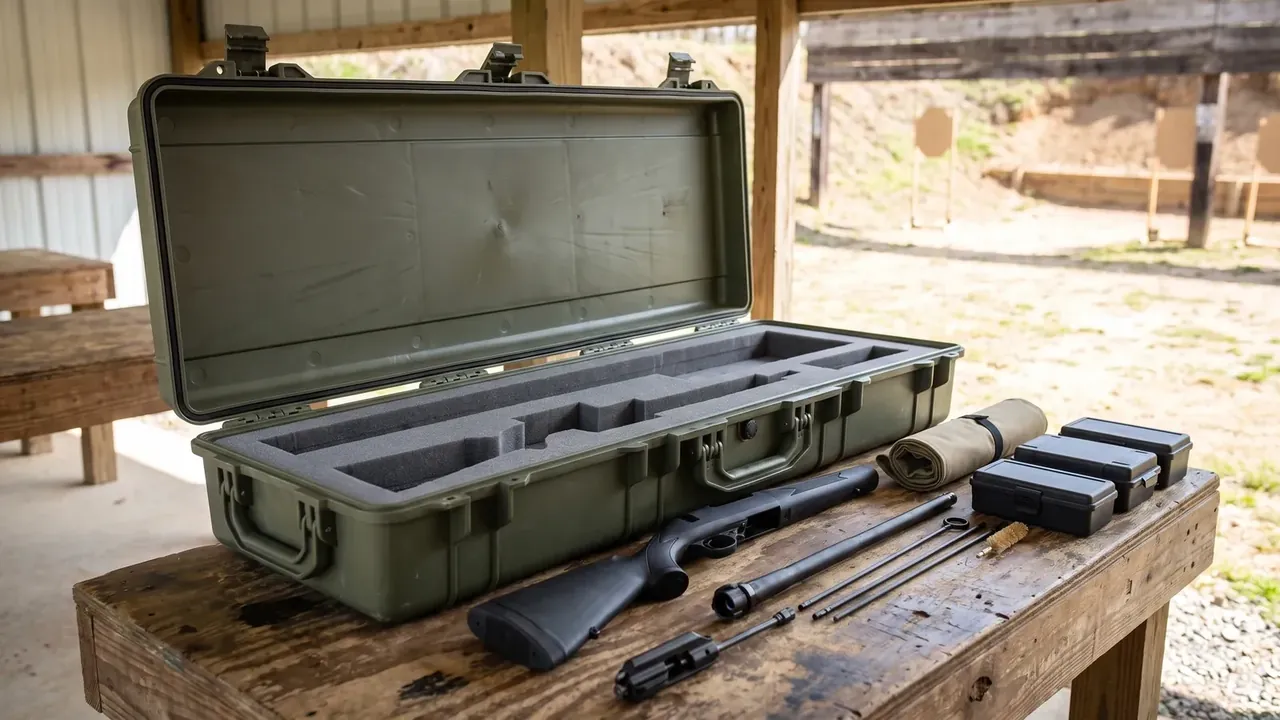
A failed missile warhead container takes one of three routes: rework, concession or rejection, chosen by which item failed rather than by the invoice.
| Defect | Class | Route | Re-verification |
|---|---|---|---|
| Decay above 0.25 kPa | Critical | Reject, hold the lot | Not allowed |
| Wall below 5.3 mm | Critical | Reject | Not allowed |
| Flatness 0.15 to 0.25 mm | Major | Grind and re-check | Double sampling |
| Paint scuff, label offset | Minor | Concession, lower grade | Waived |
Critical items carry no tolerance. Concession is open only to minor items and needs three signatures: purchasing, quality and the user.
Units on concession are stored apart and re-marked in another colour. Reworked units are re-verified at double sampling; one failure inside that sample rejects the lot, with no third attempt.
5. Sampling Ratios and the Release Sheet
Sampling for a missile warhead container follows the lot: 50 or fewer take 10%, at least 5 units; 51 to 200 take 8 plus 3 first articles in full; above 200, 5% and 1 unit cut open for wall and weld sections.
That sectioned unit is kept 24 months. If a dispute surfaces 3 years later, the cut face is the only proof of wall thickness.
The release sheet for a missile warhead container carries five signatures: size, wall, decay, rain, marking. A missing one keeps the lot out of the warehouse, and the sheet travels with the batch.
Dropping from 10% to 5% saves 4200 CNY of inspection per lot, while one missed critical defect costs more than 36,000 CNY in freight and re-testing.
Conclusion
What settles acceptance is not the weight of the folder but whether five actions repeat on the spot: measure the cavity, gauge the wall, check flatness, load it, read the decay. Contract figures on the sheet, points and tools in the procedure, zero tolerance for critical items in the disposition clause, and the arrival decision on a missile warhead container stops depending on who argues loudest.
This article discusses only the container (case body) side of specifications and design intent, and does not cover any handling, loading or use of the contents.
Related Reading
- What each of the six structural layers blocks
- Filing acceptance records for munitions shipping cases
- Test list for explosive article cases
Related Products
- 8 Series — Gun Cases; Military Equipment Cases; Camera Equipment Cases; Drone Cases; Watch Cases; Knife Cases; First Aid Cases; Electronics Equipment Cases
- WL8-2812 PP Gun Case — model WL8-2812
- All protective cases and toolboxes: 7 series, 158 models