

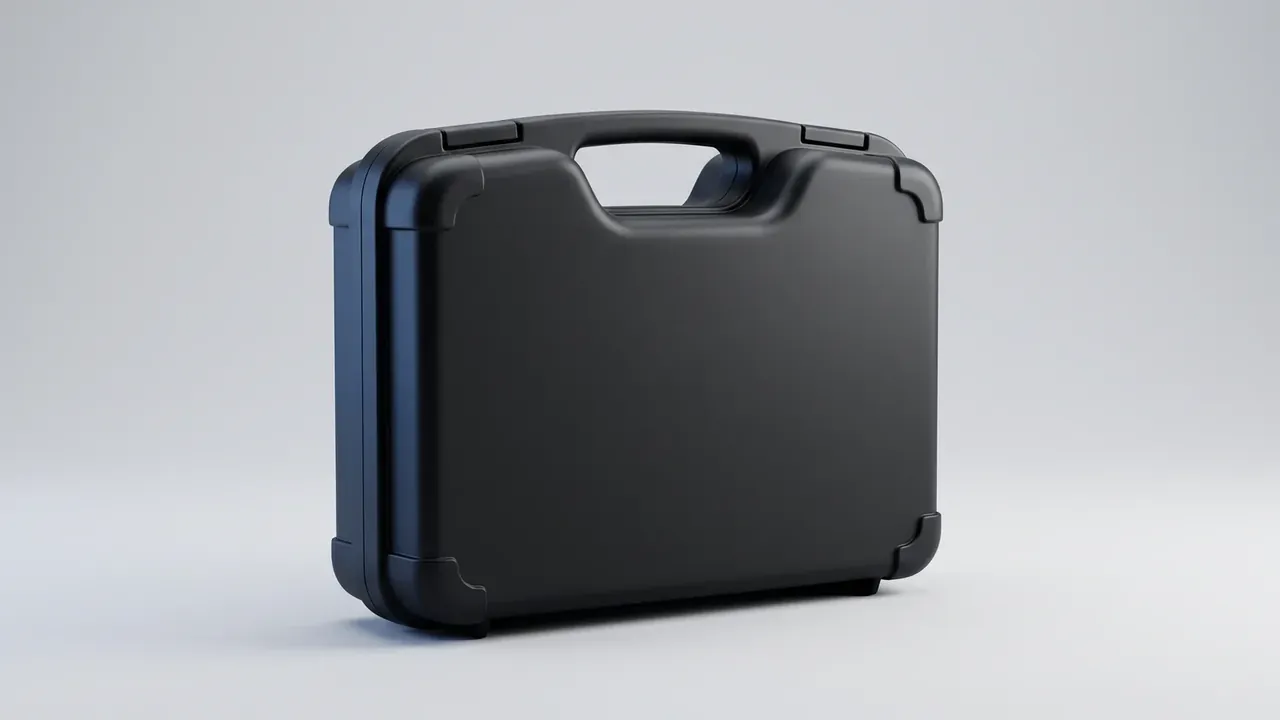
Quick answer: Compare a mobile tool cabinet, a fixed cabinet, a tool cart and a plastic tote cabinet on five metrics: mobility, cost per kilogram of load, life, service frequency and floor tolerance. Aligned, the price gap is one ranking row; daily moves and floor decide the rest.
Table of contents
- Five Metrics to Align Before Any Mobile Tool Cabinet Comparison
- Mobility Is a Distance Question, Not a Wheel Question
- Converting Price into Cost per Kilogram
- Service Life and Floor Tolerance
- Service Frequency and Five-Year Cost
- FAQ
1. Five Metrics to Align Before Any Mobile Tool Cabinet Comparison
Four quotations on one desk, and the mobile tool cabinet is rarely the cheapest. Price alone bends the answer.
For a mobile tool cabinet, mobility is moves per day times distance, not the presence of wheels. Cost per kilogram is price over rated load. Life ends at first unrepairable failure; floor tolerance matches tread to surface.
| Option | How it moves | Rated load | Cost per kg | Life | Services a year |
|---|---|---|---|---|---|
| Mobile tool cabinet | One operator, 100 mm castors | 260 kg | 8.1 CNY | 8 years | 1.1 |
| Fixed cabinet | Forklift or three people | 600 kg | 3.0 CNY | 12 years | 0.4 |
| Three-tier tool cart | One operator, 75 mm castors | 120 kg | 6.5 CNY | 5 years | 2.4 |
| Plastic tote cabinet | Two people, no wheels | 45 kg | 5.8 CNY | 3 years | 1.8 |
Whole-cabinet load is not drawer load: 60 kg per drawer against 260 kg total, versus 120 kg per shelf on the fixed cabinet. Never add four castor ratings together: apply 0.7.
2. Mobility Is a Distance Question, Not a Wheel Question
Two moves or fewer under 20 m one way favour a fixed cabinet; six moves over 20 to 80 m repay the difference in labour. Past 80 m or on a ramp, 100 mm castors stop working.
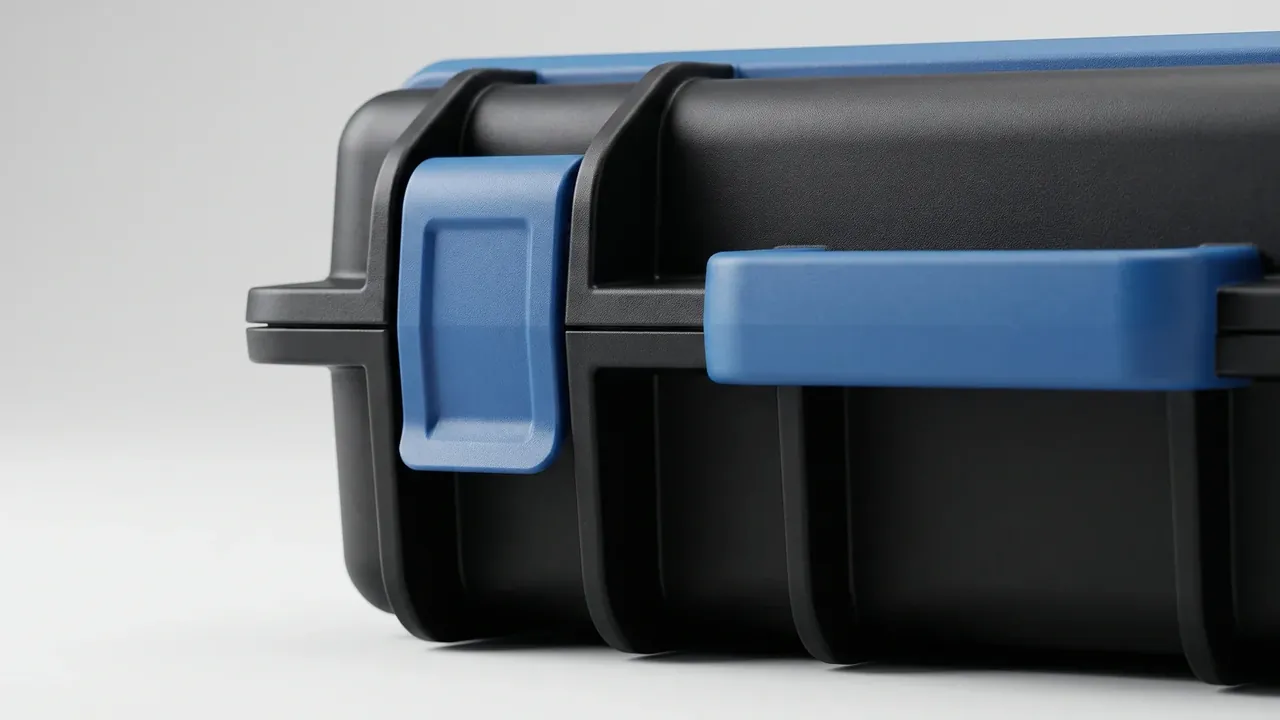
A 760 mm mobile tool cabinet through an 800 mm door leaves 20 mm per side, a loaded turning radius of 1.4 m needs a 1.6 m aisle, and 260 kg up a 5 degree ramp takes about 90 N.
A 75 mm cart must clear a 12 mm threshold six times a day; a 45 kg tote cabinet takes two people four minutes a move.
3. Converting Price into Cost per Kilogram
2,100 CNY over 260 kg returns 8.1 CNY per kg, the fixed cabinet 3.0, the cart 6.5, the tote 5.8. Load times life gives 2,080, 7,200, 600 and 135 kg-years, or 1.01, 0.25, 1.30 and 1.93 CNY per kg-year.
Utilisation moves the mobile tool cabinet again: line-side units run 75 to 85 percent full. Six moves a day at one person-hour each over 250 days is 1,500 hours, or 90,000 CNY at 60 CNY per hour, so the endpoint is cost per usable transfer.
4. Service Life and Floor Tolerance
Eight years covers roughly 12,000 pushes, castors and slides failing first; replacements stretch it to 10 years. The fixed cabinet reaches 12 years, the cart cracks at welds by year five, and the tote cabinet lasts three years with 30 percent less impact strength at minus 5 degrees Celsius.
Epoxy screed near 0.5 dislikes sharp grit; concrete at 0.6 carries 2 mm particles. Under 260 kg a 100 mm polyurethane wheel reads 0.8 g on such grit, a 75 mm nylon wheel 1.4 g.
5. Service Frequency and Five-Year Cost
The log gives 1.1 services a year, 0.4 fixed, 2.4 cart, 1.8 tote, mostly re-torquing plates and greasing slides.
| Option | Services a year | Hours each | Five-year spares | Index |
|---|---|---|---|---|
| Mobile tool cabinet | 1.1 | 0.8 h | 320 CNY | 100 |
| Fixed cabinet | 0.4 | 1.2 h | 180 CNY | 76 |
| Three-tier tool cart | 2.4 | 0.4 h | 260 CNY | 118 |
| Plastic tote cabinet | 1.8 | 0.3 h | 140 CNY | 92 |
At two moves a day the index is 100 here, 76 fixed, 118 cart, 92 tote. At six moves it climbs to 340, 190 and 210, and the ranking inverts.
Conclusion
The difference between the options is who carries the transfer cost: the fixed cabinet in labour, the cart in a load ceiling, the tote cabinet in life and cold behaviour, and the mobile tool cabinet in castors and base plate. Where that cost is booked decides how many trips a day are viable, and trips decide whether the cost per kilogram of a mobile tool cabinet is ever realised.
This article discusses only the container (case body) side of specifications and design intent, and does not cover any handling, loading or use of the contents.
Related Reading
- Mobile tool cabinet versus the alternatives
- Five checkpoints for the selection stage
- Selection criteria for rolling tool cases
- How a metal tool chest differs from the alternatives
Related Products
- 8 Series — Gun Cases; Military Equipment Cases; Camera Equipment Cases; Drone Cases; Watch Cases; Knife Cases; First Aid Cases; Electronics Equipment Cases
- WL8-2812 PP Gun Case — model WL8-2812
- All protective cases and toolboxes: 7 series, 158 models