

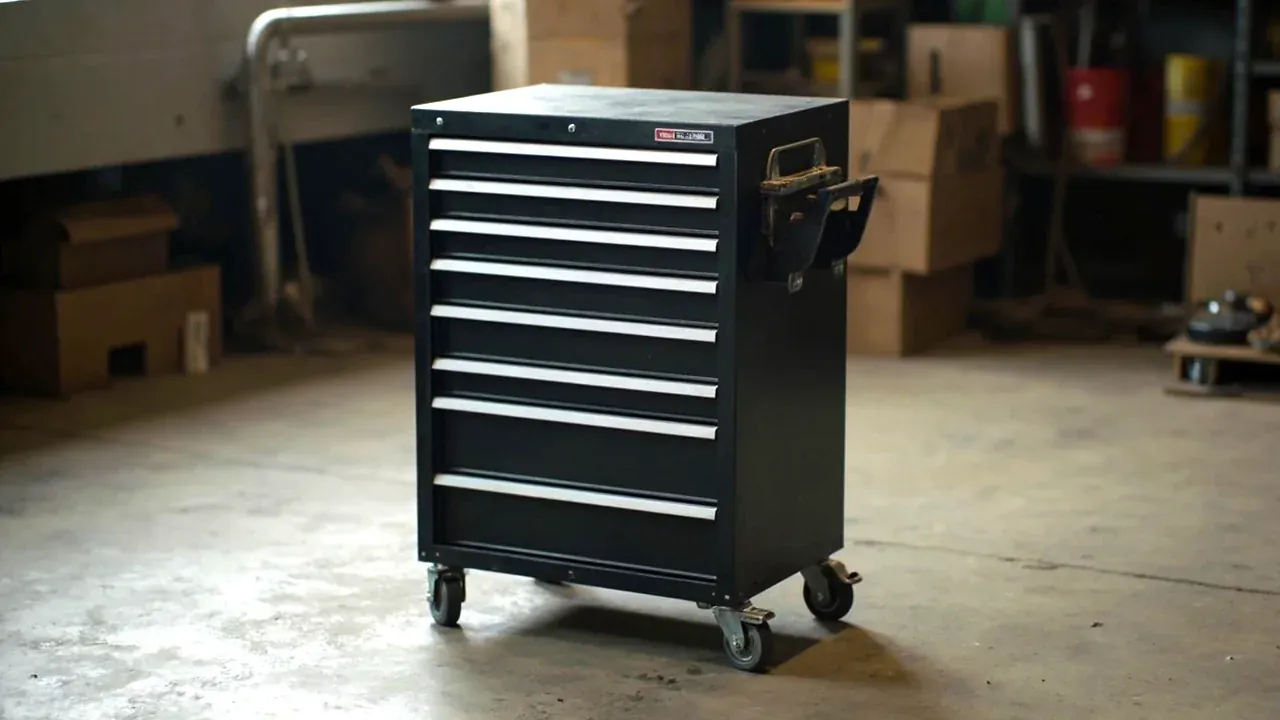
Quick answer: Select a mobile tool cabinet in the order of load, castors, brakes and balance — not drawer count. Total loaded weight sets castor diameter and material, castor mix decides whether it pushes, the brake decides whether it stays on a slope, and balance decides whether it tips with a drawer open. Estimate any of the four on an empty cabinet and the first loaded week exposes it.
Table of contents
- Choosing a mobile tool cabinet: start from loaded weight
- Castors: diameter is only one of four variables
- Brakes: stopping matters more than pushing
- Balance: the real condition is a drawer wide open
- The route: thresholds, ramps and cable ducts
- FAQ
1. Choosing a mobile tool cabinet: start from loaded weight
The first number is total loaded weight, not drawer count: cabinet, tools, liner and accessories together are what the castors carry. An eighty-kilogram six-drawer unit often passes three hundred kilograms loaded, and sizing castors on the empty weight is the usual mistake.
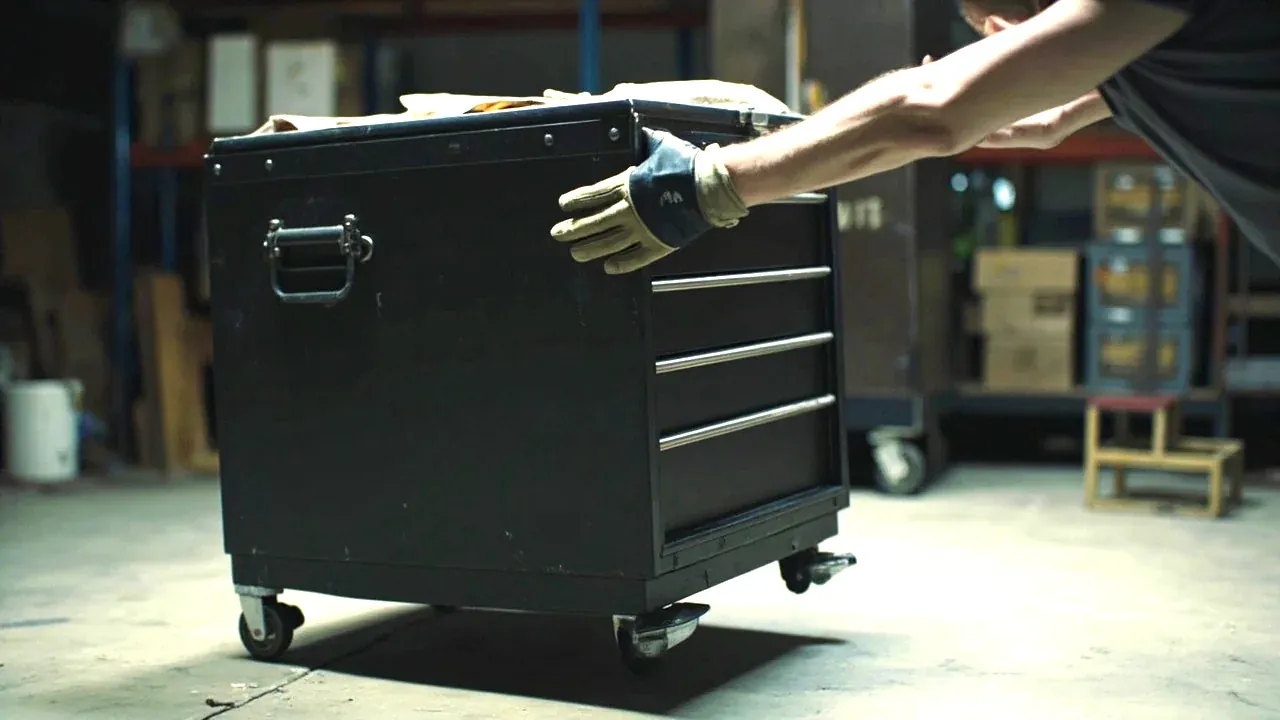
That weight also needs distributing. Concentrated in the bottom two drawers it pushes stably; concentrated at the top it behaves like an inverted pendulum and sways on any acceleration. Ask for per-drawer limits and plan heavy low, light high.
| Loaded weight | Castor size | Material | Feel |
|---|---|---|---|
| under 150 kg | 75 mm | polyurethane | light, smooth over joints |
| 150 to 300 kg | 100 mm | PU or nylon | needs steady push |
| 300 to 500 kg | 125 mm | nylon core PU | hard to start, slow to steer |
| above 500 kg | 150 mm plus | cast iron core | two people or a tug |
2. Castors: diameter is only one of four variables
A castor has four variables: diameter, material, bearing and the swivel-to-fixed mix. Diameter sets obstacle clearance, material sets rolling resistance and floor damage, the bearing sets push effort, and the mix sets whether it tracks straight — four swivel castors wander, two fixed plus two swivel track.
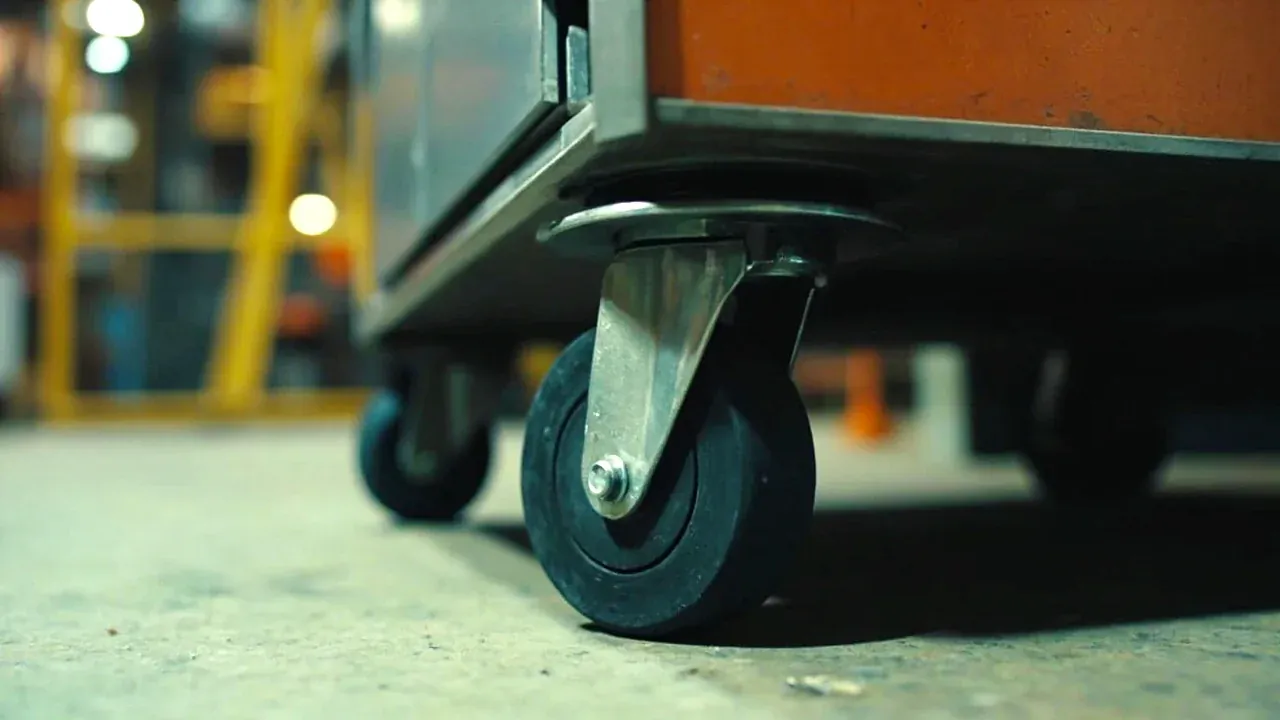
The floor is a variable too. Epoxy floors suit polyurethane; concrete tolerates nylon at the cost of noise; oily floors need oil-resistant material, since standard PU softens and delaminates in oil. Tell the supplier the floor, not just the load.
3. Brakes: stopping matters more than pushing
Two brake types exist: tread brakes pressing the tyre, simple but liable to slip on oily floors, and hub brakes locking the axle, more reliable and more costly. Heavy cabinets — especially on any slope — should use hub brakes.
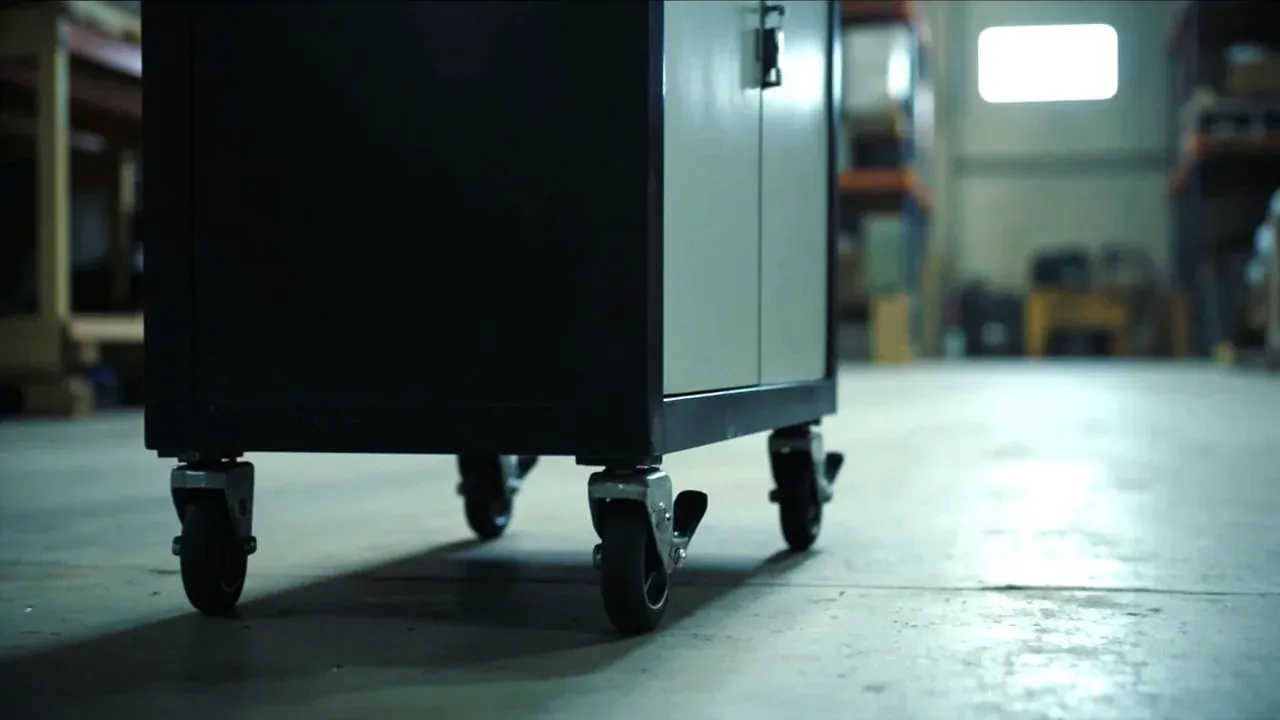
Stopped is not the same as stable. With all four braked the body can still pivot about one castor, and a fully open drawer amplifies it. Test loaded and braked with the heaviest drawer open: movement beyond a finger's width means more brakes or a floor anchor.
4. Balance: the real condition is a drawer wide open
A mobile cabinet tips more easily than a fixed one: it has no anchor, and only its own weight and wheelbase resist. With a drawer open the centre of gravity moves forward, and a loaded top drawer can push the combined point past the front axle; smaller castors and a narrower base make it worse.
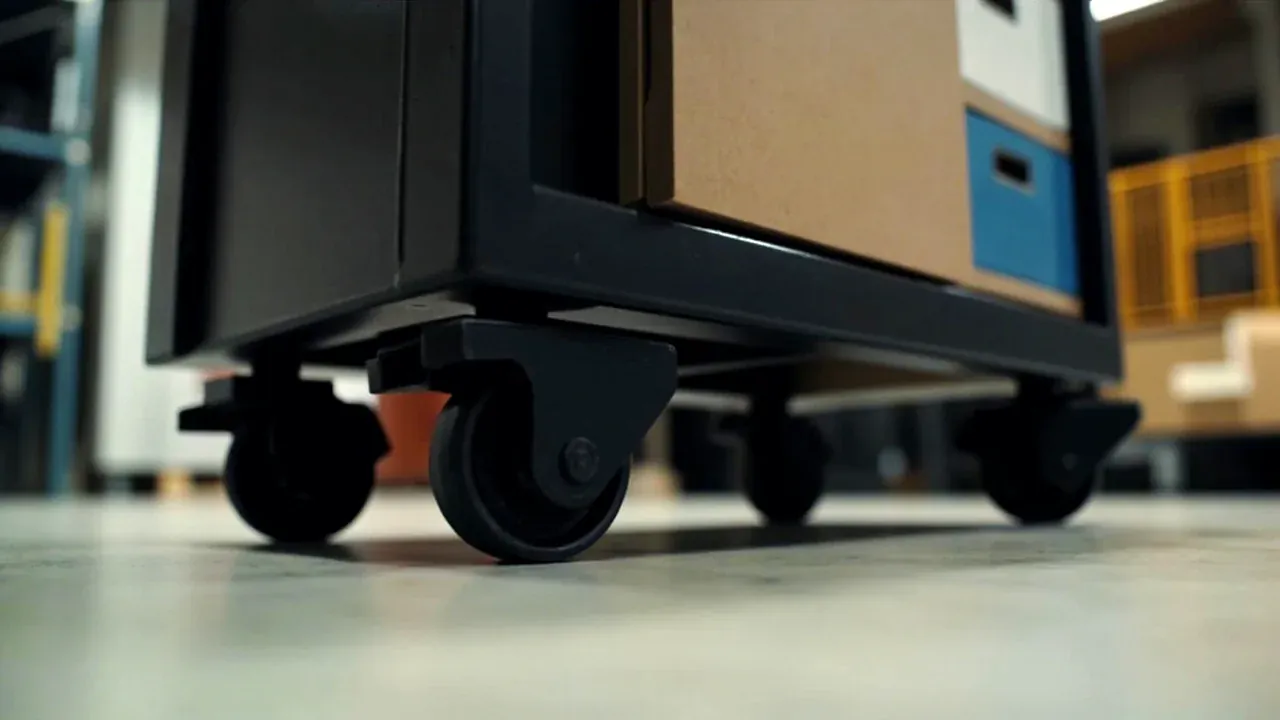
Three remedies: heaviest tools in the bottom drawer, a limit on drawers open at once, and an anti-tip bracket or floor anchor. The third does not suit a unit that moves daily, so the first two carry the load. Check for a drawer interlock — one open at a time is the most effective measure on a mobile unit.
5. The route: thresholds, ramps and cable ducts
Walk the route before choosing. Threshold height sets the minimum castor: a 20 mm lip is marginal on 75 mm and easy on 100 mm. Gradient decides whether a tug is needed — above five percent, a 300 kg cabinet is hard for one person. Cable ducts and gratings decide whether castors jam.
Turning radius matters too. Four swivel castors turn on the spot but load the fork sideways, and the forks distort first. Two fixed plus two swivel, lifting one end to turn, is steadier — which requires a push handle, not just a pull grip.
Conclusion
Selection compresses to four steps: loaded weight sets castor size, the floor sets material and mix, the gradient sets brake type, and drawer usage sets the anti-tip measure. Drawer count comes last — choose it first and the castors turn out undersized the moment the cabinet is loaded.
This article covers container-side specifications and design implications only, not the handling, loading or use of the contents.
Related Reading
- Mobile versus fixed tool cabinet
- Tool chest specifications
- Tool chests in workshops and bays
- Tool box foam lining selection
Related Products
- 8 Series — Gun Cases; Military Equipment Cases; Camera Equipment Cases; Drone Cases; Watch Cases; Knife Cases; First Aid Cases; Electronics Equipment Cases
- WL8-2812 PP Gun Case — model WL8-2812
- All protective cases and toolboxes: 7 series, 158 models