

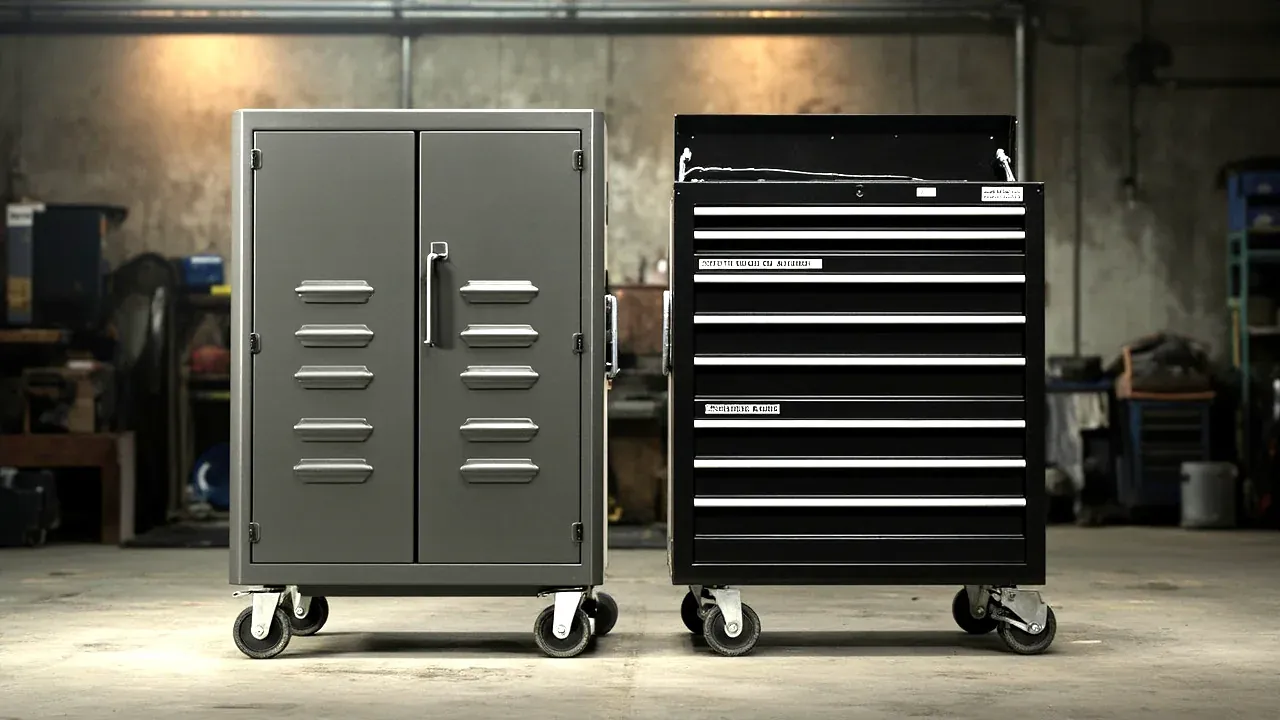
Quick answer: The difference between a mobile and a fixed tool cabinet is not castors but where the cost sits: fixed units spend on the body and floor work so people stay put, mobile units spend on castors and brakes so tools travel. Compare trips to the tools against trips with the tools; that ratio decides the five-year cost.
Table of contents
- Mobile versus fixed: start from the walking route
- Cost: where the price difference actually sits
- Footprint: projection area versus aisle width
- Access efficiency: the hidden cost of walking
- When you need both
- FAQ
1. Mobile versus fixed: start from the walking route
Draw the route before discussing price. A fixed cabinet means people walk to the tools; a mobile one means the tools come to the person. Whoever moves more often wins: thirty trips a day against five pushes a day are different problems entirely.
Distance matters. A wall-mounted cabinet ten metres from the station, thirty times a day, is six hundred metres. A mobile cabinet pushed twice takes under two minutes. That arithmetic repeats ten thousand times over five years.
| Dimension | Mobile cabinet | Fixed cabinet |
|---|---|---|
| Up-front cost | castors, brakes, anti-tip | body, wall or floor fixing |
| Footprint | can be tucked away, needs aisle | fixed projection, no aisle |
| Access | pushed to the station | people walk a fixed distance |
| Maintenance | castors and brakes | slides and locks |
2. Cost: where the price difference actually sits
A mobile unit costs twenty to thirty percent more, concentrated in castors, brakes and a reinforced base frame. A fixed cabinet never takes pushing loads, so its base can be thin; a mobile base must resist torsion or it distorts within months and drawers misalign.
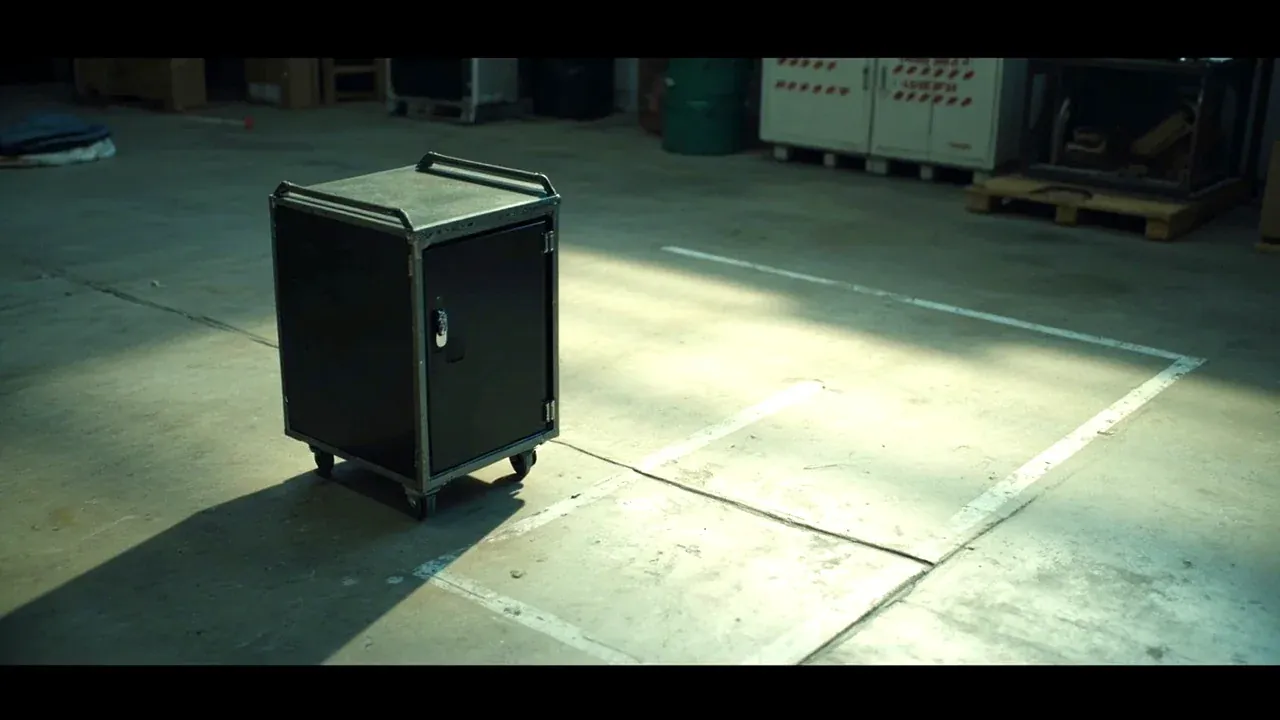
Fixed units carry hidden costs too: wall reinforcement or floor anchors, plus cable re-routing once the position is set. Those appear on the works order, not the quotation. Put both sets of hidden costs on the table and the gap shrinks.
3. Footprint: projection area versus aisle width
A fixed cabinet takes about 1.2 square metres and no aisle; a mobile one can be tucked away but needs a route wide enough for a fully open drawer plus half a metre. In a dense workshop that route costs more than the cabinet.
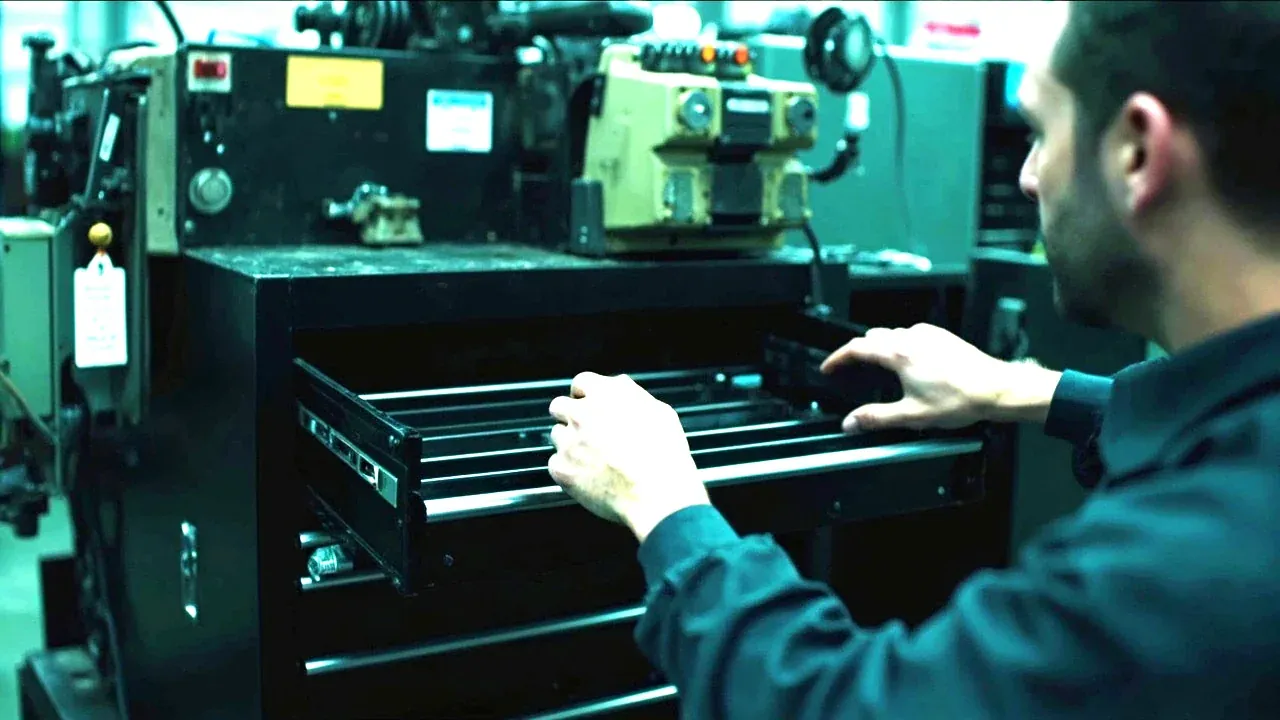
A parked mobile unit also borrows space when its drawer opens. Between two stations, a drawer that opens into the aisle ends up opened halfway in practice. Plan cabinet width plus one metre each side.
4. Access efficiency: the hidden cost of walking
Access time has two parts: reaching the cabinet and finding the layer. A fixed cabinet concentrates tools so the layer is quick but the walk is long; a mobile one removes the walk but often layers more coarsely, so finding takes longer. The two offset, and only a measurement settles it.
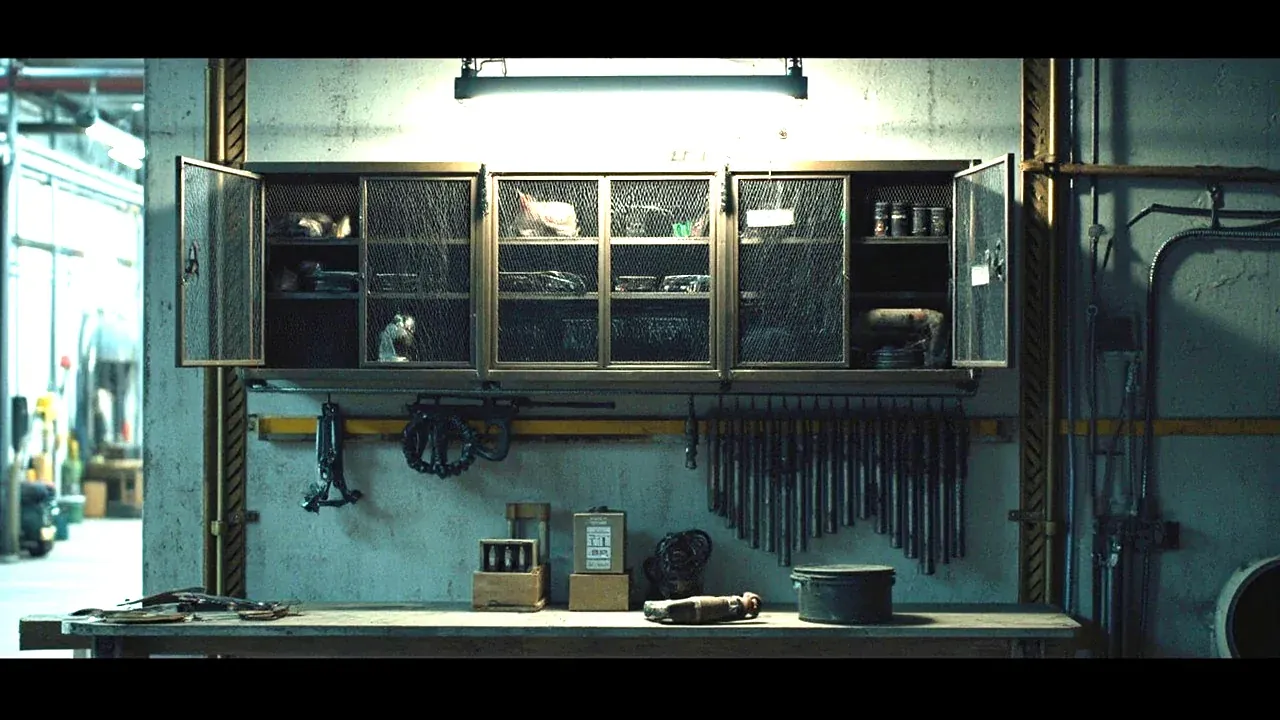
Time twenty pick-ups under each layout, from standing up to holding the tool. Most sites find the mobile unit wins on single high-frequency items, the fixed one on multi-item low-frequency jobs, where one walk serves many pieces.
5. When you need both
Workshops with many stations, many tool types and overlapping shifts usually need both: a fixed cabinet for stock and low-frequency items, a mobile unit for the day's high-frequency work. Stock stays put, working sets travel.
Mixing them requires one key system and one inventory. Tools issued from the fixed cabinet to the mobile unit need a record, or both sides run short. Weekly replenishment into the fixed unit and shift handover of the mobile one is the usual pattern.
Conclusion
The choice compresses to one line: if trips to the tools outnumber trips with the tools, take fixed; if the reverse, take mobile; if they are close, use both and let stock stay put while working sets travel. Decide on the route, not the price — the price gap is twenty percent, the route gap repeats for five years.
This article covers container-side specifications and design implications only, not the handling, loading or use of the contents.
Related Reading
- Choosing a mobile tool cabinet
- Tool chest specifications
- Tool chests in workshops and bays
- Tool box, bag and chest compared
Related Products
- 8 Series — Gun Cases; Military Equipment Cases; Camera Equipment Cases; Drone Cases; Watch Cases; Knife Cases; First Aid Cases; Electronics Equipment Cases
- WL8-2812 PP Gun Case — model WL8-2812
- All protective cases and toolboxes: 7 series, 158 models